• Wyszukiwanie zaawansowane
  • Kategorie
  • Kategorie BISAC
  • Książki na zamówienie
  • Promocje
  • Granty
  • Książka na prezent
  • Opinie
  • Pomoc
  • Załóż konto
  • Zaloguj się

The T-Cell Receptors » książka


zaloguj się | załóż konto
Logo Krainaksiazek.pl

koszyk

konto

szukaj
topmenu
Księgarnia internetowa
Szukaj
Książki na zamówienie
Promocje
Granty
Książka na prezent
Moje konto
Pomoc
 
 
Wyszukiwanie zaawansowane
Pusty koszyk
Bezpłatna dostawa dla zamówień powyżej 20 złBezpłatna dostawa dla zamówień powyżej 20 zł

Kategorie główne

• Nauka
 [2946350]
• Literatura piękna
 [1816154]

  więcej...
• Turystyka
 [70666]
• Informatyka
 [151172]
• Komiksy
 [35576]
• Encyklopedie
 [23172]
• Dziecięca
 [611458]
• Hobby
 [135995]
• AudioBooki
 [1726]
• Literatura faktu
 [225763]
• Muzyka CD
 [378]
• Słowniki
 [2917]
• Inne
 [444280]
• Kalendarze
 [1179]
• Podręczniki
 [166508]
• Poradniki
 [469467]
• Religia
 [507199]
• Czasopisma
 [496]
• Sport
 [61352]
• Sztuka
 [242330]
• CD, DVD, Video
 [3348]
• Technologie
 [219391]
• Zdrowie
 [98638]
• Książkowe Klimaty
 [124]
• Zabawki
 [2382]
• Puzzle, gry
 [3525]
• Literatura w języku ukraińskim
 [259]
• Art. papiernicze i szkolne
 [7107]
Kategorie szczegółowe BISAC

The T-Cell Receptors

ISBN-13: 9781468454086 / Angielski / Miękka / 2012 / 235 str.
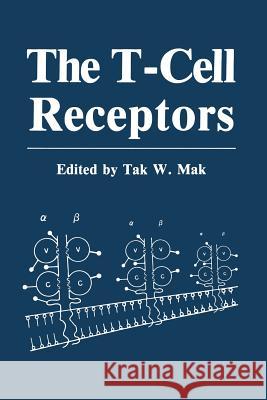
Tak W. Mak; Tak W. Mak
The T-Cell Receptors Tak W Tak W. Mak 9781468454086 Springer - książkaWidoczna okładka, to zdjęcie poglądowe, a rzeczywista szata graficzna może różnić się od prezentowanej.

The T-Cell Receptors

ISBN-13: 9781468454086 / Angielski / Miękka / 2012 / 235 str.

Tak W. Mak; Tak W. Mak
cena 402,53
(netto: 383,36 VAT:  5%)

Najniższa cena z 30 dni: 385,52
Termin realizacji zamówienia:
ok. 16-18 dni roboczych.

Darmowa dostawa!

The importance of thymus-dependent cells, or T cells, in the generation of a successful immune response was first realized in the early sixties. In the follow ing two decades, a succession of elegant experiments established the antigen specificity of T cells and their ability to perform both as regulatory and effector cells. T cells were shown to be essential in most immune reactions, playing a crucial role in augmenting the activity of effector T and B cells against 'foreign' antigen, as well as in the suppression of effector activity against self antigens. The means by which T cells differentiate 'foreign' from 'self' antigens is based on their recognition of antigen almost exclusively in the context of self major histocompatibility complex products, unlike B cells, which recognize an tigen alone. It is this recognition, mediated by the T-cell receptor, that sets into motion the diverse cell-cell interactions, which control the differentiation and regulation of the immune response. Although its importance was well established, the molecular nature of the T-cell receptor remained elusive for two decades. Many hypotheses as to its structure and precise function were put forward, using immunoglobulin as a basis for conjecture, but "the Holy Grail of Immunology" remained ephemeral until three years ago. In the ensuing years, both immunologists and molecular biologists have contributed to an explosion of data unsurpassed by any previous period in the field."


Kategorie:
Nauka, Medycyna
Kategorie BISAC:
Medical > Immunology
Science > Zoologia i nauki o zwierzętach
Science > Botanika
Wydawca:
Springer
Język:
Angielski
ISBN-13:
9781468454086
Rok wydania:
2012
Wydanie:
Softcover Repri
Ilość stron:
235
Waga:
0.38 kg
Wymiary:
22.9 x 15.2
Oprawa:
Miękka
Wolumenów:
01

1 Introduction.- 2 The ? and ? Chains of the T-Cell Receptor.- 1. Introduction.- 2. The Genomic Structure of the T-Cell Receptor Genes.- 2.1. ?-Chain genes.- 2.2. ?-Chain genes.- 3. Rearrangement of T-Cell Receptor Genes.- 3.1. T-Cell Receptor Recombinational Signals.- 3.2. ?-Chain Rearrangement and Expression.- 3.3. ? Rearrangement in T-Cell Subsets.- 3.4. ?-Chain Transcripts.- 3.5. ?-Chain Rearrangement and Transcription.- 4. The Generation of T-Cell Receptor Diversity.- 5. The T-Cell Receptor Repertoire.- 6. T-Cell Receptor Diversity.- 7. Conclusion.- References.- 3 Immunoglobulin-Related Structures Associated with Vertebrate Cell Surfaces.- 1. Members of the Ig Superfamily.- 2. Igs and the Domain Hypothesis.- 3. Statistical Significance of the Similarities to Ig.- 4. Categories of Molecules in the Ig Superfamily.- 4.1. Antigen Receptors and Associated Molecules.- 4.2. MHC Antigens.- 4.3. Antigens Associated with ?2 Microglobulin.- 4.4. Receptors for Ig.- 4.5. T-Lymphocyte Marker Antigens.- 4.6. Brain/Thymus Antigens.- 4.7. Neural Cell-Surface Molecules.- 4.8. Growth Factor Receptors.- 4.9. Molecules Not Known To Be Cell-Surface Associated.- 5. Gene Organization.- 6. Evolution of Structural Types in the Ig Superfamily.- 7. Possible Functional Derivation of the Ig Superfamily.- References.- 4 T-Cell Receptor Genes: Mutant Mice and Genes.- 1. Introduction.- 2. TcR ?-Chain Locus.- 3. Deletion Type Mutants.- 3.1. V? Mutants.- 3.2. C?-Deletion Mutant.- 3.3. V?-C?-Deletion Mutants.- 4. Nondeletion Mutants.- 4.1. V? Genes.- 4.2. V? Genes.- 4.3. V? Genes.- References.- 5 Thymic Ontogeny and the T-Cell Receptor Genes.- 1. Thymic Ontogeny.- 2. The T-Cell Receptor and Thymic Ontogeny.- 3. Thymic Leukemias.- 4. Conclusions.- References.- 6 The T-Cell Receptor/T3 Complex on the Surface of Human and Murine T Lymphocytes.- 1. T-Cell Receptors for Antigen.- 2. Antigen Recognition by T-Cell Receptors after the Establishment of Cell-Cell Interactions.- 3. The T Cell Receptor-T3 Structure.- 3.1. Description of the T3 Antigen and Its Relationship to the T-Cell Receptor.- 3.2. The Murine T-Cell Receptor-T3 Complex.- 3.3. The T3-? Chain.- 3.4. The Amino Acid Sequence of T3-? Derived from the cDNA Nucleotide Sequence.- 3.5. Physical Association of the T-Cell Receptor and T3 Proteins.- 3.6. Coordinate Cell-Surface Expression of the T-Cell Receptor-T3 Complex.- 4. Organization of the Genes Encoding the T3 Proteins.- 4.1. The T3-? Gene.- 4.2. The T3-? Gene.- 4.3. Chromosomal Locations of T3-? and -? Genes.- 5. Expression of the T3-Genes during Intrathymic Differentiation.- References.- 7 Role of the T3/T-Cell Antigen Receptor Complex in T-Cell Activation.- 1. Introduction.- 2. The T3/Ti Complex.- 3. The T3/Ti Antibodies Provide One Stimulus Required for Human T-Cell Activation.- 4. T3/Ti-Induced Hydrolysis of Polyphosphoinositides and Increase in the Concentration of Cytoplasmic Free Calcium.- 5. T-Cell Activation Induced by Soluble or Immobilized T3 MAb.- 6. The Role of Activation of Protein Kinase C for the Activation of Resting T Lymphocytes.- 7. Summary.- References.- 8 The Structure and Expression of the T-Cell ?-, ?-, and ?-Chain Genes in Human Malignancies.- 1. Introduction.- 2. T-Cell Malignancies.- 3. Technical Considerations.- 3.1. Analysis of ? Chain.- 3.2. Analysis of ? Chain.- 3.3. Analysis of ?-Chain Structure and Expression.- 4. Rearrangement and Expression of the TcR Genes in Human Neoplasias and Related Disorders.- 5. T-Cell Malignancies.- 5.1. Acute T-Lymphoid Neoplasms.- 5.2. Chronic T-Cell Malignancies.- 5.3. T8 Lymphocytosis.- 5.4. T-Cell Lymphomas.- 5.5. Non-B Non-T All.- 5.6. B-CLL.- 5.7. Lymphoproliferative Disorders of Uncertain Origin.- 5.8. Another Hematopoietic Malignancy.- 6. Observations.- 7. T-Cell Ontogeny.- 7.1. Lymphoid Malignancies with Rearrangement of Both TcR and Ig Genes.- 7.2. T-Cell Malignancies with More than Two Rearranged Bands.- 7.3. Involvement of TcR Genes in Chromosome Translocations.- 8. Conclusion.- References.- 9 The Involvement of the T-Cell Receptor in Chromosomal Aberrations.- 1. The Involvement of the T-Cell Receptor in Chromosomal Aberrations.- 2. The Burkitt’s Lymphoma Model.- 3. What is the Mechanism of Translocation in Burkitt’s Lymphoma and Other B-Lymphocyte Tumors?.- 4. The Chromosomal Locations of the T-Cell Receptor ?, ?, and ? Chains—Relevance to Chromosomal Aberrations That Highlight Regions of Genomic Activity in Differentiated Cells.- 5. Cloning Studies of Chromosomal Aberrations in T Cells.- 6. The Relevance of the Involvement of the T-Cell Receptor Genes in Chromosomal Aberrations of T Cells.- 7. Summary.- References.- 10 MHC-Disease Associations and T-Cell-Mediated Immunopathology.- 1. Introduction.- 2. Proposal.- 3. Host-Parasite Relationship: General Parameters.- 4. Supporting Evidence.- References.- 11 The ?-? Heterodimer: A Second T-Cell Receptor?.- 1. Cloning of the ? Chain.- 2. Genomic Organization of the ?-Chain Loci in Mouse and Man.- 2.1. The Murine ?-Chain Genes.- 2.2. The Human ?-Chain Genes.- 3. ?-Chain Expression.- 4. ?? as a Possible Second T-Cell Receptor.- 5. Possible Function of the ? Receptor.- 6. Conclusion.- References.


Udostępnij

Facebook - konto krainaksiazek.pl


Opinie o Krainaksiazek.pl na Opineo.pl

Partner Mybenefit

Krainaksiazek.pl w programie rzetelna firma Krainaksiaze.pl - płatności przez paypal

Czytaj nas na:

Facebook - krainaksiazek.pl
  • książki na zamówienie
  • granty
  • książka na prezent
  • kontakt
  • pomoc
  • opinie
  • regulamin
  • polityka prywatności

Zobacz:

  • Księgarnia czeska

  • Wydawnictwo Książkowe Klimaty

1997-2026 DolnySlask.com Agencja Internetowa

© 1997-2022 krainaksiazek.pl
     
KONTAKT | REGULAMIN | POLITYKA PRYWATNOŚCI | USTAWIENIA PRYWATNOŚCI
Zobacz: Księgarnia Czeska | Wydawnictwo Książkowe Klimaty | Mapa strony | Lista autorów
KrainaKsiazek.PL - Księgarnia Internetowa

Polityka prywatnosci - link
Krainaksiazek.pl - płatnośc Przelewy24
Przechowalnia Przechowalnia






