• Wyszukiwanie zaawansowane
  • Kategorie
  • Kategorie BISAC
  • Książki na zamówienie
  • Promocje
  • Granty
  • Książka na prezent
  • Opinie
  • Pomoc
  • Załóż konto
  • Zaloguj się

The Solar Chromosphere and Corona: Quiet Sun » książka


zaloguj się | załóż konto
Logo Krainaksiazek.pl

koszyk

konto

szukaj
topmenu
Księgarnia internetowa
Szukaj
Książki na zamówienie
Promocje
Granty
Książka na prezent
Moje konto
Pomoc
 
 
Wyszukiwanie zaawansowane
Pusty koszyk
Bezpłatna dostawa dla zamówień powyżej 20 złBezpłatna dostawa dla zamówień powyżej 20 zł

Kategorie główne

• Nauka
 [2949965]
• Literatura piękna
 [1857847]

  więcej...
• Turystyka
 [70818]
• Informatyka
 [151303]
• Komiksy
 [35733]
• Encyklopedie
 [23180]
• Dziecięca
 [617748]
• Hobby
 [139972]
• AudioBooki
 [1650]
• Literatura faktu
 [228361]
• Muzyka CD
 [398]
• Słowniki
 [2862]
• Inne
 [444732]
• Kalendarze
 [1620]
• Podręczniki
 [167233]
• Poradniki
 [482388]
• Religia
 [509867]
• Czasopisma
 [533]
• Sport
 [61361]
• Sztuka
 [243125]
• CD, DVD, Video
 [3451]
• Technologie
 [219309]
• Zdrowie
 [101347]
• Książkowe Klimaty
 [123]
• Zabawki
 [2362]
• Puzzle, gry
 [3791]
• Literatura w języku ukraińskim
 [253]
• Art. papiernicze i szkolne
 [7933]
Kategorie szczegółowe BISAC

The Solar Chromosphere and Corona: Quiet Sun

ISBN-13: 9789401017176 / Angielski / Miękka / 2011 / 515 str.
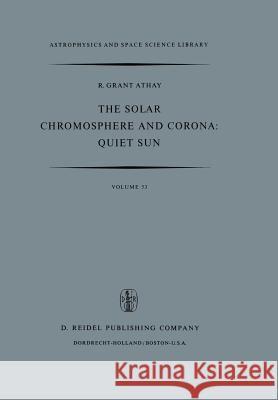
R. G. Athay
The Solar Chromosphere and Corona: Quiet Sun R. G. Athay 9789401017176 Springer - książkaWidoczna okładka, to zdjęcie poglądowe, a rzeczywista szata graficzna może różnić się od prezentowanej.

The Solar Chromosphere and Corona: Quiet Sun

ISBN-13: 9789401017176 / Angielski / Miękka / 2011 / 515 str.

R. G. Athay
cena 201,72
(netto: 192,11 VAT:  5%)

Najniższa cena z 30 dni: 192,74
Termin realizacji zamówienia:
ok. 22 dni roboczych
Bez gwarancji dostawy przed świętami

Darmowa dostawa!

The widespread tendency in solar physics to divide the solar atmosphere into separate layers and to distinguish phenomena of solar activity from phenomena of the quiet Sun emphasizes the wide ranging diversity of physical conditions and events occurring in the solar atmosphere. This diversity spans the range from a neutral, essentially quiescent atmosphere to a highly ionized, violently convective atmosphere; from a domain in which magnetic field effects are unimportant to a domain in which the magnetic pressure exceeds the gas pressure, and from a domain in which the particle motions are Maxwellian to a domain in which an appreciable fraction of the particles is accelerated to relativistic energies. It is now widely recognized that the chromosphere and corona have a common origin in the mechanical energy flux generated in the hydrogen convection zone lying beneath the photosphere. Furthermore, magnetic field phenomena appear to be as vital to the structure of th~ quiet Sun as to the active Sun. For these reasons it appears desirable to present a unified treatment of the entire solar atmosphere, both active and quiet, in a single volume. On the other hand, such a treatise must be very long if it is to avoid being superficial, and it is very difficult for a single author to write authoritatively on such a wide range of topics.


Kategorie:
Nauka, Fizyka
Kategorie BISAC:
Science > Astrofizyka
Wydawca:
Springer
Seria wydawnicza:
Astrophysics and Space Science Library (Paperback)
Język:
Angielski
ISBN-13:
9789401017176
Rok wydania:
2011
Wydanie:
1976
Numer serii:
000036061
Ilość stron:
515
Waga:
0.89 kg
Wymiary:
24.4 x 17.0
Oprawa:
Miękka
Wolumenów:
01

I. Introduction.- 1. Chromospheres and Coronas.- 2. Goals for Solar Physics.- 3. Chromosphere and Coronal Boundaries.- 4. Methods of Observation.- 5. The K- and F-Coronas.- 6. Comments on Discrete Geometrical Features.- 7. Depths of Line Formation.- II. Structural Features.- 1. Observational Methods.- 2. The Photospheric Structure.- 3. Chromospheric Network.- 4. Chromospheric Fine Structure on the Disk.- 5. Spicule Structure.- 6. Transition Region Structure.- 7. Non-Spherical Modeling.- 8. Chromospheric Active Region Structure.- 9. Observations of Coronal Structures.- 10. Fine Structure of Inner Corona.- 11. Coronal Streamers.- 12. Coronal Rays and Plumes.- 13. Coronal Disk Structures and Coronal Holes.- 14. Prominences.- 15. Solar Cycle Effects.- III. Macroscopic Motions.- 1. Measuring Systematic Motions.- 2. Photospheric Motions.- A. Wave Frequency.- B. Phase Relations.- C. Velocity Amplitude and Cell Size.- D. Discussion.- 3. Chromospheric Motions.- A. Spicules and Fibrils.- B. Cell Bright Points.- C. Chromospheric Oscillations.- D. Doppler Broadening of Chromospheric Lines.- 4. Small Scale Coronal Motions.- 5. Coronal Expansion: The Solar Wind.- 6. Prominence Motions.- 7. Impulsive Motions.- 8. Mass Balance and Energy Transport in Mass Flow.- IV. Magnetic Fields.- 1. Method of Observation.- 2. Energy Considerations.- 3. Polar Fields and UM Regions.- 4. Evolution of Large Scale Fields.- 5. Structure and Evolution of Small Scale Fields.- 6. Coronal Magnetic Fields.- V. Spectral Characteristics.- 1. Visual and Near Infrared Disk.- 2. Visual and Near Infrared Limb.- A. Chromospheric Eclipse Data.- B. Chromospheric Limb Outside of Eclipse.- C. Coronal Eclipse Data.- D. Coronal Limb Data Outside of Eclipse.- 3. Infrared, Radio and XUV Continuum Data.- A. Infrared and Radio Data.- B. XUV Data.- 4. XUV Emission Lines.- VI. Analytical Methods for Spectroscopic Data.- 1. Scattering Continuum.- A. Electron Scattering.- B. Rayleigh Scattering.- 2. Bound-Free Continua: Effectively Thin Case.- A. H-.- B. Balmer and Paschen Bound-Free Continua.- C. Helium Bound-Free Continua.- 3. Free-Free Continua.- 4. Total Line Intensities: Effectively Thin Case.- A. Two-Level Atom.- B. Three-Level Atom.- 5. Profiles of lines and Bound-Free Continua: Effectively Thick Case.- A. A Form of the Line Transfer Equation for Non-Coherent Scattering.- B. Solution of the Pseudo Line Transfer Equation.- C. The Influence of a Chromosphere.- D. Multilevel Effects.- E. Lines Formed by Coherent Scattering and Bound-Free Continua.- VII. Empirical Chromospheric and Coronal Models.- 1. Summary Models.- 2. Conditions at the Optical Limb.- 3. The Temperature Minimum Region.- A. Radiation Losses.- B. Empirical Determination of Tmin.- 4. The Low Chromosphere.- 5. The Middle Chromosphere.- A. General Comments.- B. Visual Continuum.- C. Lyman Continuum.- D. Spectral Lines on the Disk.- E. Helium lines.- 6. The High Chromosphere.- A. Mean Spherically Symmetric Model.- B. Spicule Models.- C. Spectral Line Intensities.- 7. The Chromosphere-Corona Transition Region.- 8. The Corona.- A. Density Models.- B. Ionization Temperature.- C. Line Width Temperatures.- D. Line Intensity Ratios.- E. Radio Temperatures.- F. Temperature Distribution.- VIII. Chromospheric Structure Inferred from Spectral Lines.- 1. Chromospheres and Coronas as Phenomena of Stellar Atmospheres.- 2. Influence of the Chromospheric Temperature Rise.- 3. Influence of the Chromospheric Increase in Doppler Width.- 4. Ca ii lines.- 5. Mg ii Lines.- 6. Neutral Metal Lines.- 7. Hydrogen Lines.- 8. C ii and O i Lines.- 9. Summary.- IX. Energy and Momentum Balance.- 1. Energy Balance.- 2. Radiation Loss Rates.- 3. Thermal Stability.- 4. Coronal Energy Loss by Thermal Conduction and Evaporation.- 5. Energy Balance Within the Transition Region.- 6. The Base of the Transition Region.- 7. The Effect of Motions.- 8. Energy Losses from the Chromosphere.- A. Upper Chromosphere.- B. Middle Chromosphere.- C. Low Chromosphere and Tmin Region.- 9. The Quiet Sun Solar Wind.- A. An Inconsistency of Hydrostatic Equilibrium.- B. Isothermal and Polytropic Expansion.- C. Expansion Combined with Thermal Conduction.- D. Two-Fluid Models.- E. Evaporative Models.- F. The Observational Solar Wind.- 10. Spicule Mechanisms.- A. Summary of Spicule Characteristics.- B. Summary of Theoretical Models.- C. Shock Wave Models.- D. Jets Driven by Gas Pressure.- E. Jets Driven by a Combination of Gas Pressure and Hydrodynamic Forces.- F. Jets Driven by Radiation Pressure.- G. Magnetically Driven Spicules.- X. Wave Generation and Heating.- 1. Wave Generation.- A. Expected Wave Modes.- B. Wave Equations.- C. Acoustic-Gravity Waves.- D. Magneto-Acoustic Waves.- E. Magneto-Acoustic-Gravity Waves.- 2. Interpretation of 5 Minute Oscillations.- A. Location of Waves in ki, ?1 Plane.- B. Models for 5 Minute Oscillations.- 3. Generation of Waves by the Convection Zone.- A. Convective Overshoot.- B. Overstability.- C. Convective Compression.- 4. Heating.- A. Chromospheric Models.- B. Transition Region and Coronal Models.- 5. Acoustic Production of Stellar Chromospheres and Coronas.


Udostępnij

Facebook - konto krainaksiazek.pl


Opinie o Krainaksiazek.pl na Opineo.pl

Partner Mybenefit

Krainaksiazek.pl w programie rzetelna firma Krainaksiaze.pl - płatności przez paypal

Czytaj nas na:

Facebook - krainaksiazek.pl
  • książki na zamówienie
  • granty
  • książka na prezent
  • kontakt
  • pomoc
  • opinie
  • regulamin
  • polityka prywatności

Zobacz:

  • Księgarnia czeska

  • Wydawnictwo Książkowe Klimaty

1997-2025 DolnySlask.com Agencja Internetowa

© 1997-2022 krainaksiazek.pl
     
KONTAKT | REGULAMIN | POLITYKA PRYWATNOŚCI | USTAWIENIA PRYWATNOŚCI
Zobacz: Księgarnia Czeska | Wydawnictwo Książkowe Klimaty | Mapa strony | Lista autorów
KrainaKsiazek.PL - Księgarnia Internetowa

Polityka prywatnosci - link
Krainaksiazek.pl - płatnośc Przelewy24
Przechowalnia Przechowalnia





