• Wyszukiwanie zaawansowane
  • Kategorie
  • Kategorie BISAC
  • Książki na zamówienie
  • Promocje
  • Granty
  • Książka na prezent
  • Opinie
  • Pomoc
  • Załóż konto
  • Zaloguj się

The Social Dimensions of the Circular Economy » książka


zaloguj się | załóż konto
Logo Krainaksiazek.pl

koszyk

konto

szukaj
topmenu
Księgarnia internetowa
Szukaj
Książki na zamówienie
Promocje
Granty
Książka na prezent
Moje konto
Pomoc
 
 
Wyszukiwanie zaawansowane
Pusty koszyk
Bezpłatna dostawa dla zamówień powyżej 20 złBezpłatna dostawa dla zamówień powyżej 20 zł

Kategorie główne

• Nauka
 [2946912]
• Literatura piękna
 [1852311]

  więcej...
• Turystyka
 [71421]
• Informatyka
 [150889]
• Komiksy
 [35717]
• Encyklopedie
 [23177]
• Dziecięca
 [617324]
• Hobby
 [138808]
• AudioBooki
 [1671]
• Literatura faktu
 [228371]
• Muzyka CD
 [400]
• Słowniki
 [2841]
• Inne
 [445428]
• Kalendarze
 [1545]
• Podręczniki
 [166819]
• Poradniki
 [480180]
• Religia
 [510412]
• Czasopisma
 [525]
• Sport
 [61271]
• Sztuka
 [242929]
• CD, DVD, Video
 [3371]
• Technologie
 [219258]
• Zdrowie
 [100961]
• Książkowe Klimaty
 [124]
• Zabawki
 [2341]
• Puzzle, gry
 [3766]
• Literatura w języku ukraińskim
 [255]
• Art. papiernicze i szkolne
 [7810]
Kategorie szczegółowe BISAC

The Social Dimensions of the Circular Economy

ISBN-13: 9783031254352 / Angielski
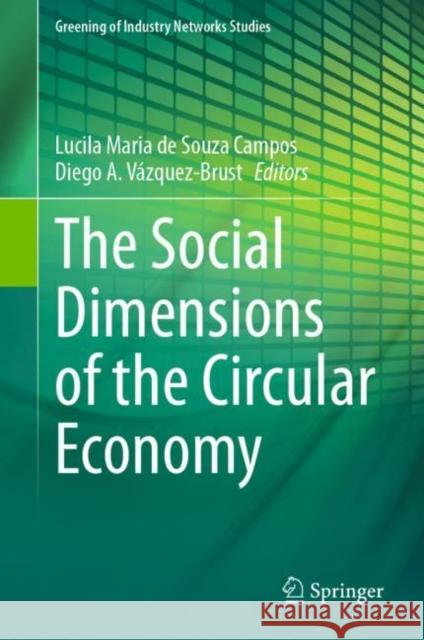
Lucila Maria de Souza Campos; Diego A. Vázquez-Brust
The Social Dimensions of the Circular Economy Lucila Maria d Diego A. V?zquez-Brust 9783031254352 Springer - książkaWidoczna okładka, to zdjęcie poglądowe, a rzeczywista szata graficzna może różnić się od prezentowanej.

The Social Dimensions of the Circular Economy

ISBN-13: 9783031254352 / Angielski

Lucila Maria de Souza Campos; Diego A. Vázquez-Brust
cena 564,88
(netto: 537,98 VAT:  5%)

Najniższa cena z 30 dni: 539,74
Termin realizacji zamówienia:
ok. 22 dni roboczych
Bez gwarancji dostawy przed świętami

Darmowa dostawa!
inne wydania

The main theme of this book is the social dimension of the circular economy (CE). This book’s objective is to provide a foundation for the discussion of social aspects of CE that also allows the integration of CE with the UN SDGs.The circular economy is increasingly becoming the consensual pathway for a transition towards sustainable production and consumption that balances the economic and ecological pillars of sustainable development. However, researchers have noted that the social dimension of sustainable development is noticeable missing or, at best, weakly developed in CE ideas and frameworks (Sehnem et al., 2019). The main argument of this book is that CE research and practice needs to embrace its social impacts, not only in terms of understanding and avoiding negative social impacts but also in terms of exploring the potential that CE models have for addressing social challenges.

The main theme of this book is the social dimension of the circular economy (CE). This book’s objective is to provide a foundation for the discussion of social aspects of CE that also allows the integration of CE with the UN SDGs. 


The circular economy is increasingly becoming the consensual pathway for a transition towards sustainable production and consumption that balances the economic and ecological pillars of sustainable development. However, researchers have noted that the social dimension of sustainable development is noticeable missing or, at best, weakly developed in CE ideas and frameworks (Sehnem et al., 2019). The main argument of this book is that CE research and practice needs to embrace its social impacts, not only in terms of understanding and avoiding negative social impacts but also in terms of exploring the potential that CE models have for addressing social challenges.

Kategorie:
Nauka, Polityka
Kategorie BISAC:
Science > Environmental Science (see also Chemistry - Environmental)
Business & Economics > Production & Operations Management
Technology & Engineering > Environmental - General
Wydawca:
Springer
Seria wydawnicza:
Greening of Industry Networks Studies
Język:
Angielski
ISBN-13:
9783031254352

Chapter 1. Introduction – Social Dimension of Circular Economy, step forward or step back?.- Chapter 2. A Systems Perspective on Social Indicators for Circular Supply Chains.- Chapter 3. The Relation Between Social Inclusion and Circular Economy Performance: An Analysis of Circular Economy Social Practices and Their Contributions to The Sustainable Development Goals.- Chapter 4. Business models supported by circular economy principles and practices for the fruit and vegetable sector: an analysis from the perspective of social inclusion of family farmers.- Chapter 5. Fighting Hunger and Educating Farmers with Regenerative Agriculture in Maputo’s Green Horticultural Belt.- Chapter 6. Partnerships for Transitions from Open-air Markets to Circular Smart Food Markets in Kenya.- Chapter 7. Implementation of urban organic waste collection and treatment system in a Brazilian municipality: an analysis based on a socio-technical transition theory.- Chapter 8. The significance of SDG 16 ‘Strong Institutions’ towards the adoption of circular economy approaches for artisanal and small-scale mining sector in sub-Saharan Africa.- Chapter 9. How effective are Circular Models at delivering a sustainable trifactor: a focus on social inclusion?.- Chapter 10. Dirty Work/Decent Work: (De)stigmatization of Sachet Water Plastic Waste Picking in Ghana’s Circular Economy.- Chapter 11. Improving Gender Equality with Social Entrepreneurship and Circular Economy: A Mexican Case.- Chapter 12. Strategies for social inclusion in Circular Economy.- Chapter 13. Circular Economy and Sustainable Development Goals 3 and 7: the case of the PlastiCity ecosystem.- Chapter 14. Wrap-Up: Equitable Circular Economy, nesting the social dimension in the Circular Economy.


Lucila M. de Souza Campos is an associate professor at the Department of Production Engineering, Universidade Federal de Santa Catarina, where she is currently responsible for the LGAA (Laboratório de Gestão e Avaliação Ambiental (Laboratory of Environmental Management and Evaluation)). She is a Bachelor's in Production Engineering (UFSCar) and also a Master's and PhD in Production Engineering (UFSC). She has been visiting professor at Royal Holloway University of London (UK), in the sustainability area (2015–2016). She has been a permanent professor of the Graduate Program in Production Engineering (PPGEP/UFSC) since 2010. She was the coordinator of PPGEP in the mandates 2013–2015 and 2017–2019. She is also the head of the Department of Production Engineering (2021–2022). She teaches and researches about Production Engineering, with an emphasis on operations management, environmental management, and sustainability. Her main research focuses are on environmental and social sustainability and circular economy. She has published more than 120 peer-reviewed outputs on related topics, including 3 edited books and 14 chapters book. Before her academic career, she worked as an Environment, Health and Safety Manager and in Environmental Management in companies in Brazil.

Diego Vázquez-Brust is a professor in Global Business Sustainability and Strategy and Sustainability Champion at the Faculty of Business and Law, University of Portsmouth, where he is currently organizing a Centre for Equitable Sustainability. Previously, he was director of the Centre for Research into Sustainability (CRIS) at Royal Holloway and senior researcher/research manager in the ESRC Center for Business Research, Accountability, Sustainability and Society (BRASS) at Cardiff University. He has been visiting professor at the University of Almeria (Spain), University of Sao Paulo and Federal University of Santa Catarina (Brazil), KEDGE Business School (France), Ghana Institute of Management and Public Administration (Ghana) and Saxion University (Netherlands). His research focuses on environmental and social sustainability and the impact of business activities in society. He has published more than 100 peer-reviewed outputs in related topics, including four edited books and a textbook, and has been a coordinator of the Greening of Industry Network since 2008. Before his academic career, he worked for the Inter-American Development Bank and the Ministry of Public Works in Argentina.

The main theme of this book is the social dimension of the circular economy (CE). This book’s objective is to provide a foundation for the discussion of social aspects of CE that also allows the integration of CE with the UN SDGs. 


The circular economy is increasingly becoming the consensual pathway for a transition towards sustainable production and consumption that balances the economic and ecological pillars of sustainable development. However, researchers have noted that the social dimension of sustainable development is noticeable missing or, at best, weakly developed in CE ideas and frameworks (Sehnem et al., 2019). The main argument of this book is that CE research and practice needs to embrace its social impacts, not only in terms of understanding and avoiding negative social impacts but also in terms of exploring the potential that CE models have for addressing social challenges.


Udostępnij

Facebook - konto krainaksiazek.pl


Opinie o Krainaksiazek.pl na Opineo.pl

Partner Mybenefit

Krainaksiazek.pl w programie rzetelna firma Krainaksiaze.pl - płatności przez paypal

Czytaj nas na:

Facebook - krainaksiazek.pl
  • książki na zamówienie
  • granty
  • książka na prezent
  • kontakt
  • pomoc
  • opinie
  • regulamin
  • polityka prywatności

Zobacz:

  • Księgarnia czeska

  • Wydawnictwo Książkowe Klimaty

1997-2025 DolnySlask.com Agencja Internetowa

© 1997-2022 krainaksiazek.pl
     
KONTAKT | REGULAMIN | POLITYKA PRYWATNOŚCI | USTAWIENIA PRYWATNOŚCI
Zobacz: Księgarnia Czeska | Wydawnictwo Książkowe Klimaty | Mapa strony | Lista autorów
KrainaKsiazek.PL - Księgarnia Internetowa

Polityka prywatnosci - link
Krainaksiazek.pl - płatnośc Przelewy24
Przechowalnia Przechowalnia





