• Wyszukiwanie zaawansowane
  • Kategorie
  • Kategorie BISAC
  • Książki na zamówienie
  • Promocje
  • Granty
  • Książka na prezent
  • Opinie
  • Pomoc
  • Załóż konto
  • Zaloguj się

The Sirex Woodwasp and Its Fungal Symbiont:: Research and Management of a Worldwide Invasive Pest » książka


zaloguj się | załóż konto
Logo Krainaksiazek.pl

koszyk

konto

szukaj
topmenu
Księgarnia internetowa
Szukaj
Książki na zamówienie
Promocje
Granty
Książka na prezent
Moje konto
Pomoc
 
 
Wyszukiwanie zaawansowane
Pusty koszyk
Bezpłatna dostawa dla zamówień powyżej 20 złBezpłatna dostawa dla zamówień powyżej 20 zł

Kategorie główne

• Nauka
 [2946912]
• Literatura piękna
 [1852311]

  więcej...
• Turystyka
 [71421]
• Informatyka
 [150889]
• Komiksy
 [35717]
• Encyklopedie
 [23177]
• Dziecięca
 [617324]
• Hobby
 [138808]
• AudioBooki
 [1671]
• Literatura faktu
 [228371]
• Muzyka CD
 [400]
• Słowniki
 [2841]
• Inne
 [445428]
• Kalendarze
 [1545]
• Podręczniki
 [166819]
• Poradniki
 [480180]
• Religia
 [510412]
• Czasopisma
 [525]
• Sport
 [61271]
• Sztuka
 [242929]
• CD, DVD, Video
 [3371]
• Technologie
 [219258]
• Zdrowie
 [100961]
• Książkowe Klimaty
 [124]
• Zabawki
 [2341]
• Puzzle, gry
 [3766]
• Literatura w języku ukraińskim
 [255]
• Art. papiernicze i szkolne
 [7810]
Kategorie szczegółowe BISAC

The Sirex Woodwasp and Its Fungal Symbiont:: Research and Management of a Worldwide Invasive Pest

ISBN-13: 9789400719590 / Angielski / Twarda / 2011 / 301 str.
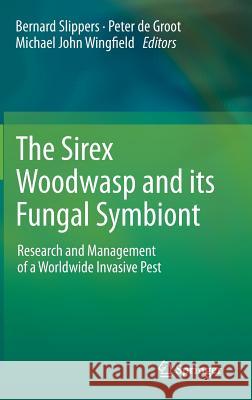
Bernard Slippers; De Groot Peter; Michael John Wingfield
The Sirex Woodwasp and Its Fungal Symbiont:: Research and Management of a Worldwide Invasive Pest Slippers, Bernard 9789400719590 Springer - książkaWidoczna okładka, to zdjęcie poglądowe, a rzeczywista szata graficzna może różnić się od prezentowanej.

The Sirex Woodwasp and Its Fungal Symbiont:: Research and Management of a Worldwide Invasive Pest

ISBN-13: 9789400719590 / Angielski / Twarda / 2011 / 301 str.

Bernard Slippers; De Groot Peter; Michael John Wingfield
cena 605,23
(netto: 576,41 VAT:  5%)

Najniższa cena z 30 dni: 578,30
Termin realizacji zamówienia:
ok. 22 dni roboczych
Bez gwarancji dostawy przed świętami

Darmowa dostawa!
inne wydania

The Sirex woodwasp, Sirex noctilio, is the most important invasive alien insect pest of Pinus plantations in the Southern Hemisphere. It now also threatens pines in North America. This book brings together the worldwide knowledge of researchers from Universities and Government institutions, as well as forest industry practitioners that have worked on the pest. Importantly, it is the first comprehensive treatment of the subject since S. noctilio was discovered outside its native range around 1900. The book covers all aspects of the biology and management of S. noctilio, including aspects of the insects taxonomy, general life history, host-plant relationships, population dynamics, chemical ecology and symbiosis with the fungus Amylostereum areolatum. The book also contains a comprehensive synthesis of the history and current status of the pest and worldwide efforts to control it, including biological control, silviculture and quarantine."


Kategorie:
Nauka, Biologia i przyroda
Kategorie BISAC:
Technology & Engineering > Agriculture - Forestry
Science > Biotechnology
Science > Life Sciences - Ecology
Wydawca:
Springer
Język:
Angielski
ISBN-13:
9789400719590
Rok wydania:
2011
Wydanie:
2012
Ilość stron:
301
Waga:
0.64 kg
Wymiary:
23.5 x 15.5
Oprawa:
Twarda
Wolumenów:
01
Dodatkowe informacje:
Bibliografia
Wydanie ilustrowane

Preface

Dedication

1.0 Sirex systematics; problems and solutions

Henri Goulet

1.1 Introduction

1.2 Important issues for solving identification problems

1.2.1 Ovipositor morphology

1.2.2 Mitochondrial DNA

1.2.3 Collections

1.3 Diversity and biogeographic coverage

1.4 Morphological characters used to recognize species

1.4.1 Ovipositor characters

1.4.2 Other characters

2.0 Life history and biology of Sirex noctilio

Kathleen Ryan and Brett P Hurley

2.1 Introduction

2.2 Insect-fungus complex

2.3 The life history of Sirex noctilio

2.4 Host selection and susceptibility

2.5 Host Records

2.6 Factors influencing population dynamics

2.6.1 Potential fecundity

2.6.2 Reproductive potential

2.6.3 Adult size

2.6.4 Sex-ratio

2.6.5 Natural enemies

2.7 Conclusions

3.0 Susceptibility and response of pines to Sirex noctilio

John M Bordeaux and Jeffrey FD Dean

3.1 Introduction

3.2 Factors contributing to tree susceptibility

3.3 Tree responses to Sirex noctilio mucus

3.4 Tree responses to Amylostereum areolatum

3.5 General responses to Sirex attack

3.6 Reducing tree susceptibility

4.0 The population dynamics of Sirex noctilio F.: the influence of diapause, spatial aggregation and flight potential on woodwasp outbreaks and spread

Juan C Corley and José M Villacide

4.1 Introduction

4.2 Pine plantations and Sirex noctilio in Patagonia

4.3 Life cycle and adult emergence patterns

4.4 Spatial dynamics of woodwasp populations at a stand scale

4.5 Flight potential of Sirex noctilio males and females

4.6 Conclusions

5.0 The woodwasp Sirex noctilio and its associated fungus Amylostereum areolatum in Europe

Beat Wermelinger and Iben M Thomsen

5.1 Introduction

5.2 Biology of Sirex noctilio

5.3 Natural enemies

5.4 Ecology of the Amylostereum fungal symbionts

5.5 Relationships between S. noctilio attack and host quality

5.6 Economic significance of S. noctilio in Europe

6.0 The genetics of Amylostereum species associated with Siricids

Magriet van der Nest, Rimvys Vasaitis, Jan Stenlid, Brenda D Wingfield, Michael J Wingfield and Bernard Slippers

6.1 Introduction

6.2 Systematics and identification

6.3 Symbiotic specificity

6.4 Mode of reproduction

6.5 Vegetative incompatibility and population diversity studies

6.6 Conclusions and future prospects

7.0 Siricid woodwasps and their fungal symbionts in Asia, specifically those occurring in Japan

Masanobu Tabata, Hiroaki Miyata and Kaoru Maeto

7.1 Introduction

7.2 Symbiosis between woodwasps and fungi

7.3 Molecular phylogeny of fungal symbionts

7.4 Life-cycle and host interaction of woodwasps

8.0 Parasitoids in the management of Sirex: Looking back and looking ahead

8.1 Introduction

8.2 Use of parasitoids as biological control agents

8.2.1 New Zealand and Australia

8.2.2 South America

8.2.3 South Africa

8.3 Conclusions

9.0 Factors affecting the efficacy of Deladenus siricidicola in biological control systems

Bernard Slippers, Brett P Hurley, X Osmond Mlonyeni, Peter de Groot and Michael J Wingfield

9.1 Introduction

9.2 Rearing, handling and storage

9.3 Evolution of nematode virulence and wasp resistance

9.4 Introduction history and genetic diversity

9.5 Interaction specificity – Amylostereum and Sirex

9.6 Variable environmental factors

9.7 Conclusions

10.0 Ecological considerations in using Deladenus siricidicola for the biological control of Sirex noctilio in North America

David W Williams, Kelley E Zylstra and Victor C Mastro

10.1 Introduction

10.2 Ecological factors in North America affecting the biological control program

10.2.1 Climate

10.2.2 The North American nematode

10.3 Possible effects of the biological control program on non-target pine insects in North America

10.3.1 North American Siricids as potential hosts

10.3.2 Questions on nontarget effects on North American siricids

10.4 Conclusions and future directions

11.0 The chemical ecology of Sirex noctilio

Damon J Crook, Katalin Böröczky, Kelley E Zylstra, Victor C Mastro and James H Tumlinson

11.1 Introduction

11.2 Sirex noctilio and stressed trees

11.3 Pine tree volatile composition of healthy and girdled trees

11.4 Electroantennogram (EAG) responses of S. noctilio

11.5 Recent lure trials based on GC and GC-EAD results

11.6 Antennal physiology

11.7 Pheromones

11.8 Conclusions

12.0 The use of kairomone lures for the detection of Sirex noctilio in susceptible Pinus radiata plantations in Australia

Richard Bashford and John L Madden

Introduction

12.1 Identification and testing of Pinus radiata stem volatiles

12.2 Development of a kairomone baited trap system in Tasmania

12.3 Integration of a static trap module into the current Australian NSCC working procedures for the control of Sirex noctilio

12.4 Conclusions

13.0 The Sirex woodwasp in New Zealand: History and current status

John Bain, Stephanie L Sopow and Lindsay S Bulman

13.1 Introduction

13.2 History of Sirex in New Zealand

13.3 Use of biological control agents

13.4 Pest status of Sirex noctilio in New Zealand 1980-2010

13.5 Conclusions

14.0 Sirex woodwasp in Australia: current management strategies, research and emerging issues

Angus J Carnegie and Richard Bashford

14.1 Introduction

14.2 Control and management

14.2.1 Australian Sirex biological control unit

14.2.2 Current operational management

14.3 Current issues and research

14.3.1 Reduced nematode parasitism of S. noctilio

14.3.2 Ips grandicollis attacking Sirex trap trees

14.3.3 Optimise timing of nematode inoculation of trap trees

14.3.4 Trap tree establishment techniques

14.3.5 Storage life of nematodes

14.3.6 Spread of Sirex into subtropical Australia

14.3.7 Future research

14.4 conclusions

15.0 The ecology and biological control of the woodwasp, Sirex noctilio, in Patagonia, Argentina

Paula Klasmer and Eduardo Botto

15.1 Introduction

15.2 Establishment, spread and distribution of Sirex noctilio in Argentina

15.3 Management strategies for Sirex noctilio in Patagonia

15.3.1 Monitoring

15.3.2 Biological control with parasitoids

15.3.3 Biological control with entomophagous nematodes

15.4 Summary and Conclusions

16.0 The woodwasp Sirex noctilio in Brazil: monitoring and control

Edson T Iede, Susete do R C Penteado and Wilson R Filho

16.1 Introduction

16.2 Biology and ecology of Sirex noctilio

16.3 The national program of woodwasp control in Brazil

16.3.1 Prevention strategies

16.3.2 Early detection and monitoring of S. noctilio

16.3.3 Biological control

16.3.4 Quarantine strategies

16.4 General recommendations

17.0 Surveillance and control of the Sirex woodwasp: The Chilean experience

Marcos Beèche, Dolly Lanfranco, Mario Zapata and Cecilia Ruiz

17.1 Introduction

17.2 Forest health in Chile

17.3 Sirex noctilio: a remarkable taxon

17.4 Surveillance of Sirex noctilio in Chile

17.4.1 Surveillance program methods

17.4.2 Distribution of Sirex noctilio in Chile

17.5 Control of Sirex noctilio in Chile

17.5.1 Quarantine control

17.5.2 Sanitation

17.5.3 Biological control

17.6 Summary and conclusions

18.0 The control of the Sirex woodwasp in diverse environments: The South African experience

Brett P Hurley, Philip Croft, Marcel Verleur, Michael J Wingfield and Bernard Slippers

18.1 Introduction

18.2 Pine forestry in South Africa

18.3 Introduction and spread of S. noctilio in South Africa

18.4 Efforts to control S. noctilio in South Africa

18.4.1 Biological control with parasitic nematodes

18.4.2 Biological control with parasitic wasps

18.4.3 Plantation management

18.4.4 Monitoring of Sirex noctilio

18.5 Conclusions

19.0 Sirex, surveys and management: Challenges of having Sirex noctilio in North America

Kevin J Dodds and Peter de Groot

19.1 Introduction

19.2 Detection in North America

19.2.1 Agencies involved in detection and delimitation efforts in Canada and the United States

19.2.2 Annual surveys

19.3 North American forests at risk

19.4 Survey challenges in North America

19.4.1 Logistical issues

19.4.2 Biological issues

19.5 Management challenges in North America

19.5.1 Silviculture

19.5.2 Biological control

19.6 Conclusions

20.0 Looking into the future of Sirex research and management

Bernard Slippers and Michael J Wingfield

20.1 Introduction

20.2 Questions relating to the natural history of Siricids and their symbionts

20.3 Continued risk and challenges facing management

20.4 New technologies and unexplored opportunities

Conclusions

The Sirex woodwasp, Sirex noctilio, is the most important invasive alien insect pest in Pinus plantations across the Southern Hemisphere, and it now threatens pines in North America. Sirex noctilio is native to Eurasia, where it causes little damage and is better known for its fascinating biology, including an obligate mutualism with the fungus Amylostereum areolatum. The wasp first appeared outside its native range around 1900 in New Zealand, and it has subsequently spread to Australia, South America and Africa. The pest continues to spread globally and this is vividly illustrated by its recent appearance in North America.

The genesis of the book was an International Sirex Symposium held in South Africa in May 2007. This symposium recognised the growing global threat from the woodwasp and the realization that a sustained research effort would be required to deal with it. This meeting succeeded remarkably in bringing together a diverse mosaic of government, industry and academic experience from many parts of the world. The shared experience emerging from the meeting, as well as the research and management work that has been undertaken subsequently, is captured in this book.

This book covers aspects of the insect’s taxonomy, life history, host-plant relationships, population dynamics and chemical ecology, as well as the nature of its obligate mutualistic relationship with the fungus Amylostereum, its distribution, diversity and biology. There is also a focus on the development and adaptation of biological control systems using various parasitic wasps and the nematode Deladenus siricidicola. Importantly, the book contains a complete synthesis of the history and current status of the pest as well as efforts to control it in the Southern Hemisphere and in North America. Overall, this book illustrates the need for a global community effort to combat the increasing threat of invasive alien pests andpathogens to the world’s forests.


Udostępnij

Facebook - konto krainaksiazek.pl


Opinie o Krainaksiazek.pl na Opineo.pl

Partner Mybenefit

Krainaksiazek.pl w programie rzetelna firma Krainaksiaze.pl - płatności przez paypal

Czytaj nas na:

Facebook - krainaksiazek.pl
  • książki na zamówienie
  • granty
  • książka na prezent
  • kontakt
  • pomoc
  • opinie
  • regulamin
  • polityka prywatności

Zobacz:

  • Księgarnia czeska

  • Wydawnictwo Książkowe Klimaty

1997-2025 DolnySlask.com Agencja Internetowa

© 1997-2022 krainaksiazek.pl
     
KONTAKT | REGULAMIN | POLITYKA PRYWATNOŚCI | USTAWIENIA PRYWATNOŚCI
Zobacz: Księgarnia Czeska | Wydawnictwo Książkowe Klimaty | Mapa strony | Lista autorów
KrainaKsiazek.PL - Księgarnia Internetowa

Polityka prywatnosci - link
Krainaksiazek.pl - płatnośc Przelewy24
Przechowalnia Przechowalnia






