• Wyszukiwanie zaawansowane
  • Kategorie
  • Kategorie BISAC
  • Książki na zamówienie
  • Promocje
  • Granty
  • Książka na prezent
  • Opinie
  • Pomoc
  • Załóż konto
  • Zaloguj się

The Sailing Mind » książka

zaloguj się | załóż konto
Logo Krainaksiazek.pl

koszyk

konto

szukaj
topmenu
Księgarnia internetowa
Szukaj
Książki na zamówienie
Promocje
Granty
Książka na prezent
Moje konto
Pomoc
 
 
Wyszukiwanie zaawansowane
Pusty koszyk
Bezpłatna dostawa dla zamówień powyżej 20 złBezpłatna dostawa dla zamówień powyżej 20 zł

Kategorie główne

• Nauka
 [2949965]
• Literatura piękna
 [1857847]

  więcej...
• Turystyka
 [70818]
• Informatyka
 [151303]
• Komiksy
 [35733]
• Encyklopedie
 [23180]
• Dziecięca
 [617748]
• Hobby
 [139972]
• AudioBooki
 [1650]
• Literatura faktu
 [228361]
• Muzyka CD
 [398]
• Słowniki
 [2862]
• Inne
 [444732]
• Kalendarze
 [1620]
• Podręczniki
 [167233]
• Poradniki
 [482388]
• Religia
 [509867]
• Czasopisma
 [533]
• Sport
 [61361]
• Sztuka
 [243125]
• CD, DVD, Video
 [3451]
• Technologie
 [219309]
• Zdrowie
 [101347]
• Książkowe Klimaty
 [123]
• Zabawki
 [2362]
• Puzzle, gry
 [3791]
• Literatura w języku ukraińskim
 [253]
• Art. papiernicze i szkolne
 [7933]
Kategorie szczegółowe BISAC

The Sailing Mind

ISBN-13: 9783030896416 / Angielski / Miękka / 2023
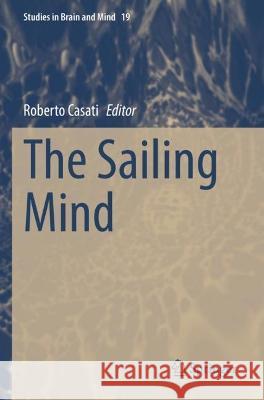
The Sailing Mind  9783030896416 Springer International Publishing - książkaWidoczna okładka, to zdjęcie poglądowe, a rzeczywista szata graficzna może różnić się od prezentowanej.

The Sailing Mind

ISBN-13: 9783030896416 / Angielski / Miękka / 2023

cena 524,53
(netto: 499,55 VAT:  5%)

Najniższa cena z 30 dni: 501,19
Termin realizacji zamówienia:
ok. 22 dni roboczych
Bez gwarancji dostawy przed świętami

Darmowa dostawa!
inne wydania

This book scrutinizes the practice of sailing and its relation to philosophy of mind. Sailing brings about a peculiar human-artifact interaction which can lead to unexplored research paths. The idea behind this collection is that this interaction is better scrutinized by sailor scientists/philosophers to open up new possible pathways in research. Fascinating theoretical breakthroughs have been provided by observing sailing practices with the most well-known being Hutchins’ introduction in cognitive science of the concept of “distributed cognition.” However, in times past, sailing has both fueled philosophical metaphors, from Theseus’ ship to Plato’s image of the intellect as the boatperson of the soul, and inspired philosophers’ views (as happened to Herder during a stormy sea trip). 

The ecology of sailing is highly constrained: sailboats move at the surface between a compressible fluid and an uncompressible fluid. Wind originates in certain specific circumstances. Only certain sequences of actions are possible to take advantage of this ecology. The ontology of sailing is both of the boat and of the ocean/wind system. It highlights the fact that sailboats have been for centuries arguably the most complex technological artifacts in each culture that developed them, precisely because the environment they are engaging is so peculiar and demanding - almost the precise dual of Sapiens’ adaptive environment.

This volume will appeal to philosophers of mind, cognitive psychologists, and marine professionals.


Kategorie:
Nauka, Filozofia
Wydawca:
Springer International Publishing
Seria wydawnicza:
Studies in Brain and Mind
Język:
Angielski
ISBN-13:
9783030896416
Rok wydania:
2023
Waga:
0.33 kg
Wymiary:
23.5 x 15.5
Oprawa:
Miękka
Dodatkowe informacje:
Wydanie ilustrowane

Chapter 1. Emboated Cognition and Sailing Expertise (Murat Aydede).- Chapter 2. Euromov Experiments with “Flying Carpet” Simulator (Benoit Bardy).- Chapter 3. Imagination and Representational Shortcuts (Roberto Casati).- Chapter 4. An Idea of the Sea or How to Get the Feel of Sailing. For an Antrhopology of Skill (Francesca Cozzolino).- Chapter 5. Engineering, Daydreaming, and Control (Daniel Dennett and Ophelia Deroy).- Chapter 6. Sailing: Gourmet Food for the Brain (Luciano Fadiga).- Chapter 7. The Science of Navigation—in Real and Academic Waters (Randy Gallistel).- Chapter 8. An Extension to the Boat of the Computations About Contact-Avoiding Interactions Between Body and External Objects (Giandomenico Iannetti).- Chapter 9. Sailing in Small Boats (David Papineau).- Chapter 10. Infinite Sailing (Massimo Piattelli-Palmarini).- Chapter 11. Thinking on a Sailboat (William Sharpe).- Chapter 12. Sailing, Flow, and Happiness (Christine Tappolet).- Chapter 13. Communicating the Space of Sailing (Thora Tenbrink).

Roberto Casati, director of the Jean Nicod Institute of ENS in Paris, one of the leading research centers in cognitive science, works currently on spatial disorientation and on cognitive tools for remediating or preventing it. He is the author of 120 research papers and book chapters on perception, spatial representation and the use of maps and images, as well as of ten books, some of which have been translated in many languages. His seminal work on Digital Colonialism has spurred a large debate on the use of technology in schools. An dedicated sailor, his latest achievement is a transatlantic crossing on Albatros, a Challenge 67 monohull, as a crew member and on board researcher.  His latest book project is Ocean: a Philosopher’s Journey.

This book scrutinizes the practice of sailing and its relation to philosophy of mind. Sailing brings about a peculiar human-artifact interaction which can lead to unexplored research paths. The idea behind this collection is that this interaction is better scrutinized by sailor scientists/philosophers to open up new possible pathways in research. Fascinating theoretical breakthroughs have been provided by observing sailing practices with the most well-known being Hutchins’ introduction in cognitive science of the concept of “distributed cognition.” However, in times past, sailing has both fueled philosophical metaphors, from Theseus’ ship to Plato’s image of the intellect as the boatperson of the soul, and inspired philosophers’ views (as happened to Herder during a stormy sea trip). 

The ecology of sailing is highly constrained: sailboats move at the surface between a compressible fluid and an uncompressible fluid. Wind originates in certain specific circumstances. Only certain sequences of actions are possible to take advantage of this ecology. The ontology of sailing is both of the boat and of the ocean/wind system. It highlights the fact that sailboats have been for centuries arguably the most complex technological artifacts in each culture that developed them, precisely because the environment they are engaging is so peculiar and demanding - almost the precise dual of Sapiens’ adaptive environment.

This volume will appeal to philosophers of mind, cognitive psychologists, and marine professionals.




Udostępnij

Facebook - konto krainaksiazek.pl


Opinie o Krainaksiazek.pl na Opineo.pl

Partner Mybenefit

Krainaksiazek.pl w programie rzetelna firma Krainaksiaze.pl - płatności przez paypal

Czytaj nas na:

Facebook - krainaksiazek.pl
  • książki na zamówienie
  • granty
  • książka na prezent
  • kontakt
  • pomoc
  • opinie
  • regulamin
  • polityka prywatności

Zobacz:

  • Księgarnia czeska

  • Wydawnictwo Książkowe Klimaty

1997-2025 DolnySlask.com Agencja Internetowa

© 1997-2022 krainaksiazek.pl
     
KONTAKT | REGULAMIN | POLITYKA PRYWATNOŚCI | USTAWIENIA PRYWATNOŚCI
Zobacz: Księgarnia Czeska | Wydawnictwo Książkowe Klimaty | Mapa strony | Lista autorów
KrainaKsiazek.PL - Księgarnia Internetowa

Polityka prywatnosci - link
Krainaksiazek.pl - płatnośc Przelewy24
Przechowalnia Przechowalnia





