• Wyszukiwanie zaawansowane
  • Kategorie
  • Kategorie BISAC
  • Książki na zamówienie
  • Promocje
  • Granty
  • Książka na prezent
  • Opinie
  • Pomoc
  • Załóż konto
  • Zaloguj się

The Saffron Genome » książka


zaloguj się | załóż konto
Logo Krainaksiazek.pl

koszyk

konto

szukaj
topmenu
Księgarnia internetowa
Szukaj
Książki na zamówienie
Promocje
Granty
Książka na prezent
Moje konto
Pomoc
 
 
Wyszukiwanie zaawansowane
Pusty koszyk
Bezpłatna dostawa dla zamówień powyżej 20 złBezpłatna dostawa dla zamówień powyżej 20 zł

Kategorie główne

• Nauka
 [2949965]
• Literatura piękna
 [1857847]

  więcej...
• Turystyka
 [70818]
• Informatyka
 [151303]
• Komiksy
 [35733]
• Encyklopedie
 [23180]
• Dziecięca
 [617748]
• Hobby
 [139972]
• AudioBooki
 [1650]
• Literatura faktu
 [228361]
• Muzyka CD
 [398]
• Słowniki
 [2862]
• Inne
 [444732]
• Kalendarze
 [1620]
• Podręczniki
 [167233]
• Poradniki
 [482388]
• Religia
 [509867]
• Czasopisma
 [533]
• Sport
 [61361]
• Sztuka
 [243125]
• CD, DVD, Video
 [3451]
• Technologie
 [219309]
• Zdrowie
 [101347]
• Książkowe Klimaty
 [123]
• Zabawki
 [2362]
• Puzzle, gry
 [3791]
• Literatura w języku ukraińskim
 [253]
• Art. papiernicze i szkolne
 [7933]
Kategorie szczegółowe BISAC

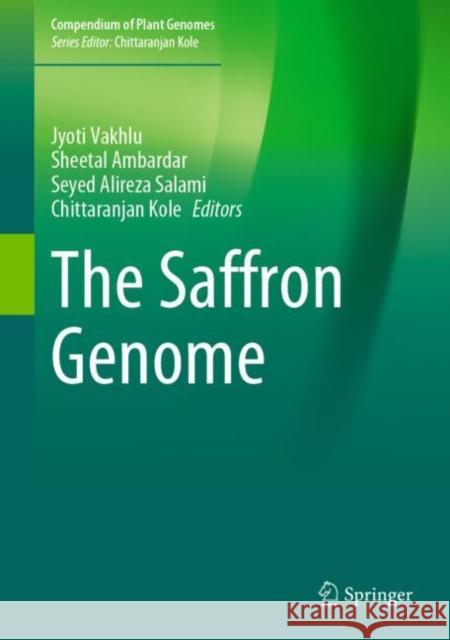
The Saffron Genome

ISBN-13: 9783031099991 / Angielski / Twarda / 2022 / 300 str.
Jyoti Vakhlu; Sheetal Ambardar; Seyed Alireza Salami
The Saffron Genome Jyoti Vakhlu Sheetal Ambardar Seyed Alireza Salami 9783031099991 Springer - książkaWidoczna okładka, to zdjęcie poglądowe, a rzeczywista szata graficzna może różnić się od prezentowanej.

The Saffron Genome

ISBN-13: 9783031099991 / Angielski / Twarda / 2022 / 300 str.

Jyoti Vakhlu; Sheetal Ambardar; Seyed Alireza Salami
cena 887,69 zł
(netto: 845,42 VAT:  5%)

Najniższa cena z 30 dni: 848,19 zł
Termin realizacji zamówienia:
ok. 22 dni roboczych
Bez gwarancji dostawy przed świętami

Darmowa dostawa!
inne wydania

This book is about Saffron (Crocus sativusL.) that is the most expensive spice in the world. Though there are other books on saffron but none of them has comprehensive information on saffron genome, transcriptome, proteome, metabolome and microbiome. The book has been divided into five sections and 17 chapters that cover all the areas related to its cultivation, market & economy, genomics, transcriptomics, proteomics, metabolomics, tissue culture, microbiomics, metagenomics etc. In addition a chapter on molecular markers and their use in molecular genetic mapping in saffron that lacks genetic diversity as a sterile plant paves a way for selection of elite varieties based on the epigenetic variability. A section on in-vitro propagation elaborates on the corm production under controlled conditions. In summary this book encompasses most of the information available on this golden spice


This book is about Saffron (Crocus sativus L.) that is the most expensive spice in the world. Though there are other books on saffron but none of them has comprehensive information on saffron genome, transcriptome, proteome, metabolome and microbiome. The book has been divided into five sections and 17 chapters that cover all the areas related to its cultivation, market & economy, genomics, transcriptomics, proteomics, metabolomics, tissue culture, microbiomics, metagenomics etc. In addition a chapter on molecular markers and their use in molecular genetic mapping in saffron that lacks genetic diversity as a sterile plant paves a way for selection of elite varieties based on the epigenetic variability. A section on in-vitro propagation elaborates on the corm production under controlled conditions. In summary this book encompasses most of the information available on this golden spice

Kategorie:
Nauka, Biologia i przyroda
Kategorie BISAC:
Science > Botanika
Science > Life Sciences - Genetics & Genomics
Science > Biotechnology
Wydawca:
Springer
Seria wydawnicza:
Compendium of Plant Genomes
Język:
Angielski
ISBN-13:
9783031099991
Rok wydania:
2022
Dostępne języki:
Numer serii:
000763599
Ilość stron:
300
Waga:
0.77 kg
Wymiary:
25.4 x 17.78 x 1.91
Oprawa:
Twarda
Dodatkowe informacje:
Wydanie ilustrowane

Part I

1              Saffron (Crocus sa-tivus): A 360 degree overview               Ritika Mansotra and Jyoti Vakhlu*            School of Biotechnology, University of Jammu, Jammu and Kashmir 560065               jyotivakhlu@jammuuniversity.ac.in         41

Part II: Omics studies on Saffron

2              Reference genome of Saffron “The Golden condiment”  1Sheetal Ambardar*, 2Jyoti Vakhlu and 1R. Sowdhamini*    1National Centre for Biological Sci-ences (NCBS), GKVK post, Benga-luru 560065

2School of Biotechnology, University of Jammu, Jammu and Kashmir 560065

                sheetalambardar@gmail.com

21

3              Saffron OMICS: Novel approaches towards put-ting data at work Seyed Alireza Sala-mi*  and 1Amjad M. Husaini Department of Horticultural Scienc-es, Faculty of Agricultural Science and Technology, University of Teh-ran, Iran        asalami@ut.ac.ir

42

4              Bioinformatics for saf-fron-omics and crop im-provement             1Syed Anam ul Haq, 2Seyed Alireza Sala-mi and 1Amjad M. Husaini*               1Genome Engineering and Societal Biotechnology Lab, Division of Plant Biotechnology, Sher-e-Kashmir Uni-versity of Agricultural Sciences and Technology of Kashmir, Shalimar Campus, Srinagar, 190025, Jammu and Kashmir, India

2Department of Horticultural Sci-ence, Faculty of Engineering and Ag-ricultural Science, University of Teh-ran, Iran                amjadhusaini@yahoo.com, amja-dhusaini@skuastkashmir.ac.in 48

5              Genetic mapping and molecular markers in Saffron          Seyed Alireza Sala-mi* and Amjad M. Husaini                Department of Horticultural Scienc-es, Faculty of Agricultural Science and Technology, University of Teh-ran, Iran        asalami@ut.ac.ir

22

Part III: Microbiomics

6              Soil Classification, Nutri-ent Management and Land Cover of Saffron Growing Areas of Kashmir Valley                1Nayar Afaq Kirmani, 1J. A. Sofi, 2M. H. Chesti, 3Ikhlaq A. Mir, 4Insha Irshad, 4Suheeba Fayaz and 4Waseema Jan         1Division of Soil Sciences, Faculty of Horticulture, 2Faculty of Agriculture, Wadoora, Sopore, SKUAST-K, Shalimar, Kashmir, India, 3Centre for Climate Change and Mountain Agri-culture, Division of Environmental Science, FOH, SKUAST-K, 4Division of Soil Sciences, Faculty of Horticul-ture and, SKUAST-K, Shalimar, Kashmir, India                nakimani@skuastkashmir.ac.in  19

7              Cultromic and metabar-codic insights into saf-fron-microbiome associ-ations       Nancy Bhagat1#, Riti-ka Mansotra1#, Sheetal Ambardar1,2, Jyoti Vakhlu1*            School of Biotechnology, University of Jammu, Jammu and Kashmir 180006

2National Centre for Biological Sci-ences (NCBS), GKVK post, Benga-luru 560065  jyotivakhlu@jammuuniversity.ac.in,

sheetalambardar@gmail.com

36

8              Saffron, bacteria and Mycorrhiza               Mitra Aelaei and Fahimeh Salehi                Department of Horticulture, Faculty of Agriculture, University of Zanjan, Zanjan, Iran maelaei@znu.ac.ir           23

9              Diversity analysis and bioprospection of fungal endophytes of Crocus sativus.      Zahoor Ahmed Wani                Department of Botony

Government Degree College Kisht-war   zawani1986@gmail.com

19

10           Epidemiology of corm rot of saffron        1Vishal Gupta, 2V.K.Razdan  and Satish Kumar Shar-ma  1Biocontrol Laboratory, Advanced Centre for Horticulture Research, SKUAST-Jammu, Udheywalla, 1800018;

2 Division of Plant Pathology, Faculty of Agriculture, SKUAST-Jammu, Chatha, 1800009

3Regional Horticulture Research Sub-Station, Sher-e-Kashmir Univer-sity of Agricultural

Sciences & Technology of Jammu, Bhaderwah    vishal94gupta@rediffmail.com,

princesatish1@gmail.com,

vijayrazdan@gmail.com

24

11           Pathogenicity and genet-ic diversity of microbes of Crocus sativus L. and the various strategies combating diseases               Rythem Anand, Pooja Sharma  and Madhulika Bhagat*   School of Biotechnology

University of Jammu

Jammu-6, Jammu and Kashmir

India      madhulikasbt@gmail.com

24

Part IV: In-vitro micropropagation in Saffron

12           Tissue culture tech-niques for Saffron im-provement       Seyed Alireza Salami       Department of Horticultural Scienc-es, Faculty of Agricultural Science and Technology, University of Teh-ran, Iran        asalami@ut.ac.ir

35

13           Saffron production under control condition          Shirin Moradi     College of Agricultural Science and Technology, University of Tehran, Iran    shirinmoradi@ut.ac.ir

shirinmoradi88@gmail.com

24

Part V: Saffron Metabolomics

14           Saffron: Metabolomics and quality points of view              Mitra Aelaei and Fahimeh Salehi                Department of Horticulture, Faculty of Agriculture, University of Zanjan, Zanjan, Iran  maelaei@znu.ac.ir           24

15           Saffron in phytotherapy : Pharmocological proper-ties and medicinal uses             Laila Sbabou       Laboratoire de Microbiologie et de Biologie Moléculaire Faculté des Sci-ences, Av Ibn Batouta BP 1014, Uni-versitéMohammed V - Agdal - Rabat – MAROC (GSM) 0661 81 4001        lailasbabou@gmail.com 26

Part VI: Saffron Market, trade and Production

16           Economic Aspects of Saffron in the world              Alireza Karbasi and Bahareh Zandi Dareh Gharibi                1Department of Agricultural Eco-nomics, Faculty of Agriculture, Fer-dowsi University of Mashhad, Mash-had, Iran                arkarbasi2002@yahoo.com

20

17           Marketing prospects for Saffron in domestic market: the case of Mo-roccan PDO “Saffron of Taliouine"                Fatima Lambarraa-Lehnhardt 1,2 and Assem Lmouden3 1 Farm Economics and Ecosystem Services Group, Leibniz Centre for Agricultural Landscape Research (ZALF), Müncheberg, Germany, 2 CRC-PEG, University of Göttingen, Germany, 3United Nations Develop-ment Programme (UNDP), Morocco                fatima.lehnhardt@zalf.de            16

                Subject Index                                                   

 Prof. Jyoti Vakhlu, the former director School of Biotechnology, University of Jammu, India, has 22 years of teaching and research experience. She has been teaching courses based on molecular biology, recombinant DNA technology, genomics and metagenomics to Master’s, M.Phil., and doctoral students in the University of Jammu that includes theory as well as practical courses. She has published about 50 research papers in reputed scientific journals. She has been able to generate extra mural research funding from national and international agencies such as DBT, DST, ICAR, UGC, NMPB, DAAD, Germany, ICGEB, Italy, India–Sri Lanka research foundation, and WTZ-OEAD, Austria. Prof Vakhlu’s group is involved in unravelling the cultivation-dependent and cultivation-independent microbial diversity in extreme environment soil from north-western Himalayas, healing clay of Chamlyal and saffron, Crocus sativus L. by using molecular tools. 

Dr. Sheetal Ambardar, Assistant Professor at School of Biotechnology, University of Jammu, is a promising young researcher with an experience in genomics, transcriptomics, microbiomics, next generation sequencing (NGS) technology, and bioinformatics analysis. She has been working in this area for the m last 14 years. She is involved in teaching Microbiology, Biotechnology and Bioinformatics to postgraduate and Ph.D students of the School. Previously, she was working as a DST women scientist-A at National Center for Biological Sciences (NCBS), Bengaluru. She has pioneered the research on saffron microbe/microbiome interaction. A distinction holder throughout her academic carrier and gold medallist in her Masters in microbiology, Dr. Ambardar has qualified most of the national level fellowships in India for research, such as DST Women Scientist Award, DST,(2018), National Postdoctoral Fellowship (N-PDF), SERB, DST,(2016), UGC-MKU-NRCBS Visiting Fellowship (2011), INSPIRE-AORC Fellowships in Microbiology, DST, (2010), and NET CSIR-JRF  (2007, 2009). She has also published her research work in more than 21 research papers in international journals including 5 book chapters and edited a book on Neem entitled “The Neem Genome”. 

Dr. Seyed Alireza Salami has about two decades of experience in bioscience, molecular genetics, and bioinformatics. He is currently CEO and the R&D manager of a start-up biotechnology company (OMICS) in Iran which led many projects on next generation sequencing and database technology, CRISPR-Cas editing technology, and recombinant proteins.

Dr. Salami received his Ph.D. in Biotechnology and Molecular Genetics on "Genetics of Host-Pathogen Interactions". His interest in medicinal plants and pharmaceutical industry led him to start two mega projects on medicinal herbs mainly cannabis (CannOMICS) and saffron (CrocOMICS) since 2010 towards putting valuable natural metabolites in food and health baskets.

He is collaborating with numerous university and research centers around the world which led to generate several research funding. He is a reviewer of several scientific journals and is the author and the co-author of more than 60 scientific papers in reputed scientific journals. He is the owner of MedCannaBase.org and SaffronOmics.com which aim to gather all cannabis and Crocus experts together as a Union. He is also a member of Organization of Saffron Exporting Countries (OSEC), head of Industrial and Medical Cannabis Research Institute (IMCRI), member of Iranian Society for Horticultural Science (irSHS), and Dean of Biotechnology and Genetic Resources branch of irSHS.

Prof. Chittaranjan Kole is an internationally reputed scientist with an illustrious professional career spanning over thirty-eight years and original contributions in the fields of plant genomics and biotechnology leading to the publication of more than 150 research articles in globally leading journals. He has edited over 170 books for the leading publishers of the world including Springer Nature, Wiley-Blackwell and Taylor & Francis Group. His works and editing acumen have been appreciated by seven Nobel Laureates including Profs. Norman Borlaug, Arthur Kornberg, Werner Arber, Phillip Sharp, Günter Blobel, Lee Hartwell and Roger Kornberg. Previously he was a Visiting Professor in The Pennsylvania State University and Clemson University. He also served as the Vice-Chancellor of the BC Agricultural University in India. Currently, he is acting as the Chief Advisor of The Neotia University in India and Chairman of the Prof. Chittaranjan Kole Foundation for Science and Society. He is also the President of the International Climate-Resilient Crop Genomics Consortium (ICRCGC), International Phytomedomics and Nutriomics Consortium (IPNC) and Genome India International (GII).

This book is about Saffron (Crocus sativus L.) that is the most expensive spice in the world. Though there are other books on saffron but none of them has comprehensive information on saffron genome, transcriptome, proteome, metabolome and microbiome. The book has been divided into five sections and 17 chapters that cover all the areas related to its cultivation, market & economy, genomics, transcriptomics, proteomics, metabolomics, tissue culture, microbiomics, metagenomics etc. In addition a chapter on molecular markers and their use in molecular genetic mapping in saffron that lacks genetic diversity as a sterile plant paves a way for selection of elite varieties based on the epigenetic variability. A section on in-vitro propagation elaborates on the corm production under controlled conditions. In summary this book encompasses most of the information available on this golden spice




Udostępnij

Facebook - konto krainaksiazek.pl


Opinie o Krainaksiazek.pl na Opineo.pl

Partner Mybenefit

Krainaksiazek.pl w programie rzetelna firma Krainaksiaze.pl - płatności przez paypal

Czytaj nas na:

Facebook - krainaksiazek.pl
  • książki na zamówienie
  • granty
  • książka na prezent
  • kontakt
  • pomoc
  • opinie
  • regulamin
  • polityka prywatności

Zobacz:

  • Księgarnia czeska

  • Wydawnictwo Książkowe Klimaty

1997-2025 DolnySlask.com Agencja Internetowa

© 1997-2022 krainaksiazek.pl
     
KONTAKT | REGULAMIN | POLITYKA PRYWATNOŚCI | USTAWIENIA PRYWATNOŚCI
Zobacz: Księgarnia Czeska | Wydawnictwo Książkowe Klimaty | Mapa strony | Lista autorów
KrainaKsiazek.PL - Księgarnia Internetowa

Polityka prywatnosci - link
Krainaksiazek.pl - płatnośc Przelewy24
Przechowalnia Przechowalnia




