• Wyszukiwanie zaawansowane
  • Kategorie
  • Kategorie BISAC
  • Książki na zamówienie
  • Promocje
  • Granty
  • Książka na prezent
  • Opinie
  • Pomoc
  • Załóż konto
  • Zaloguj się

The Roots of the Recovery Movement in Psychiatry: Lessons Learned » książka


zaloguj się | załóż konto
Logo Krainaksiazek.pl

koszyk

konto

szukaj
topmenu
Księgarnia internetowa
Szukaj
Książki na zamówienie
Promocje
Granty
Książka na prezent
Moje konto
Pomoc
 
 
Wyszukiwanie zaawansowane
Pusty koszyk
Bezpłatna dostawa dla zamówień powyżej 20 złBezpłatna dostawa dla zamówień powyżej 20 zł

Kategorie główne

• Nauka
 [2952079]
• Literatura piękna
 [1850969]

  więcej...
• Turystyka
 [71058]
• Informatyka
 [151066]
• Komiksy
 [35579]
• Encyklopedie
 [23181]
• Dziecięca
 [620496]
• Hobby
 [139036]
• AudioBooki
 [1646]
• Literatura faktu
 [228729]
• Muzyka CD
 [379]
• Słowniki
 [2932]
• Inne
 [445708]
• Kalendarze
 [1409]
• Podręczniki
 [164793]
• Poradniki
 [480107]
• Religia
 [510956]
• Czasopisma
 [511]
• Sport
 [61267]
• Sztuka
 [243299]
• CD, DVD, Video
 [3411]
• Technologie
 [219640]
• Zdrowie
 [100984]
• Książkowe Klimaty
 [124]
• Zabawki
 [2281]
• Puzzle, gry
 [3363]
• Literatura w języku ukraińskim
 [258]
• Art. papiernicze i szkolne
 [8020]
Kategorie szczegółowe BISAC

The Roots of the Recovery Movement in Psychiatry: Lessons Learned

ISBN-13: 9780470777633 / Angielski / Twarda / 2010 / 296 str.
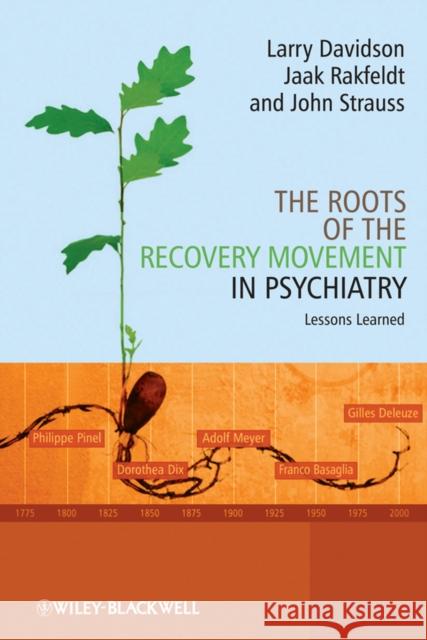
Davidson
The Roots of the Recovery Movement in Psychiatry: Lessons Learned Davidson, Larry 9780470777633  - książkaWidoczna okładka, to zdjęcie poglądowe, a rzeczywista szata graficzna może różnić się od prezentowanej.

The Roots of the Recovery Movement in Psychiatry: Lessons Learned

ISBN-13: 9780470777633 / Angielski / Twarda / 2010 / 296 str.

Davidson
cena 399,74
(netto: 380,70 VAT:  5%)

Najniższa cena z 30 dni: 395,65
Termin realizacji zamówienia:
ok. 30 dni roboczych
Dostawa w 2026 r.

Darmowa dostawa!

As the global psychiatric community enters a new era of transformation, this book explores lessons learned from previous efforts with the goal of "getting it right" this time. In response to the common refrain that we know about and 'do' recovery already, the authors set the recovery movement within the conceptual framework of major thinkers and achievers in the history of psychiatry, such as Philippe Pinel, Dorothea Dix, Adolf Meyer, Harry Stack Sullivan, and Franco Basaglia. The book reaches beyond the usual boundaries of psychiatry to incorporate lessons from related fields, such as psychology, sociology, social welfare, philosophy, political economic theory, and civil rights. From Jane Addams and the Settlement House movement to Martin Luther King, Jr., and Gilles Deleuze, this book identifies the less well-known and less visible dimensions of the recovery concept and movement that underlie concrete clinical practice. In addition, the authors highlight the limitations of previous efforts to reform and transform mental health practice, such as the de-institutionalization movement begun in the 1950s, in the hope that the field will not have to repeat these same mistakes. Their thoughtful analysis and valuable advice will benefit people in recovery, their loved ones, the practitioners who serve them, and society at large. Foreword by Fred Frese, Founder of the Community and State Hospital Section of the American Psychological Association and past president of the National Mental Health Consumers' Association


Kategorie:
Nauka, Medycyna
Kategorie BISAC:
Medical > Psychiatria
Psychology > Psychopathology - General
Język:
Angielski
ISBN-13:
9780470777633
Rok wydania:
2010
Ilość stron:
296
Waga:
0.65 kg
Wymiary:
24.89 x 17.27 x 2.03
Oprawa:
Twarda
Wolumenów:
01
Dodatkowe informacje:
Bibliografia

"Overall, this book would be useful for students and practitioners who are familiar with the literature on recovery." (Mental Health Practice, 1 November 2011)

"This is an important contribution from international leads, which offers the reader interested in recovery an awareness of its substantial ethical and political foundations and the need to sustain a civil rights perspective." (British Journal of Psychiatry, 2011)

"Just as Tuke and the late 18th century reformers were bold in their vision of moral treatment, we need to be bold about recovery. Davidson et al. provide some of the conceptual and political framework for that vision, and it is these aspects of their book that will help practitioners build recovery focused mental health services." (Metapsychology, February 2011)"This book should be required reading for any young professional entering the mental health field. Education in the history of the development of applied psychology will often give the reader a self–satisfied glow. We know so much more now than in the days of insulin shock therapy, hydrotherapy, and psychoanalysis. The Roots of the Recovery Movement in Psychiatry: Lessons Learned drives home the point that we can learn as much from the successes of our predecessors as we can from their mistakes". (American Psychological Association, 17 November 2010)

"This book is a wonderful contribution to the literature attempting to untangle the web of what recovery truly means to individuals and how care can continue to evolve to meet the fundamental rights of human beings with serious mental illnesses." (Psychiatric Rehabilitation Journal, Summer 2010)"However the book is not limited to the study of psychiatry– it illustrates how psychiatry has been influenced by other disciplines such as philosophy, sociology, psychology, political theory, and civil rights.  This is the major strength of this book." (British Journal of Wellbeing, September 2010)

Foreword

Acknowledgements

1 Introduction

1.1 What is the recovery movement in psychiatry?

1.2 Rationale for the book

1.3 From traitement moral to moral treatment

1.4 Reciprocity in community–based care

1.5 The everyday and interpersonal context of recovery

1.6 Closing the hospital

1.7 The rights and responsibilities of citizenship

1.8 Agency as a basis for transformation

1.9 Why these figures and not others?

1.10 Conclusion

2 FromTraitement Moral to Moral Treatment

2.1 The birth of psychiatry as a medical speciality

2.2 Philippe Pinel and Jean–Baptise Pussin

2.3 Traitement moral

2.4 Pinel s psychological interventions

2.5 The Retreat at York

2.6 Moral treatment or moral management?

2.7 From treatment to education

2.8 Re–shaping character

2.9 The demise of moral treatment

2.10 Summary of lessons learned

3 Reciprocity in Community–based Care

3.1 The advocacy of dorothea dix

3.2 The legacy of dorothea dix

3.3 Jane Addams community alternative

3.4 A series of unfortunate, but influential, events

3.5 The founding of the first american settlement

3.6 Forty years at hull–house

3.7 Distilling the active ingredients

3.8 Interventions with individuals

3.9 Interventions with collectives

3.10 Applications to mental health

3.11 Summary of lessons learned

4 The Everyday and Interpersonal Context of Recovery

4.1 The birth of psychiatry as a community–based practice

4.2 Beyond the illness paradigm (by John Strauss, part 1)

4.3 Growing up inside meyer s common sense psychiatry (by John Strauss, part 2)

4.4 Subjectivity and the person (by John Strauss, part 3)

4.5 Blending science and art in a human science (by John Strauss, part 4)

4.6 From a psychiatry based in death to a psychiatry based in life

4.7 Problems in everyday living and their resolution

4.8 Opportunity and occupation

4.9 The interpersonal context of recovery

4.10 Summary of lessons learned

5 Closing the Hospital

5.1 The failure of the asylum

5.2 Erving Goffman and the presentation of self

5.3 The hospital as total institution

5.4 Franco Basaglia and the Italian mental health reform movement

5.5 De–institutionalization the Italian way

5.6 Bracketing the illness

5.7 Freedom is therapeutic

5.8 Avoiding the re–creation of the asylum in the community

5.9 Social inclusion

5.10 Summary of lessons learned

6 The Rights and Responsibilities of Citizenship

6.1 Recovery as a civil rights movement

6.2 The incomplete world of Martin Luther King, Jnr

6.3 Can rights be given?

6.4 Recovery delayed is recovery denied

6.5 Colour blindness and capitalism

6.6 The complete subject of Gilles Deleuze

6.7 Oedipus and anti–oedipus

6.8 Schizophrenic speech and Watergate

6.9 Community inclusion vs community integration

6.10 Summary of lessons learned

7 Agency as the Basis for Transformation

7.1 The need for a new conceptual framework

7.2 Beyond de–institutionalization and community tenure

7.3 Rights and recovery

7.4 The capabilities approach of Amartya Sen

7.5 Applying a capabilities approach to the work of transformation

7.6 Human agency and mediation: the work of Lev Vygotsky

7.7 Action theory, the zone of proximal development and scaffolding

7.8 Applying activity analysis: the case of fossilized behaviour

7.9 Applying activity analysis: using the zone of proximal development

7.10 Summary of lessons learned

8 Conclusion

References

Index

Larry Davidson is Associate Professor of psychiatry at the Connecticut Mental Health Center at Yale. His patient–oriented research includes recovery from serious mental illness, the development of qualitative and participatory research methods, community–based treatment of psychosis, the development and evaluation of innovative psycho–social interventions, and the promotion of collaborative relationships between people with serious mental illness and their healthcare providers. He received the President′s Award, United States Psychosocial Rehabilitation Association, New York Chapter, in 2007 and the Franco Basaglia Memorial Scholarship, Fondazione Basaglia, Rome, Italy, in 2008.

Jaak Rakfeldt is Professor of Social Work at the Southern Connecticut State University in New Haven, CT, USA.

John Strauss is Emeritus Professor of Psychiatry the Department of Psychiatry at Yale University in New Haven, CT, USA.

As the global psychiatric community enters a new era of transformation, this book explores lessons learned from previous efforts with the goal of "getting it right" this time. In response to the common refrain that we know about and ′do′ recovery already, the authors set the recovery movement within the conceptual framework of major thinkers and achievers in the history of psychiatry, such as Philippe Pinel, Dorothea Dix, Adolf Meyer, Harry Stack Sullivan, and Franco Basaglia.

The book reaches beyond the usual boundaries of psychiatry to incorporate lessons from related fields, such as psychology, sociology, social welfare, philosophy, political economic theory, and civil rights. From Jane Addams and the Settlement House movement to Martin Luther King, Jr., and Gilles Deleuze, this book identifies the less well–known and less visible dimensions of the recovery concept and movement that underlie concrete clinical practice.

In addition, the authors highlight the limitations of previous efforts to reform and transform mental health practice, such as the de–institutionalization movement begun in the 1950s, in the hope that the field will not have to repeat these same mistakes. Their thoughtful analysis and valuable advice will benefit people in recovery, their loved ones, the practitioners who serve them, and society at large.

Foreword by Fred Frese, Founder of the Community and State Hospital Section of the American Psychological Association and past president of the National Mental Health Consumers′ Association

"This well–written, interesting volume should serve to provide significant edification and enlightenment to anyone desirous of a better grounding in how we have arrived at these relatively halcyon days of transforming our approach to persons with serious mental illness from one focusing primarily on care to one where the primary goal is that of recovery" (see Excerpt above for full Foreword).


Udostępnij

Facebook - konto krainaksiazek.pl


Opinie o Krainaksiazek.pl na Opineo.pl

Partner Mybenefit

Krainaksiazek.pl w programie rzetelna firma Krainaksiaze.pl - płatności przez paypal

Czytaj nas na:

Facebook - krainaksiazek.pl
  • książki na zamówienie
  • granty
  • książka na prezent
  • kontakt
  • pomoc
  • opinie
  • regulamin
  • polityka prywatności

Zobacz:

  • Księgarnia czeska

  • Wydawnictwo Książkowe Klimaty

1997-2025 DolnySlask.com Agencja Internetowa

© 1997-2022 krainaksiazek.pl
     
KONTAKT | REGULAMIN | POLITYKA PRYWATNOŚCI | USTAWIENIA PRYWATNOŚCI
Zobacz: Księgarnia Czeska | Wydawnictwo Książkowe Klimaty | Mapa strony | Lista autorów
KrainaKsiazek.PL - Księgarnia Internetowa

Polityka prywatnosci - link
Krainaksiazek.pl - płatnośc Przelewy24
Przechowalnia Przechowalnia





