Termin realizacji zamówienia: ok. 30 dni roboczych Dostawa w 2026 r.
Darmowa dostawa!
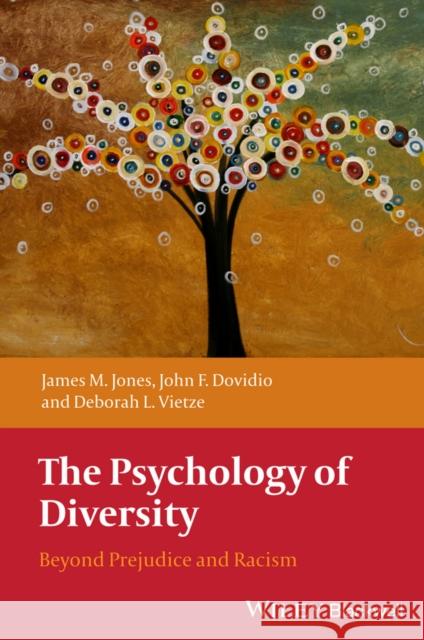
The Psychology of Diversity presents a captivating social-psychological study of diversity, the obstacles confronting it, and the benefits it provides.
Goes beyond prejudice and discrimination to discuss the personal and social implications of diversity for both majority and minority group members
Considers how historical, political, economic, and societal factors shape the way people think about and respond to diversity
Explains why discrimination leads to bias at all levels in society - interpersonal, institutional, cultural, and social
Describes proven techniques for improving intergroup relations
Examines the brain's impact on bias in clear terms for students with little or no background in neuroscience
Includes helpful study tools throughout the text as well as an online instructor's manual
Bibliografia Glosariusz/słownik Wydanie ilustrowane Podręcznik
“The Psychology of Diversity not only teaches readers about research on prejudice, but it helps them understand how they can personally contribute to a better and more inclusive society.” (PsycCRITIQUES, 4 May 2015)
Contents vii
Preface xv
Dedication xviii
Acknowledgments xix
Part One Framing Diversity 1
Chapter 1 The Psychology of Diversity: Challenges and Benefits 3
Chapter 2 Central Concepts in the Psychology of Diversity 27
Chapter 3 Historical Perspectives on Diversity in the United States 55
Part Two Psychological Processes 87
Chapter 4 Personality and Individual Differences: How Different Types of People Respond to Diversity in Different Ways 89
Chapter 5 Social Cognition and Categorization: Distinguishing “Us” from “Them” 117
Chapter 6 Social Identity, Roles, and Relations: Motivational Influences in Responses to Diversity 147
Chapter 7 Is Bias in the Brain? 173
Chapter 8 Coping and Adapting to Stigma and Difference 205
Chapter 9 Intergroup Interactions: Pitfalls and Promises 239
Part Three Culture, Power, and Institutions 263
Chapter 10 Cultural Diversity: Preferences, Meaning, and Difference 265
Chapter 11 Social Roles and Power in a Diverse Society 299
Chapter 12 The Challenge of Diversity for Institutions 327
Chapter 13 The Psychology of Diversity: Principles and Prospects 355
Glossary 377
Index 401
James M. Jones is Professor of Psychology at the University of Delaware and Director of the Center for the Study of Diversity. He received the Lifetime Contribution to Psychology award from the APA in 2011.
John F. Dovidio isProfessor of Psychology at Yale University. He has received numerous awards for his scholarship, service, and teaching, and served as president of several professional societies.
Deborah L. Vietze is Professor of Psychology and Urban Education at the City University of New York. She has received awards for her contributions to research on ethnic minorites and has served as a representative from the American Psychological Association to the United Nations.
The Psychology of Diversity presents a captivating social–psychological study of diversity, the obstacles confronting it, and the benefits it provides. The text considers how historical, political, economic, and societal factors shape the way people think about and respond to diversity. The approach is multi–level, with coverage of diverse topics including everything from the neuroscience of prejudice to the politics of diversity.
While the book devotes considerable attention to the problems of prejudice and discrimination toward diverse groups, chapters also describe proven techniques for improving intergroup relations in a variety of ways. It illuminates how well–intentioned efforts to control bias can backfire personally, interpersonally, and socially. Although challenges to diversity are significant, emphasis is placed on why and how an understanding of diversity can offer unique insights and opportunities, and prepare people better for a global society.
"Unlike older and traditional texts on prejudice and intergroup relations, The Psychology of Diversity offers a sharply different approach – one much better suited to the complexities and subtleties of present–day intergroup phenomena. It is also authoritative as one would expect from a text written by leading social psychological experts in the field." Thomas F. Pettigrew, University of California, Santa Cruz
"This is the most comprehensive survey of diversity since the groundbreaking Jones Prejudice and Racism volume, the undisputed bible of the field for decades. The Psychology of Diversity, authoritatively written by some of the field’s foremost leaders, will rightfully take its place as the go–to resource for students, researchers, and practitioners alike, to meet the challenges of the 21st century." Professor Susan Fiske, Eugene Higgins Professor, Psychology and Public Affairs, Princeton University
"One could not hope for better guides through the maze of social–psychological work on diversity in America. Jones, Dovidio, and Vietze prove to be map–makers of ‘Lewis and Clark’ quality, never losing their way over difficult terrain, and steering the reader through defining research on psychological processes, and an analysis of diversity in terms of culture, power, and institutions." Miles Hewstone, Professor of Social Psychology, University of Oxford, UK
"The successful management of increasingly diverse societies is a major imperative of our times. In their extraordinarily comprehensive volume, Jones, Dovidio, and Vietze do a masterful job of presenting the latest scientific evidence concerning both the challenges to and opportunities for moving beyond prejudice and racism. This volume is essential reading for anyone interested in social diversity or intergroup relations." Jim Sidanius, Department of Psychology, Harvard University
"The Psychology of Diversity: Beyond Prejudice and Racism is an illuminating book on the psychological processes behind power, bias, and cultural difference, as well as the broad influences and challenges that diversity presents. This book is unique in that it not only addresses the negative consequences of bias and discrimination, but also contributes research–based solutions to these problems by providing techniques to improve intergroup relations; I highly recommend this book not only for students, but for professionals and all individuals who care about reducing prejudice and respecting and benefitting from diversity in our society." Florence L. Denmark, Ph.D., Robert Scott Pace Distinguished Research Professor of Psychology, Former President of the American Psychological Association