• Wyszukiwanie zaawansowane
  • Kategorie
  • Kategorie BISAC
  • Książki na zamówienie
  • Promocje
  • Granty
  • Książka na prezent
  • Opinie
  • Pomoc
  • Załóż konto
  • Zaloguj się

The Power of Money: How Ideas about Money Shaped the Modern World » książka

zaloguj się | załóż konto
Logo Krainaksiazek.pl

koszyk

konto

szukaj
topmenu
Księgarnia internetowa
Szukaj
Książki na zamówienie
Promocje
Granty
Książka na prezent
Moje konto
Pomoc
 
 
Wyszukiwanie zaawansowane
Pusty koszyk
Bezpłatna dostawa dla zamówień powyżej 20 złBezpłatna dostawa dla zamówień powyżej 20 zł

Kategorie główne

• Nauka
 [2949965]
• Literatura piękna
 [1857847]

  więcej...
• Turystyka
 [70818]
• Informatyka
 [151303]
• Komiksy
 [35733]
• Encyklopedie
 [23180]
• Dziecięca
 [617748]
• Hobby
 [139972]
• AudioBooki
 [1650]
• Literatura faktu
 [228361]
• Muzyka CD
 [398]
• Słowniki
 [2862]
• Inne
 [444732]
• Kalendarze
 [1620]
• Podręczniki
 [167233]
• Poradniki
 [482388]
• Religia
 [509867]
• Czasopisma
 [533]
• Sport
 [61361]
• Sztuka
 [243125]
• CD, DVD, Video
 [3451]
• Technologie
 [219309]
• Zdrowie
 [101347]
• Książkowe Klimaty
 [123]
• Zabawki
 [2362]
• Puzzle, gry
 [3791]
• Literatura w języku ukraińskim
 [253]
• Art. papiernicze i szkolne
 [7933]
Kategorie szczegółowe BISAC

The Power of Money: How Ideas about Money Shaped the Modern World

ISBN-13: 9783030258931 / Angielski / Miękka / 2019 / 300 str.
Robert Pringle
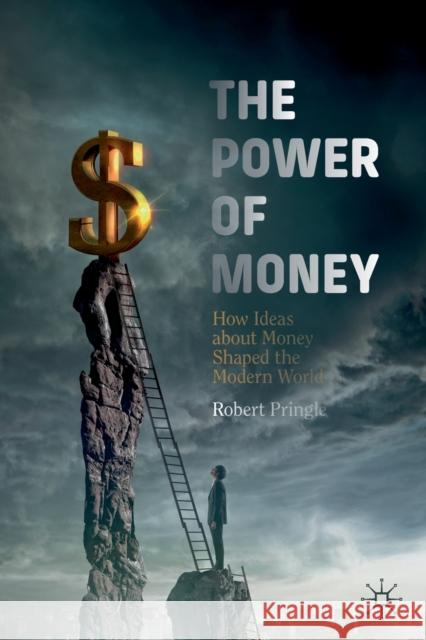
The Power of Money: How Ideas about Money Shaped the Modern World Pringle, Robert 9783030258931 Palgrave MacMillan - książkaWidoczna okładka, to zdjęcie poglądowe, a rzeczywista szata graficzna może różnić się od prezentowanej.

The Power of Money: How Ideas about Money Shaped the Modern World

ISBN-13: 9783030258931 / Angielski / Miękka / 2019 / 300 str.

Robert Pringle
cena 121,01 zł
(netto: 115,25 VAT:  5%)

Najniższa cena z 30 dni: 115,63 zł
Termin realizacji zamówienia:
ok. 22 dni roboczych
Bez gwarancji dostawy przed świętami

Darmowa dostawa!
Kategorie:
Nauka, Ekonomia i biznes
Kategorie BISAC:
Business & Economics > Finance - General
Business & Economics > Historia ekonomii
Business & Economics > Makroekonomia
Wydawca:
Palgrave MacMillan
Język:
Angielski
ISBN-13:
9783030258931
Rok wydania:
2019
Dostępne języki:
Ilość stron:
300
Waga:
0.44 kg
Wymiary:
23.39 x 15.6 x 1.65
Oprawa:
Miękka
Dodatkowe informacje:
Wydanie ilustrowane


"Robert Pringle's worldly vision is openly and proudly liberal, particularly in his approach to the state's monetary role in current times. The powerful liberal tradition plays a primary role in the book. ... The scope for defining these terms is wide open. Pringle deserves great credit for having set out the problem with such clarity." (Alessandro Roselli, Economic Affairs, Vol. 40 (2), June, 2020)
"The book ought to be read by anyone with an interest in history, politics or society. Economists would benefit, too, from Pringle's far more thoughtful dissection of what money actually is and actually does than their textbooks often present." (Claire Jones, Central Banking, centralbanking.com, February 18, 2020)

1. Introduction     


Part One: Time Past: How ideas shaped actions

2. Europe's money and culture before 1914                                                 

3. The 1920s: Lessons from Weimar

4.  The Jazz Age: America in the 1920s

5. The money-haters: experiments in socialism

6. Europe between the world wars: a ferment of ideas

7.  How Europe’s culture kept money under control (1940s and 1950s)

8.  New money from the New World

9. American culture and the dollar after World War II

10. The century’s hinge (mid 1960s to late 1970s)

11. 1980-2000: Creation of a global money space


Part Two: Time Present: Actions have consequences                               

12. The global money culture - an outline

13. Money Delusion and the crash, 2000-2010

14. Money as a tool of the state

15. The euro: the biggest money project

16. Crony and criminal capitalism since 2010      

17. Global money: Insiders and Outsiders


Part Three: Time Future: Consequences engender ideas

18. The jealous state and the future of money

19. The new sociology of money

20. Money and the decline of classical liberalism

21. What can we learn from Japanese culture?

22. Contemporary art: towards new ways of ‘seeing’ money


Part Four: Concluding remarks

23. The money we deserve


Robert Pringle is an author, editor, commentator and entrepreneur specializing in money, banking and capital markets. A former Editor of The Banker, London, he was founding director of the Group of 30 institute on monetary affairs (now based in Washington, DC) from 1979 to 1986. In 1990 he founded Central Banking Publications, a financial publisher specialising in public policy and financial markets including the Central Banking journal, which he edited for 20 years. He remains chairman of the company. Robert has monitored and commented on changes in financial markets and the monetary policies of central banks around the world for more than 40 years. In addition to numerous articles for a wide variety of journals, he has published several books and edited more than 50 volumes of collected papers, surveys and training manuals for central bankers and market regulators. He has obtained a Master’s degree in economics, sociology and history from King’s College, Cambridge University, UK, and conducted post-graduate study in economics and sociology at the London School of Economics, UK.

Innovation in money is just as important as innovation in any other sphere of activity; money is always a “work in progress.” In fact, history shows societies have tried out a wide diversity of monetary arrangements. Ideas about money have played key roles at crucial turning points in world history and during national histories. Recently, a new global money space has been created, a joint venture between the public and private sector.

This book explores the new money society that has grown up to inhabit this new space. The book has several aims: Firstly, the book shows how beliefs about money, as well as attitudes and values towards it, have varied between societies and over time, and specifically how they have changed over the modern era. Secondly, the book shows the powerful effects that changing ideas have had on events, including wars and revolutions, recessions, booms and financial crises. Thirdly, the book recounts the creation of a global money space, dated to the last quarter of the 20th century, and explores its features. Fourthly, the book describes some characteristics of the new money society that inhabits the global money space. Fifthly, the book shows how each society, and indeed successive generations of the same society, has made its own unique arrangements to govern money – i.e. how it comes to terms with the power of money.

The author argues that we need to develop a new arrangement now and suggests that we have much to learn from recent creative work in a number of fields ranging from the sociology of money to contemporary art. This approach sheds new light on a number of controversial issues, including the rise of crony capitalism, growing social divisions, currency wars, and asset price bubbles.

Pringle, Robert Robert Pringle is a historian, author, and retired... więcej >


Udostępnij

Facebook - konto krainaksiazek.pl


Opinie o Krainaksiazek.pl na Opineo.pl

Partner Mybenefit

Krainaksiazek.pl w programie rzetelna firma Krainaksiaze.pl - płatności przez paypal

Czytaj nas na:

Facebook - krainaksiazek.pl
  • książki na zamówienie
  • granty
  • książka na prezent
  • kontakt
  • pomoc
  • opinie
  • regulamin
  • polityka prywatności

Zobacz:

  • Księgarnia czeska

  • Wydawnictwo Książkowe Klimaty

1997-2025 DolnySlask.com Agencja Internetowa

© 1997-2022 krainaksiazek.pl
     
KONTAKT | REGULAMIN | POLITYKA PRYWATNOŚCI | USTAWIENIA PRYWATNOŚCI
Zobacz: Księgarnia Czeska | Wydawnictwo Książkowe Klimaty | Mapa strony | Lista autorów
KrainaKsiazek.PL - Księgarnia Internetowa

Polityka prywatnosci - link
Krainaksiazek.pl - płatnośc Przelewy24
Przechowalnia Przechowalnia






