The Potentials of Violence in Conflict Transformation » książka





The Potentials of Violence in Conflict Transformation
ISBN-13: 9783639302929 / Angielski / Miękka / 2010 / 80 str.
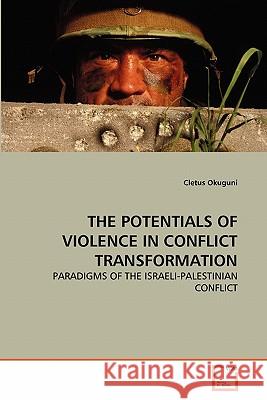
This study sets out to find the potentials of violence in conflict transformation, bearing in mind, the example and pattern evident in the Israeli-Palestinian/Arab conflict relations. It examines its damaging effects on human societies and civilisation, convivial relations between different peoples, as well as the constructive or positive role, if any, of violence and violent behaviour between belligerents, and within any given society. It also places emphasis on the use of violence as a channel of political and social communication vis-a- vis the Palestinian/Arab-Israeli interface. Thus, the study considers the utility of the violent approach towards the transformation of conflict behaviour patterns between disputing parties.It adopts the purposive sampling method, and the available samples technique, was of an exploratory nature. The study discovers the impact of the Self-Other, We-They Paradigm on the conflict generation and sustenance spectrum.
This study sets out to find the potentials of violence in conflict transformation, bearing in mind, the example and pattern evident in the Israeli-Palestinian/Arab conflict relations. It examines its damaging effects on human societies and civilisation, convivial relations between different peoples, as well as the constructive or positive role, if any, of violence and violent behaviour between belligerents, and within any given society. It also places emphasis on the use of violence as a channel of political and social communication vis-a- vis the Palestinian/Arab-Israeli interface. Thus, the study considers the utility of the violent approach towards the transformation of conflict behaviour patterns between disputing parties.It adopts the purposive sampling method, and the available samples technique, was of an exploratory nature. The study discovers the impact of the Self-Other, We-They Paradigm on the conflict generation and sustenance spectrum.




Czytaj nas na:
KrainaKsiazek.PL - Księgarnia Internetowa


