• Wyszukiwanie zaawansowane
  • Kategorie
  • Kategorie BISAC
  • Książki na zamówienie
  • Promocje
  • Granty
  • Książka na prezent
  • Opinie
  • Pomoc
  • Załóż konto
  • Zaloguj się

The Political Economy of Crisis Management and Reform in Egypt » książka


zaloguj się | załóż konto
Logo Krainaksiazek.pl

koszyk

konto

szukaj
topmenu
Księgarnia internetowa
Szukaj
Książki na zamówienie
Promocje
Granty
Książka na prezent
Moje konto
Pomoc
 
 
Wyszukiwanie zaawansowane
Pusty koszyk
Bezpłatna dostawa dla zamówień powyżej 20 złBezpłatna dostawa dla zamówień powyżej 20 zł

Kategorie główne

• Nauka
 [2949965]
• Literatura piękna
 [1857847]

  więcej...
• Turystyka
 [70818]
• Informatyka
 [151303]
• Komiksy
 [35733]
• Encyklopedie
 [23180]
• Dziecięca
 [617748]
• Hobby
 [139972]
• AudioBooki
 [1650]
• Literatura faktu
 [228361]
• Muzyka CD
 [398]
• Słowniki
 [2862]
• Inne
 [444732]
• Kalendarze
 [1620]
• Podręczniki
 [167233]
• Poradniki
 [482388]
• Religia
 [509867]
• Czasopisma
 [533]
• Sport
 [61361]
• Sztuka
 [243125]
• CD, DVD, Video
 [3451]
• Technologie
 [219309]
• Zdrowie
 [101347]
• Książkowe Klimaty
 [123]
• Zabawki
 [2362]
• Puzzle, gry
 [3791]
• Literatura w języku ukraińskim
 [253]
• Art. papiernicze i szkolne
 [7933]
Kategorie szczegółowe BISAC

The Political Economy of Crisis Management and Reform in Egypt

ISBN-13: 9783031194818 / Angielski / Twarda / 2024
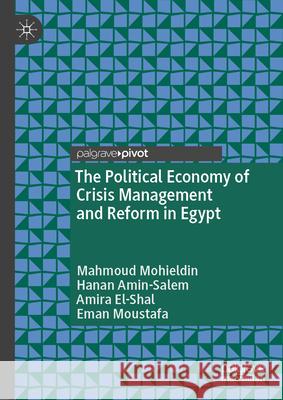
Mahmoud Mohieldin; Hanan Amin-Salem; Amira El-Shal
The Political Economy of Crisis Management and Reform in Egypt Eman Moustafa 9783031194818 Palgrave MacMillan - książkaWidoczna okładka, to zdjęcie poglądowe, a rzeczywista szata graficzna może różnić się od prezentowanej.

The Political Economy of Crisis Management and Reform in Egypt

ISBN-13: 9783031194818 / Angielski / Twarda / 2024

Mahmoud Mohieldin; Hanan Amin-Salem; Amira El-Shal
cena 161,36 zł
(netto: 153,68 VAT:  5%)

Najniższa cena z 30 dni: 154,18 zł
Termin realizacji zamówienia:
ok. 22 dni roboczych
Bez gwarancji dostawy przed świętami

Darmowa dostawa!

This Palgrave Pivot, in light of the new conditions, the new realities and the essential new “unknowns” abruptly thrown up by the COVID-19 pandemic, offers pragmatic policy prescriptions to Egyptian decision-makers as a road map to guide them in steering the country out of crisis and toward a better future for the Egyptian people. Egypt is the world’s 14th largest country by population but ranks only 44th globally with regards to its GDP (in 2019 nominal US$ terms). The mismatch between Egypt’s population size and GDP rank highlights a key concern of this work – that in spite of notable achievements in certain areas and the success of the recently-concluded IMF program, the country remains far from achieving its economic potential. Throughout its modern era, the country has lagged behind in household income, social welfare, productivity and many other markers of twenty-first century economic success even vis-à-vis other developing country peers.This book focuses on framing the optimal macroeconomic policy agenda for Egypt in the face of the big global, regional and national forces that are being accelerated, intensified or changed by the COVID-19 crisis rather than on specific sectoral policy formulations. The authors present these big questions in the context of showing how Egypt can best navigate the risks and seize the opportunities of the current period of intense flux and transition, to put itself in the best possible position to create prosperity, stability, and hope for its citizens. The authors examine to what extent the Egyptian authorities can fulfill their ambitious development plans and in producing this work, to provide useful lessons that can be applied to other governments struggling to respond to the challenges of the age.

This Palgrave Pivot, in light of the new conditions, the new realities and the essential new “unknowns” abruptly thrown up by the COVID-19 pandemic, offers pragmatic policy prescriptions to Egyptian decision-makers as a road map to guide them in steering the country out of crisis and toward a better future for the Egyptian people. Egypt is the world’s 14th largest country by population but ranks only 44th globally with regards to its GDP (in 2019 nominal US$ terms). The mismatch between Egypt’s population size and GDP rank highlights a key concern of this work – that in spite of notable achievements in certain areas and the success of the recently-concluded IMF program, the country remains far from achieving its economic potential. Throughout its modern era, the country has lagged behind in household income, social welfare, productivity and many other markers of twenty-first century economic success even vis-à-vis other developing country peers.



This book focuses on framing the optimal macroeconomic policy agenda for Egypt in the face of the big global, regional and national forces that are being accelerated, intensified or changed by the COVID-19 crisis rather than on specific sectoral policy formulations. The authors present these big questions in the context of showing how Egypt can best navigate the risks and seize the opportunities of the current period of intense flux and transition, to put itself in the best possible position to create prosperity, stability, and hope for its citizens. The authors examine to what extent the Egyptian authorities can fulfill their ambitious development plans and in producing this work, to provide useful lessons that can be applied to other governments struggling to respond to the challenges of the age.

Kategorie:
Nauka, Ekonomia i biznes
Kategorie BISAC:
Business & Economics > Makroekonomia
Political Science > Public Policy - Economic Policy
Business & Economics > Development - Economic Development
Wydawca:
Palgrave MacMillan
Język:
Angielski
ISBN-13:
9783031194818
Rok wydania:
2024
Dostępne języki:
Oprawa:
Twarda
Dodatkowe informacje:
Glosariusz/słownik

INTRODUCTION......................................................................................................................... 4

PART I: LOOKING BACK AT HOW EGYPT GOT TO TODAY......................................... 6

Pragmatism and Egyptianization: 1952 – 1960.......................................................................... 6

Pre-1952 Modern Egypt................................................................................................................ 7

Longstanding Challenges.............................................................................................................. 9

A New Social Contract................................................................................................................ 10

Nationalization and Central Planning: 1961 – 1966................................................................. 13

The Regime’s Need to Reinforce its Legitimacy....................................................................... 14

Industrialization and Mega Projects......................................................................................... 15

The Triangle of Failure............................................................................................................... 17

The Rise of the Welfare State..................................................................................................... 21

War: 1967 – 1973......................................................................................................................... 23

Shock Waves................................................................................................................................ 24

A War Economy.......................................................................................................................... 24

The Open-Door Policy (Infitah): 1974 – 1990........................................................................... 26

Partial Reforms: 1991 – 1996..................................................................................................... 32

The Seven Lean Years: 1997 – 2004.......................................................................................... 36

Attempts at Reform: 2004 – 2008............................................................................................... 39

PART II: NAVIGATING THE STORM.................................................................................. 48

The Triple-F Crisis...................................................................................................................... 48

The Food Crisis............................................................................................................................ 49

The Fuel Crisis............................................................................................................................. 56

The Global Financial Crisis........................................................................................................ 63

The Political Crisis...................................................................................................................... 66

Political Turmoil and Economic Emergency............................................................................ 67

Getting Back on Track................................................................................................................ 72

The COVID-19 Crisis.................................................................................................................. 78

A Threat to the Health System................................................................................................... 79

In The Wake of The COVID Shock........................................................................................... 96

The Resurgence of Threats......................................................................................................... 99

Scorecard and Lessons.............................................................................................................. 100

PART III: ACHIEVING SUSTAINABLE AND INCLUSIVE GROWTH......................... 110

A New Classification of Countries........................................................................................... 110

Egypt’s Overall Progress toward Sustainable Development................................................. 113

The Growth-Poverty-Inequality Nexus in Egypt................................................................... 116

Poverty........................................................................................................................................ 117

Inequality.................................................................................................................................... 123

Reform of Institutions and Governance.................................................................................. 128

A Better Political Economy Framework................................................................................. 129

Key Governance Indicators...................................................................................................... 132

The Impact of Poor Governance on Economic Development............................................... 137

The Role of Leadership: A Strong State and Bad Governance............................................ 140

Structural Reform: The Future Ahead................................................................................... 144

CONCLUDING REMARKS.................................................................................................... 147

GLOSSARY............................................................................................................................... 151

REFERENCES       159

Mahmoud Mohieldin is the United Nation's Special Envoy on Financing the 2030 Agenda for Sustainable Development. Previously he was the World Bank Group's Senior Vice President for the 2030 Development Agenda, UN Relations, and Partnerships. He serves as a Board member on the Global Partnership for Sustainable Development Data, as well as an observer to the EU MultiStakeholder Platform for the Sustainable Development Goals (SDGs). Dr. Mohieldin previously served as Corporate Secretary, President’s Special Envoy, and Managing Director for the World Bank Group. Prior to joining the World Bank, he was Minister of Investment of Egypt from 2004 until 2010. Dr. Mohieldin also served on several Boards of Directors in the Central Bank of Egypt and the corporate sector. He was a member of the Commission on Growth and Development and selected a Young Global Leader of the World Economic Forum in 2005.


Hanan Amin-Salem is Global Head of Sovereign Advisory at Citi. She was formerly the First Deputy Minister of Finance in Egypt.

This Palgrave Pivot, in light of the new conditions, the new realities and the essential new “unknowns” abruptly thrown up by the COVID-19 pandemic, offers pragmatic policy prescriptions to Egyptian decision-makers as a road map to guide them in steering the country out of crisis and toward a better future for the Egyptian people. Egypt is the world’s 14th largest country by population but ranks only 44th globally with regards to its GDP (in 2019 nominal US$ terms). The mismatch between Egypt’s population size and GDP rank highlights a key concern of this work – that in spite of notable achievements in certain areas and the success of the recently-concluded IMF program, the country remains far from achieving its economic potential. Throughout its modern era, the country has lagged behind in household income, social welfare, productivity and many other markers of twenty-first century economic success even vis-à-vis other developing country peers.


This book focuses on framing the optimal macroeconomic policy agenda for Egypt in the face of the big global, regional and national forces that are being accelerated, intensified or changed by the COVID-19 crisis rather than on specific sectoral policy formulations. The authors present these big questions in the context of showing how Egypt can best navigate the risks and seize the opportunities of the current period of intense flux and transition, to put itself in the best possible position to create prosperity, stability, and hope for its citizens. The authors examine to what extent the Egyptian authorities can fulfill their ambitious development plans and in producing this work, to provide useful lessons that can be applied to other governments struggling to respond to the challenges of the age.

Mahmoud Mohieldin is the United Nation's Special Envoy on Financing the 2030 Agenda for Sustainable Development. Previously he was the World Bank Group's Senior Vice President for the 2030 Development Agenda, UN Relations, and Partnerships. He serves as a Board member on the Global Partnership for Sustainable Development Data, as well as an observer to the EU MultiStakeholder Platform for the Sustainable Development Goals (SDGs). Dr. Mohieldin previously served as Corporate Secretary, President’s Special Envoy, and Managing Director for the World Bank Group. Prior to joining the World Bank, he was Minister of Investment of Egypt from 2004 until 2010. Dr. Mohieldin also served on several Boards of Directors in the Central Bank of Egypt and the corporate sector. He was a member of the Commission on Growth and Development and selected a Young Global Leader of the World Economic Forum in 2005.

Hanan Amin-Salem is Global Head of Sovereign Advisory at Citi. She was formerly the First Deputy Minister of Finance in Egypt.


Udostępnij

Facebook - konto krainaksiazek.pl


Opinie o Krainaksiazek.pl na Opineo.pl

Partner Mybenefit

Krainaksiazek.pl w programie rzetelna firma Krainaksiaze.pl - płatności przez paypal

Czytaj nas na:

Facebook - krainaksiazek.pl
  • książki na zamówienie
  • granty
  • książka na prezent
  • kontakt
  • pomoc
  • opinie
  • regulamin
  • polityka prywatności

Zobacz:

  • Księgarnia czeska

  • Wydawnictwo Książkowe Klimaty

1997-2025 DolnySlask.com Agencja Internetowa

© 1997-2022 krainaksiazek.pl
     
KONTAKT | REGULAMIN | POLITYKA PRYWATNOŚCI | USTAWIENIA PRYWATNOŚCI
Zobacz: Księgarnia Czeska | Wydawnictwo Książkowe Klimaty | Mapa strony | Lista autorów
KrainaKsiazek.PL - Księgarnia Internetowa

Polityka prywatnosci - link
Krainaksiazek.pl - płatnośc Przelewy24
Przechowalnia Przechowalnia




