The Plant Stem: A Microscopic Aspect » książka





The Plant Stem: A Microscopic Aspect
ISBN-13: 9783319735238 / Angielski / Twarda / 2018 / 207 str.
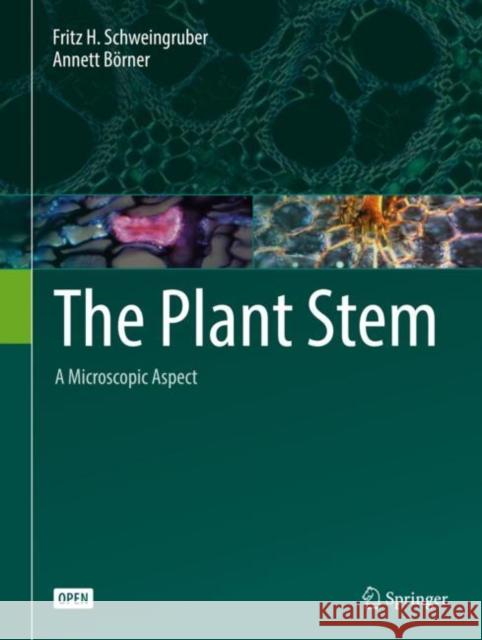
The Plant Stem: A Microscopic Aspect
ISBN-13: 9783319735238 / Angielski / Twarda / 2018 / 207 str.
(netto: 191,21 VAT: 5%)
Najniższa cena z 30 dni: 192,74
ok. 22 dni roboczych.
Darmowa dostawa!
TABLE OF CONTENTS
1 Introduction
2 Preparation techniques - Making anatomical structures visible
3 Morphology of the plant body
3.1 Growth forms and life forms
3.2 Parts of stems and definition of bark terms
4 Cellular composition of the plant bodies
4.1 The individual cell
4.2 Meristematic initials - The source of new cells
4.3 The cuticula - Protection against dehydration
4.4 Epidermis - The skin of plants
4.5 Collenchyma - Local peripheral stability
4.6 Parenchyma cells - Storage and repair
4.7 Fibers and tracheids - Stabilization and water conduction
4.8 Sclereids in the bark - Aberrant cell wall thickening
4.9 Vessels - Water conductance
4.10 Cork cells - Defense against organisms, heat and cold
4.11 Sieve cells, sieve tubes and companion cells - Conduction of assimilates
4.12 Secretory cells - Defense
4.13 Intercellulars and aerenchyma - Air circulation within the plant
5 Structure of cell walls and cell contents
5.1 Principal cell wall construction - Form and stability
5.2 Pits - Lateral contact between cells
5.3 Perforation plates - Axial contact between vessels
5.4 Helical (spiral) thickenings - Special wall thickenings
5.5 Tyloses - Permanent interruption of water flow
5.6 Cell contents - Everything inside the cell wall
5.6.1 Nuclei in Protoplasts - Metabolic centers of the plant cells
5.6.2 Plastids - Green, yellow and white bodies
5.6.3 Starch grains - Stored energy
5.6.4 Crystals in vacuoles - Regulators and metabolic waste
5.6.5 Stained substances within the stem - Defense
6 Primary, secondary and tertiary meristem
6.1 Primary meristems in apical zones - Initials of longitudinal and radial growth
6.1.1 Macroscopic aspect of primary meristems in apical shoots and roots - Grow higher, grow deeper6.1.2 Apical shoot dynamics - Long and short shoots - Grow fast, grow slow
6.1.3 Shoot death and metamorphosis - The end of longitudinal growth: Twigs must die
6.1.4 Microscopic aspect of apical meristems of shoots and roots - Towards heaven and earth
6.1.5 From the primary apical meristem to the secondary lateral meristems in shoots - From longitudinal to radial growth
6.1.6 From the primary apical meristem to the secondary lateral meristems in roots - From longitudinal to radial growth6.1.7 From the primary apical meristem in shoots to roots in plants without cambium (monocotyledons)
6.1.8 From the primary apical meristem of vascular spore plants in shoots to roots
6.1.9 Pericycle and endodermis - Central cylinder and cortex are separated
6.2 Secondary and tertiary meristems and radial growth - Cambium and cork cambium
6.2.1 Macroscopic aspect of radial growth and xylem coloration - Stems get thicker
6.2.2 Microscopic aspect of radial growth (conifers, dicotyledonous plants and palm ferns) - An overview
6.2.3 The production and enlargement of new cells in the xylem of a thickening stem - The need of more and larger cells
6.2.4 Cell formation and differentiation in the xylem - The multifunctional stem center
6.2.5 Timing of xylem formation
6.2.6 Cell differentiation in the phloem - The multifunctional stem periphery
6.2.7 Formation of tertiary meristems, the cork cambium – A new skin
6.2.8 Life time and death of cells - Cells must die
6.3 Cambial variants - Phloem elements within the xylem
6.4 Intercalary meristems - Longitudinal growth far behind the tips of shoots and roots
7 Stem anatomical structures of major taxonomic units
7.1 Stem-forming fungi and algae
7.1.1 Sporophytes of fungi
7.1.2 Thallus and stems of brown algae
7.2 Mosses - The oldest living plants
7.3 Fern-like plants
7.3.1 Spikemosses, quillworts and clubmosses
7.3.2 Whisk fern and moonwort
7.3.3 Horsetails
7.3.4 Ferns
7.4 Seed plants
7.4.1 Palm ferns
7.4.2 Ginkgo
7.4.3 Conifers
7.4.4 Gnetales
Ephedraceae
WelwitschiaceaeGnetaceae
Gnetales: Conifers or Angiosperms?
7.4.5 Angiosperms - Monocotyledons and their growth forms
Palms (Arecaceae)
Bamboo (Poaceae)
Grass-like terrestrial herbs (Cyperaceae)
Terrestrial grasses (Poaceae)
Orchids (Orchidaceae)
Lianas
Hydrophytes
Trees and shrubs with secondary growth (Dracaena, Aloe)
7.4.5 Angiosperms - Dicotyledons and their growth forms
Annual herbs (therophytes)
Perennial herbs (hemicryptophytes and geophytes)
Dwarf shrubs (chamaephytes and nanophanerophyte)
Shrubs (nanophanerophytes)
Trees (phanerophytes)
Lianas
Succulents
Parasites
Hydrophytes and helophytes
8 Evolution of stems
8.1 Paleobotanic evidences of stems
Early plant evolution
The move to the land
The earliest small land plants
The earliest treesThe Carboniferous clubmoss and horsetail forests (Lycophyta and the Sphenophytes)
The first gymnosperms (Cordaitales)
The development of Angiosperms
8.2 Evolution and homoplasy of wood anatomical traits
Homoplasy and evolution
8.3 Parallel evolution of macroscopic and microscopic traits
8.3.1 Mesic European fir forest (Adenostylo-Abietetum)
8.3.2 Heathlands along European North Atlantic coast
8.3.3 Alpine meadows (Caricetum curvulae)
9 Anatomical adaptions to permanent changed environmental conditions
9.1 Anatomical and morphological plasticity of species
9.2 Anatomical and morphological adaption to different climates
9.2.1 Trees in the tropics, the temperate and boreal zone
Tropical rain forest
Temperate forest
Boreal forest
9.2.2 Shrubs in the tropics, the Mediterranean and arctic zoneSubtropical African dry climate, Sahara
European thermo-Mediterranean zone
Arctic zone
10 Anatomical adaptions to temporarily changed environmental conditions
10.1 Anatomical effect of short-term environmental changes during the vegetation period
10.1.1 Individual small and large annual rings and missing rings
10.1.2 Discontinuous growth - Wedging rings
10.1.3 Individual small and large latewood zones and latewood zones with thin- or thick-walled tracheids
10.1.4 Individual, not fully lignified latewood zones ("blue rings")
10.1.5 False rings and density variations
10.1.6 Tissue and fiber cracks10.2 Effect of multi-annual environmental changes
10.2.1 Abrupt growth changes
10.2.2 Structural changes10.3 Eccentricity and irregular stem forms
10.4 Reaction wood - Reaction to mechanical stress
10.4.1 Compression wood in conifers
10.4.2 Tension wood in angiosperms
10.5 Cell collapse and lateral ray compression
10.6 Cambial wounding - Callus formation, overgrowing of wounds
10.7 Prevention of wounds10.8 Resin and gum ducts
11 Coexistence of algae, fungi and vascular plants
11.1 Mycorrhiza - 11.2 Lichens - Coexistence of algae and fungi 12 Wood decay 12.1 Abiotic decomposition 12.2 Anaerobic decay - Absence of oxygen 12.3 Aerobic decay - Wood-decaying fungi 12.4 Compartimentalization - The natural limit to fungal growth 12.5 Decay by xylobiontic insects 13 Fossilization, permineralization, coalification, carbonization and wetwood conservation 13.1 Fossilization 13.2 Permineralization of archeological artefacts 13.3 Coalification 13.4 Carbonization
Fritz Hans Schweingruber
After studies at the University of Bern, Switzerland and postdocs by Hal Fritts in Tucson, Arizona he was teaching during 26 years wood anatomy and dendrochronology at the University of Basel. At the same time he was leader of the Research Group Tree Rings and Environment at the Swiss Federal Institute of Forest, Snow and Landscape in Birmensdorf, Switzerland where he constructed the Northern hemispheric dendroclimatological densitometric network and wood anatomical books from Europe, Russia and the Sahara. 1986 he founded the International dendroecological field week and 2001 the International dendroanatomical weeks.
Annett Börner
She is a geo-ecologist with a special interest plant ecology. She has worked for more than 15 years as an editor and designer in the field of scientific publications, in print and web media. She specialises in science communication, and her clients include a number of major research institutes in Europe and Australia. She lives in Adelaide, Australia.
The amount of text is reduced to a minimum, and the scientific information is highlighted with short legends and labeled photographs, allowing readers to focus on the pictures to easily understand how the anatomical structures relate to genetic, ecological, decomposition and technical influences. It includes a chapter devoted to simple anatomical preparation techniques, and further chapters showing the cell content, cell walls, meristematic tissues and stem structures of all major taxonomic units and morphological growth forms in various ecological and climatic regions from subarctic to equatorial latitudes, as well as structures of fossil, subfossil and technically altered wood.
This textbook appeals to students and researchers in the fields of plant anatomy, taxonomy, ecology, dendrochronology, history, plant pathology, and evolutionary biology as well as to technologists.




Czytaj nas na:
1997-2026 DolnySlask.com Agencja Internetowa
KrainaKsiazek.PL - Księgarnia Internetowa


