• Wyszukiwanie zaawansowane
  • Kategorie
  • Kategorie BISAC
  • Książki na zamówienie
  • Promocje
  • Granty
  • Książka na prezent
  • Opinie
  • Pomoc
  • Załóż konto
  • Zaloguj się

The Perception of Visual Information » książka


zaloguj się | załóż konto
Logo Krainaksiazek.pl

koszyk

konto

szukaj
topmenu
Księgarnia internetowa
Szukaj
Książki na zamówienie
Promocje
Granty
Książka na prezent
Moje konto
Pomoc
 
 
Wyszukiwanie zaawansowane
Pusty koszyk
Bezpłatna dostawa dla zamówień powyżej 20 złBezpłatna dostawa dla zamówień powyżej 20 zł

Kategorie główne

• Nauka
 [2946600]
• Literatura piękna
 [1856966]

  więcej...
• Turystyka
 [72221]
• Informatyka
 [151456]
• Komiksy
 [35826]
• Encyklopedie
 [23190]
• Dziecięca
 [619653]
• Hobby
 [140543]
• AudioBooki
 [1577]
• Literatura faktu
 [228355]
• Muzyka CD
 [410]
• Słowniki
 [2874]
• Inne
 [445822]
• Kalendarze
 [1744]
• Podręczniki
 [167141]
• Poradniki
 [482898]
• Religia
 [510455]
• Czasopisma
 [526]
• Sport
 [61590]
• Sztuka
 [243598]
• CD, DVD, Video
 [3423]
• Technologie
 [219201]
• Zdrowie
 [101638]
• Książkowe Klimaty
 [124]
• Zabawki
 [2473]
• Puzzle, gry
 [3898]
• Literatura w języku ukraińskim
 [254]
• Art. papiernicze i szkolne
 [8170]
Kategorie szczegółowe BISAC

The Perception of Visual Information

ISBN-13: 9781461273066 / Angielski / Miękka / 2012 / 409 str.
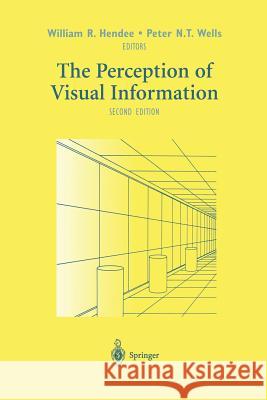
William R. Henglishdee; Peter N. T. Wells
The Perception of Visual Information William R Peter N 9781461273066 Springer - książkaWidoczna okładka, to zdjęcie poglądowe, a rzeczywista szata graficzna może różnić się od prezentowanej.

The Perception of Visual Information

ISBN-13: 9781461273066 / Angielski / Miękka / 2012 / 409 str.

William R. Henglishdee; Peter N. T. Wells
cena 806,99 zł
(netto: 768,56 VAT:  5%)

Najniższa cena z 30 dni: 771,08 zł
Termin realizacji zamówienia:
ok. 22 dni roboczych
Bez gwarancji dostawy przed świętami

Darmowa dostawa!

The presentation and interpretation of visual information is essential to almost every activity in human life and most endeavors of modern technology. This book examines the current status of what is known (and not known) about human vision, how human observers interpret visual data, and how to present such data to facilitate their interpretation and use. Written by experts who are able to cross disciplinary boundaries, the book provides an educational pathway through several models of human vision; describes how the visual response is analyzed and quantified; presents current theories of how the human visual response is interpreted; discusses the cognitive responses of human observers; and examines such applications as space exploration, manufacturing, surveillance, earth and air sciences, and medicine. The book is intended for everyone with an undergraduate-level background in science or engineering with an interest in visual science. This second edition has been brought up to date throughout and contains a new chapter on "Virtual reality and augmented reality in medicine."


Kategorie:
Nauka, Biologia i przyroda
Kategorie BISAC:
Psychology > Movements - Behaviorism
Medical > Radiologia
Science > Biofizyka
Wydawca:
Springer
Język:
Angielski
ISBN-13:
9781461273066
Rok wydania:
2012
Wydanie:
Softcover Repri
Ilość stron:
409
Waga:
0.66 kg
Wymiary:
23.5 x 15.5
Oprawa:
Miękka
Wolumenów:
01

1 Physiological Optics.- 1.1 Introduction.- 1.2 Optical Anatomy of the Eye.- 1.3 Aberrations of the Eye.- 1.3.1 Spherical Aberration.- 1.3.2 Chromatic Aberration.- 1.3.3 Oblique Astigmatism and Coma.- 1.3.4 Curvature of Field.- 1.4 The Visual Pathways.- 1.4.1 Photoreceptors.- 1.4.2 Bipolar, Ganglion, Horizontal, and Amacrine Cells.- 1.4.3 Lateral Geniculate Nucleus.- 1.4.4 Primary Visual Cortex.- 1.5 Mechanisms of Viewing.- 1.6 ColorVision.- 1.7 Physical Performance of the Visual System.- 1.7.1 Spectral Sensitivity.- 1.7.2 Incremental Brightness Sensitivity.- 1.7.3 Spatial Response.- 1.7.4 Temporal Response.- 1.7.5 Dynamic Range.- 1.8 Information Transfer Rates.- 1.9 References.- 2 Detection of Vision Information.- 2.1 Introduction.- 2.2 Early Theories of Vision.- 2.2.1 The Evil Eye.- 2.3 Simple Experiments.- 2.3.1 Inverted Image on the Retina.- 2.3.2 Blind Spot.- 2.3.3 Horizontal and Vertical Detectors.- 2.3.4 Mach Bands.- 2.3.5 The Craik, Cornsweet, O’Brien Illusion.- 2.3.6 Herman Hering Grid.- 2.3.7 The Moon Illusion.- 2.4 Adaptation and After Images.- 2.4.1 Stimulus and Sensation.- 2.5 Three-Dimensional Vision.- 2.6 Stereoscopic Viewing.- 2.7 Cross-Eyed Technique of Three-Dimensional Viewing.- 2.8 Models of the Visual System.- 2.8.1 Feature Detection.- 2.8.2 The Bottom-Up and Top-Down Models.- 2.8.3 Ideal Observer Studies.- 2.8.4 Computational Models.- 2.8.5 Preattentive and Attentive Processing Textons.- 2.9 References.- 3 Quantification of Visual Capability.- 3.1 Introduction.- 3.2 Visual Acuity.- 3.3 Contrast Sensitivity.- 3.4 Visual Physiology.- 3.5 Visual Filtering.- 3.5.1 Sine-Wave Gratings.- 3.5.2 Contrast Sensitivity Function.- 3.5.3 Channel Filter Images.- 3.6 Causes of Vision Loss.- 3.7 Detection and Identification of Visual Signals.- 3.7.1 Measuring Contrast Sensitivity.- 3.7.2 Sine-Wave Grating and Low Contrast Letter Charts.- 3.7.3 Test Modalities for Contrast Sensitivity.- 3.7.4 Interpreting Contrast Sensitivity: EyeView.- 3.7.5 Glare Testing.- 3.7.6 Applications to Imaging.- 3.8 Conclusions.- 3.9 References.- 4 A Multiscale Geometric Model of Human Vision.- 4.1 Introduction.- 4.2 Scale-Space.- 4.3 Scaled Differential Operators.- 4.4 Image Structure.- 4.5 Description of the Early Vision System.- 4.6 Differential Invariants.- 4.7 Applications.- 4.8 Discussion.- 4.9 References.- 5 Human Response to Visual Stimuli.- 5.1 Introduction.- 5.2 Measuring Human Responses.- 5.2.1 Low Intensity Signals.- 5.2.2 Intense Stimuli.- 5.3 Complex Stimuli.- 5.3.1 Selective Visual Attention.- 5.3.2 Visual Scanning.- 5.3.3 Matching Image and Observer Characteristics.- 5.3.4 Focal Attention and Observer Factors.- 5.3.5 Individual Differences.- 5.3.6 Improving diagnostic accuracy.- 5.4 References.- 6 Cognitive Interpretation of Visual Signals.- 6.1 Early Views of Cognition.- 6.2 Western Philosophical Speculations on Cognition.- 6.3 Visual Texture Discrimination.- 6.4 Illusions.- 6.4.1 Ambiguities.- 6.4.2 Distortions.- 6.4.3 Paradoxes.- 6.4.4 Fictions.- 6.4.5 Summary.- 6.5 Color Vision.- 6.6 References.- 7 Visual Data Formatting.- 7.1 Introduction.- 7.2 Brightness, Contrast, and Details.- 7.3 Texture Discrimination and Edge Detection.- 7.4 Medical Imaging and Information.- 7.5 Visual Information and Communication.- 7.6 Conclusions.- 7.7 References.- 8 Image Manipulation.- 8.1 Introduction: The Digital Image.- 8.2 Interpolation.- 8.3 Gray-Level Manipulation.- 8.4 Filtering.- 8.5 Geometric Processing and Image Co-Registration.- 8.6 Image Subtraction.- 8.7 Segmentation.- 8.8 Maximum Intensity Projection.- 8.9 Conclusion.- 8.10 References.- 9 Physical and Psychophysical Measurement of Images.- 9.1 Introduction.- 9.2 Physical Measurements of Image Quality.- 9.2.1 Image Formation.- 9.2.2 Spatial Resolution.- 9.2.3 Noise.- 9.2.4 Signal-to-Noise Ratio.- 9.3 Limitations of Physical Analysis.- 9.4 Measuring Observer Performance: Basic Principles of ROC analysis.- 9.5 General Issues Regarding the Use of ROC Methods in Medical Imaging Research.- 9.5.1 Diagnostic Truth.- 9.5.2 Sampling.- 9.5.3 Statistical Precision and Power.- 9.5.4 Absolute versus Relative Performance.- 9.5.5 AFROC and FFE Analysis.- 9.5.6 Detection Methodology Applied to a Classification Problem.- 9.6 Statistical Issues in ROC Analysis.- 9.6.1 Fitting Individual ROC Curves.- 9.7 References.- 10 Computer Vision and Decision Support.- 10.1 Introduction.- 10.2 Computer Vision.- 10.2.1 Image Processing.- 10.2.2 Image Segmentation.- 10.2.3 Feature Analysis.- 10.3 Computer Vision Examples.- 10.3.1 Mammography.- 10.3.2 Chest Radiography.- 10.4 Decision Support.- 10.4.1 Clinical Algorithms.- 10.4.2 Mathematical and Casual Models of Physical Processes.- 10.4.3 Statistical Pattern-Matching Techniques.- 10.4.4 Decision Theory.- 10.4.5 Connectionism.- 10.4.6 Symbolic Reasoning and Expert Systems.- 10.4.7 Critiquing Systems.- 10.4.8 Knowledge Filters.- 10.5 A Decision Support Example: Mammography.- 10.6 Combining Decision Support and Computer Vision.- 10.7 References.- 11 Architecture and Ergonomics of Imaging Workstations.- 11.1 Architecture of Imaging Workstation.- 11.1.1 Image Processing Hardware.- 11.1.2 Display Monitor.- 11.1.3 Image Storage Devices.- 11.2 Examples of Imaging Workstation.- 11.2.1 Diagnostic Workstation.- 11.2.2 Review Workstation.- 11.2.3 Analysis Workstation.- 11.2.4 Digitizing and Printing Workstation.- 11.2.5 Interactive Teaching Workstation.- 11.2.6 Editorial and Research Workstation.- 11.3 Ergonomics of Imaging Workstation.- 11.3.1 Glare.- 11.3.2 Ambient Illuminance.- 11.3.3 User Interface.- 11.3.4 Multiple Display.- 11.4 References.- 12 Virtual Reality and Augmented Reality in Medicine.- 12.1 Introduction.- 12.1.1 Virtual Reality.- 12.1.2 Augmented Reality.- 12.1.3 Tele-Presence.- 12.1.4 Real Time.- 12.2 Medical Applications of VR Technology.- 12.2.1 Teaching.- 12.2.2 Surgical Simulation and Training.- 12.2.3 Planning and Simulation of a Specific Procedure.- 12.2.4 Image-Guided Surgery.- 12.2.5 Remote Manipulation, Tele-Surgery, and Mentoring.- 12.2.6 Remote Consultation and Rehabilitation.- 12.3 Augmented Reality in Image-Guided Surgery.- 12.3.1 Three-Dimensional Medical Imaging.- 12.3.2 Applications in Skull Base Surgery and Neurosurgery.- 12.3.3 Visual Perception in Augmented Reality.- 12.4 Conclusions and Future Work.- 12.5 References.- 13 Problems and Prospects in the Perception of Visual Information.- 13.1 Aspects ofVisual Perception.- 13.1.1 Physiological Optics.- 13.1.2 Detection of Visual Information.- 13.1.3 Interpretation of Visual Images.- 13.1.4 A Multiscale Geometric Model of Human Vision.- 13.1.5 Human Response to Visual Stimuli.- 13.1.6 Cognitive Interpretation of Visual Signals.- 13.1.7 Visual Data Formatting.- 13.1.8 Image Manipulation.- 13.1.9 Physical and Psychophysical Measurement of Images.- 13.1.10 Computer Vision and Decision Support.- 13.1.11 Architecture and Ergonomics of Image Workstations.- 13.1.12 Virtual Reality and Augmented Reality in Medicine.- 13.2 Conclusions.- 13.3 References.


Udostępnij

Facebook - konto krainaksiazek.pl


Opinie o Krainaksiazek.pl na Opineo.pl

Partner Mybenefit

Krainaksiazek.pl w programie rzetelna firma Krainaksiaze.pl - płatności przez paypal

Czytaj nas na:

Facebook - krainaksiazek.pl
  • książki na zamówienie
  • granty
  • książka na prezent
  • kontakt
  • pomoc
  • opinie
  • regulamin
  • polityka prywatności

Zobacz:

  • Księgarnia czeska

  • Wydawnictwo Książkowe Klimaty

1997-2025 DolnySlask.com Agencja Internetowa

© 1997-2022 krainaksiazek.pl
     
KONTAKT | REGULAMIN | POLITYKA PRYWATNOŚCI | USTAWIENIA PRYWATNOŚCI
Zobacz: Księgarnia Czeska | Wydawnictwo Książkowe Klimaty | Mapa strony | Lista autorów
KrainaKsiazek.PL - Księgarnia Internetowa

Polityka prywatnosci - link
Krainaksiazek.pl - płatnośc Przelewy24
Przechowalnia Przechowalnia






