• Wyszukiwanie zaawansowane
  • Kategorie
  • Kategorie BISAC
  • Książki na zamówienie
  • Promocje
  • Granty
  • Książka na prezent
  • Opinie
  • Pomoc
  • Załóż konto
  • Zaloguj się

The Paradoxes of Modernity: Creating Belief Through Art, Community, and Ritual » książka


zaloguj się | załóż konto
Logo Krainaksiazek.pl

koszyk

konto

szukaj
topmenu
Księgarnia internetowa
Szukaj
Książki na zamówienie
Promocje
Granty
Książka na prezent
Moje konto
Pomoc
 
 
Wyszukiwanie zaawansowane
Pusty koszyk
Bezpłatna dostawa dla zamówień powyżej 20 złBezpłatna dostawa dla zamówień powyżej 20 zł

Kategorie główne

• Nauka
 [2949965]
• Literatura piękna
 [1857847]

  więcej...
• Turystyka
 [70818]
• Informatyka
 [151303]
• Komiksy
 [35733]
• Encyklopedie
 [23180]
• Dziecięca
 [617748]
• Hobby
 [139972]
• AudioBooki
 [1650]
• Literatura faktu
 [228361]
• Muzyka CD
 [398]
• Słowniki
 [2862]
• Inne
 [444732]
• Kalendarze
 [1620]
• Podręczniki
 [167233]
• Poradniki
 [482388]
• Religia
 [509867]
• Czasopisma
 [533]
• Sport
 [61361]
• Sztuka
 [243125]
• CD, DVD, Video
 [3451]
• Technologie
 [219309]
• Zdrowie
 [101347]
• Książkowe Klimaty
 [123]
• Zabawki
 [2362]
• Puzzle, gry
 [3791]
• Literatura w języku ukraińskim
 [253]
• Art. papiernicze i szkolne
 [7933]
Kategorie szczegółowe BISAC

The Paradoxes of Modernity: Creating Belief Through Art, Community, and Ritual

ISBN-13: 9783030990558 / Angielski / Twarda / 2022
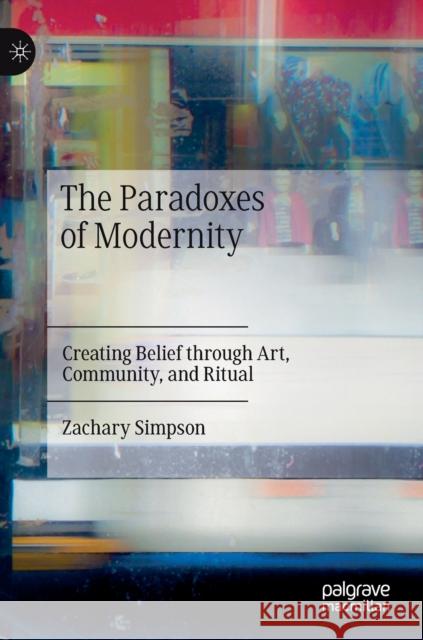
Zachary Simpson
The Paradoxes of Modernity: Creating Belief Through Art, Community, and Ritual Simpson, Zachary 9783030990558 Springer International Publishing - książkaWidoczna okładka, to zdjęcie poglądowe, a rzeczywista szata graficzna może różnić się od prezentowanej.

The Paradoxes of Modernity: Creating Belief Through Art, Community, and Ritual

ISBN-13: 9783030990558 / Angielski / Twarda / 2022

Zachary Simpson
cena 443,82
(netto: 422,69 VAT:  5%)

Najniższa cena z 30 dni: 424,07
Termin realizacji zamówienia:
ok. 22 dni roboczych
Bez gwarancji dostawy przed świętami

Darmowa dostawa!
inne wydania

A paradox lies at the heart of modernity: the simultaneous demand to create ideas to make us better humans and communities, along with the contrary imperative that we criticize all ideals, especially the ones we have created. In philosophy we see this paradox most acutely in figures like Immanuel Kant, who states that we cannot know the essence of things and yet we must retain old ideas – God, freedom, and the soul – in order to become better and more ethical humans. Or in Friedrich Nietzsche, whose eternal recurrence, a self-created myth whose sole purpose is to get us to see the value in the everyday. This basic scheme – belief and un-belief – is one of the fundamental elements of modernity, manifesting itself in the philosophies of Herbert Marcuse and Michel Foucault, along with the theologies of Blaise Pascal, C.S. Lewis, William James, Sallie McFague, and Philip Clayton.



How do we live out the values we know to be constructions? This question holds captive our ability to solve public goods problems and make our lives more meaningful. Instead of seeing this paradox of modernity as self-deception or bad faith, Zachary Simpson employs cognitive and social scientific research to explain how best to realize values that we know to be false: through art, community, and ritual. In Simpson's account, the values we construct must conform to narrative, be reinforced through community, and habituated through ritual. And yet modernity has also undermined collectivity and ritual. Thus arises the second paradox of modernity: the best tools we have for realizing values are those which devalue the individual modern subject.
The last part of the book attempts to make three normative points regarding modernity. First, the modern, individualist subject is insufficient to realize the very values and aspirations of modernity. We must recognize that humans are collective and communal. Second, we cannot simply create values – they must arise in communities and be realized through narrative and ritual. And, third, if we are to live meaningful lives as contemporary meta-ethicists and positive psychologists argue, then such lives must include art, community, and ritual as a way to affirm and reinforce one’s values.
Let’s Pretend is a statement about one of the dilemmas of the contemporary western world and how that dilemma is, and might be, resolved. How do we believe in the values that we know will make a better world, even if they are of our own making? We must do so, in part, by becoming less modern, by engaging with one another and imagining more.
The book should serve as both an essay in the history of Western thought as well as a constructive argument about the nature of the modern epoch and what resources we have to realize the central aspirations of modernity. It aims to fill a critical lacuna in theoretical and philosophical approaches to modernity. While most texts focus on either the need for created values or the need to remedy modern subjectivity, few, if any, link the two problems together. Moreover, they do not ground their analyses in the social sciences and contemporary findings regarding the efficacy of narrative, communal action, and rituals.
The book is unique, then, because it asks a central question – how do we believe in what we know to be false? – and because it answers this question using interdisciplinary methods that allow us to see the faultlines and paradoxes of our age.

Kategorie:
Nauka, Filozofia
Kategorie BISAC:
Philosophy > Movements - General
Philosophy > History & Surveys - Modern
Wydawca:
Springer International Publishing
Język:
Angielski
ISBN-13:
9783030990558
Rok wydania:
2022
Waga:
0.45 kg
Wymiary:
21.0 x 14.8
Oprawa:
Twarda
Dodatkowe informacje:
Wydanie ilustrowane

1. Introduction (with added material on modernity)

2. Skepticism and Beyond
3. Noble Lies, Fantasies, and Fictions
4. The Religious Story
5. Modernity and the Temporal Shift
6. A Philosophy of Fictions
7. Art, Narrative, and Commitment
8. Community
9. Ritual
10. The Subject
11. Pretending Our Way to Fulfillment (with added section on myth)
12. The Work of Mourning (with further elaboration on religion and myth)

Zachary Simpson is Professor of Philosophy and Religious Studies at the University of Science and Arts of Oklahoma, USA.

The Paradoxes of Modernity examines one of the central dilemmas of the modern world: How do we believe in ideas that we know to be untrue, but are of practical value? The modern world tells us to be critical and independent. And yet it also proliferates constructed ideas, from gods to ethical ideals to fictions. Using research from anthropology, psychology, religion, and philosophy, the book shows how the path to belief goes through narratives, communities, and rituals. These technologies help us realize belief in an age of unbelief, but they also call into question the central dogmas of modernity itself: the independent, critical, and rational subject. To be modern is to be caught between these two paradoxes: either incapable of believing in ideas we desire, or realizing them at the expense of modernity itself.


Udostępnij

Facebook - konto krainaksiazek.pl


Opinie o Krainaksiazek.pl na Opineo.pl

Partner Mybenefit

Krainaksiazek.pl w programie rzetelna firma Krainaksiaze.pl - płatności przez paypal

Czytaj nas na:

Facebook - krainaksiazek.pl
  • książki na zamówienie
  • granty
  • książka na prezent
  • kontakt
  • pomoc
  • opinie
  • regulamin
  • polityka prywatności

Zobacz:

  • Księgarnia czeska

  • Wydawnictwo Książkowe Klimaty

1997-2025 DolnySlask.com Agencja Internetowa

© 1997-2022 krainaksiazek.pl
     
KONTAKT | REGULAMIN | POLITYKA PRYWATNOŚCI | USTAWIENIA PRYWATNOŚCI
Zobacz: Księgarnia Czeska | Wydawnictwo Książkowe Klimaty | Mapa strony | Lista autorów
KrainaKsiazek.PL - Księgarnia Internetowa

Polityka prywatnosci - link
Krainaksiazek.pl - płatnośc Przelewy24
Przechowalnia Przechowalnia




