• Wyszukiwanie zaawansowane
  • Kategorie
  • Kategorie BISAC
  • Książki na zamówienie
  • Promocje
  • Granty
  • Książka na prezent
  • Opinie
  • Pomoc
  • Załóż konto
  • Zaloguj się

The Palgrave Handbook of Gothic Origins » książka


zaloguj się | załóż konto
Logo Krainaksiazek.pl

koszyk

konto

szukaj
topmenu
Księgarnia internetowa
Szukaj
Książki na zamówienie
Promocje
Granty
Książka na prezent
Moje konto
Pomoc
 
 
Wyszukiwanie zaawansowane
Pusty koszyk
Bezpłatna dostawa dla zamówień powyżej 20 złBezpłatna dostawa dla zamówień powyżej 20 zł

Kategorie główne

• Nauka
 [2949965]
• Literatura piękna
 [1857847]

  więcej...
• Turystyka
 [70818]
• Informatyka
 [151303]
• Komiksy
 [35733]
• Encyklopedie
 [23180]
• Dziecięca
 [617748]
• Hobby
 [139972]
• AudioBooki
 [1650]
• Literatura faktu
 [228361]
• Muzyka CD
 [398]
• Słowniki
 [2862]
• Inne
 [444732]
• Kalendarze
 [1620]
• Podręczniki
 [167233]
• Poradniki
 [482388]
• Religia
 [509867]
• Czasopisma
 [533]
• Sport
 [61361]
• Sztuka
 [243125]
• CD, DVD, Video
 [3451]
• Technologie
 [219309]
• Zdrowie
 [101347]
• Książkowe Klimaty
 [123]
• Zabawki
 [2362]
• Puzzle, gry
 [3791]
• Literatura w języku ukraińskim
 [253]
• Art. papiernicze i szkolne
 [7933]
Kategorie szczegółowe BISAC

The Palgrave Handbook of Gothic Origins

ISBN-13: 9783030845643 / Angielski / Miękka / 2022 / 618 str.
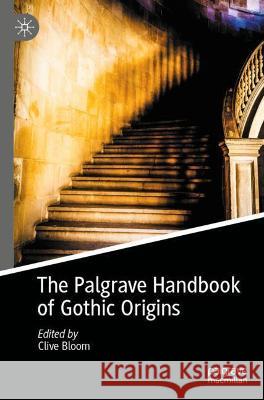
Clive Bloom
The Palgrave Handbook of Gothic Origins Clive Bloom 9783030845643 Palgrave MacMillan - książkaWidoczna okładka, to zdjęcie poglądowe, a rzeczywista szata graficzna może różnić się od prezentowanej.

The Palgrave Handbook of Gothic Origins

ISBN-13: 9783030845643 / Angielski / Miękka / 2022 / 618 str.

Clive Bloom
cena 1008,75 zł
(netto: 960,71 VAT:  5%)

Najniższa cena z 30 dni: 886,75 zł
Termin realizacji zamówienia:
ok. 22 dni roboczych
Bez gwarancji dostawy przed świętami

Darmowa dostawa!

This handbook provides a comprehensive overview of research on the Gothic Revival. The Gothic Revival was based on emotion rather than reason and when Horace Walpole created Strawberry Hill House, a gleaming white castle on the banks of the Thames, he had to create new words to describe the experience of gothic lifestyle. Nevertheless, Walpole’s house produced nightmares and his bookThe Castle of Otrantowas the first truly gothic novel, with supernatural, sensational and Shakespearean elements challenging the emergent fiction of social relationships. The novel’s themes of violence, tragedy, death, imprisonment, castle battlements, dungeons, fair maidens, secrets, ghosts and prophecies led to a new genre encompassing prose, theatre, poetry and painting, whilst opening up a whole world of imagination for entrepreneurial female writers such as Mary Shelley, Joanna Baillie and Ann Radcliffe, whose immensely popular books led to the intense inner landscapes of the Bronte sisters. Matthew Lewis’sThe Monkcreated a new gothic: atheistic, decadent, perverse, necrophilic and hellish. The social upheaval of the French Revolution and the emergence of the Romantic movement with its more intense (and often) atheistic self-absorption led the gothic into darker corners of human experience with a greater emphasis on the inner life, hallucination, delusion, drug addiction, mental instability, perversion and death and the emerging science of psychology. The intensity of the German experience led to an emphasis on doubles and schizophrenic behaviour, ghosts, spirits, mesmerism, the occult and hell. This volume charts the origins of this major shift in social perceptions and completes a trilogy of Palgrave Handbooks on the Gothic—combined they provide an exhaustive survey of current research in Gothic studies, a go-to for students and researchers alike.


This handbook provides a comprehensive overview of research on the Gothic Revival. The Gothic Revival was based on emotion rather than reason and when Horace Walpole created Strawberry Hill House, a gleaming white castle on the banks of the Thames, he had to create new words to describe the experience of gothic lifestyle. Nevertheless, Walpole’s house produced nightmares and his book The Castle of Otranto was the first truly gothic novel, with supernatural, sensational and Shakespearean elements challenging the emergent fiction of social relationships. The novel’s themes of violence, tragedy, death, imprisonment, castle battlements, dungeons, fair maidens, secrets, ghosts and prophecies led to a new genre encompassing prose, theatre, poetry and painting, whilst opening up a whole world of imagination for entrepreneurial female writers such as Mary Shelley, Joanna Baillie and Ann Radcliffe, whose immensely popular books led to the intense inner landscapes of the Bronte sisters. Matthew Lewis’s The Monk created a new gothic: atheistic, decadent, perverse, necrophilic and hellish. The social upheaval of the French Revolution and the emergence of the Romantic movement with its more intense (and often) atheistic self-absorption led the gothic into darker corners of human experience with a greater emphasis on the inner life, hallucination, delusion, drug addiction, mental instability, perversion and death and the emerging science of psychology. The intensity of the German experience led to an emphasis on doubles and schizophrenic behaviour, ghosts, spirits, mesmerism, the occult and hell. This volume charts the origins of this major shift in social perceptions and completes a trilogy of Palgrave Handbooks on the Gothic—combined they provide an exhaustive survey of current research in Gothic studies, a go-to for students and researchers alike.

Kategorie:
Nauka, Socjologia i społeczeństwo
Kategorie BISAC:
Fiction > Gothic
Wydawca:
Palgrave MacMillan
Język:
Angielski
ISBN-13:
9783030845643
Rok wydania:
2022
Dostępne języki:
Ilość stron:
618
Waga:
0.96 kg
Wymiary:
23.5 x 15.5
Oprawa:
Miękka
Dodatkowe informacje:
Wydanie ilustrowane

1.     Clive Bloom: Introduction: From Horace Walpole to the Divine Marquis de Sade.- Gothic Ancestors.- 2.     Giles Whiteley: Shakespeare, Influence and Appropriation.- 3.     Cecilia Lindskog Whiteley: Jacobean Drama and the Macabre.- Gothic Style.- 4.     Beatriz Sánchez Santos and Manuel Aguirre: The Grammar of a Genre.- 5.     Manuel Aguirre: Formulaic Language.- Sentimental Gothic.- 6.     Joan Passey: Ann Radcliffe's Influences and Legacies.- 7.     Fanny Lacôte: Ann Radcliffe and the French Revolution.- 8. Kaley Kramer:  Forms and Feelings in the Genre.- 9. J.S. Mackley: The re-discovery of Eleanor Sleath.- Gothic Science.- 10. Robert K. Shepherd: Victor Frankenstein Sullies The Book of Splendour.- 11. Marta Vega: The Myth of Frankenstein.- Graveyard Gothic.- 12. Eric Parisot:  Graveyard Poetry and the Aesthetics of Horror.- 13. Roger Luckhurst: The Necropolitan Imagination.- 14. Nicola Bowring: Writing the City and Loss in the Work of Thomas De Quincey.- Gothic Poetry.- 15. Maria Giakaniki: The Dark Poetry of Charlotte Dacre.- 16. Kirstin A. Mills: The Poetics of Space, the Mind and the Supernatural in S. T. Coleridge.- Visual Gothic.- 17. James Rattue:  Gardens and Designed Landscapes.- 18. Peter N. Lindfield and Dale Townshend: Metaphor and Revivalist Architecture at Strawberry Hill.- 19. David Annwn Jones:  The Art of Ghostly Projections.- 20. Simon Bacon:  The Nightmare and Proto-vampires.- Gothic Exoticism.- 21. Martina Bartlett:  John Polidori’s Mesmerising Vampire.- 22. Naomi Simone Borwein: The Cabinet of Orientalisms.- Gothic Theology and the Mystical.- 23. Holly Hirst:  Gothic Theologies of the Supernatural.- 24. Miranda Corcoran: Imagining the Occult in the Age of Enlightenment.- 25. Cleo Cameron: Materialism and The Monk.- 26. Charlie Jorge: Between the Nation and the Dark Recesses of the Soul in Charles  Maturin.- 27. Joakim Wrethed:  Charles Maturin Revisited.- 28. Simon Bacon:  The Vrykolokas, the Wandering Jew, and the Flying Dutchman.- 29. Madeline Potter: The Body, Materiality, and Damnation in Charles Maturin.


Clive Bloom is Emeritus Professor at Middlesex University, UK, and currently, Professor in Residence at the Larkin Centre for Poetry and Creative Writing at Hull University, UK. He has written numerous books on popular literature and Gothic fiction, history and politics. He is a broadcaster and occasional journalist who has been quoted in both the Washington Post and Pravda and has an entry in the Columbia Book of World Quotations.    


This handbook provides a comprehensive overview of research on the Gothic Revival. The Gothic Revival was based on emotion rather than reason and when Horace Walpole created Strawberry Hill House, a gleaming white castle on the banks of the Thames, he had to create new words to describe the experience of gothic lifestyle. Nevertheless, Walpole’s house produced nightmares and his book The Castle of Otranto was the first truly gothic novel, with supernatural, sensational and Shakespearean elements challenging the emergent fiction of social relationships. The novel’s themes of violence, tragedy, death, imprisonment, castle battlements, dungeons, fair maidens, secrets, ghosts and prophecies led to a new genre encompassing prose, theatre, poetry and painting, whilst opening up a whole world of imagination for entrepreneurial female writers such as Mary Shelley, Joanna Baillie and Ann Radcliffe, whose immensely popular books led to the intense inner landscapes of the Bronte sisters. Matthew Lewis’s The Monk created a new gothic: atheistic, decadent, perverse, necrophilic and hellish. The social upheaval of the French Revolution and the emergence of the Romantic movement with its more intense (and often) atheistic self-absorption led the gothic into darker corners of human experience with a greater emphasis on the inner life, hallucination, delusion, drug addiction, mental instability, perversion and death and the emerging science of psychology. The intensity of the German experience led to an emphasis on doubles and schizophrenic behaviour, ghosts, spirits, mesmerism, the occult and hell. This volume charts the origins of this major shift in social perceptions and completes a trilogy of Palgrave Handbooks on the Gothic—combined they provide an exhaustive survey of current research in Gothic studies, a go-to for students and researchers alike.



Clive Bloom is Emeritus Professor at Middlesex University, UK, and currently, Professor in Residence at the Larkin Centre for Poetry and Creative Writing at Hull University, UK. He has written numerous books on popular literature and Gothic fiction, history and politics. He is a broadcaster and occasional journalist who has been quoted in both the Washington Post and Pravda and has an entry in the Columbia Book of World Quotations.


Udostępnij

Facebook - konto krainaksiazek.pl


Opinie o Krainaksiazek.pl na Opineo.pl

Partner Mybenefit

Krainaksiazek.pl w programie rzetelna firma Krainaksiaze.pl - płatności przez paypal

Czytaj nas na:

Facebook - krainaksiazek.pl
  • książki na zamówienie
  • granty
  • książka na prezent
  • kontakt
  • pomoc
  • opinie
  • regulamin
  • polityka prywatności

Zobacz:

  • Księgarnia czeska

  • Wydawnictwo Książkowe Klimaty

1997-2025 DolnySlask.com Agencja Internetowa

© 1997-2022 krainaksiazek.pl
     
KONTAKT | REGULAMIN | POLITYKA PRYWATNOŚCI | USTAWIENIA PRYWATNOŚCI
Zobacz: Księgarnia Czeska | Wydawnictwo Książkowe Klimaty | Mapa strony | Lista autorów
KrainaKsiazek.PL - Księgarnia Internetowa

Polityka prywatnosci - link
Krainaksiazek.pl - płatnośc Przelewy24
Przechowalnia Przechowalnia




