• Wyszukiwanie zaawansowane
  • Kategorie
  • Kategorie BISAC
  • Książki na zamówienie
  • Promocje
  • Granty
  • Książka na prezent
  • Opinie
  • Pomoc
  • Załóż konto
  • Zaloguj się

The Ontology of the Middle Way » książka


zaloguj się | załóż konto
Logo Krainaksiazek.pl

koszyk

konto

szukaj
topmenu
Księgarnia internetowa
Szukaj
Książki na zamówienie
Promocje
Granty
Książka na prezent
Moje konto
Pomoc
 
 
Wyszukiwanie zaawansowane
Pusty koszyk
Bezpłatna dostawa dla zamówień powyżej 20 złBezpłatna dostawa dla zamówień powyżej 20 zł

Kategorie główne

• Nauka
 [2946912]
• Literatura piękna
 [1852311]

  więcej...
• Turystyka
 [71421]
• Informatyka
 [150889]
• Komiksy
 [35717]
• Encyklopedie
 [23177]
• Dziecięca
 [617324]
• Hobby
 [138808]
• AudioBooki
 [1671]
• Literatura faktu
 [228371]
• Muzyka CD
 [400]
• Słowniki
 [2841]
• Inne
 [445428]
• Kalendarze
 [1545]
• Podręczniki
 [166819]
• Poradniki
 [480180]
• Religia
 [510412]
• Czasopisma
 [525]
• Sport
 [61271]
• Sztuka
 [242929]
• CD, DVD, Video
 [3371]
• Technologie
 [219258]
• Zdrowie
 [100961]
• Książkowe Klimaty
 [124]
• Zabawki
 [2341]
• Puzzle, gry
 [3766]
• Literatura w języku ukraińskim
 [255]
• Art. papiernicze i szkolne
 [7810]
Kategorie szczegółowe BISAC

The Ontology of the Middle Way

ISBN-13: 9789401067331 / Angielski / Miękka / 2011 / 372 str.
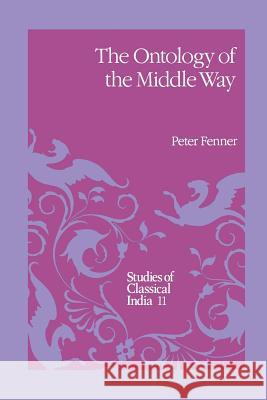
P. Fenner
The Ontology of the Middle Way P. Fenner 9789401067331 Springer - książkaWidoczna okładka, to zdjęcie poglądowe, a rzeczywista szata graficzna może różnić się od prezentowanej.

The Ontology of the Middle Way

ISBN-13: 9789401067331 / Angielski / Miękka / 2011 / 372 str.

P. Fenner
cena 806,99
(netto: 768,56 VAT:  5%)

Najniższa cena z 30 dni: 771,08
Termin realizacji zamówienia:
ok. 22 dni roboczych
Bez gwarancji dostawy przed świętami

Darmowa dostawa!

This study is mainly the outcome of work completed as a Ph.D. thesis at the University of Queensland. However, it has been revised in many ways since its preparation in dissertation form. Many people have contributed to the study and I am concerned that I may fail to mention everyone who has assisted me. My first introduction to The Introduction to the Middle Way (Madhyamakavatara) came through a course I attended at a Buddhist Centre in Queensland called Chenrezig Institute. The course was given by Ven. Geshe Loden, originally of Sera Monastery in India, and was translated by Ven. Zasep Tulku. Besides participating in this course I also attended a number of other courses on Madhyamika presented by these and other lamas in Australia and in Nepal. I was also fortunate to spend a semester at the University of Wisconsin - Madison studying with Professor Geshe Lhundup Sopa. At different times I had the opportunity to discuss, in person or through correspondence, aspects of the study with a number of leading scholars. Professors J.W. de Jong, Robert Thurman, Jeffrey Hopkins and Paul Williams gave freely of their expertise although in some cases I know that I was unable to take full advantage of their suggestions. Special mention and thanks go Professor Fred Streng who supported the study and gave most graciously of his time. In Australia I would like to thank my advisers at the University of Queensland, Drs. Ross Reat, Arvind Sharma and Richard Hutch.


Kategorie:
Nauka, Filozofia
Kategorie BISAC:
Gardening > General
Religion > Buddhism - General (see also Philosophy - Buddhist)
Philosophy > Filozofia wschodu
Wydawca:
Springer
Seria wydawnicza:
Studies of Classical India
Język:
Angielski
ISBN-13:
9789401067331
Rok wydania:
2011
Wydanie:
Softcover Repri
Numer serii:
000171844
Ilość stron:
372
Waga:
0.54 kg
Wymiary:
22.9 x 15.2
Oprawa:
Miękka
Wolumenów:
01

Notes.- One: The Introduction to the Middle Way [MA] and its Religious Content.- 1 Chandrakirti and the Introduction to the Middle Way [MA].- 2 Three Systems of Thought that can be Isolated in the Introduction to the Middle Way [MA].- 2.1 The System of Insight and its Development.- 2.2 The Bodhisattvas’ Development and their Deeds (carya).- 2.3 The Characterised Madhyamika.- 3 The Context of the Introduction to the Middle Way [MA].- 3.1 Knowledge (jnana) Yoga.- 3.2 The Transference of Insight.- 4 The Profound and Extensive Contents.- Notes.- Two: The Profound View.- 1 The Cognitive Basis of Madhyamika Soteriology.- 2 The Philosophy of Emptiness (sunyavada).- 2.1 The Descriptions of Emptiness.- 2.2 Different Types of Emptiness.- 2.3 Twenty Emptinesses.- 2.4 Intrinsic Existence (svahhava) as what is Negated by Emptiness.- 3 Madhyamika Analyses.- 4 Analysis of Phenomena (dharma).- 4.1 Birth from Self.- 4.2 Birth from Other.- 4.3 Birth from both Self and Other.- 4.4 Birth from no Cause.- 5 Analysis of the Person (pudgala).- 5.1 The Self or Person Negated.- 5.2 Seven-Sectioned Analysis.- 5.3 The Self is not Different from the Psycho-physical Organism.- 5.4 The Self is not the Same as the Psycho-physical Organism.- 5.5 Refutation of a Substantial Self.- 5.6 The Self is not the Same as the Collection.- 5.7 The Self is not in the Psycho-physical Organism and Vice Versa.- 5.8 The Self does not have the Psycho-physical Organism.- 5.9 The Self is not the Shape of the Psycho-physical Organism.- 6 Critique of Buddhist Phenomenalism (vijnanavada).- 6.1 Refuting the Non-externality of Sense Objects.- 6.2 The Failure of Mental Potentials to Account for Sensory Experience.- 6.3 Counter-examples.- 6.4 Refutation of a Self-reflexive Consciousness (svasamvedana).- 7 Some Meta-logical Observation.- 8 The Middle Path and Relational Origination.- 9 The Profound Path Structure.- Notes.- Three: Analysis and Insight.- 1 Western Interpretation of the Problem.- 2 Chandrakirti’s Statement on the Relationship.- 3 The Structural Foundations of Analysis.- 3.1 Entity Discrimination (samjna) and Predication.- 3.2 The Principle of Definition Through Logical Opposites.- 3.3 Dichotomisation.- 3.4 The ParadoxicalStructure of Predication.- 3.5 The Destructuring of Conceptuality.- 4 Patterns of Analysis in the Introduction to the Middle Way [MA].- 4.1 The Introduction to the Middle Way’s [MA] Proofs and Categories of Analysis.- 4.2 The Introduction’s [MA] Analyses and the Core Structure.- 4.3 The Introduction’s [MA] Contradictions.- 4.4 Category Restricted and Unrestricted Analyses.- 4.5 Abstract and Instantiated Analyses.- 4.6 Interpretation of Diagram 3.1 as a Flow-chart.- 4.7 Modal Analysis and Substantive Bi-negative Conclusions.- 4.8 Implicative and Non-affirming Negations.- 5 Logical and Experiential Consequences.- 6 Contingency and Necessity in Consequential Analysis.- Notes.- Four: Insight and Extensive Deeds.- 1 Common-sense World-view.- 1.1 Instruments of Valid Conventional Cognition.- 1.2 Subjective Determinants of Cognition.- 1.3 The Common-sense World.- 2 The Yogin’s Practices.- 3 The Bodhisattvas’ Path.- 3.1 The Bodhisattvas’ Compassion.- 4 The Buddha-nature.- 4.1 Interpretative Teaching.- 5 The Relations between the Profound and Extensive Contents.- 5.1 Emptiness and Conventions.- 5.2 The Relations between the Two Realities.- 5.3 Emptiness and Valid Conventions.- 6 Insight and the Fully Evolved Mind.- 6.1 Insight and Compassion.- 6.2 Insight and the Fully Evolved Mind (bodhicitta).- Notes.- Conclusion.


Udostępnij

Facebook - konto krainaksiazek.pl


Opinie o Krainaksiazek.pl na Opineo.pl

Partner Mybenefit

Krainaksiazek.pl w programie rzetelna firma Krainaksiaze.pl - płatności przez paypal

Czytaj nas na:

Facebook - krainaksiazek.pl
  • książki na zamówienie
  • granty
  • książka na prezent
  • kontakt
  • pomoc
  • opinie
  • regulamin
  • polityka prywatności

Zobacz:

  • Księgarnia czeska

  • Wydawnictwo Książkowe Klimaty

1997-2025 DolnySlask.com Agencja Internetowa

© 1997-2022 krainaksiazek.pl
     
KONTAKT | REGULAMIN | POLITYKA PRYWATNOŚCI | USTAWIENIA PRYWATNOŚCI
Zobacz: Księgarnia Czeska | Wydawnictwo Książkowe Klimaty | Mapa strony | Lista autorów
KrainaKsiazek.PL - Księgarnia Internetowa

Polityka prywatnosci - link
Krainaksiazek.pl - płatnośc Przelewy24
Przechowalnia Przechowalnia





