The New World: Conquest and Consequence » książka





The New World: Conquest and Consequence
ISBN-13: 9783565249503 / Angielski / Miękka / 280 str.
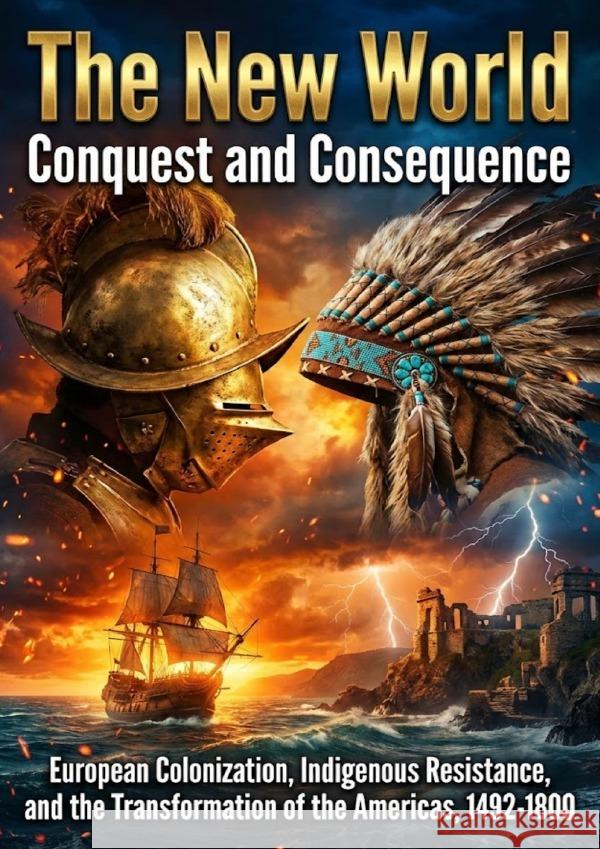
European arrival in the Americas initiated catastrophic demographic collapse, violent conquest, and the establishment of colonial systems that fundamentally reshaped three continents. This comprehensive examination analyzes the mechanisms of colonization-from initial contact through military subjugation and missionary campaigns to plantation economies and administrative control-exploring both European imperial strategies and indigenous responses ranging from accommodation to armed resistance.Drawing on colonial records, indigenous codices, missionary reports, and archaeological evidence, this book reveals how conquest operated through disease, military technology, political alliances with rival indigenous groups, and systematic exploitation of existing social structures. It explores how Spanish encomienda, Portuguese bandeiras, and French fur trade networks created distinct colonial patterns, how indigenous populations adapted survival strategies, and how African slavery became central to colonial economies.The narrative examines the pace and scale of demographic catastrophe, the persistence of indigenous political and cultural systems despite colonial pressure, the emergence of mixed populations and new identities, and how colonial extraction enriched European economies while devastating American societies. It analyzes resistance movements, the role of the Catholic Church, legal debates over indigenous rights, and how colonization laid foundations for modern inequalities. Without minimizing violence or reducing indigenous peoples to victims, this work provides rigorous analysis of conquest's mechanisms and lasting consequences.
Within fifty years of contact, Caribbean Taíno population collapsed from disease and forced labor. Encomienda transformed indigenous societies into labor pools for Spanish extraction.




Czytaj nas na:
KrainaKsiazek.PL - Księgarnia Internetowa


