• Wyszukiwanie zaawansowane
  • Kategorie
  • Kategorie BISAC
  • Książki na zamówienie
  • Promocje
  • Granty
  • Książka na prezent
  • Opinie
  • Pomoc
  • Załóż konto
  • Zaloguj się

The Muscarinic Receptors » książka


zaloguj się | załóż konto
Logo Krainaksiazek.pl

koszyk

konto

szukaj
topmenu
Księgarnia internetowa
Szukaj
Książki na zamówienie
Promocje
Granty
Książka na prezent
Moje konto
Pomoc
 
 
Wyszukiwanie zaawansowane
Pusty koszyk
Bezpłatna dostawa dla zamówień powyżej 20 złBezpłatna dostawa dla zamówień powyżej 20 zł

Kategorie główne

• Nauka
 [2949965]
• Literatura piękna
 [1857847]

  więcej...
• Turystyka
 [70818]
• Informatyka
 [151303]
• Komiksy
 [35733]
• Encyklopedie
 [23180]
• Dziecięca
 [617748]
• Hobby
 [139972]
• AudioBooki
 [1650]
• Literatura faktu
 [228361]
• Muzyka CD
 [398]
• Słowniki
 [2862]
• Inne
 [444732]
• Kalendarze
 [1620]
• Podręczniki
 [167233]
• Poradniki
 [482388]
• Religia
 [509867]
• Czasopisma
 [533]
• Sport
 [61361]
• Sztuka
 [243125]
• CD, DVD, Video
 [3451]
• Technologie
 [219309]
• Zdrowie
 [101347]
• Książkowe Klimaty
 [123]
• Zabawki
 [2362]
• Puzzle, gry
 [3791]
• Literatura w języku ukraińskim
 [253]
• Art. papiernicze i szkolne
 [7933]
Kategorie szczegółowe BISAC

The Muscarinic Receptors

ISBN-13: 9780896031562 / Angielski / Twarda / 1989 / 478 str.
Phillip Brown; Joan Heller Brown
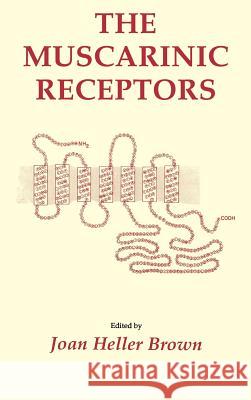
The Muscarinic Receptors Phyllis Ed. F. Ed. Phyllis Ed. F. Brown Joan Heller Brown 9780896031562 Humana Press - książkaWidoczna okładka, to zdjęcie poglądowe, a rzeczywista szata graficzna może różnić się od prezentowanej.

The Muscarinic Receptors

ISBN-13: 9780896031562 / Angielski / Twarda / 1989 / 478 str.

Phillip Brown; Joan Heller Brown
cena 403,47
(netto: 384,26 VAT:  5%)

Najniższa cena z 30 dni: 385,52
Termin realizacji zamówienia:
ok. 22 dni roboczych
Bez gwarancji dostawy przed świętami

Darmowa dostawa!
inne wydania

Research on muscarinic receptors is advancing at an extraordinary rate. Ten years ago, the existence of muscarinic receptor sub types was a logical assumption with only scattered experimen tal support. The discovery that pirenzepine recognized apparent heterogeneity in muscarinic binding sites infused new life into the problem of subclassifying muscarinic receptors. Simultaneous advances in molecular biology created a frenzy to clone cell sur face receptors. The muscarinic receptor succumbed surprisingly quickly, revealing its structure and that of at least four closely related gene products within a year. Our hope of obtaining clear evidence for muscarinic receptor subtypes was answered with a vengeance. Now a family of muscarinic receptors sits before us, asking to be understood. The bounty is as attractive to those who have not previously studied muscarinic receptors as to those who have dedicated their research careers to this subject. The goal of this book is to ensure that the new generation of research will profit from the wisdom of the past. The tools of molecular biology are well suited to the tasks of characteriz ing the pharmacology, function, and regulation of the distinct muscarinic receptor subtypes. However, efficient and intelligent use of these tools is not possible, unless one understands the properties of the receptor, the molecular mechanisms by which it couples to effectors, and the ways that it is regulated."


Kategorie:
Nauka, Medycyna
Kategorie BISAC:
Gardening > General
Medical > Neuroscience
Science > Life Sciences - Neuroscience
Wydawca:
Humana Press
Seria wydawnicza:
Experimental and Clinical Neuroscience
Język:
Angielski
ISBN-13:
9780896031562
Rok wydania:
1989
Wydanie:
1989
Numer serii:
000162006
Ilość stron:
478
Waga:
1.99 kg
Wymiary:
23.5 x 15.5
Oprawa:
Twarda
Wolumenów:
01

Section 1: Historical Perspectives.- 1 History and Basic Properties of the Muscarinic Cholinergic Receptors.- 1. History.- 2. The Range of Muscarinic Activity.- 3. Muscarinic Agonists.- 4. Muscarinic Antagonists.- 5. Receptor Binding Studies.- 6. Quantitation of Muscarinic Effects in Intact Tissues.- 7. Physiological and Biochemical Actions of Muscarinic Agonists.- 7.1. Actions through Adenylate Cyclase.- 7.2. Actions through Inositol Phosphates.- 7.3. Actions on Potassium Permeability.- 7.4. Actions on Calcium Permeability.- 8. Subtypes of the Muscarinic Receptor.- References.- Section 2: Pharmacological Properties, Purification, and Cloning of Muscarinic Receptors.- 2 The Binding Properties of Muscarinic Receptors.- 1. Introduction.- 2. The Binding of Antagonists.- 2.1. Early Studies: A Simple Picture.- 2.2. Recent Studies: A Very Complex Picture.- 2.3. Comparison of the Binding Properties of Receptors in Different Tissues.- 2.4. Simplification of the Binding Pattern by the Use of Tritiated Selective Antagonists.- 2.5. Simplification and Analysis of the Binding Complexity by Taking Advantage of the Different Kinetics of [3H]NMS Binding to the Receptor Subclasses.- 2.6. Effects of Incubation Conditions on Antagonist Binding.- 2.7. Drugs That Do Not Bind at the Same Site as Acetylcholine or Atropine.- 2.8. Soluble Receptors.- 2.9. Differences in the Binding of Hydrophobic and Hydrophilic Ligands to Muscarinic Receptors.- 2.10. Binding Studies on Smooth Muscle.- 3. The Binding of Agonists.- 3.1. Early Studies.- 3.2. Simplification of the Agonist Binding Properties.- 3.3. Modulation of the Agonist Binding Properties by Divalent Cations and Nucleotides.- 3.4. Models for Agonist Binding Heterogeneity.- 3.5. Modulation of the Agonist Binding Properties by Other Agents.- 3.6. Soluble Receptors.- 4. General Conclusions.- References.- 3 Muscarinic Receptor Purification and Properties.- 1. Solubilization and Purification of Muscarinic Receptors.- 1.1. Solubilization of Muscarinic Receptors (mAChR).- 1.2. Purification of Muscarinic Receptors.- 2. Ligand Binding Properties of Purified Muscarinic Receptors.- 3. Physical Properties and Structural Studies of Muscarinic Receptors.- 3.1. Glycoprotein Properties.- 3.2. Physical Properties.- 4. Cloning of Muscarinic Receptors.- 4.1. Amino-Acid Sequence and Structure Deduced from cDNA Clones.- 4.2. Receptor Expression.- 5. Reconstitution of Muscarinic Receptors with Guanine Nucleotide Binding Proteins.- References.- 4 Subtypes of Muscarinic Cholinergic Receptors: Ligand Binding, Functional Studies, and Cloning.- 1. Introduction.- 2. Physiological Studies.- 3. Radioligand Binding Studies.- 4. Molecular Cloning of Genes for Muscarinic Receptors.- 5. Conclusions.- References.- 5 Structural Determinants of Muscarinic Agonist Activity.- 1. Introduction.- 2. Analogs of Acetylcholine.- 2.1. Conformationally Restricted Analogs of Acetylcholine.- 2.2. Affinity and Efficacy of Acetylcholine Analogs.- 2.3. Molecular Models for Acetylcholine-Like Ligands.- 3. Analogs of Muscarine.- 3.1. Cyclopentane and Cyclopentene Derivatives.- 3.2. Tetrahydrofurane and Tetrahydrothiophene Derivatives.- 3.3. Oxathiolanes.- 3.4. Affinity and Efficacy of Muscarine Analogs.- 4. Analogs of Arecoline.- 4.1. Tetrahydropyridine Analogs.- 4.2. Dihydrothiopyranes.- 4.3. 3-Pyrroline Derivatives.- 4.4. Conformationally Restricted Tetrahydropyridine Derivatives.- 5. Analogs of Oxotremorine.- 5.1. Structure—Affinity and Structure—Efficacy Relationships.- 5.2. Relationship between Affinity and Efficacy and Biochemically Determined Drug Parameters.- 5.3. Selectivity of Partial Agonists.- 6. Atypical Muscarinic Agonists.- 6.1. Analogs of McN-A-343.- 6.2. Analogs of RS 86.- 6.3. Analogs of Pilocarpine.- 6.4. Analogs of AF 30.- 7. Haloalkylamine Derivatives of Muscarinic Agonists.- 7.1. Analogs of Acetylcholine.- 7.2. Analogs of Oxotremorine.- References.- Section 3: Biochemical Effectors Coupled to Muscarinic Receptors.- 6 Muscarinic Cholinergic Receptor-Mediated Regulation of Cyclic AMP Metabolism.- 1. Introduction.- 2. Regulation of Cyclic AMP Synthesis.- 2.1. General Model for Activation of Adenylate Cyclase.- 2.2. Receptor-Mediated Inhibition of Adenylate Cyclase.- 2.3. Observations on mAChR-Mediated Inhibition of Adenylate Cyclase.- 3. Receptor-Mediated Activation of Phosphodiesterase.- 3.1. General Properties.- 3.2. Phosphodiesterase in Thyroid Slices.- 3.3. Phosphodiesterase in Astrocytoma Cells.- 3.4. Mechanism of Activation of Phosphodiesterase.- 4. Comparative Properties of the Two Second-Messenger Response Systems Involved in mAChR-Mediated Lowering of Cyclic AMP Levels.- 5. Conclusions.- References.- 7 Muscarinic Cholinergic Receptor Regulation of Inositol Phospholipid Metabolism and Calcium Mobilization.- 1. The Phosphoinositide Cycle.- 2. Tissue Localization of Muscarinic Receptor-Stimulated Inositol Phospholipid Hydrolysis.- 3. Relationship Between Agonist Occupancy and the Phosphoinositide Response.- 4. Differential Effects of Muscarinic Agonists on Phosphoinositide Hydrolysis.- 5. Relationship of Muscarinic Receptor Subtypes to the Regulation of Phospholipase C.- 6. Evidence that a GTP-Binding Protein Transduces Muscarinic Receptor Binding into Activation of Phospholipase C.- 7. Regulation of Muscarinic Receptor-Mediated Phosphoinositide Hydrolysis by Protein Kinase C.- 8. Muscarinic Receptor Stimulation of Calcium Mobilization.- 9. The Role of Inositol Trisphosphate in Release of Calcium from Intracellular Stores.- 10. Depletion and Refilling of Calcium Stores.- 11. Role of Calcium Elevation in Muscarinic Responses.- 12. Conclusions and Future Directions.- References.- 8 Muscarinic Receptor Regulation of Cyclic GMP and Eicosanoid Production.- 1. Physiology.- 1.1. Muscarinic Receptor-Mediated Cyclic GMP Formation in Cells.- 1.2. Function of Cyclic GMP in Various Systems.- 2. Muscarinic Receptor Subtype Mediating Cyclic GMP Formation.- 2.1. N1E-115 Neuroblastoma Cells.- 2.2. Correlation of Cyclic GMP and Phosphoinositide Metabolism.- 3. Possible Mechanisms of Activation of Guanylate Cyclase.- 3.1. Calcium Channels.- 3.2. Oxygen and Lipids.- 4. Muscarinic Receptor-Mediated Arachidonate Metabolism.- 4.1. Blockade of Muscarinic Responses by Arachidonic Metabolic Inhibitors.- 4.2. Release of Eicosanoids by the Muscarinic Receptor.- 4.3. Lipoxygenation in Neural Tissue and Relevance to Disease.- References.- 9 Muscarinic Cholinergic Receptor Regulation of Ion Channels.- 1. Introduction.- 2. Potassium Conductance Increase.- 2.1. Heart.- 2.2. Neurons.- 2.3. Glands.- 2.4. Oocytes.- 3. Potassium Conductance Decrease.- 3.1. Neurons.- 3.2. Smooth Muscle.- 4. Calcium Channels.- 4.1. Heart.- 4.2. Neurons.- 4.3. Smooth Muscle.- 5. Inward Currents from Increased Cation Conductance.- 5.1. Heart.- 5.2. Neurons.- 5.3. Smooth Muscle.- 5.4. Gland Cells.- 5.5. Oocytes.- 6. Chloride Channels.- 6.1. Neurons.- 6.2. Gland Cells.- 6.3. Oocytes.- 7. Conclusions.- References.- Section 4: Regulation of Muscarinic Receptors.- 10 Allosteric interactions of Muscarinic Receptors and Their Regulation by Other Membrane Proteins.- 1. Allostery and Cooperativity: Definitions and Experimental Tools.- 1.1. Definitions.- 1.2. Experimental Tools.- 2. Homotropic Site—Site Interactions among Muscarinic Receptors.- 2.1. Identification of Cooperative Interactions between Muscarinic Binding Sites in Rat Adenohypophysis Using Competition Studies.- 2.2. Studies on Site—Site Interactions in Heart and Brain Muscarinic Receptors.- 3. Allosteric Interactions of Muscarinic Receptors.- 3.1. Interactions of Gallamine with Muscarinic Receptors.- 3.2. Bisquaternary Pyridinium Oximes as Allosteric Inhibitors of Rat Brain Muscarinic Receptors.- 3.3. Allosteric Interactions of Other Drugs with Muscarinic Receptors.- 4. Interaction between Muscarinic Receptors and G-Proteins.- 5. Interaction between Muscarinic Receptors and Ion Channels.- References.- 11 Regulation and Development of Muscarinic Receptor Number and Function.- 1. Introduction.- 2. Regulation by Exposure to Agonist.- 2.1. Regulation of mAChR Number and Function in Cell Culture.- 2.2. Regulation of mAChR by In Vivo Agonist and Antagonist Administration.- 2.3. Rapid Agonist-Mediated Desensitization of Receptor Function.- 3. Physiological and Biochemical Properties of Newly Synthesized Receptors.- 4. Regulation by Innervation, Hormones, and Factors.- 5. Regulation by Electrical Activity.- 6. Possible Roles of Phosphorylation in Receptor Regulation.- 7. Developmental Changes in mAChR Numbers and Function.- 7.1. Developmental Changes in the mAChR in the Central Nervous System.- 7.2. Developmental Changes in and Regulation of Cardiac mAChR.- 8. Conclusions.- References.- Section 5: Future Directions.- 12 Future Directions.- 1. Future Directions.- References.

Brown, Phillip A H Halsey is Emeritus Fellow of Nuffield College,... więcej >


Udostępnij

Facebook - konto krainaksiazek.pl


Opinie o Krainaksiazek.pl na Opineo.pl

Partner Mybenefit

Krainaksiazek.pl w programie rzetelna firma Krainaksiaze.pl - płatności przez paypal

Czytaj nas na:

Facebook - krainaksiazek.pl
  • książki na zamówienie
  • granty
  • książka na prezent
  • kontakt
  • pomoc
  • opinie
  • regulamin
  • polityka prywatności

Zobacz:

  • Księgarnia czeska

  • Wydawnictwo Książkowe Klimaty

1997-2025 DolnySlask.com Agencja Internetowa

© 1997-2022 krainaksiazek.pl
     
KONTAKT | REGULAMIN | POLITYKA PRYWATNOŚCI | USTAWIENIA PRYWATNOŚCI
Zobacz: Księgarnia Czeska | Wydawnictwo Książkowe Klimaty | Mapa strony | Lista autorów
KrainaKsiazek.PL - Księgarnia Internetowa

Polityka prywatnosci - link
Krainaksiazek.pl - płatnośc Przelewy24
Przechowalnia Przechowalnia






