• Wyszukiwanie zaawansowane
  • Kategorie
  • Kategorie BISAC
  • Książki na zamówienie
  • Promocje
  • Granty
  • Książka na prezent
  • Opinie
  • Pomoc
  • Załóż konto
  • Zaloguj się

The Mouse Nervous System » książka

zaloguj się | załóż konto
Logo Krainaksiazek.pl

koszyk

konto

szukaj
topmenu
Księgarnia internetowa
Szukaj
Książki na zamówienie
Promocje
Granty
Książka na prezent
Moje konto
Pomoc
 
 
Wyszukiwanie zaawansowane
Pusty koszyk
Bezpłatna dostawa dla zamówień powyżej 20 złBezpłatna dostawa dla zamówień powyżej 20 zł

Kategorie główne

• Nauka
 [2948695]
• Literatura piękna
 [1824038]

  więcej...
• Turystyka
 [70868]
• Informatyka
 [151073]
• Komiksy
 [35227]
• Encyklopedie
 [23181]
• Dziecięca
 [621575]
• Hobby
 [138961]
• AudioBooki
 [1642]
• Literatura faktu
 [228651]
• Muzyka CD
 [371]
• Słowniki
 [2933]
• Inne
 [445341]
• Kalendarze
 [1243]
• Podręczniki
 [164416]
• Poradniki
 [479493]
• Religia
 [510449]
• Czasopisma
 [502]
• Sport
 [61384]
• Sztuka
 [243086]
• CD, DVD, Video
 [3417]
• Technologie
 [219673]
• Zdrowie
 [100865]
• Książkowe Klimaty
 [124]
• Zabawki
 [2168]
• Puzzle, gry
 [3372]
• Literatura w języku ukraińskim
 [260]
• Art. papiernicze i szkolne
 [7838]
Kategorie szczegółowe BISAC

The Mouse Nervous System

ISBN-13: 9780123694973 / Angielski / Twarda / 2011 / 795 str.
Charles Watson
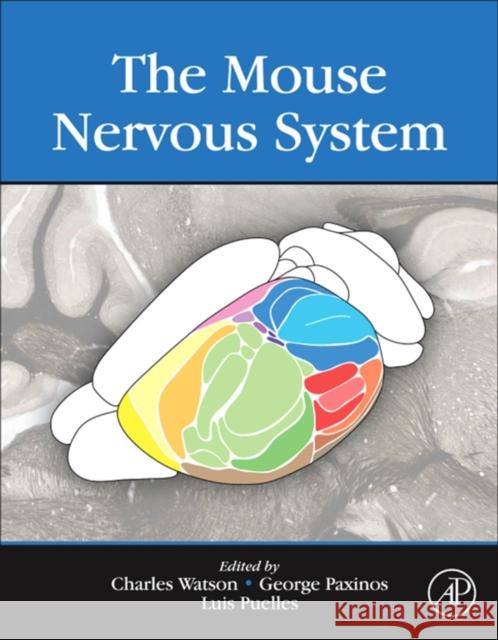
The Mouse Nervous System Charles Watson 9780123694973 ACADEMIC PRESS - książkaWidoczna okładka, to zdjęcie poglądowe, a rzeczywista szata graficzna może różnić się od prezentowanej.

The Mouse Nervous System

ISBN-13: 9780123694973 / Angielski / Twarda / 2011 / 795 str.

Charles Watson
cena 953,12
(netto: 907,73 VAT:  5%)

Najniższa cena z 30 dni: 941,44
Termin realizacji zamówienia:
ok. 30 dni roboczych.

Darmowa dostawa!

The Mouse Nervous System provides a comprehensive account of the central nervous system of the mouse. The book is aimed at molecular biologists who need a book that introduces them to the anatomy of the mouse brain and spinal cord, but also takes them into the relevant details of development and organization of the area they have chosen to study. The Mouse Nervous System offers a wealth of new information for experienced anatomists who work on mice. The book serves as a valuable resource for researchers and graduate students in neuroscience.

  • Systematic consideration of the anatomy and connections of all regions of the brain and spinal cord by the authors of the most cited rodent brain atlases
  • A major section (12 chapters) on functional systems related to motor control, sensation, and behavioral and emotional states
  • A detailed analysis of gene expression during development of the forebrain by Luis Puelles, the leading researcher in this area
  • Full coverage of the role of gene expression during development and the new field of genetic neuroanatomy using site-specific recombinases
  • Examples of the use of mouse models in the study of neurological illness

Kategorie:
Nauka, Biologia i przyroda
Kategorie BISAC:
Science > Life Sciences - Anatomy & Physiology
Science > Ssaki
Science > Biologia molekularna
Wydawca:
ACADEMIC PRESS
Język:
Angielski
ISBN-13:
9780123694973
Rok wydania:
2011
Ilość stron:
795
Waga:
2.63 kg
Wymiary:
27.69 x 22.1 x 4.57
Oprawa:
Twarda
Wolumenów:
01
Dodatkowe informacje:
Bibliografia
Wydanie ilustrowane

A mouse may appear insignificant due to its small size, but its complex nervous system has played a significant role in neuroscience studies. Such a system is intricate enough for a book, the thickness of 4 adult mice lying on top of one another, to be written about it. There were three main reasons for such a book: it would serve as an introductory guide to neuroscience for molecular biologists, provide insight on the new discoveries of gene expression, and highlight that mice are unique as compared to the more commonly studied rats. The Mouse Nervous System, edited by Charles Watson, George Paxinos, and Luis Puelles, does just that by thoroughly venturing through the crevices of the central nervous system of the mouse.

To the general public, the mouse brain may appear to be a simple chunk of mass, but neurologists and anatomists would beg to differ. This book, having been composed by professionals in the fields of neurology and anatomy, shows how complicated the mouse brain actually is. Of the 33 chapters devoted to the anatomy of the mouse brain, the first three are about its stages of development. These earlier chapters also include past experiments which provide support for the facts about development. For more than half of the book, from chapter four until chapter fifteen, the structure of the brain is presented as a whole and then as individual parts. Thus, the text and real life anatomy figures both serve as dissections of the mouse brain. Furthermore, images throughout the book are useful and relevant not only to those who learn from viewing pictures but also serve as supplemental information for those who learn from reading text.

After introducing the reader to the fundamentals of the mouse brain, the systems and their respective functions are presented in chapters 16 through 27. With most important information already provided in the first half of the book, these later chapters serve to assist the reader in connecting the dots on how all those structures function together. In addition to providing background knowledge about the nervous system of the mouse, this book is also user-friendly because a table of contents that is chapter-specific is present at the beginning of each respective chapter. The helpfulness continues at the conclusion of chapters where a list of references is presented so the reader can read more about an intriguing subject. Perhaps the most unique feature of this book is the abbreviations list which is located near the end of certain chapters. This list is beneficial to both the writers and readers; the writers can provide the intended definitions which will lessen the likelihood that the reader searches and finds an inaccurate abbreviation.

A textbook of this size is expected to contain an abundance of information about the nervous system of the mouse, which it does. Although its content is focused on an audience of molecular biologists and neuroscientists, the cleverly organized layout offers enough background knowledge for any reader to be able to understand the later chapters when human diseases, using the mouse brain as a model, are discussed. This book is highly recommended for someone striving to learn about the mouse nervous system in great detail.-Katalina J. Sher, Jack W. Tsao Department of Neurology, Uniformed Services University of the Health Services

Section A - Development Genetic regionalisation morphogenesis Gene targeting Genetic neuoanatomy

Section B - Structure Neocortex Hippocampus Piriform cortex Subpallial structures Hypothalamus Diencephalon Midbrain Cerebellum Hindbrain Spinal cord Vascular supply Imaging techniques

Section C - Motor and Sensory Systems Motor nuclei of the cranial nerves Visceral motoneurons Neurosecretory nuclei of the hypothalamus and preoptic area Cortical structures in motor control Hypothalamic goal directed behavior Subpallial structures Somatosensory Gustatory Pain Auditory Visual Olefactory Vestibular

Section D - Behavioral States Basal nucleus of Meynert

Section E - Emotional States Introduction to emotional states Orbitofrontal coretex

Section F - Mouse Models of Mental Illness and Neurological Disease Overview of mouse models Huntington's Drug addictions

Charles Watson is a neuroscientist and public health physician. His qualifications included a medical degree (MBBS) and two research doctorates (MD and DSc). He is Professor Emeritus at Curtin University, and holds adjunct professorial research positions at the University of New South Wales, the University of Queensland, and the University of Western Australia.
He has published over 100 refereed journal articles and 40 book chapters, and has co-authored over 25 books on brain and spinal cord anatomy. The Paxinos Watson rat brain atlas has been cited over 80,000 times. His current research is focused on the comparative anatomy of the hippocampus and the claustrum.
He was awarded the degree of Doctor of Science by the University of Sydney in 2012 and received the Distinguished Achievement Award of the Australasian Society for Neuroscience in 2018. Professor George Paxinos, AO (BA, MA, PhD, DSc) completed his BA at The University of California at Berkeley, his PhD at McGill University, and spent a postdoctoral year at Yale University. He is the author of almost 50 books on the structure of the brain of humans and experimental animals, including The Rat Brain in Stereotaxic Coordinates, now in its 7th Edition, which is ranked by Thomson ISI as one of the 50 most cited items in the Web of Science. Dr. Paxinos paved the way for future neuroscience research by being the first to produce a three-dimensional (stereotaxic) framework for placement of electrodes and injections in the brain of experimental animals, which is now used as an international standard. He was a member of the first International Consortium for Brain Mapping, a UCLA based consortium that received the top ranking and was funded by the NIMH led Human Brain Project. Dr. Paxinos has been honored with more than nine distinguished awards throughout his years of research, including: The Warner Brown Memorial Prize (University of California at Berkeley, 1968), The Walter Burfitt Prize (1992), The Award for Excellence in Publishing in Medical Science (Assoc Amer Publishers, 1999), The Ramaciotti Medal for Excellence in Biomedical Research (2001), The Alexander von Humbolt Foundation Prize (Germany 2004), and more. Dr. Puelles has held various positions teaching human anatomy and conducting research in neuroembryology and comparative neuroanatomy at the Universities of Granada, Sevilla, Badajoz, Cadiz and Murcia in Spain. Since 1983 he has been Full professor of Neuroanatomy at the University of Murcia. He is author of ~230 works, notably the first edition of Chick Brain in Stereotaxic Coordinates, and co-editor of Elsevier's The Mouse Nervous System.


Udostępnij

Facebook - konto krainaksiazek.pl


Opinie o Krainaksiazek.pl na Opineo.pl

Partner Mybenefit

Krainaksiazek.pl w programie rzetelna firma Krainaksiaze.pl - płatności przez paypal

Czytaj nas na:

Facebook - krainaksiazek.pl
  • książki na zamówienie
  • granty
  • książka na prezent
  • kontakt
  • pomoc
  • opinie
  • regulamin
  • polityka prywatności

Zobacz:

  • Księgarnia czeska

  • Wydawnictwo Książkowe Klimaty

1997-2026 DolnySlask.com Agencja Internetowa

© 1997-2022 krainaksiazek.pl
     
KONTAKT | REGULAMIN | POLITYKA PRYWATNOŚCI | USTAWIENIA PRYWATNOŚCI
Zobacz: Księgarnia Czeska | Wydawnictwo Książkowe Klimaty | Mapa strony | Lista autorów
KrainaKsiazek.PL - Księgarnia Internetowa

Polityka prywatnosci - link
Krainaksiazek.pl - płatnośc Przelewy24
Przechowalnia Przechowalnia







