• Wyszukiwanie zaawansowane
  • Kategorie
  • Kategorie BISAC
  • Książki na zamówienie
  • Promocje
  • Granty
  • Książka na prezent
  • Opinie
  • Pomoc
  • Załóż konto
  • Zaloguj się

The Modern Lean Enterprise: From Mass Customisation to Personalisation » książka


zaloguj się | załóż konto
Logo Krainaksiazek.pl

koszyk

konto

szukaj
topmenu
Księgarnia internetowa
Szukaj
Książki na zamówienie
Promocje
Granty
Książka na prezent
Moje konto
Pomoc
 
 
Wyszukiwanie zaawansowane
Pusty koszyk
Bezpłatna dostawa dla zamówień powyżej 20 złBezpłatna dostawa dla zamówień powyżej 20 zł

Kategorie główne

• Nauka
 [2946912]
• Literatura piękna
 [1852311]

  więcej...
• Turystyka
 [71421]
• Informatyka
 [150889]
• Komiksy
 [35717]
• Encyklopedie
 [23177]
• Dziecięca
 [617324]
• Hobby
 [138808]
• AudioBooki
 [1671]
• Literatura faktu
 [228371]
• Muzyka CD
 [400]
• Słowniki
 [2841]
• Inne
 [445428]
• Kalendarze
 [1545]
• Podręczniki
 [166819]
• Poradniki
 [480180]
• Religia
 [510412]
• Czasopisma
 [525]
• Sport
 [61271]
• Sztuka
 [242929]
• CD, DVD, Video
 [3371]
• Technologie
 [219258]
• Zdrowie
 [100961]
• Książkowe Klimaty
 [124]
• Zabawki
 [2341]
• Puzzle, gry
 [3766]
• Literatura w języku ukraińskim
 [255]
• Art. papiernicze i szkolne
 [7810]
Kategorie szczegółowe BISAC

The Modern Lean Enterprise: From Mass Customisation to Personalisation

ISBN-13: 9783662644782 / Angielski / Miękka / 2023 / 285 str.
Alexander Tsigkas
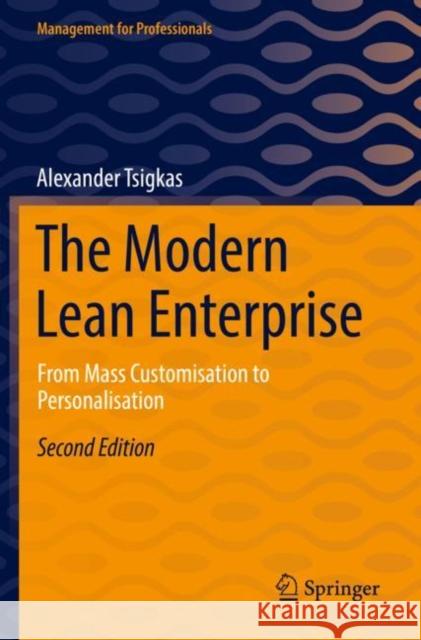
The Modern Lean Enterprise: From Mass Customisation to Personalisation Alexander Tsigkas 9783662644782 Springer-Verlag Berlin and Heidelberg GmbH &  - książkaWidoczna okładka, to zdjęcie poglądowe, a rzeczywista szata graficzna może różnić się od prezentowanej.

The Modern Lean Enterprise: From Mass Customisation to Personalisation

ISBN-13: 9783662644782 / Angielski / Miękka / 2023 / 285 str.

Alexander Tsigkas
cena 228,89
(netto: 217,99 VAT:  5%)

Najniższa cena z 30 dni: 219,73
Termin realizacji zamówienia:
ok. 22 dni roboczych
Bez gwarancji dostawy przed świętami

Darmowa dostawa!
inne wydania

The book addresses a modern reorientation of Lean, abandoning the classical waste dogma that brings direct efficiency gains and substituting by a way to achieving indirect efficiency in a continuous and sustainable manner. Waste is the output of a process that cannot be of further use, while value is a matter of valuation, a process whose output we conceive to be of further use. Value and waste are not antithetical, they are just not comparable issues. We achieve added value to the modern Lean Enterprise through synergies that bring sustainable economic benefits to the company. Such synergies use the complementarity theory developed by Milgrom and Roberts in 1990 on the principle that we can achieve maximal gains via the joint investment on complement activities and not investing. Complementarity is not something specific to Lean Enterprises; however, Lean Enterprises can benefit the most from such a concept. The reason is that Lean uses the principle of achieving more with less effort. Less effort does not mean the use of fewer resources, but the use of resources in a complementary way in order to achieve more, rather than using them. Complementarity is a feature by design. Complementarity by design will help modern Lean companies have an easier transition in the digital era and the new world of Industry 4.0.In this second edition, we have preserved the method of how to achieve Lean and have enhanced it to show how to move towards modern Lean within Industry 4.0 paradigm. However, if a company has not yet made the Lean step, there is no need to make that step first before yielding the benefits. Technology is the key. Modern Lean Enterprise strengthens out of the old paradigm into the new one of Industry 4.0. Because of evolution, such an enterprise achieves optimal technological complementarity necessary for synergies that sustain increasing profits.


The book addresses a modern reorientation of Lean, abandoning the classical waste dogma that brings direct efficiency gains and substituting by a way to achieving indirect efficiency in a continuous and sustainable manner. Waste is the output of a process that cannot be of further use, while value is a matter of valuation, a process whose output we conceive to be of further use. Value and waste are not antithetical, they are just not comparable issues. We achieve added value to the modern Lean Enterprise through synergies that bring sustainable economic benefits to the company. Such synergies use the complementarity theory developed by Milgrom and Roberts in 1990 on the principle that we can achieve maximal gains via the joint investment on complement activities and not investing. Complementarity is not something specific to Lean Enterprises; however, Lean Enterprises can benefit the most from such a concept. The reason is that Lean uses the principle of achieving more with less effort. Less effort does not mean the use of fewer resources, but the use of resources in a complementary way in order to achieve more, rather than using them. Complementarity is a feature by design. Complementarity by design will help modern Lean companies have an easier transition in the digital era and the new world of Industry 4.0. In this second edition, we have preserved the method of how to achieve Lean and have enhanced it to show how to move towards modern Lean within Industry 4.0 paradigm. However, if a company has not yet made the Lean step, there is no need to make that step first before yielding the benefits. Technology is the key. Modern Lean Enterprise strengthens out of the old paradigm into the new one of Industry 4.0. Because of evolution, such an enterprise achieves optimal technological complementarity necessary for synergies that sustain increasing profits.

Kategorie:
Nauka, Ekonomia i biznes
Kategorie BISAC:
Business & Economics > Production & Operations Management
Business & Economics > Zarządzenie i techniki zarządzania
Business & Economics > Management Science
Wydawca:
Springer-Verlag Berlin and Heidelberg GmbH &
Seria wydawnicza:
Management for Professionals
Język:
Angielski
ISBN-13:
9783662644782
Rok wydania:
2023
Wydanie:
2022
Numer serii:
000424298
Ilość stron:
285
Waga:
0.42 kg
Wymiary:
23.39 x 15.6 x 1.63
Oprawa:
Miękka
Wolumenów:
01
Dodatkowe informacje:
Wydanie ilustrowane

​1. The Modern Lean Enterprise.- Part I: Rising of the Digital Economy.- 2. The Displacement of the Economy.- 3. The Post Industrial Factory.- Part II: Lean in Theory.- 4. Principles of Lean Production.- 5. Lean Flow: A Method.- 6. Successful Implementation.- 7. Modern Lean Thinking.- Part III: Lean in Practice.- 8. Lean Factory.- 9. Lean for Industry 4.0.


Alexander Tsigkas is a retired professor at Democritus University of Thrace (Athens, Greece). His research concentrates on cybernetics and performativity, and especially on the intelligence of natural-artificial-economic systems. He has published several scholarly articles on these topics, including lean enterprises, design-thinking, mass customization and supply chain management.

The book addresses a modern reorientation of Lean, abandoning the classical waste dogma that brings direct efficiency gains and substituting by a way to achieving indirect efficiency in a continuous and sustainable manner. Waste is the output of a process that cannot be of further use, while value is a matter of valuation, a process whose output we conceive to be of further use. Value and waste are not antithetical, they are just not comparable issues. We achieve added value to the modern Lean Enterprise through synergies that bring sustainable economic benefits to the company. Such synergies use the complementarity theory developed by Milgrom and Roberts in 1990 on the principle that we can achieve maximal gains via the joint investment on complement activities and not investing. Complementarity is not something specific to Lean Enterprises; however, Lean Enterprises can benefit the most from such a concept. The reason is that Lean uses the principle of achieving more with less effort. Less effort does not mean the use of fewer resources, but the use of resources in a complementary way in order to achieve more, rather than using them. Complementarity is a feature by design. Complementarity by design will help modern Lean companies have an easier transition in the digital era and the new world of Industry 4.0.

In this second edition, we have preserved the method of how to achieve Lean and have enhanced it to show how to move towards modern Lean within Industry 4.0 paradigm. However, if a company has not yet made the Lean step, there is no need to make that step first before yielding the benefits. Technology is the key. Modern Lean Enterprise strengthens out of the old paradigm into the new one of Industry 4.0. Because of evolution, such an enterprise achieves optimal technological complementarity necessary for synergies that sustain increasing profits.




Udostępnij

Facebook - konto krainaksiazek.pl


Opinie o Krainaksiazek.pl na Opineo.pl

Partner Mybenefit

Krainaksiazek.pl w programie rzetelna firma Krainaksiaze.pl - płatności przez paypal

Czytaj nas na:

Facebook - krainaksiazek.pl
  • książki na zamówienie
  • granty
  • książka na prezent
  • kontakt
  • pomoc
  • opinie
  • regulamin
  • polityka prywatności

Zobacz:

  • Księgarnia czeska

  • Wydawnictwo Książkowe Klimaty

1997-2025 DolnySlask.com Agencja Internetowa

© 1997-2022 krainaksiazek.pl
     
KONTAKT | REGULAMIN | POLITYKA PRYWATNOŚCI | USTAWIENIA PRYWATNOŚCI
Zobacz: Księgarnia Czeska | Wydawnictwo Książkowe Klimaty | Mapa strony | Lista autorów
KrainaKsiazek.PL - Księgarnia Internetowa

Polityka prywatnosci - link
Krainaksiazek.pl - płatnośc Przelewy24
Przechowalnia Przechowalnia




