• Wyszukiwanie zaawansowane
  • Kategorie
  • Kategorie BISAC
  • Książki na zamówienie
  • Promocje
  • Granty
  • Książka na prezent
  • Opinie
  • Pomoc
  • Załóż konto
  • Zaloguj się

The Mind-Brain Continuum: Psychoneurointracrinology » książka


zaloguj się | załóż konto
Logo Krainaksiazek.pl

koszyk

konto

szukaj
topmenu
Księgarnia internetowa
Szukaj
Książki na zamówienie
Promocje
Granty
Książka na prezent
Moje konto
Pomoc
 
 
Wyszukiwanie zaawansowane
Pusty koszyk
Bezpłatna dostawa dla zamówień powyżej 20 złBezpłatna dostawa dla zamówień powyżej 20 zł

Kategorie główne

• Nauka
 [2946912]
• Literatura piękna
 [1852311]

  więcej...
• Turystyka
 [71421]
• Informatyka
 [150889]
• Komiksy
 [35717]
• Encyklopedie
 [23177]
• Dziecięca
 [617324]
• Hobby
 [138808]
• AudioBooki
 [1671]
• Literatura faktu
 [228371]
• Muzyka CD
 [400]
• Słowniki
 [2841]
• Inne
 [445428]
• Kalendarze
 [1545]
• Podręczniki
 [166819]
• Poradniki
 [480180]
• Religia
 [510412]
• Czasopisma
 [525]
• Sport
 [61271]
• Sztuka
 [242929]
• CD, DVD, Video
 [3371]
• Technologie
 [219258]
• Zdrowie
 [100961]
• Książkowe Klimaty
 [124]
• Zabawki
 [2341]
• Puzzle, gry
 [3766]
• Literatura w języku ukraińskim
 [255]
• Art. papiernicze i szkolne
 [7810]
Kategorie szczegółowe BISAC

The Mind-Brain Continuum: Psychoneurointracrinology

ISBN-13: 9783031100581 / Angielski / Twarda / 2023 / 196 str.
Susan Gordon
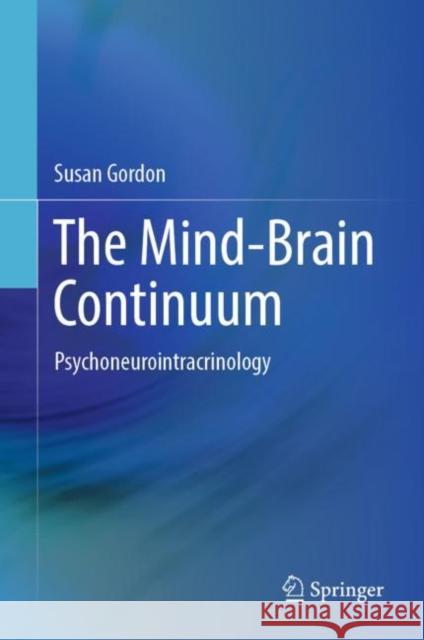
The Mind-Brain Continuum: Psychoneurointracrinology Susan Gordon 9783031100581 Springer - książkaWidoczna okładka, to zdjęcie poglądowe, a rzeczywista szata graficzna może różnić się od prezentowanej.

The Mind-Brain Continuum: Psychoneurointracrinology

ISBN-13: 9783031100581 / Angielski / Twarda / 2023 / 196 str.

Susan Gordon
cena 483,04
(netto: 460,04 VAT:  5%)

Najniższa cena z 30 dni: 462,63
Termin realizacji zamówienia:
ok. 22 dni roboczych
Bez gwarancji dostawy przed świętami

Darmowa dostawa!
inne wydania

This insightful book proposes a holistic theory of the development of self, drawing on interdisciplinary literature in existential-phenomenology, neurophenomenology, intracrinology, endocrinology, and naturopathic medicine. The psychoneurointracrine hypothesis bridges the gap between the mind and brain, providing a framework to explain the complex system that facilitates development of one’s sense of self and well-being. The book challenges assumptions in present day neuroscience and psychiatry, placing the mind and brain on a continuum of health and growth rather than reducing the study of human consciousness to neurobiological terms and pathological classifications.“In this landmark book, Susan Gordon presents a bold hypothesis, one that underscores the importance of psychoneurointracrine activity and links it to female neurology and the development of one’s sense of self. She brilliantly places this activity, which serves as a mind-body bridge, within the frameworks of neurophenomenology and non-linear dynamics. Her psychoneurointracrine hypothesis is a tour de force, one that is holistic, integrating intracrinology with psychology and neurology. This hypothesis undercuts the current assumption that the mind is an epiphenomenon of the brain, creating a paradigm that impacts science’s understanding of behavior, experience, consciousness, and human agency.”Stanley Krippner, PhD,Affiliated Distinguished Faculty, California Institute of Integral Studies, San Francisco, CA“In her fascinating book, Susan Gordon develops a novel theory about the biological connection between mind, brain, and organism. Drawing on empirical research on the role of the female hormonal system in basal states of self and mood, she shows that the biochemistry of the endocrine system must be viewed as an indispensable foundation for the emergence of embodied self-awareness. The homeostasis and hormonal balance of the organism is integral to the sense of well-being and the development of meaning, but it is also continually modulated and influenced by the subject’s experience of his or her world. She makes a decisive contribution to a theory of embodiment that goes far beyond a computational theory of the brain to focus on the biochemical-organismic processes at the root of the mind.”Thomas Fuchs, MD, PhD,Karl Jaspers Professor of Philosophy and Psychiatry, University of Heidelberg, DE

This insightful book proposes a holistic theory of the development of self, drawing on interdisciplinary literature in existential-phenomenology, neurophenomenology, intracrinology, endocrinology, and naturopathic medicine. The psychoneurointracrine hypothesis bridges the gap between the mind and brain, providing a framework to explain the complex system that facilitates development of one’s sense of self and well-being. The book challenges assumptions in present day neuroscience and psychiatry, placing the mind and brain on a continuum of health and growth rather than reducing the study of human consciousness to neurobiological terms and pathological classifications.“In this landmark book, Susan Gordon presents a bold hypothesis, one that underscores the importance of psychoneurointracrine activity and links it to female neurology and the development of one’s sense of self. She brilliantly places this activity, which serves as a mind-body bridge, within the frameworks of neurophenomenology and non-linear dynamics. Her psychoneurointracrine hypothesis is a tour de force, one that is holistic, integrating intracrinology with psychology and neurology. This hypothesis undercuts the current assumption that the mind is an epiphenomenon of the brain, creating a paradigm that impacts science’s understanding of behavior, experience, consciousness, and human agency.”Stanley Krippner, PhD, Affiliated Distinguished Faculty, California Institute of Integral Studies, San Francisco, CA“In her fascinating book, Susan Gordon develops a novel theory about the biological connection between mind, brain, and organism. Drawing on empirical research on the role of the female hormonal system in basal states of self and mood, she shows that the biochemistry of the endocrine system must be viewed as an indispensable foundation for the emergence of embodied self-awareness. The homeostasis and hormonal balance of the organism is integral to the sense of well-being and the development of meaning, but it is also continually modulated and influenced by the subject’s experience of his or her world. She makes a decisive contribution to a theory of embodiment that goes far beyond a computational theory of the brain to focus on the biochemical-organismic processes at the root of the mind.”Thomas Fuchs, MD, PhD, Karl Jaspers Professor of Philosophy and Psychiatry, University of Heidelberg, DE

Kategorie:
Nauka, Psychologia
Kategorie BISAC:
Psychology > Cognitive Psychology & Cognition
Psychology > Personality
Philosophy > Mind & Body
Wydawca:
Springer
Język:
Angielski
ISBN-13:
9783031100581
Rok wydania:
2023
Dostępne języki:
Ilość stron:
196
Oprawa:
Twarda
Dodatkowe informacje:
Wydanie ilustrowane

1. Neurobiological Reductionism and the Philosophy of Science.- 2. Holism and the Theory of Autopoiesis.- 3. Neurophenomenology, Enactive Cognition, and the Embodied Mind.- 4. Models of the Self.- 5. Self-Actualization.- 6. Neurobiological Transition in Women at Midlife.- 7. Intracrinology is Autopoietic.- 8. Psychoneurointracrine Hypothesis.- Implications for Psychiatry and Psychological Medicine.- 10. Conclusion.

Susan Gordon, PhD is Core Adjunct Professor of Psychology at National University, La Jolla, CA and Research Director of the Southbury Clinic for Traditional Medicines, Southbury, CT. She has a doctorate in the History and Philosophy of Psychology (mind-body medicine) from Saybrook University and training in naturopathic medicine from Bastyr University. Dr. Gordon is an invited post-doctoral lecturer at L'Institut des Systèmes Complexes Paris Île-de-France and a Foreign Expert of the Bureau of Foreign Experts Affairs, Guangxi Province, PRC. Her research and publications integrate reproductive endocrinology, neurophenomenology, Asian and comparative philosophy, and mind-body medicine. Dr. Gordon is editor and contributing author of Neurophenomenology and Its Applications to Psychology (Springer, 2013), co-author of “Humanistic Neuropsychology: The Implications of Neurophenomenology for Psychology,” In The Handbook of Humanistic Psychology: Leading Edges in Theory, Research, and Practice (Sage, 2015) and author of “Psycho-Neuro-Intracrinology: The Mind-Body Continuum,” In The Healing Power of Nature: The Foundations of Naturopathic Medicine and the Ecology of Healing: Primary Care for the Twenty First Century (in review). 

This insightful book proposes a holistic theory of the development of self, drawing on interdisciplinary literature in existential-phenomenology, neurophenomenology, intracrinology, endocrinology, and naturopathic medicine. The psychoneurointracrine hypothesis bridges the gap between the mind and brain, providing a framework to explain the complex system that facilitates development of one’s sense of self and well-being. The book challenges assumptions in present day neuroscience and psychiatry, placing the mind and brain on a continuum of health and growth rather than reducing the study of human consciousness to neurobiological terms and pathological classifications.

“In this landmark book, Susan Gordon presents a bold hypothesis, one that underscores the importance of psychoneurointracrine activity and links it to female neurology and the development of one’s sense of self. She brilliantly places this activity, which serves as a mind-body bridge, within the frameworks of neurophenomenology and non-linear dynamics. Her psychoneurointracrine hypothesis is a tour de force, one that is holistic, integrating intracrinology with psychology and neurology. This hypothesis undercuts the current assumption that the mind is an epiphenomenon of the brain, creating a paradigm that impacts science’s understanding of behavior, experience, consciousness, and human agency.”

Stanley Krippner, PhD, Affiliated Distinguished Faculty, California Institute of Integral Studies, San Francisco, CA

“In her fascinating book, Susan Gordon develops a novel theory about the biological connection between mind, brain, and organism. Drawing on empirical research on the role of the female hormonal system in basal states of self and mood, she shows that the biochemistry of the endocrine system must be viewed as an indispensable foundation for the emergence of embodied self-awareness. The homeostasis and hormonal balance of the organism is integral to the sense of well-being and the development of meaning, but it is also continually modulated and influenced by the subject’s experience of his or her world. In this way, she makes a decisive contribution to a theory of embodiment that goes far beyond a computational theory of the brain to focus on the biochemical-organismic processes at the root of the mind.”

Thomas Fuchs, MD, PhD, Karl Jaspers Professor of Philosophy and Psychiatry, University of Heidelberg, DE



Udostępnij

Facebook - konto krainaksiazek.pl


Opinie o Krainaksiazek.pl na Opineo.pl

Partner Mybenefit

Krainaksiazek.pl w programie rzetelna firma Krainaksiaze.pl - płatności przez paypal

Czytaj nas na:

Facebook - krainaksiazek.pl
  • książki na zamówienie
  • granty
  • książka na prezent
  • kontakt
  • pomoc
  • opinie
  • regulamin
  • polityka prywatności

Zobacz:

  • Księgarnia czeska

  • Wydawnictwo Książkowe Klimaty

1997-2025 DolnySlask.com Agencja Internetowa

© 1997-2022 krainaksiazek.pl
     
KONTAKT | REGULAMIN | POLITYKA PRYWATNOŚCI | USTAWIENIA PRYWATNOŚCI
Zobacz: Księgarnia Czeska | Wydawnictwo Książkowe Klimaty | Mapa strony | Lista autorów
KrainaKsiazek.PL - Księgarnia Internetowa

Polityka prywatnosci - link
Krainaksiazek.pl - płatnośc Przelewy24
Przechowalnia Przechowalnia





