• Wyszukiwanie zaawansowane
  • Kategorie
  • Kategorie BISAC
  • Książki na zamówienie
  • Promocje
  • Granty
  • Książka na prezent
  • Opinie
  • Pomoc
  • Załóż konto
  • Zaloguj się

The Mental Mechanisms of Patient Adherence to Long-Term Therapies: Mind and Care » książka


zaloguj się | załóż konto
Logo Krainaksiazek.pl

koszyk

konto

szukaj
topmenu
Księgarnia internetowa
Szukaj
Książki na zamówienie
Promocje
Granty
Książka na prezent
Moje konto
Pomoc
 
 
Wyszukiwanie zaawansowane
Pusty koszyk
Bezpłatna dostawa dla zamówień powyżej 20 złBezpłatna dostawa dla zamówień powyżej 20 zł

Kategorie główne

• Nauka
 [2946912]
• Literatura piękna
 [1852311]

  więcej...
• Turystyka
 [71421]
• Informatyka
 [150889]
• Komiksy
 [35717]
• Encyklopedie
 [23177]
• Dziecięca
 [617324]
• Hobby
 [138808]
• AudioBooki
 [1671]
• Literatura faktu
 [228371]
• Muzyka CD
 [400]
• Słowniki
 [2841]
• Inne
 [445428]
• Kalendarze
 [1545]
• Podręczniki
 [166819]
• Poradniki
 [480180]
• Religia
 [510412]
• Czasopisma
 [525]
• Sport
 [61271]
• Sztuka
 [242929]
• CD, DVD, Video
 [3371]
• Technologie
 [219258]
• Zdrowie
 [100961]
• Książkowe Klimaty
 [124]
• Zabawki
 [2341]
• Puzzle, gry
 [3766]
• Literatura w języku ukraińskim
 [255]
• Art. papiernicze i szkolne
 [7810]
Kategorie szczegółowe BISAC

The Mental Mechanisms of Patient Adherence to Long-Term Therapies: Mind and Care

ISBN-13: 9783319122649 / Angielski / Twarda / 2015 / 207 str.
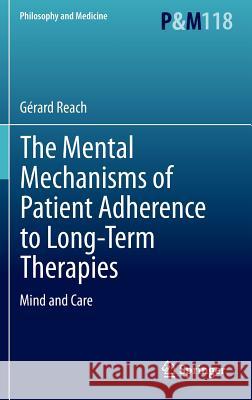
Gerard Reach
The Mental Mechanisms of Patient Adherence to Long-Term Therapies: Mind and Care Reach, Gérard 9783319122649 Springer - książkaWidoczna okładka, to zdjęcie poglądowe, a rzeczywista szata graficzna może różnić się od prezentowanej.

The Mental Mechanisms of Patient Adherence to Long-Term Therapies: Mind and Care

ISBN-13: 9783319122649 / Angielski / Twarda / 2015 / 207 str.

Gerard Reach
cena 201,72
(netto: 192,11 VAT:  5%)

Najniższa cena z 30 dni: 192,74
Termin realizacji zamówienia:
ok. 22 dni roboczych
Bez gwarancji dostawy przed świętami

Darmowa dostawa!

How can we accept that we ought to stop smoking, follow a diet, exercise, or take medications? The goal of this book is to describe the mechanisms of patients' adherence to long-term therapies, whose improvement, according to the World Health Organization (WHO), would be more beneficial than any biomedical progress. For example, approximately half of the patients do not regularly follow medical prescriptions, resulting in deleterious effects on people's health and a strong impact on health expenditure. This book describes how our beliefs, desires, and emotions intervene in our choices concerning our health, by referring to concepts developed within the framework of the philosophy of mind. In particular, it tries to explain how we can choose between an immediate pleasure and a remote reward--preserving our health and our life. We postulate that such an "intertemporal" choice can be directed by a "principle of foresight" which leads us to give priority to the future. Just like patients' non-adherence to prescribed medications, doctors often don't always do what they should: They are non-adherent to good practice guidelines. We propose that what was recently de-scribed as "clinical inertia" could also represent a case of myopia: From time to time doctors fail to consider the long-term interests of their patient. Both patients' non-adherence and doctors' clinical inertia represent major barriers to the efficiency of care. However, it is also necessary to respect patients' autonomy. The analysis of relationship between mind and care which is provided in this book sheds new light on the nature of the therapeutic alliance between doctor and patient, solving the dilemma between the ethical principles of beneficence and autonomy.


Kategorie:
Nauka, Biologia i przyroda
Kategorie BISAC:
Medical > Etyka
Science > Ethics
Wydawca:
Springer
Seria wydawnicza:
Philosophy and Medicine
Język:
Angielski
ISBN-13:
9783319122649
Rok wydania:
2015
Wydanie:
2015
Numer serii:
000033088
Ilość stron:
207
Waga:
0.50 kg
Wymiary:
23.39 x 15.6 x 1.42
Oprawa:
Twarda
Wolumenów:
01
Dodatkowe informacje:
Wydanie ilustrowane

1 Introduction: The doctor, her patient, and their reasons.- 1. Adherence and nonadherence to therapies: A definition; 2. Nonadherence: How frequent is it?; 3. The consequences of nonadherence; 4. Scope of the book; 5. Some simple explanations for nonadherence; 6. A typology of adherence? Analogous or homologous phenomena; 7. The real question; 8. From behavior to action; 9. A philosophical interpretation of adherence to long-term therapies.- 2 The classic view;1. Determinants of nonadherence to long-term therapies; 2. Behavioral models of patient adherence; 3. Limitations of psychological models; 4. A new perspective; 5. Psychology and philosophy, in search of mental mechanisms; 6. Observation and explanation; 7. Patient and agent.- 3 Intentionality; 1. What is ‘in your head’; 2. A mental puzzle and its formation; 3. Actions: A causal theory.- 4 An intentionalist model of adherence; 1. Therapeutic agency; 2. An intentionalist model of adherence; 3. The pivotal role of emotions in patient adherence; 4. Bringing action into play: Volition.- 5 The dynamics of intentionality 1.  Motivational force; 2.  Self-control; 3.  The force of habit; 4. Intention, decision, and willpower; 5. The dynamics of intentionality.- 6 Medical irrationality; 1. Akrasia; 2. Patient nonadherence as a case of akrasia; 3. Another example of irrationality: The denial of illness; 4. Logical mechanisms of irrationality.- 7 Time and adherence: A principle of foresight; 1. The effect of time; 2. The principle of foresight; 3. The appearance of adherence; 4. A physiopathological point of view; 5. A top-down model of adherence.- 8 An intentionalist account of doctor-patient relationship and biomedical ethics; 1. Philosophical analysis of doctor-patient relationship; 2. The principle of charity; 3. Adherence and autonomy.- 9 Doctors’ clinical inertia as myopia; 1. Clinical inertia: Definition and logical description 2. Empirical evidence: The paradigm case of psychological insulin resistance; 3. Empathy and sympathy 4. The paradox of empathy in medical care; 5. Another conception of sympathy; 6. Care, sympathy,; beneficence, and love; 7. Care as a special form of sympathy; 8. The respective values of immediacy and future; 9. Empathy, sympathy, and the ethical dynamics of the pa-tient-doctor relationship; 10. A model of chronic care involving patient education and trust; 11. Conclusion: Mind and Care.- 10  Conclusion:  Adherence Generalized; 1. A choice between two actions; 2. Generalization of the problem; 3. Defining adherence by its explanation; 4. Eros and Thanatos.

The author is a diabetologist and Professor of Endocrinology, Diabetology and Metabolic Diseases at Paris 13 University. He has authored several books, including one published by Springer under the title: Clinical Inertia, A Critique of Medical Reason.

The goal of this book is to describe the mechanisms of patients’ adherence to long-term therapies, whose improvement, according to the World Health Organization (WHO), would be more beneficial than any biomedical progress. For example, approximately half of the patients do not regularly follow medical prescriptions, resulting in deleterious effects on people’s health and a strong impact on health expenditure.

This book describes how our beliefs, desires, and emotions intervene in our choices concerning our health, by referring to concepts developed within the framework of the philosophy of mind. In particular, it tries to explain how we can choose between an immediate pleasure and a remote reward—preserving our health and our life. We postulate that such an “intertemporal” choice can be directed by a “principle of foresight” which leads us to give priority to the future.

Just like patients’ non-adherence to prescribed medications, doctors often don’t always do what they should: They are non-adherent to good practice guidelines. We propose that what was recently described as “clinical inertia” could also represent a case of myopia: From time to time doctors fail to consider the long-term interests of their patient.

Both patients’ non-adherence and doctors’ clinical inertia represent major barriers to the efficiency of care. However, it is also necessary to respect patients’ autonomy. The analysis of relationship between mind and care which is provided in this book sheds new light on the nature of the therapeutic alliance between doctor and patient, solving the dilemma between the ethical principles of beneficence and autonomy.




Udostępnij

Facebook - konto krainaksiazek.pl


Opinie o Krainaksiazek.pl na Opineo.pl

Partner Mybenefit

Krainaksiazek.pl w programie rzetelna firma Krainaksiaze.pl - płatności przez paypal

Czytaj nas na:

Facebook - krainaksiazek.pl
  • książki na zamówienie
  • granty
  • książka na prezent
  • kontakt
  • pomoc
  • opinie
  • regulamin
  • polityka prywatności

Zobacz:

  • Księgarnia czeska

  • Wydawnictwo Książkowe Klimaty

1997-2025 DolnySlask.com Agencja Internetowa

© 1997-2022 krainaksiazek.pl
     
KONTAKT | REGULAMIN | POLITYKA PRYWATNOŚCI | USTAWIENIA PRYWATNOŚCI
Zobacz: Księgarnia Czeska | Wydawnictwo Książkowe Klimaty | Mapa strony | Lista autorów
KrainaKsiazek.PL - Księgarnia Internetowa

Polityka prywatnosci - link
Krainaksiazek.pl - płatnośc Przelewy24
Przechowalnia Przechowalnia




