• Wyszukiwanie zaawansowane
  • Kategorie
  • Kategorie BISAC
  • Książki na zamówienie
  • Promocje
  • Granty
  • Książka na prezent
  • Opinie
  • Pomoc
  • Załóż konto
  • Zaloguj się

The Measurement of Personality » książka


zaloguj się | załóż konto
Logo Krainaksiazek.pl

koszyk

konto

szukaj
topmenu
Księgarnia internetowa
Szukaj
Książki na zamówienie
Promocje
Granty
Książka na prezent
Moje konto
Pomoc
 
 
Wyszukiwanie zaawansowane
Pusty koszyk
Bezpłatna dostawa dla zamówień powyżej 20 złBezpłatna dostawa dla zamówień powyżej 20 zł

Kategorie główne

• Nauka
 [2948695]
• Literatura piękna
 [1824038]

  więcej...
• Turystyka
 [70868]
• Informatyka
 [151073]
• Komiksy
 [35227]
• Encyklopedie
 [23181]
• Dziecięca
 [621575]
• Hobby
 [138961]
• AudioBooki
 [1642]
• Literatura faktu
 [228651]
• Muzyka CD
 [371]
• Słowniki
 [2933]
• Inne
 [445341]
• Kalendarze
 [1243]
• Podręczniki
 [164416]
• Poradniki
 [479493]
• Religia
 [510449]
• Czasopisma
 [502]
• Sport
 [61384]
• Sztuka
 [243086]
• CD, DVD, Video
 [3417]
• Technologie
 [219673]
• Zdrowie
 [100865]
• Książkowe Klimaty
 [124]
• Zabawki
 [2168]
• Puzzle, gry
 [3372]
• Literatura w języku ukraińskim
 [260]
• Art. papiernicze i szkolne
 [7838]
Kategorie szczegółowe BISAC

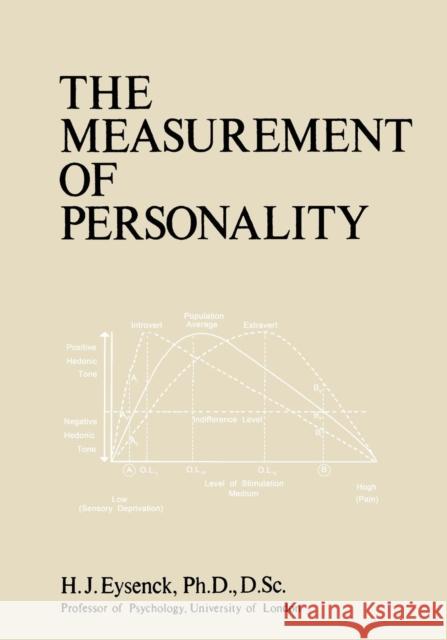
The Measurement of Personality

ISBN-13: 9789401161701 / Angielski / Miękka / 2012 / 512 str.
Hans J. Eysenck
The Measurement of Personality Hans J. Eysenck 9789401161701 Springer - książkaWidoczna okładka, to zdjęcie poglądowe, a rzeczywista szata graficzna może różnić się od prezentowanej.

The Measurement of Personality

ISBN-13: 9789401161701 / Angielski / Miękka / 2012 / 512 str.

Hans J. Eysenck
cena 200,77
(netto: 191,21 VAT:  5%)

Najniższa cena z 30 dni: 192,74
Termin realizacji zamówienia:
ok. 22 dni roboczych.

Darmowa dostawa!

This book deals with the measurement of personality, in detail concerning the philosophical discussions of this much the same way as an earlier book dealt with the concept; the reader must be referred to Suppe's (1974) measurement of intelligence (Eysenck, 1973). In each book for this purpose. Immediately the reader will case the major part of the book consists of reprinted express a doubt. It is possible to argue that such a articles of particular interest and importance, organized paradigm exists in the field of intelligence, although into ten sections, and linked by short commentaries. In even that statement would be criticized by many each case, the intent is not to produce a textbook, or a psychologists; can it be argued that such a statement survey of all or many of the current approaches to the can seriously be made in the field of personality? There subject, or an eclectic conglomerate, but rather to try is indeed a marked difference of status; I would suggest and give a coherent impression of a scientific paradigm. that the paradigm of "intelligence" fashioned by Galton, Paradigms, as defined by Kuhn (1962), are "accepted Spearman, Burt, Thurstone and Binet is not exempt examples of actual scientific practice-examples which from criticism, but it does constitute a paradigm as include law, theory, application, and instrumentation defined by Kuhn.


Kategorie:
Nauka, Medycyna
Kategorie BISAC:
Psychology > Personality
Medical > Psychiatria
Wydawca:
Springer
Język:
Angielski
ISBN-13:
9789401161701
Rok wydania:
2012
Wydanie:
Softcover Repri
Ilość stron:
512
Waga:
0.90 kg
Wymiary:
25.4 x 17.78 x 2.72
Oprawa:
Miękka
Wolumenów:
01

I Models of Personality.- Personality Research: Components of Variance Attributable to the Person and the Situation.- Personality in Monkeys: Factor Analyses of Rhesus Social Behaviour.- The Nature of Extraversion: A Genetical Analysis.- Primaries or Second-order Factors: A Critical Consideration of Cattell’s 16 PF Battery.- Eysenck’s Personality Dimensions: A Model for the MMP.- II The Physiological Basis of Personality.- Extraversion-Introversion and the EEG.- Electrodermal Lability as a Personality Dimension.- Initial Amplitude and Rate of Habituation of Orienting Reaction in Relation to Extraversion and Neuroticism.- Sensation Seeking and Cortical Augmenting-Reducing.- Salivary Response to Lemon Juice as a Measure of Introversion.- Introversion-Extraversion and Circadian Rhythms.- Personality and the Inverted-U Relation.- III Pain, Sensory Deprivation, and Sensation Seeking.- Introversion and Isolation Tolerance.- Personality and Time Estimation in Sensory Deprivation.- Tolerance for Experimentally Induced Pain as Related to Personality.- “Stimulus Hunger”: Individual Differences in Operant Strategy in a Button-pressing Task.- Extraversion and Preferred Level of Sensory Stimulation.- Extraversion and Variety-seeking in a Monotonous Task.- Stimulant and Depressant Drugs on Kinaesthetic Figural After-effects.- The Tolerance for Pain and for Sensory Deprivation.- IV Personality and Vigilance.- Physiological and Personality Correlates of Commission Errors in an Auditory Vigilance Task.- Varied Auditory Stimulation, Temperament Differences and Vigilance Performance.- Personality and Physiological Correlates of Performance Decrement on a Monotonous Task Requiring Sustained Attention.- Vigilance Performance Related to Extraversion-Introversion and Caffeine.- The Effect of a Low Rate of Regular Signals upon the Reaction Times of Introverts and Extraverts.- Errors of Commission as a Function of Age and Temperament in a Type of Vigilance Task.- V Personality and Perceptual Reactions.- Extraversion and Auditory Sensitivity to High and Low Frequency.- Relation of Visual Sensitivity to Extraversion.- Effect of Intensity of Visual Stimulation on Auditory Sensitivity in Relation to Personality.- Effects of Intensity of Auditory Stimulation on Photopic Visual Sensitivity in Relation to Personality.- Extraversion and Pupillary Response to Affective and Tabboo Words.- Colour Preferences, Extraversion, and Neuroticism of Art Students.- Preference of Complexity as a Function of Neuroticism, Extraversion, and Amplitude of Orienting Response.- The Effects of Chlorpromazine and Dextroamphetamine Sulphate on the Visual Stimulation Preference of Extraverts and Introverts.- VI Psychomotor Behaviour.- Effects of Muscle Relaxation Training on State and Trait Anxiety in Extraverts and Introverts.- Psychomotor Performance as a Function of White Noise and Personality Variables.- Personality and the Success of Card-punch Operators in Training.- Evidence for the Generality of Reminiscence as a Function of Extraversion and Neuroticism.- Strategies in Rotary Pursuit Tracking.- Anxiety as a Function of Task Performance Feedback and Extraversion-Introversion.- VII Learning and Conditioning.- Emotionality and Performance on Competitional and Non-competitional Paired-associates.- Activation, Manifest Anxiety and Verbal Learning.- Extraversion, Neuroticism, and Verbal Reasoning Ability as Determinants of Paired-associates Learning.- Extraversion and Increased Interference in Paired-associate Learning.- Interference, Extraversion and Paired-associate Learning.- Effects of Anxiety Level and Extraversion-Introversion on Probability Learning.- The Influence of Personality and Task Conditions on Learning and Transfer.- The Effects of Stimulant and Depressant Drugs on Verbal Conditioning.- Conditioning, Introversion-Extraversion and the Strength of the Nervous System.- VIII Memory and Recall.- Extraversion, Arousal, and Paired-associate Recall.- Short- and Long-term Memory as a Function of Individual Differences in Arousal.- Relationship between Sharpening and Extraversion.- Individual Differences in Speed of Retrieval from Semantic Memory.- Arousal and Speed of Recall.- Individual Differences in Cognition: Some Relationships between Personality and Memory.- IX Cognition and Creativity.- Anxiety, Extraversion-Introversion, and Divergent Thinking Ability.- Divergent Thinking: A Complex Function of Interacting Dimensions of Extraversion-Introversion and Neuroticism-Stability.- The Relationships between Intelligence, Personality and Creativity under Two Conditions of Stress.- Individual Differences in Solution Time in Error-free Problem Solving.- Personality in Primary School Children: 1. Ability and Achievement.- The Effects of Chronological Age on the Relationship of Intelligence and Academic Achievement with Extraversion and Neuroticism.- Introversion-Extraversion, Time Stress, and Caffeine: Effect on Verbal Performance.- X Social Behaviour.- Personality Characteristics of Good Judges of Others.- Personality and Speech.- Personality and Differential Susceptibility to Hypnosis: Further Replication and Sex Differences.- Personality and Sexual Adjustment.- Extraversion, Neuroticism, Psychoticism and Antisocial Behaviour in Schoolgirls.

Hans J. Eysenck, geb. in Berlin, ist wohl der am meisten bekannte Psychologe des 20. Jahrhunderts mit rund 90 Büchern und fast 1000 Fachartikeln. Weltbekannt (und bis heute grundlegend) wurden seine Studien zur Persönlichkeitsforschung, die häufig zu Test- und Fragebogenverfahren eingesetzt werden. Der Autor war Direktor des Psychiatrischen Instituts der University of London. Er verstarb 1997.

Eysenck, Hans J. Hans "J. Eysenck "(1916-1997) was professor of psy... więcej >


Udostępnij

Facebook - konto krainaksiazek.pl


Opinie o Krainaksiazek.pl na Opineo.pl

Partner Mybenefit

Krainaksiazek.pl w programie rzetelna firma Krainaksiaze.pl - płatności przez paypal

Czytaj nas na:

Facebook - krainaksiazek.pl
  • książki na zamówienie
  • granty
  • książka na prezent
  • kontakt
  • pomoc
  • opinie
  • regulamin
  • polityka prywatności

Zobacz:

  • Księgarnia czeska

  • Wydawnictwo Książkowe Klimaty

1997-2026 DolnySlask.com Agencja Internetowa

© 1997-2022 krainaksiazek.pl
     
KONTAKT | REGULAMIN | POLITYKA PRYWATNOŚCI | USTAWIENIA PRYWATNOŚCI
Zobacz: Księgarnia Czeska | Wydawnictwo Książkowe Klimaty | Mapa strony | Lista autorów
KrainaKsiazek.PL - Księgarnia Internetowa

Polityka prywatnosci - link
Krainaksiazek.pl - płatnośc Przelewy24
Przechowalnia Przechowalnia





