• Wyszukiwanie zaawansowane
  • Kategorie
  • Kategorie BISAC
  • Książki na zamówienie
  • Promocje
  • Granty
  • Książka na prezent
  • Opinie
  • Pomoc
  • Załóż konto
  • Zaloguj się

The Major Metaphors of Evolution: Darwinism Then and Now » książka


zaloguj się | załóż konto
Logo Krainaksiazek.pl

koszyk

konto

szukaj
topmenu
Księgarnia internetowa
Szukaj
Książki na zamówienie
Promocje
Granty
Książka na prezent
Moje konto
Pomoc
 
 
Wyszukiwanie zaawansowane
Pusty koszyk
Bezpłatna dostawa dla zamówień powyżej 20 złBezpłatna dostawa dla zamówień powyżej 20 zł

Kategorie główne

• Nauka
 [2949965]
• Literatura piękna
 [1857847]

  więcej...
• Turystyka
 [70818]
• Informatyka
 [151303]
• Komiksy
 [35733]
• Encyklopedie
 [23180]
• Dziecięca
 [617748]
• Hobby
 [139972]
• AudioBooki
 [1650]
• Literatura faktu
 [228361]
• Muzyka CD
 [398]
• Słowniki
 [2862]
• Inne
 [444732]
• Kalendarze
 [1620]
• Podręczniki
 [167233]
• Poradniki
 [482388]
• Religia
 [509867]
• Czasopisma
 [533]
• Sport
 [61361]
• Sztuka
 [243125]
• CD, DVD, Video
 [3451]
• Technologie
 [219309]
• Zdrowie
 [101347]
• Książkowe Klimaty
 [123]
• Zabawki
 [2362]
• Puzzle, gry
 [3791]
• Literatura w języku ukraińskim
 [253]
• Art. papiernicze i szkolne
 [7933]
Kategorie szczegółowe BISAC

The Major Metaphors of Evolution: Darwinism Then and Now

ISBN-13: 9783030520854 / Angielski / Twarda / 2020 / 273 str.
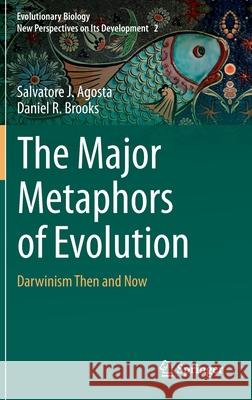
Salvatore J. Agosta; Daniel R. Brooks
The Major Metaphors of Evolution: Darwinism Then and Now Agosta, Salvatore J. 9783030520854 Springer - książkaWidoczna okładka, to zdjęcie poglądowe, a rzeczywista szata graficzna może różnić się od prezentowanej.

The Major Metaphors of Evolution: Darwinism Then and Now

ISBN-13: 9783030520854 / Angielski / Twarda / 2020 / 273 str.

Salvatore J. Agosta; Daniel R. Brooks
cena 806,99 zł
(netto: 768,56 VAT:  5%)

Najniższa cena z 30 dni: 693,97 zł
Termin realizacji zamówienia:
ok. 22 dni roboczych
Bez gwarancji dostawy przed świętami

Darmowa dostawa!
inne wydania
Kategorie:
Nauka, Biologia i przyroda
Kategorie BISAC:
Science > Life Sciences - Evolution
Science > Philosophy & Social Aspects
Science > Biologia i przyroda
Wydawca:
Springer
Seria wydawnicza:
Evolutionary Biology - New Perspectives on Its Development
Język:
Angielski
ISBN-13:
9783030520854
Rok wydania:
2020
Wydanie:
2020
Numer serii:
000894279
Ilość stron:
273
Waga:
0.58 kg
Wymiary:
23.39 x 15.6 x 1.75
Oprawa:
Twarda
Wolumenów:
01
Dodatkowe informacje:
Wydanie ilustrowane

Table of Contents

Chapter 1. Context

Chapter 2. A Talking Book
Abstract
2.1. We are a Fearful Species
2.1.1. The Complexity Paradox
2.2. We are a Story-telling Species
2.2.1. A Story within a Story
2.3. We are a Dreaming Species
2.4. Summary
References

Chapter 3. Setting the Stage
Abstract
3.1. 1859: The Origin Appears
3.1.1. The Nature of the Organism
3.1.2. The Nature of the Organism and Darwin's Necessary Misfit
3.1.3. Natural Selection Emerges from Darwin’s Necessary Misfit and the Nature
of the Conditions
3.1.4. What Happens if the Conditions Change?
3.1.5. Natural Selection as a Blunt Instrument: Survival of the Adequate or
Survival of the Fittest Collective
3.2. Darwinian Evolution: The Law of the Conditions of Existence
3.3. Two Powerful Visual Metaphors
3.3.1. The Tree of Life
3.3.2. The Entangled Bank
3.4. What was Wrong with Darwinism?
3.4.1. Naturalism
3.4.2. Modernism
3.4.3. Romanticism
3.5. Organized Resistance
3.5.1. The Geographers
3.5.2. The Orthogeneticists
3.5.3. The Neo-Lamarckians
3.5.4. The Neo-Darwinians and the Rise of "Survival of the Fittest"
3.6 Summary
References

Chapter 4. Neo-Darwinism, Expansion and Consolidation (1900-1980)
4.1. Low Hanging Fruit: The Geographers
4.1.1. Speciation by Reinforcement
4.1.2. Peripatric Speciation plus Reinforcement
4.1.3. Changing the Nature of Species
4.1.4. Yes, but
4.2. The Big Enchilada: Pan-adaptationism
4.2.1. Mathematics
4.2.2. Yes, but
4.3. Co-opting Orthogenetic Adaptationism
4.4. Act 2: The Hardened Synthesis (1959-1980)
4.4.1. Absorbing the Final Holdout: Co-opting Coevolution
4.5. Reinforcing the Cornerstones
4.5.1. Speciation
4.5.2. Species
4.5.3. Adaptationism and the Hardened Synthesis
4.6. The Hardened Synthesis and Ecology: The Rise of Evolutionary Ecology
4.6.1. Geography as a Proxy for History
4.6.2. Geography as a Means of Eliminating the Confounding Effects of History
4.7. The Hardened Synthesis and Ethology: Behavioral Ecology Emerges
4.8. Yeah, but
4.8.1. Genetic Drift and Shifting Balance
4.8.2. Epigenetic Landscapes
4.9. Summary
References

Chapter 5. Criticism, Resistance, a Glimmer of Hope
Abstract
5.1. The Return of History
5.1.1. The Phylogenetics Revolution
5.1.2. Speciation
5.1.3. Species
5.1.4. The Orthogeneticists Return: Co-speciation
5.1.5. Adaptationism Questioned
5.1.6. The Return of History to Comparative Biology
5.2. Evolution meets Complex Systems Analysis
5.2.1. A Complex Systems View of the Nature of the Organism
5.2.2. A Complex Systems View of Microevolution and Macroevolution
5.2.3. Niches and Niche Construction
5.3. Extending the Hardened Synthesis
5.3.1. Renewed Interest in Galtonian Comparative Biology
5.3.2. Evolutionary Ecology
5.4. Why does the Hardened Synthesis Still Exist, and is even being Extended?
5.5. Back to the Future
5.5.1. Eldredge and Salthe (1984)
5.5.2. Brooks and Wiley (1986, 1988)
5.5.3. Maynard Smith and Szathmary (1995)
5.6. Summary
References

Chapter 6. Buying Time
Abstract
6.1. Becoming Alive: From Non-life to Life
6.2. Staying Alive: The First Rule of Life
6.3. Being Evolvable: The Second Rule of Life
6.3.1. Slow Down and Live: It's the Fluxes (diS), not the Flows (deS)
6.3.2. Keeping it Affordable
6.3.3. Intimate Details of Inheritance Dynamics
6.3.4. An Information View of Evolvable Life
6.3.5. Temporal Dynamics of Biological Information
6.4. Summary
References

Chapter 7. Making Space
Abstract
7.1. The Nature of the Organism: Capacity Space
7.2. Evolvable Space-Time: An Integrated View of the Nature of the Organism
7.3. The Nature of the Conditions: Opportunity Space
7.3.1. Capacity meets Opportunity: Fitness Space
7.4. Coping with Conflict
7.4.1. The Means: Ecological Fitting
7.4.2. The Opportunity: Ecological Fitting in Sloppy Fitness Space
7.5. Summary
References

Chapter 8. Conflict Resolution
Abstract
8.1. Compensatory Changes: Diversifying Your Portfolio
8.2. Cohesion: Making Distinctions
8.3. Visualizing Conflict Resolution
8.4. The Meaning of Conflict: Beauty is in the Eye of the Beholder
8.4.1. Intention in Biological Signals: The Sender
8.4.2. Meaning in Biological Signals: The Receiver
8.5. Fitness Space: A Complex Mix of Signals and Messages
8.6. The Nature of Selection
8.7. Summary
References

Chapter 9. Evolutionary Transitions
9.1. Phylogenetic Analysis as a Reflection of the Dynamics of Conflict Resolution
9.2. An Initial Taxonomy of Transitions
9.2.1. Maynard Smith and Szathmary: What is the Limiting Factor?
9.2.2. Queller: How are the Participants Related?
9.2.3. Brooks and McLennan: What is the Degree of Difficulty?
9.3. Some Sagas
9.3.1. Making a Living
9.3.2. Origins of Herbivory
9.3.3. The "Conquest of Land"
9.3.4. Filling Niches or the Nature of the Organism?
9.3.5. Transitions in Context
9.4. Summary
References

Chapter 10. The Stockholm Paradigm
Abstract
10.1. Altered Geographical Fitness Space: Taxon Pulses
10.2. Altered Functional Fitness Space: The Oscillation Hypothesis
10.3. Integrating Spatial and Functional Oscillations: The Stockholm Paradigm
10.4. Coping with Uncertainty
10.5. Summary
References

Chapter 11. Putting Evolution to Work
Abstract
11.1. Ecosystems: A Paradox
11.1.1. Debunking the Butterfly Effect
11.2. Us: A New View of "The Commons"
11.2.1. The Myth of Control - Why Domestication is not the Answer
11.2.2. The Laws of Biotics
11.3. Changing from "Conservation and Restoration" to "Encouraging the Exploration of
Evolutionary Potential"
11.3.1. What Lessons about Survival can we Learn by Studying what is
happening Today?
11.3.2. Being Proactive about Emerging Infectious Disease
11.3.3. A Specter Returns
11.4. Summary
References

Sal Agosta is an Associate Professor, Virginia Commonwealth University. He received a PhD in Biology from the University of Pennsylvania in 2007, after which he was awarded a Postdoctoral Fellowship in Ecology and Evolutionary Biology from the University of Toronto followed by a Howard Hughes Medical Institute Postdoctoral Fellowship from Wilkes University. Sal is an ecologist and evolutionary biologist whose work ranges from field and laboratory studies of animal-plant interactions in both temperate and tropical habitats to theoretical studies of foundational concepts in ecology and evolution. His current research focuses on the physiological ecology of plant-feeding insects, particularly in the context of biological invasions and climate change.

Daniel R Brooks is Professor Emeritus, University of Toronto. He is a Fellow of the Royal Society of Canada (Academy of Science) and Fellow of the Linnaean Society of London and has been awarded honorary doctorates from Stockholm University and the University of Nebraska. He has been a Senior Visiting Fellow of the Collegium Budapest, Stellenbosch Institute of Advanced Study,Institute of Advanced Studies, Köszeg, and the Hungarian National Institute of Ecology. Dan is an evolutionary biologist whose more than 375 scientific publications, including half a dozen books, ranges from field studies of the evolution of host-pathogen systems in tropical wildlands to foundational studies of evolutionary theory. His current focus is integrating evolutionary principles into developing proactive public policy for coping with global climate change, with an emphasis on the emerging disease crisis.

This book presents a unified evolutionary framework based on three sets of metaphors that will help to consolidate discussions on evolutionary transitions.

Evolution is the unifying principle of life, making identifying ways to apply evolutionary principles to tackle existence-threatening crises such as climate change crucial. A more cohesive evolutionary framework will further the discussions in this regard and also accelerate the process itself.

This book lays out a framework based on three dualistic classes of metaphors – time, space, and conflict resolution. Evolutionary transitions theory shows how metaphors can help us understand selective diversification, as Darwin described with his “tree of life”. Moreover, the recently proposed Stockholm paradigm demonstrates how metaphors can help shed light on the emergence of complex ecosystems that Darwin highlighted with his “tangled bank” metaphor. Taken together, these ideas offer proactive measures for coping with existential crises for humanity, such as climate change.

The book will appeal to biologists, philosophers and historians alike.


Udostępnij

Facebook - konto krainaksiazek.pl


Opinie o Krainaksiazek.pl na Opineo.pl

Partner Mybenefit

Krainaksiazek.pl w programie rzetelna firma Krainaksiaze.pl - płatności przez paypal

Czytaj nas na:

Facebook - krainaksiazek.pl
  • książki na zamówienie
  • granty
  • książka na prezent
  • kontakt
  • pomoc
  • opinie
  • regulamin
  • polityka prywatności

Zobacz:

  • Księgarnia czeska

  • Wydawnictwo Książkowe Klimaty

1997-2025 DolnySlask.com Agencja Internetowa

© 1997-2022 krainaksiazek.pl
     
KONTAKT | REGULAMIN | POLITYKA PRYWATNOŚCI | USTAWIENIA PRYWATNOŚCI
Zobacz: Księgarnia Czeska | Wydawnictwo Książkowe Klimaty | Mapa strony | Lista autorów
KrainaKsiazek.PL - Księgarnia Internetowa

Polityka prywatnosci - link
Krainaksiazek.pl - płatnośc Przelewy24
Przechowalnia Przechowalnia






