The Invisible Hand of Cancer: The Complex Force of Socioeconomic Factors in Oncology Today » książka





The Invisible Hand of Cancer: The Complex Force of Socioeconomic Factors in Oncology Today
ISBN-13: 9783031457739 / Miękka / 2024 / 563 str.
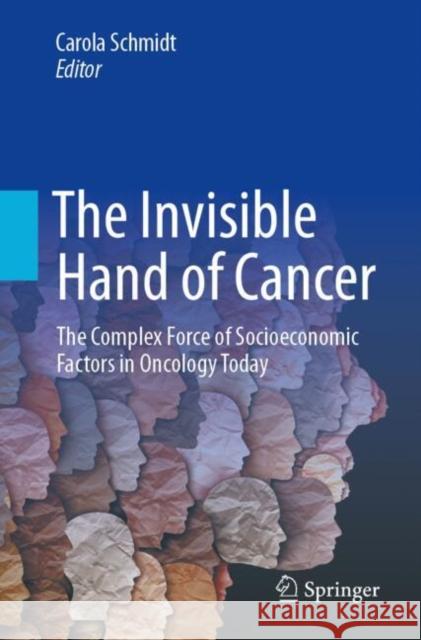
The Invisible Hand of Cancer: The Complex Force of Socioeconomic Factors in Oncology Today
ISBN-13: 9783031457739 / Miękka / 2024 / 563 str.
(netto: 134,47 VAT: 5%)
Najniższa cena z 30 dni: 134,90 zł
ok. 22 dni roboczych
Bez gwarancji dostawy przed świętami
Darmowa dostawa!
1. The Blame Game
This chapter will address how our society often blames cancer patients, associating habits and some types of cancer. It will measure the psychological impacts, question and show data (in a comprehensible way) to conclude what habits and how much they really can cause cell mutation and cancer. The blame game's sociological aspects are analyzed, which is a psychological and cultural behavior (proved by consistent data) of judging people by their type of cancer. Confronting popular habits and theories with science, the first chapter will address the question of how much habits can really interfere with the complex mechanisms of cancer development, and how fair is the way cancer is approached in the media and society. More than that, it opens the discussion about how it interferes in treating cancer as a public policy.
2. The Broken Machine
This chapter is about the biology of cancer and how our repair mechanisms work to avoid cancer development. The various mechanisms of repair are listed and it is explained why they can sometimes not function properly.
3. Healthy and Fitness — to be, or not to be, that is the question
This chapter confronts common knowledge about what is considered healthy. It includes data, as well as mechanisms of mutation of some substances (in a reader-friendly way), and shows how these substances can easily be avoided in daily life. It also discusses the safety of some preservatives in food and other substances that are approved in many countries.
4. Chaos and Complexity
This chapter addresses physical chemistry in an easy-to-read format for non-scientists. It explains the complex organization of cancer, how it can adapt itself to the body, and if its biology tends to chaos.
5. Life and Death Are Made Of Five Letters: A, T, C, G, U
This chapter is about genetics: DNA, RNA, and the code of life and death.
6. Panem et Circenses
This chapter includes an analysis of news and popular information about cancer and their social effects, detailing how the popular excitement over false promises influences government decisions and other cause-effect analyses.
7. Metastasis — When biology favors that cancer follows its way
This chapter highlights the biology of metastasis and the many characteristics that lead a patient to develop metastatic cancer.
8. Treating Cancer
This chapter presents drugs, radiotherapy and surgery in cancer treatments. It discusses why each treatment works for some patients and not for others. Stem cell transplantation, CART-cells and other relatively new therapies are also featured, describing how individual biology interferes. Special attention is given to CART-cells and cellular therapies.
9. Cancer and Incarceration
Incarcerated patients are a specific population and often have their needs neglected, representing a major health issue. Therefore, this chapter will discuss health and cancer in the prison system of the United States.
10. Cancer in Germany, the US, and Brazil
This chapter will compare cancer treatment, public policies, health systems, financial toxicity and other social factors related to cancer in Germany, the United States and Brazil.
11. When the Same Way is Longer: Cancer Social Determinants
This chapter will analyze the social determinants of cancer and how healthcare is managed in different countries. In many developing countries cancer is not regarded as a national priority since the major health problems are related to malnutrition, deaths of neonates during delivery and neglected infectious diseases, such as malaria. Another issue linked to social conditions is the choice of health insurance, which will also be addressed in this chapter.
12. Financial Toxicity
This chapter will address the high-cost of cancer treatments and how it affects patients and their caregivers.
13. When the Same Disease Can Have Different Psychological Impacts in Different Countries
This chapter will compare the psychological impacts of cancer in different countries.
Pediatric Oncology Pharmacist & Writer.
Author of “Chubby’s Tale: The true story of a teddy bear who beat cancer,” which is listed on BookAuthorithy’s “81 Best Leukemia Books of All Time.”
Best-selling author of children’s books about cancer, including “Bald is Beautiful: A letter for a fabulous girl,” and “Cancer Daily Life.”
Springer Nature author of the books “Pediatric Hematopoietic Stem Cell Transplantation for Pharmacists: The Gold Standard to Practice,” “Pediatric Oncologic Pharmacy—A Complete Guide to Practice,” “Chemotherapy in Neonates and Infants—Pharmacological Oncology for Children Under 1 Year Old,” and “Drug Therapy and Interactions in Pediatric Oncology—A Pocket Guide.” Editor of the book “Chemotherapy and Pharmacology for Leukemia in Pregnancy: Guidelines and Strategies for Best Practices,” published by Springer.
Post-Graduation in Pediatric Oncologic Pharmacy; MBA in Planning and Business Management.
After a career in hospitals and classrooms, she has been linking her two passions: writing and oncology. She can be found on Twitter @_CarolaSchmidt
Oncology is a field characterized as “medicine of high complexity” and cancer is generally regarded as a complex system. Therefore, it cannot be classified and treated according only to its biology. Even though research on the biology of cancer has increased and more studies have been published, the related sociological, political and economic dimensions, as well as mathematical models that predict whether this condition will take one course or another, have often been neglected. The Invisible Hand of Cancer—The Complex Force of Socioeconomic Factors in Oncology Today unfolds the variables behind the biological disease, exploring the social aspects and presenting cancer as a model inside of the Complexity Theory.
Cancer is a generic word for more than 200 diseases. In a wider view of cancer treatment, the various factors of cancer interact in multiple ways and it is a difficult task to identify and understand all the possible combinations in this system. All these variables and how they interact can be defined as the invisible hand of cancer. This book does not intend to be an exhaustive analysis of these aspects. It is a door being opened to the cancer research journey, along the years and beyond its biology. It will also discuss how social behavior can interfere in the evolution of cancer treatment, as a result of society’s way of thinking and choices, thus the importance of truly addressing cancer as an intricate system and a public health issue.
After the success of my children’s books about cancer (Chubby’s Tale: The true story of a teddy bear who beat cancer, Bald is Beautiful: A letter for a fabulous girl, Cancer Daily Life, and What is Cancer?: A book for kids), I have developed a passion for writing about science in a simple way for non-scientist readers. I have also worked to build a career as a writer, communicating with patients, advocates, and oncology and pediatric oncology professionals, mostly on Twitter. Everyone knows someone who has or had cancer, so more and more popular science books on this topic are becoming bestsellers. This book is directed to a general audience and follows scientific standards, encompassing high-quality data, but in an easy-to-read format. Furthermore, it will raise awareness and show how simple actions such as not judging patients and not spreading false popular beliefs can contribute to achieve a new milestone in the cancer journey.




Czytaj nas na:
1997-2025 DolnySlask.com Agencja Internetowa
KrainaKsiazek.PL - Księgarnia Internetowa


