ROBERT L. HEATH, PHD, (professor emeritus, University of Houston, USA) recently published two four–volume works: Public Relations: Critical Concepts in Media and Cultural Studies (2013) and Strategic Communication (with Anne Gregory) as part of Sage Benchmarks in Communication, (2015) He is co–editor, with Øyvind Ihlen, of The Handbook of Organizational Rhetoric and Communication (Wiley Blackwell 2018). His research areas include issues management, risk management and communication, crisis communication, organizational rhetoric, and corporate social responsibility.
WINNI JOHANSEN, PHD, is a Professor at the Centre for Corporate Communication at the School of Business and Social Sciences, Aarhus University, Aarhus, Denmark, and Director of the Executive Master′s Program in Corporate Communication. She is co–editor ofCrisis Communication, Handbook of Communication Series, Vol. 23 (2019). Her research areas include strategic communication, crisis management and crisis communication, public relations, organizational communication, and environmental communication.
The definitive international reference on strategic communication
The term "strategic communication" began to take on its current intellectual and professional trajectory so that by 2007 an academic journal could be launched and a definition proposed. The concept was needed to sharpen the acumen of various communication functions within organizations and entities in order to improve their approach and thus be more successful in fulfilling their mission, vision, values statements and goals.
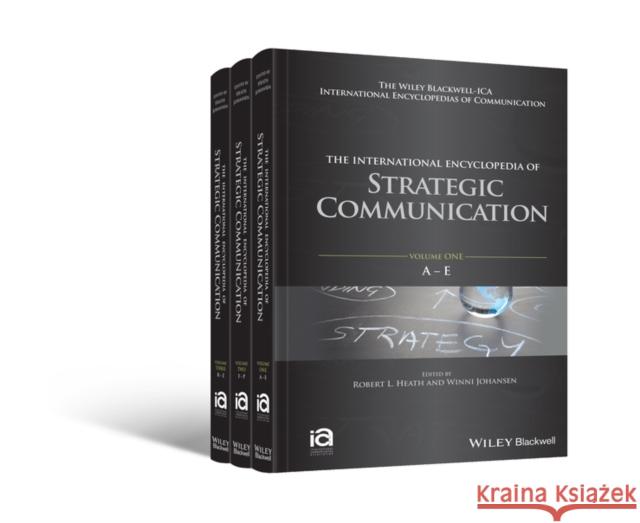
In recent years, strategic communication has evolved to become more integrative, holistic and has taken on a sociocultural orientation. The first major work of its kind, The InternationalEncyclopedia of Strategic Communication captures the full scope of contemporary theory and practice.
Reflecting the current international trends within communication studies generally, this timely reference explores current efforts on the part of thought leaders and communications professionals from around the globe to critique, integrate, and reengineer forms, structures, functions of, best practices, and purposes for both internal and external organizational communication as a management process. These experts share their insights, knowledge and experience within four major areas: strategy, organization, management, and sociocultural impact.
Defines and presents state–of–the–art concepts, models, theories, contexts, and professional practices at the heart of 21st century strategic communication
Addresses major contexts within which strategic influence is required to achieve outcomes that serve the interests of organizations or other entities as well as those whom they seek to influence or depend upon for success
Explores specific topical entries that have come to constitute the applications and intellectual foundations that enrich strategic communication
Examines strategic communication′s role and offers a broad view of its impact on professional areas
Examines how strategic communication principles transcend and are applied currently in specialties such as public relations, conflict and issues management, public diplomacy, political communication, managerial communication, internal communication, technical communication, marketing communication and advertising, fundraising development, social advocacy, information campaigns, health communication, and stakeholder engagement
Written with the support and editorial assistance of the International Communication Association, the world′s leading association for scholars interested in the study, teaching, and application of all aspects of human and mediated communication, The InternationalEncyclopedia of Strategic Communication is an indispensable resource for students, teachers, and researchers in the burgeoning field of strategic communication worldwide.