• Wyszukiwanie zaawansowane
  • Kategorie
  • Kategorie BISAC
  • Książki na zamówienie
  • Promocje
  • Granty
  • Książka na prezent
  • Opinie
  • Pomoc
  • Załóż konto
  • Zaloguj się

The Interconnected Arctic -- Uarctic Congress 2016 » książka

zaloguj się | załóż konto
Logo Krainaksiazek.pl

koszyk

konto

szukaj
topmenu
Księgarnia internetowa
Szukaj
Książki na zamówienie
Promocje
Granty
Książka na prezent
Moje konto
Pomoc
 
 
Wyszukiwanie zaawansowane
Pusty koszyk
Bezpłatna dostawa dla zamówień powyżej 20 złBezpłatna dostawa dla zamówień powyżej 20 zł

Kategorie główne

• Nauka
 [2950560]
• Literatura piękna
 [1849509]

  więcej...
• Turystyka
 [71097]
• Informatyka
 [151150]
• Komiksy
 [35848]
• Encyklopedie
 [23178]
• Dziecięca
 [617388]
• Hobby
 [139064]
• AudioBooki
 [1657]
• Literatura faktu
 [228597]
• Muzyka CD
 [383]
• Słowniki
 [2855]
• Inne
 [445295]
• Kalendarze
 [1464]
• Podręczniki
 [167547]
• Poradniki
 [480102]
• Religia
 [510749]
• Czasopisma
 [516]
• Sport
 [61293]
• Sztuka
 [243352]
• CD, DVD, Video
 [3414]
• Technologie
 [219456]
• Zdrowie
 [101002]
• Książkowe Klimaty
 [124]
• Zabawki
 [2311]
• Puzzle, gry
 [3459]
• Literatura w języku ukraińskim
 [254]
• Art. papiernicze i szkolne
 [8079]
Kategorie szczegółowe BISAC

The Interconnected Arctic -- Uarctic Congress 2016

ISBN-13: 9783319861869 / Angielski / Miękka / 2018 / 311 str.
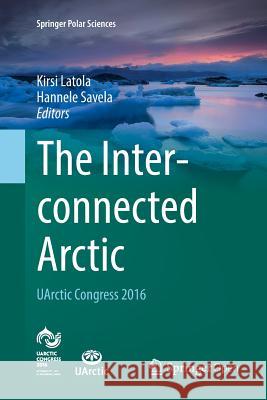
Kirsi Latola; Hannele Savela
The Interconnected Arctic -- Uarctic Congress 2016 Latola, Kirsi 9783319861869 Springer - książkaWidoczna okładka, to zdjęcie poglądowe, a rzeczywista szata graficzna może różnić się od prezentowanej.

The Interconnected Arctic -- Uarctic Congress 2016

ISBN-13: 9783319861869 / Angielski / Miękka / 2018 / 311 str.

Kirsi Latola; Hannele Savela
cena 201,24
(netto: 191,66 VAT:  5%)

Najniższa cena z 30 dni: 192,74
Termin realizacji zamówienia:
ok. 22 dni roboczych
Dostawa w 2026 r.

Darmowa dostawa!
Kategorie:
Nauka, Biologia i przyroda
Kategorie BISAC:
Technology & Engineering > Environmental - General
Science > Global Warming & Climate Change
Social Science > Socjologia
Wydawca:
Springer
Seria wydawnicza:
Springer Polar Sciences
Język:
Angielski
ISBN-13:
9783319861869
Rok wydania:
2018
Wydanie:
Softcover Repri
Ilość stron:
311
Waga:
0.45 kg
Wymiary:
23.39 x 15.6 x 1.75
Oprawa:
Miękka
Wolumenów:
01
Dodatkowe informacje:
Wydanie ilustrowane


Part I Vulnerability of the Arctic environments

Chapter 1 Mysteries of the geological history of the Cenozoic Arctic Ocean sea ice cover. Jörn Thiede

Chapter 2 Response of Arctic alpine biota to climate change -evidence from Polar Urals GLORIA summits. Yuri E. Mikhailov and Pavel A. Moiseev

Chapter 3 The features of natural and artificial recovery in quarries of the forest-tundra zone of Western Siberia. Elena Koptseva and Alexander Egorov

Chapter 4 The concept of hierarchical structure of large marine ecosystems in the zoning of Russian Arctic shelf seas. Kirill M. Petrov, Andrey A. Bobkov

Chapter 5 Changing climate and outbreaks of forest pest insects in a cold northern country, Finland. Seppo Neuvonen and Heli Viiri

Chapter 6 Wood-based energy as a strategy for climate change mitigation in the Arctic –Perspectives on assessment of climate impacts and resource efficiency with Life Cycle Assessment. Laura Sokka<

Chapter 7. Geospatial analysis of persistent organic pollutant deposits in the Arctic ecosystems and environment. Vladimir A. Kudrjashov

Chapter 8 Hydrological probabilistic model MARCS and its application to simulate the probability density functions of multi-year maximal runoff: the Russian Arctic as a case of study. Elena Shevnina and Ekaterina Gaidukova

Chapter 9 Student contribution: Assessment of Atmospheric Circulation in the Atlantic-Eurasian Region and Arctic Using Climate Indices. The Possible Applications of these Indices in Long-term Weather Forecasts. Mikhail M. Latonin

Chapter 10 Student contribution: Difficulties of Geological Engineering in Arctic Seas. Yuliia Tcibulnikova


Part II Vulnerability of the Arctic societies

Chapter 11 The Health Transition: A challenge to indigenous peoples in the Arctic. Peter Sköld

Chapter 12 Uncertainties in Arctic socio-economic scenarios. Riina Haavisto, Karoliina Pilli-Sihvola and Atte Harjanne

Chapter 13 Importance of consideration of climate change at managing fish stocks: A case of northern Russian fisheries. Dmitry Lajus, Daria Smagina and Julia Lajus


Chapter 14 Preservation of territories and traditional activities of the northern indigenous peoples in the period of the Arctic industrial development. Elena Gladun and Kseniya Ivanova

Chapter 15 The Arctic journey – design experiments in the north. Satu Miettinen and Titta Jylkäs

Chapter 16 The Bicycle and the Arctic. Resilient and sustainable transport in times of climate change. Alexander Meitz and Karoline Ringhofer


Part III Building the long-term human capacity

Chapter 17 Human capital development in the Russian Arctic. Alexandra Kekkonen

Chapter 18 Impact of wages on employment and migration in the High North of Russia. Marina Giltman

Chapter 19 Well-being in an Arctic city. Designing a longitudinal study on student relationships and perceived quality of life. Steinar Thorvaldsen, Gunstein Egeberg and John A. Rønning

Chapter 20 Researching Links between Teacher Wellbeing and Educational Change: Case Studies from Kazakhstan and Sakha Republic, Olga M. Chorosova and Nikolai F. Artemev

Chapter 21 Student contribution: Well-being at the Polish polar station, Svalbard: Adaptation to extreme environments. Anna Temp


Part IV Arcitc tourism 

Chapter 22 Tourism futures in the Arctic. Patrick T. Maher

Chapter 23 Uniqueness as a draw for riding under the midnight sun. Blake Rowsell and Patrick T. Maher

Chapter 24 Arctic tourism: the design approach with reference to the Russian North. Svetlana Usenyuk and Maria Gostyaeva


Part V Arctic safety 

Chapter 25 Maritime operations and emergency preparedness in the Arctic –competence standards for search and rescue operations contingencies in polar waters. Johannes Schmied, Odd Jarl Borch, Ensieh Kheiri Pileh Roud, Tor Einar Berg, Kay Fjørtoft, Ørjan Selvik, James R. Parsons

Chapter 26 Risk reduction as a result of implementation of the functional based IMO Polar Code in the Arctic cruise industry. Knut Espen Solberg, Robert Brown,  Eirik Skogvoll, Ove Tobias Gudmestad

Chapter 27 Safety of industrial development and transportation routes in the Arctic (SITRA) -collaboration project for research and education of future High North experts. Nataliya Marchenko, Rocky Taylor, Aleksey Marchenko

Chapter 28 Safe Snow and Ice Construction to Arctic Conditions. Kai Ryynänen

Chapter 29 The components of psychological safety of oil and gas shift workers in the Arctic. Yana Korneeva, Tamara Tyulyubaeva, Natalia Simonova


Part VI Circumpolar, inclusive and reciprocal Arctic

Chapter 30 Where is gender? Cracking the Arctic box and its persistent “gender neutral” research agendas. Gunhild Hoogensen-Gjørv

Chapter 31 Towards an Arctic awakening: Neocolonalism, sustainable development, emancipatory research, collective action, and Arctic regional policymaking. Ulunnguaq Elisabeth Markussen, student perspective​

The first ever UArctic Congress science section in St.Petersburg in September 2016 has taken its themes from ICARP III statement and report. The third International Conference on Arctic Research Planning (ICARP III) provided a framework for identifying Arctic science priorities for the next decade; coordinating various Arctic research agendas; informing policy makers, people who live in or near the Arctic and the global community and building constructive relationships between producers and users of knowledge. It was an effort of over 20 Arctic organisations and after the final conference in Toyama 2015 first the statement was given and then in early 2016 the report. The key points given at the statement were used in planning the UArctic congress themes:

1. Vulnerability of Arctic Environments

2.. Vulnerability of Arctic Societies

3. Local and traditional knowledge

4. Building long-term human capacity

5. New markets for the Arctic, including trade, tourism and transportation.

This book is open access under a CC BY 4.0 license.

This book presents the most current research results and knowledge from five multidisciplinary themes: Vulnerability of Arctic Environments, Vulnerability of Arctic Societies, Local and Traditional Knowledge, Building Long-term Human Capacity, New Markets for the Arctic, including tourism and safety. The themes are those discussed at the first ever UArctic Congress Science Section, St. Petersburg, Russia, September 2016. The book looks at the Arctic from a holistic perspective; how the environment (both marine and terrestrial) and communities can adapt and manage the changes due to climate change. The chapters provide examples of the state-of-the-art research, bringing together both scientific and local knowledge to form a comprehensive and cohesive volume.


Udostępnij

Facebook - konto krainaksiazek.pl


Opinie o Krainaksiazek.pl na Opineo.pl

Partner Mybenefit

Krainaksiazek.pl w programie rzetelna firma Krainaksiaze.pl - płatności przez paypal

Czytaj nas na:

Facebook - krainaksiazek.pl
  • książki na zamówienie
  • granty
  • książka na prezent
  • kontakt
  • pomoc
  • opinie
  • regulamin
  • polityka prywatności

Zobacz:

  • Księgarnia czeska

  • Wydawnictwo Książkowe Klimaty

1997-2025 DolnySlask.com Agencja Internetowa

© 1997-2022 krainaksiazek.pl
     
KONTAKT | REGULAMIN | POLITYKA PRYWATNOŚCI | USTAWIENIA PRYWATNOŚCI
Zobacz: Księgarnia Czeska | Wydawnictwo Książkowe Klimaty | Mapa strony | Lista autorów
KrainaKsiazek.PL - Księgarnia Internetowa

Polityka prywatnosci - link
Krainaksiazek.pl - płatnośc Przelewy24
Przechowalnia Przechowalnia







