• Wyszukiwanie zaawansowane
  • Kategorie
  • Kategorie BISAC
  • Książki na zamówienie
  • Promocje
  • Granty
  • Książka na prezent
  • Opinie
  • Pomoc
  • Załóż konto
  • Zaloguj się

The Importance of Place: Geographical Indications as a Tool for Local and Regional Development » książka


zaloguj się | załóż konto
Logo Krainaksiazek.pl

koszyk

konto

szukaj
topmenu
Księgarnia internetowa
Szukaj
Książki na zamówienie
Promocje
Granty
Książka na prezent
Moje konto
Pomoc
 
 
Wyszukiwanie zaawansowane
Pusty koszyk
Bezpłatna dostawa dla zamówień powyżej 20 złBezpłatna dostawa dla zamówień powyżej 20 zł

Kategorie główne

• Nauka
 [2946912]
• Literatura piękna
 [1852311]

  więcej...
• Turystyka
 [71421]
• Informatyka
 [150889]
• Komiksy
 [35717]
• Encyklopedie
 [23177]
• Dziecięca
 [617324]
• Hobby
 [138808]
• AudioBooki
 [1671]
• Literatura faktu
 [228371]
• Muzyka CD
 [400]
• Słowniki
 [2841]
• Inne
 [445428]
• Kalendarze
 [1545]
• Podręczniki
 [166819]
• Poradniki
 [480180]
• Religia
 [510412]
• Czasopisma
 [525]
• Sport
 [61271]
• Sztuka
 [242929]
• CD, DVD, Video
 [3371]
• Technologie
 [219258]
• Zdrowie
 [100961]
• Książkowe Klimaty
 [124]
• Zabawki
 [2341]
• Puzzle, gry
 [3766]
• Literatura w języku ukraińskim
 [255]
• Art. papiernicze i szkolne
 [7810]
Kategorie szczegółowe BISAC

The Importance of Place: Geographical Indications as a Tool for Local and Regional Development

ISBN-13: 9783319530727 / Angielski / Twarda / 2017 / 287 str.
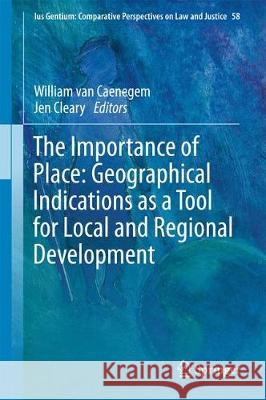
William Van Caenegem; Jen Cleary
The Importance of Place: Geographical Indications as a Tool for Local and Regional Development William Va Jen Cleary 9783319530727 Springer - książkaWidoczna okładka, to zdjęcie poglądowe, a rzeczywista szata graficzna może różnić się od prezentowanej.

The Importance of Place: Geographical Indications as a Tool for Local and Regional Development

ISBN-13: 9783319530727 / Angielski / Twarda / 2017 / 287 str.

William Van Caenegem; Jen Cleary
cena 682,72
(netto: 650,21 VAT:  5%)

Najniższa cena z 30 dni: 655,41
Termin realizacji zamówienia:
ok. 22 dni roboczych
Dostawa w 2026 r.

Darmowa dostawa!

This book explores the potential benefits and disadvantages of geographical indication (GIs) registration schemes, analyzing the utility of GI registrations for the development and promotion of regional economies, both in national and international markets. The book draws on the van Caenegem, Cleary & Drahos Australian Provenance Report, along with the valuable empirical data collected in connection with it. The book situates the rural development question in an international context, presenting several case studies from Italy, France and Morocco, New Zealand and Australia. The book contains various chapters focused on comparing regulatory structures in various relevant jurisdictions and drawing on other countries' experiences. It contains significant contributions from industry actors with extensive experience in regional branding initiatives and GI-related policy issues.
Progressive in structure, the book starts from the 'big picture' level before moving down to the local and concrete scale. Geographical indications of Australian products are vital both in domestic and overseas markets by accurately representing the origin and quality of niche agricultural products. Thus, with a particular focus on Australia, the book promotes the assessment of geographical indications as potential regional assets that will help producers develop local quality indicators that will serve as public goods for successive generations of producers.


Kategorie:
Nauka, Prawo i administracja
Kategorie BISAC:
Law > International
Business & Economics > Industries - Agribusiness
Social Science > Antropologia - Kultury
Wydawca:
Springer
Seria wydawnicza:
Ius Gentium: Comparative Perspectives on Law and Justice
Język:
Angielski
ISBN-13:
9783319530727
Rok wydania:
2017
Wydanie:
2017
Numer serii:
000354656
Ilość stron:
287
Waga:
0.63 kg
Wymiary:
24.41 x 16.56 x 2.11
Oprawa:
Twarda
Wolumenów:
01

Part I: International Trade: Perspectives on Politics and Place.- Chapter 1. Protecting Geographical-Origin-Brands Abroad: The Geneva Act of the Lisbon Agreement (Matthijs Geuze).- Chapter 2. The Geneva Act of the Lisbon Agreement: Controversial Negotiations and Controversial Results (Daniel J. Gervais).- Chapter 3. The Global Struggle Between Europe and United States Over Geographical Indications in South Korea And in the TPP Economies (Bernard O’connor).- Chapter 4. The Aroma of Opportunity: The Potential of Wine Geographical Indications in the Australia-India Comprehensive Economic Cooperation Agreement (Susanne Taylor).- Part II: Old and New World, Development Perspectives.- Chapter 6. Mitigating ‘One-Size-Fits-All’ Approaches to Australian Agriculture: Is There a Case to be Made for Geographical Indications? (Jen Cleary).- Chapter 7. Protecting Appellations of Origin: One Hundred Years of Efforts and Debates (Genevieve Teil).- Chapter 8. From Geographical Indications to Collective Place Branding in France and Morocco (Mechthild Donner).- Chapter 9. GI Blues: Geographical Indications and Wine in New Zealand (John Overton).- Chapter 10. Do Geographical Indications for Handicrafts Deserve a Special Regime? Insight from Worldwide Law and Practice (Delphine Marie-Vivien).- Chapter 11. Old World Case Study: The Role of Protected Geographical Indications to Foster Rural Development Dynamics: The Case of Sorana Bean PGI (Giovanni Belletti).- Chapter 12. New World Case Study: King Island - Living the Place Brand (Jennifer Thorn).

William van Caenegem is a Professor of Law at the Faculty of Law, Bond University. He specializes in intellectual property law and comparative law. William wrote some of the first articles in Australia concerning the legal protection of geographical indications of origin, in the context of the WTO/TRIPS negotiations on the subject. He is a co-author with Jen Cleary and Peter Drahos of the RIRDC Report ‘Provenance of Australian food products: is there a place for Geographical Indications?’ (2015) and with Jen Cleary, Madeline Taylor and Brenda Marshall of the RIRDC Report ‘Collective Bargaining in the Agricultural Sector’ (2015). He has published on many areas of intellectual property law, including IP and innovation and also IP and the protection of commercial reputation.

Jen Cleary is a human geographer with research interests in regional development and agricultural value chain analysis. Jen is based within the Centre for Global Food Studies at the University of Adelaide, and holds an honorary position as Adjunct Associate Professor at the Institute for Governance and Policy Analysis at the University of Canberra. Jen has served as Chair of Regional Development Australia, Far North (RDAFN) from 2009–14 and was appointed in 2015 as Chair of the RDA National Reference Group, established by former Deputy Prime Minister Warren Truss. In 2013 Jen joined the National Steering Committee of SEGRA (Sustainable Economic Growth for Regional Australia), a national, independent body that fosters collaboration and formulates policy advice across rural, regional and remote Australia.

This book explores the potential benefits and disadvantages of geographical indication (GIs) registration schemes, analyzing the utility of GI registrations for the development and promotion of regional economies, both in national and international markets. The book draws on the van Caenegem, Cleary & Drahos Australian Provenance Report, along with the valuable empirical data collected in connection with it. 

The book situates the rural development question in an international context, presenting several case studies from Italy, France and Morocco, New Zealand and Australia. The book contains various chapters focused on comparing regulatory structures in various relevant jurisdictions and drawing on other countries’ experiences. It contains significant contributions from industry actors with extensive experience in regional branding initiatives and GI-related policy issues. 

Progressive in structure, the book starts from the ‘big picture’ level before moving down to the local and concrete scale. Geographical indications of Australian products are vital both in domestic and overseas markets by accurately representing the origin and quality of niche agricultural products. Thus, with a particular focus on Australia, the book promotes the assessment of geographical indications as potential regional assets that will help producers develop local quality indicators that will serve as public goods for successive generations of producers.

Van Caenegem, William William Van Caenegem is a Professor of Law at Bond... więcej >
Cleary, Jen Cindy Lu was just a girl looking for love. 15 year... więcej >


Udostępnij

Facebook - konto krainaksiazek.pl


Opinie o Krainaksiazek.pl na Opineo.pl

Partner Mybenefit

Krainaksiazek.pl w programie rzetelna firma Krainaksiaze.pl - płatności przez paypal

Czytaj nas na:

Facebook - krainaksiazek.pl
  • książki na zamówienie
  • granty
  • książka na prezent
  • kontakt
  • pomoc
  • opinie
  • regulamin
  • polityka prywatności

Zobacz:

  • Księgarnia czeska

  • Wydawnictwo Książkowe Klimaty

1997-2025 DolnySlask.com Agencja Internetowa

© 1997-2022 krainaksiazek.pl
     
KONTAKT | REGULAMIN | POLITYKA PRYWATNOŚCI | USTAWIENIA PRYWATNOŚCI
Zobacz: Księgarnia Czeska | Wydawnictwo Książkowe Klimaty | Mapa strony | Lista autorów
KrainaKsiazek.PL - Księgarnia Internetowa

Polityka prywatnosci - link
Krainaksiazek.pl - płatnośc Przelewy24
Przechowalnia Przechowalnia




