• Wyszukiwanie zaawansowane
  • Kategorie
  • Kategorie BISAC
  • Książki na zamówienie
  • Promocje
  • Granty
  • Książka na prezent
  • Opinie
  • Pomoc
  • Załóż konto
  • Zaloguj się

The IEEE Guide to Writing in the Engineering and Technical Fields » książka


zaloguj się | załóż konto
Logo Krainaksiazek.pl

koszyk

konto

szukaj
topmenu
Księgarnia internetowa
Szukaj
Książki na zamówienie
Promocje
Granty
Książka na prezent
Moje konto
Pomoc
 
 
Wyszukiwanie zaawansowane
Pusty koszyk
Bezpłatna dostawa dla zamówień powyżej 20 złBezpłatna dostawa dla zamówień powyżej 20 zł

Kategorie główne

• Nauka
 [2949965]
• Literatura piękna
 [1857847]

  więcej...
• Turystyka
 [70818]
• Informatyka
 [151303]
• Komiksy
 [35733]
• Encyklopedie
 [23180]
• Dziecięca
 [617748]
• Hobby
 [139972]
• AudioBooki
 [1650]
• Literatura faktu
 [228361]
• Muzyka CD
 [398]
• Słowniki
 [2862]
• Inne
 [444732]
• Kalendarze
 [1620]
• Podręczniki
 [167233]
• Poradniki
 [482388]
• Religia
 [509867]
• Czasopisma
 [533]
• Sport
 [61361]
• Sztuka
 [243125]
• CD, DVD, Video
 [3451]
• Technologie
 [219309]
• Zdrowie
 [101347]
• Książkowe Klimaty
 [123]
• Zabawki
 [2362]
• Puzzle, gry
 [3791]
• Literatura w języku ukraińskim
 [253]
• Art. papiernicze i szkolne
 [7933]
Kategorie szczegółowe BISAC

The IEEE Guide to Writing in the Engineering and Technical Fields

ISBN-13: 9781119070139 / Angielski / Miękka / 2017 / 200 str.
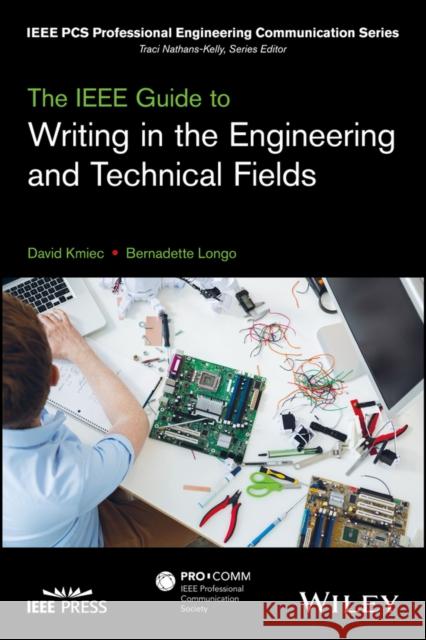
David Kmiec; Julia Williams; Bernadette Longo
The IEEE Guide to Writing in the Engineering and Technical Fields David Kmiec Julia Williams Bernadette Longo 9781119070139 Wiley-IEEE Press - książkaWidoczna okładka, to zdjęcie poglądowe, a rzeczywista szata graficzna może różnić się od prezentowanej.

The IEEE Guide to Writing in the Engineering and Technical Fields

ISBN-13: 9781119070139 / Angielski / Miękka / 2017 / 200 str.

David Kmiec; Julia Williams; Bernadette Longo
cena 323,22 zł
(netto: 307,83 VAT:  5%)

Najniższa cena z 30 dni: 319,91 zł
Termin realizacji zamówienia:
ok. 30 dni roboczych
Bez gwarancji dostawy przed świętami

Darmowa dostawa!

The goal of this book is to introduce students and practicing engineers to all the components of writing in the workplace. Readers will learn how considerations of audience and purpose govern the structure of their documents. The handbook is broken up into two sections: Writing in Engineering Organizations and What Can You Do With Writing? The first section helps readers approach their writing in a logical and persuasive way as well as analyze their purpose for writing. The second section demonstrates how to distinguish rhetorical situations and the generic forms to inform, train, persuade, and collaborate. The website provides professional users a recognizable workplace environment that they can consider as they plan to act within their own workplaces. Users who log into the website will be able to access engineering documents and media organized in a way that tells the story of real world engineering projects. Student users will be provided with insight into workplace contexts, which are essential to understanding how engineers communicate at work.


Kategorie:
Informatyka
Kategorie BISAC:
Technology & Engineering > Technical Writing
Technology & Engineering > Engineering (General)
Wydawca:
Wiley-IEEE Press
Seria wydawnicza:
IEEE PCs Professional Engineering Communication
Język:
Angielski
ISBN-13:
9781119070139
Rok wydania:
2017
Numer serii:
000441106
Ilość stron:
200
Waga:
0.32 kg
Wymiary:
22.86 x 14.99 x 1.27
Oprawa:
Miękka
Wolumenów:
01

A Note from the Series Editor, ix

About the Authors, xi

PART I A TECHNIQUE FOR WRITING LIKE A PROFESSIONAL 1

Introduction, 3

1 The Social Situation of Text 7

The Social Contexts for Technical Writing, 8

Models of the Writing Environment, 9

Transmission Models, 10

Correctness Models, 11

Cognitive/Behavioral Models, 13

Social/Rhetorical Models, 14

This Guide′s Approach, 16

The Rhetorical Situation: Purpose, 18

The Rhetorical Situation: Audience, 21

The Rhetorical Situation: Identity, 26

The Rhetorical Situation: Context, 28

The Pragmatic Situation: Community and Genre, 29

2 Making Writing Decisions 33

Introduction, 34

Document Structure and Granularity, 35

Arranging Text at the Macro Level, 37

Sectioning and Heading Sections, 39

Aids for Navigating and Understanding Document Structure, 43

Creating Effects with Lexis and Syntax at the Micro Level, 45

Lexical Technique: Word Choice, Technical Terms, and Hedges and Boosters, 47

Syntactic Technique: Modification, Clausal Arrangement, and Discursive Cueing, 53

Intermediate Structural Units and Argumentative Movement, 68

Paragraph Cohesion and Paragraphs as Structural Units of a Document, 69

Structures Other than Paragraphs, 72

Citations and Other Intertextual Statements, 73

Implications for the Process of Writing, 75

Additional Reading, 77

PART 2 WRITING DOCUMENTS 79

Introduction 81

3 Writing to Know: Informative Documents 85

Introduction, 86

The Purposes of Informative Documents, 86

Occasions for Preparing an Informative Document, 88

Audiences for an Informative Document, 88

Key Communication Strategies When Writing to Know, 90

Understanding What Constitutes Sufficient Evidence to Support a Claim, 90

Structuring Evidence in Your Document, 91

Establishing Expertise, 92

Questions for Analyzing Existing Documents, 93

Some Typical Informative Documents, 93

Reports, 93

Specifications, 104

4 Writing to Enable: Instructions and Guidance 109

Introduction, 110

The Purposes of Enabling Documents, 110

Occasions for Preparing an Enabling Document, 112

Audiences for an Enabling Document, 112

Key Communication Strategies When Writing to Enable, 113

Anticipating a Document′s Use Context, 113

Deciding How Much Background Is Warranted, 115

Testing the Document with Users, 116

Questions for Analyzing Existing Documents, 119

Characteristic Enabling Documents, 119

Manuals/Guides and Other Documents That Primarily Contain Instructions/Directions/Procedures, 119

Tutorials/Training Materials, 128

Policies, 130

5 Writing to Convince: Persuasive Documents 133

Introduction, 134

The Purposes of Persuasive Documents, 134

Occasions for Preparing a Persuasive Document, 135

Audiences for the Persuasive Document, 136

Key Communication Strategies When Writing to Convince, 137

Designing Your Argument to Consider the Audience′s Preexisting Beliefs, 137

Using the Terms and Values of the Audience to Articulate a Shared Goal, 140

Assuring Outcomes and Benefits without Seeming Unrealistic, 142

Questions for Analyzing Existing Documents, 143

Typical Examples of Persuasive Documents, 145

Proposals, 145

Business Plans, 149

6 Correspondence: Medium of Workplace Collaboration 155

Introduction, 156

The Purposes of Correspondence, 157

Occasions for Preparing Correspondence, 158

Audiences for Correspondence, 158

Key Communication Strategies When Corresponding, 160

Consider Workplace Roles and Official and Unofficial Relationships and Responsibilities, 160

Evaluate Target Size and Frequency of Communication for a Relationship, 162

Pause to Reconsider Composition, Time, and Tone before Sending, 163

Characteristics of Correspondence Documents, 165

Letters, Memoranda, and E–mails, 165

Types of Correspondence, 167

Pre– and Post–meeting Documents: Announcements, Agendas, and Minutes, 170

Social Media, 171

Appendix: IEEE Style for References, 173

Index, 183

David Kmiec, PhD is a Senior Lecturer and Coordinator of Undergraduate Technical Writing in the Department of Humanities at New Jersey Institute of Technology, USA. He also consults for government agencies and manufacturing and engineering services firms, helping them establish knowledge of management practices and effective workflows for digital and print publications.

Bernadette Longo, PhD is an Associate Professor in the Department of Humanities at New Jersey Institute of Technology, USA. She won the Emily K. Schlesinger Award for outstanding service to the IEEE Professional Communication Society in 2014.

Helps both engineers and students improve their writing skills by learning to analyze target audience, tone, and purpose in order to effectively write technical documents

This book introduces students and practicing engineers to all the components of writing in the workplace. It teaches readers how considerations of audience and purpose govern the structure of their documents within particular work settings. The IEEE Guide to Writing in the Engineering and Technical Fields is broken up into two sections: "Writing in Engineering Organizations" and "What Can You Do With Writing?" The first section helps readers approach their writing in a logical and persuasive way as well as analyze their purpose for writing. The second section demonstrates how to distinguish rhetorical situations and the generic forms to inform, train, persuade, and collaborate.

The emergence of the global workplace has brought with it an increasingly important role for effective technical communication. Engineers more often need to work in cross–functional teams with people in different disciplines, in different countries, and in different parts of the world. Engineers must know how to communicate in a rapidly evolving global environment, as both practitioners of global English and developers of technical documents. Effective communication is critical in these settings.

The IEEE Guide to Writing in the Engineering and Technical Fields:

  • Addresses the increasing demand for technical writing courses geared toward engineers
  • Allows readers to perfect their writing skills in order to present knowledge and ideas to clients, government representatives, and the general public
  • Covers topics most important to the working engineer

The IEEE Guide to Writing in the Engineering and Technical Fields is a handbook developed specifically for engineers and engineering students. Using an argumentation framework, the handbook presents information about forms of engineering communication in a clear and accessible format. This book introduces both forms that are characteristic of the engineering workplace and principles of logic and rhetoric that underlie these forms. As a result, students and practicing engineers can improve their writing in any situation they encounter, because they can use these principles to analyze audience, purpose, tone, and form.

Williams, Julia Julia has always made up stories in her head, and ... więcej >


Udostępnij

Facebook - konto krainaksiazek.pl


Opinie o Krainaksiazek.pl na Opineo.pl

Partner Mybenefit

Krainaksiazek.pl w programie rzetelna firma Krainaksiaze.pl - płatności przez paypal

Czytaj nas na:

Facebook - krainaksiazek.pl
  • książki na zamówienie
  • granty
  • książka na prezent
  • kontakt
  • pomoc
  • opinie
  • regulamin
  • polityka prywatności

Zobacz:

  • Księgarnia czeska

  • Wydawnictwo Książkowe Klimaty

1997-2025 DolnySlask.com Agencja Internetowa

© 1997-2022 krainaksiazek.pl
     
KONTAKT | REGULAMIN | POLITYKA PRYWATNOŚCI | USTAWIENIA PRYWATNOŚCI
Zobacz: Księgarnia Czeska | Wydawnictwo Książkowe Klimaty | Mapa strony | Lista autorów
KrainaKsiazek.PL - Księgarnia Internetowa

Polityka prywatnosci - link
Krainaksiazek.pl - płatnośc Przelewy24
Przechowalnia Przechowalnia





