• Wyszukiwanie zaawansowane
  • Kategorie
  • Kategorie BISAC
  • Książki na zamówienie
  • Promocje
  • Granty
  • Książka na prezent
  • Opinie
  • Pomoc
  • Załóż konto
  • Zaloguj się

The History and Future of Economics » książka


zaloguj się | załóż konto
Logo Krainaksiazek.pl

koszyk

konto

szukaj
topmenu
Księgarnia internetowa
Szukaj
Książki na zamówienie
Promocje
Granty
Książka na prezent
Moje konto
Pomoc
 
 
Wyszukiwanie zaawansowane
Pusty koszyk
Bezpłatna dostawa dla zamówień powyżej 20 złBezpłatna dostawa dla zamówień powyżej 20 zł

Kategorie główne

• Nauka
 [2946912]
• Literatura piękna
 [1852311]

  więcej...
• Turystyka
 [71421]
• Informatyka
 [150889]
• Komiksy
 [35717]
• Encyklopedie
 [23177]
• Dziecięca
 [617324]
• Hobby
 [138808]
• AudioBooki
 [1671]
• Literatura faktu
 [228371]
• Muzyka CD
 [400]
• Słowniki
 [2841]
• Inne
 [445428]
• Kalendarze
 [1545]
• Podręczniki
 [166819]
• Poradniki
 [480180]
• Religia
 [510412]
• Czasopisma
 [525]
• Sport
 [61271]
• Sztuka
 [242929]
• CD, DVD, Video
 [3371]
• Technologie
 [219258]
• Zdrowie
 [100961]
• Książkowe Klimaty
 [124]
• Zabawki
 [2341]
• Puzzle, gry
 [3766]
• Literatura w języku ukraińskim
 [255]
• Art. papiernicze i szkolne
 [7810]
Kategorie szczegółowe BISAC

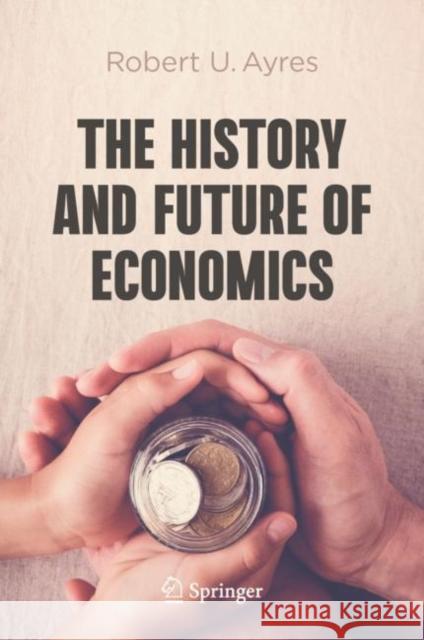
The History and Future of Economics

ISBN-13: 9783031262074 / Angielski
Robert U. Ayres
The History and Future of Economics Robert U. Ayres 9783031262074 Springer - książkaWidoczna okładka, to zdjęcie poglądowe, a rzeczywista szata graficzna może różnić się od prezentowanej.

The History and Future of Economics

ISBN-13: 9783031262074 / Angielski

Robert U. Ayres
cena 221,37
(netto: 210,83 VAT:  5%)

Najniższa cena z 30 dni: 192,74
Termin realizacji zamówienia:
ok. 22 dni roboczych
Bez gwarancji dostawy przed świętami

Darmowa dostawa!
inne wydania

The purpose of this book is three-fold. The first purpose is to posit that the fundamental substance of the universe is energy, and that energy is required (consumed) for any material transformation, or information transmission. The labor theory of value, articulated by the physiocrats and elaborated by Adam Smith, David Ricardo, J.B. Say and Karl Marx was a rough first approximation of the value creation process, in the 17thand 18thcenturies, but is now obsolete. Labor is now (mostly) performed by machines, not by humans (or animals).The second aim of the book is to argue that the economy is a living (open) system -- an “island of order” –that exists far from both thermodynamic and  economic equilibrium. Order is achieved by dissipating a flux of exergy. Economists frequently emphasize the equilibrium assumption, introduced originally by Leon Walras in 1854. But in reality, biological systems and human social systems are dissipative cycles, far from both thermodynamic equilibrium, and economic equilibrium, yet stable and capable of evolution, driven by the solar exergy flux.The third aim of the book is to re-emphasize, that – being open – the economic system cannot be regarded as a collection of individual competitive utility-maximizing transactions. There are, increasingly, important possibilities for cooperation instead of competition. Moreover third party effects, both “bads” (externalities) and the “public good” (happiness)  – need to be incorporated into the socio-economic decision making process.

The purpose of this book is three-fold. The first purpose is to posit that the fundamental substance of the universe is energy, and that energy is required (consumed) for any material transformation, or information transmission. The labor theory of value, articulated by the physiocrats and elaborated by Adam Smith, David Ricardo, J.B. Say and Karl Marx was a rough first approximation of the value creation process, in the 17th and 18th centuries, but is now obsolete. Labor is now (mostly) performed by machines, not by humans (or animals).  The second aim of the book is to argue that the economy is a living (open) system -- an “island of order” –that exists far from both thermodynamic and  economic equilibrium. Order is achieved by dissipating a flux of exergy. Economists frequently emphasize the equilibrium assumption, introduced originally by Leon Walras in 1854. But in reality, biological systems and human social systems are dissipative cycles, far from both thermodynamic equilibrium, and economic equilibrium, yet stable and capable of evolution, driven by the solar exergy flux. The third aim of the book is to re-emphasize, that – being open – the economic system cannot be regarded as a collection of individual competitive utility-maximizing transactions. There are, increasingly, important possibilities for cooperation instead of competition. Moreover third party effects, both “bads” (externalities) and the “public good” (happiness)  – need to be incorporated into the socio-economic decision making process. 

Kategorie:
Nauka, Ekonomia i biznes
Kategorie BISAC:
Business & Economics > Economics - Theory
Business & Economics > Historia ekonomii
History > Social History
Wydawca:
Springer
Język:
Angielski
ISBN-13:
9783031262074

1. From pre-history to the Crusades.- 2. From the Crusades to the Renaissance.- 3. The Protestant work ethic and the rise of capitalism as Gods work.- 4. The Enlightenment: From Leonardo to Galileo.- 5. The rise of the East India Trading Companies.- 6. The “glorious revolution” and the BoE.- 7. Laissez-Faire and John Law’s premature invention of “futures”.- 8. Classical economics as moral philosophy.- 9. Bentham and utilitarianism.- 10. The rise of physics: from Newton to Einstein.- 11. Energetics.- 12. Evolutionary theory and genetics.- 13. Entropy, exergy, information and complexity.- 14. The “marginal revolution” in Economics.- 15. Socialism and the Welfare State.- 16. Keynes v. Hayek and the monetarists.- 17. The future of economics and the economics of the future.

Professor Ayres holds a PhD in Mathematical Physics from Kings College, University of London, a MSc in Physics from the University of Maryland and a BA, BSc from the University of Chicago. He is currently Emeritus Professor of Economics and Political Science and of Technology and Operations Management at INSEAD, the international graduate business school.

He joined INSEAD in 1992, becoming the first Sandoz (now Novartis) Chair of Management and the Environment, as well as the founder of CMER, Center for the Management of Environmental Resources. He directed CMER from 1992-2000. Since retirement he has been a visiting professor at Chalmers Institute of Technology in Sweden (where he was also a King's Professor) and Institute Scholar at the International Institute for Applied Systems Analysis (IIASA) in Austria. He remains active, producing publications on topics ranging from Industrial Metabolism and Industrial Ecology, through Environmental Policy and Environmental Economics, to Energy. Professor Ayres is the author or coauthor of 22 books, most recently including The Economic Growth Engine (2009, with Benjamin Warr), Crossing the Energy Divide (2009, with Edward Ayres), Bubble Economy (2014), Energy, Complexity and Wealth Maximization (2018), On Capitalism and Inequality (2020), and The History and Future of Technology (2021).

The purpose of this book is three-fold. The first purpose is to posit that the fundamental substance of the universe is energy, and that energy is required (consumed) for any material transformation, or information transmission. The labor theory of value, articulated by the physiocrats and elaborated by Adam Smith, David Ricardo, J.B. Say and Karl Marx was a rough first approximation of the value creation process, in the 17th and 18th centuries, but is now obsolete. Labor is now (mostly) performed by machines, not by humans (or animals).  

The second aim of the book is to argue that the economy is a living (open) system -- an “island of order” –that exists far from both thermodynamic and  economic equilibrium. Order is achieved by dissipating a flux of exergy. Economists frequently emphasize the equilibrium assumption, introduced originally by Leon Walras in 1854. But in reality, biological systems and human social systems are dissipative cycles, far from both thermodynamic equilibrium, and economic equilibrium, yet stable and capable of evolution, driven by the solar exergy flux. 

The third aim of the book is to re-emphasize, that – being open – the economic system cannot be regarded as a collection of individual competitive utility-maximizing transactions. There are, increasingly, important possibilities for cooperation instead of competition. Moreover third party effects, both “bads” (externalities) and the “public good” (happiness)  – need to be incorporated into the socio-economic decision making process.

Ayres, Robert U. Robert U. Ayres, an American-born physicist and ec... więcej >


Udostępnij

Facebook - konto krainaksiazek.pl


Opinie o Krainaksiazek.pl na Opineo.pl

Partner Mybenefit

Krainaksiazek.pl w programie rzetelna firma Krainaksiaze.pl - płatności przez paypal

Czytaj nas na:

Facebook - krainaksiazek.pl
  • książki na zamówienie
  • granty
  • książka na prezent
  • kontakt
  • pomoc
  • opinie
  • regulamin
  • polityka prywatności

Zobacz:

  • Księgarnia czeska

  • Wydawnictwo Książkowe Klimaty

1997-2025 DolnySlask.com Agencja Internetowa

© 1997-2022 krainaksiazek.pl
     
KONTAKT | REGULAMIN | POLITYKA PRYWATNOŚCI | USTAWIENIA PRYWATNOŚCI
Zobacz: Księgarnia Czeska | Wydawnictwo Książkowe Klimaty | Mapa strony | Lista autorów
KrainaKsiazek.PL - Księgarnia Internetowa

Polityka prywatnosci - link
Krainaksiazek.pl - płatnośc Przelewy24
Przechowalnia Przechowalnia




