• Wyszukiwanie zaawansowane
  • Kategorie
  • Kategorie BISAC
  • Książki na zamówienie
  • Promocje
  • Granty
  • Książka na prezent
  • Opinie
  • Pomoc
  • Załóż konto
  • Zaloguj się

The Handbook of Global Communication and Media Ethics » książka


zaloguj się | załóż konto
Logo Krainaksiazek.pl

koszyk

konto

szukaj
topmenu
Księgarnia internetowa
Szukaj
Książki na zamówienie
Promocje
Granty
Książka na prezent
Moje konto
Pomoc
 
 
Wyszukiwanie zaawansowane
Pusty koszyk
Bezpłatna dostawa dla zamówień powyżej 20 złBezpłatna dostawa dla zamówień powyżej 20 zł

Kategorie główne

• Nauka
 [2946600]
• Literatura piękna
 [1856966]

  więcej...
• Turystyka
 [72221]
• Informatyka
 [151456]
• Komiksy
 [35826]
• Encyklopedie
 [23190]
• Dziecięca
 [619653]
• Hobby
 [140543]
• AudioBooki
 [1577]
• Literatura faktu
 [228355]
• Muzyka CD
 [410]
• Słowniki
 [2874]
• Inne
 [445822]
• Kalendarze
 [1744]
• Podręczniki
 [167141]
• Poradniki
 [482898]
• Religia
 [510455]
• Czasopisma
 [526]
• Sport
 [61590]
• Sztuka
 [243598]
• CD, DVD, Video
 [3423]
• Technologie
 [219201]
• Zdrowie
 [101638]
• Książkowe Klimaty
 [124]
• Zabawki
 [2473]
• Puzzle, gry
 [3898]
• Literatura w języku ukraińskim
 [254]
• Art. papiernicze i szkolne
 [8170]
Kategorie szczegółowe BISAC

The Handbook of Global Communication and Media Ethics

ISBN-13: 9781405188128 / Angielski / Twarda / 2011 / 1040 str.
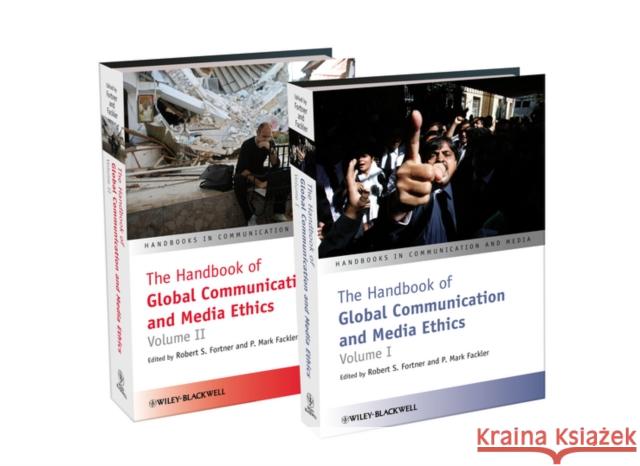
Robert S. Fortner;Mark Fackler;¬Abar
The Handbook of Global Communication and Media Ethics Fortner, Robert S. 9781405188128  - książkaWidoczna okładka, to zdjęcie poglądowe, a rzeczywista szata graficzna może różnić się od prezentowanej.

The Handbook of Global Communication and Media Ethics

ISBN-13: 9781405188128 / Angielski / Twarda / 2011 / 1040 str.

Robert S. Fortner;Mark Fackler;¬Abar
cena 1675,30 zł
(netto: 1595,52 VAT:  5%)

Najniższa cena z 30 dni: 1661,56 zł
Termin realizacji zamówienia:
ok. 30 dni roboczych
Bez gwarancji dostawy przed świętami

Darmowa dostawa!
inne wydania

This groundbreaking handbook provides a comprehensive picture of the ethical dimensions of communication in a global setting. Both theoretical and practical, this important volume will raise the ethical bar for both scholars and practitioners in the world of global communication and media.

  • Selected by Choice as an Outstanding Academic Title for 2011
  • Brings together leading international scholars to consider ethical issues raised by globalization, the practice of journalism, popular culture, and media activities
  • Examines important themes in communication ethics, including feminism, ideology, social responsibility, reporting, metanarratives, blasphemy, development, and -glocalism-, among many others
  • Contains case studies on reporting, censorship, responsibility, terrorism, disenfranchisement, and guilt throughout many countries and regions worldwide
  • Contributions by Islamic scholars discuss various facets of that religion's engagement with the public sphere, and others who deal with some of the religious and cultural factors that bedevil efforts to understand our world

This book is designed to provide a comprehensive examination of the ethical issues that affect the practice of communication around the world. A variety of religious traditions, ideologies and world views, standard practices, cultures and economic considerations affect the types of decisions made by journalists, film makers, photographers, public relations practitioners, advertisers, editors, directors, producers, writers, and regulators. Many of these decisions have ethical dimensions, even when they are not recognized by those making the decisions. Across the world those who practice communication struggle with those who would influence their choices from philosophical or ethical perspectives.
How explicit should films be when telling the story of the Rwandan genocide? Should a liar be called a liar by an “objective” press? Should reporters be “embedded” with military units, or does that compromise their ability to tell the story or judge the rationales for going to war? Who gets it right – al Jazeera’s more explicit and gory reporting of a bomb blast’s aftermath, or the sanitized “family” news programs shown in the United States? Should film makers cooperate with government’s demands on them so that they can avoid “undermining army morale,” or does that compromise the public’s expectations of them? Is citizen journalism legitimate? Is propaganda ever legitimate? Is blogging a positive or negative aspect to the Internet? Does new technology make it more or less likely that people will be well–informed? Is the “digital divide” real and, if so, does it make the “right to communicate” an increasily unlikely prospect? The questions with ethical dimensions seem nearly limitless, with traditional ones continuing to defy consensus and new ones being added regularly to the mix.

As information increasingly flows across borders in ever–greater quantities, it forces such questions to the surface. This comprehensive, two volume handbook outlines these perspectives and more, positing one against another on common themes to provide a foundation for seeking such a resolution of perspectives.
The two volumes are organized around a set of qestions that experts in various fields address. Each volume begins with introductory chapters that outline the primordial issues in global communication ethics and the newly–emerging issues based in developing technologies affecting the practices of communicators. The two volumes together would have sections devoted to ideology and ethics, religion and ethics, monopoly and ethics, conflict and ethics, culture and ethics, and technology and ethics.


Kategorie:
Nauka
Kategorie BISAC:
Language Arts & Disciplines > Communication Studies
Social Science > Media Studies
Philosophy > Ethics & Moral Philosophy
Seria wydawnicza:
Handbooks in Communication and Media
Język:
Angielski
ISBN-13:
9781405188128
Rok wydania:
2011
Numer serii:
000379737
Ilość stron:
1040
Waga:
0.95 kg
Wymiary:
24.89 x 17.53 x 3.3
Oprawa:
Twarda
Wolumenów:
01

"The present volume is the most far–reaching to date. Summing Up: Essential. Lower–division undergraduates through faculty and professionals." (Choice, 1 November 2011)

Notes on Contributors ix

Preface xix

1 Primordial Issues in Communication Ethics 1
Clifford G. Christians

2 Communication Ethics: The Wonder of Metanarratives in a Postmodern Age 20
Ronald C. Arnett

3 Information, Communication, and Planetary Citizenship 41
Luiz Martins da Silva

4 Global Communication and Cultural Particularisms: The Place of Values in the Simultaneity of Structural Globalization and Cultural Fragmentation The Case of Islamic Civilization 54
Bassam Tibi

5 The Ethics of Privacy in High versus Low Technology Societies 79
Robert S. Fortner

6 Social Responsibility Theory and Media Monopolies 98
P. Mark Fackler

7 Ethics and Ideology: Moving from Labels to Analysis 119
Lee Wilkins

8 Fragments of Truth: The Right to Communication as a Universal Value 133
Philip Lee

9 Glocal Media Ethics 154
Shakuntala Rao

10 Feminist Ethics and Global Media 171
Linda Steiner

11 Words as Weapons: A History of War Reporting 1945 to the Present 193
Richard Lance Keeble

12 Multidimensional Objectivity for Global Journalism 215
Stephen J.A. Ward

13 New Media and an Old Problem: Promoting Democracy 234
Deni Elliott and Amanda Decker

14 The Dilemma of Trust 247
Ian Richards

15 The Ethical Case for a Blasphemy Law 263
Neville Cox

16 The Medium is the Moral 298
Michael Bugeja

17 Development Ethics: The Audacious Agenda 317
Chloe Schwenke

18 Indigenous Media Values: Cultural and Ethical Implications 342
Joe Grixti

19 Media Ethics as Panoptic Discourse: A Foucauldian View 364
Ed McLuskie

20 Ethical Anxieties in the Global Public Sphere 376
Robert S. Fortner

21 Universalism versus Communitarianism in Media Ethics 393
Clifford G. Christians

22 Responsibility of Net Users 415
Raphael Cohen–Almagor

23 Media Ethics and International Organizations 434
Cees J. Hamelink

24 Making the Case for What Can and Should Be Published 452
Bruce C. Swaffield

25 Ungrievable Lives: Global Terror and the Media 461
Giovanna Borradori

26 Journalism Ethics in the Moral Infrastructure of a Global Civil Society 481
Robert S. Fortner

27 Problems of Application 500
P. Mark Fackler

28 Disenfranchised and Disempowered: How the Globalized Media Treat Their Audiences A Case from India 515
Anita Dighe

29 Questioning Journalism Ethics in the Global Age: How Japanese News Media Report and Support Immigrant Law Revision 533
Kaori Hayashi

30 Ancient Roots and Contemporary Challenges: Asian Journalists Try to Find the Balance 553
Jiafei Yin

31 Understanding Bollywood 576
Vijay Mishra

32 Peace Communication in Sudan: Toward Infusing a New Islamic Perspective 601
Haydar Badawi Sadig and Hala Asmina Guta

33 Media and Post–Election Violence in Kenya 625
P. Mark Fackler, Levi Obonyo, Mitchell Terpstra, and Emmanuel Okaalet

34 Ethics of Survival: Media, Palestinians, and Israelis in Conflict 654
Oliver Witte

35 Voiceless Glasnost: Responding to Government Pressures and Lack of a Free Press Tradition in Russia 676
Victor Akhterov

36 Media Use and Abuse in Ethiopia 699
Zenebe Beyene

37 Collective Guilt as a Response to Evil: The Case of Arabs and Muslims in the Western Media 734
Rasha A. Abdulla and Mervat Abou Oaf

38 Journalists as Witnesses to Violence and Suffering 751
Amy Richards and Jolyon Mitchell

39 Reporting on Religious Authority Complicit with Atrocity 773
Paul A. Soukup, S.J.

40 The Ethics of Representation and the Internet 784
Boniface Omachonu Omatta

41 Authors, Authority, Ownership, and Ethics in Digital Media and News 802
Jarice Hanson

42 Ethical Implications of Blogging 822
Bernhard Debatin

43 Journalism Ethics in a Digital Network 844
Jane B. Singer

44 Now Look What You Made Me Do: Violence and Media Accountability 863
Peter Hulm

45 Protecting Children from Harmful Influences of Media through Formal and Nonformal Media Education 890
Asbjørn Simonnes and Gudmund Gjelsten

46 Ethics and International Propaganda 911
Philip M. Taylor

47 Modernization and Its Discontents: Ethics, Development, and the Diffusion of Innovations 932
Robert S. Fortner

48 Communication Technologies in the Arsenal of Al Qaeda and Taliban: Why the West Is Not Winning the War on Terror 952
Haydar Badawi Sadig, Roshan Noorzai, and Hala Asmina Guta

49 The Ethics of a Very Public Sphere: Differential Soundscapes and the Discourse of the Streets 972
Robert S. Fortner

Index 991

Robert S. Fortner is Director of the Media Research Institute, a non–profit organization serving the church, NGO and international radio community with research to assist them in meeting their missions. He is also a Professor of Communication Arts and Sciences at Calvin College. He is the author of International Communication: History, Conflict and Control of the Global Metropolis (Wadsworth, 1993), Public Diplomacy and International Politics: The Symbolic Constructs of Summits and International Radio News (Praeger, 1994), Radio, Morality and Culture: Britain, Canada and the United States 1919–1945 (Southern Illinois University Press, 2006), and Communication, Media, and Identity: A Christian Theory of Communication (Rowman and Littlefield, 2007).

Mark Fackler is Professor of Communication Arts and Sciences at Calvin College. He has taught at Addis Ababa University, Ethiopia, Daystar University, Kenya, and Uganda Christian University (Mukono). Fackler is co–author of Media Ethics: Cases and Moral Reasoning (Longman, 7th edition, 2005) and Good News: Social Ethics and the Press (Oxford University Press, 1993) and has contributed and edited other several books, chapters, and papers on media, ethics, and emerging democracies in East Africa.

This groundbreaking handbook provides a comprehensive picture of the ethical dimensions of communication in a global setting. Bringing together scholars from around the world, it examines ethical issues raised by globalization, the practice of journalism, popular culture, and media activities, and provides most detailed and diverse set of essays available on this huge topic that has ever been assembled.

The handbook includes examinations of feminism, ideology, social responsibility, reporting, metanarratives, blasphemy, development, and glocalism, among many others. In addition, the volume includes case studies on reporting, censorship, responsibility, terrorism, disenfranchisement, and guilt (again, among others) throughout many countries and regions worldwide. the handbook includes contributions by several Islamic scholars who discuss various facets of that religion s engagement with the public sphere, and others who deal with some of the religious and cultural factors that bedevil efforts to understand our world. This set of essays is both theoretical and practical, and will raise the ethical bar for both scholars and practitioners in the world of global communication and media.


Udostępnij

Facebook - konto krainaksiazek.pl


Opinie o Krainaksiazek.pl na Opineo.pl

Partner Mybenefit

Krainaksiazek.pl w programie rzetelna firma Krainaksiaze.pl - płatności przez paypal

Czytaj nas na:

Facebook - krainaksiazek.pl
  • książki na zamówienie
  • granty
  • książka na prezent
  • kontakt
  • pomoc
  • opinie
  • regulamin
  • polityka prywatności

Zobacz:

  • Księgarnia czeska

  • Wydawnictwo Książkowe Klimaty

1997-2025 DolnySlask.com Agencja Internetowa

© 1997-2022 krainaksiazek.pl
     
KONTAKT | REGULAMIN | POLITYKA PRYWATNOŚCI | USTAWIENIA PRYWATNOŚCI
Zobacz: Księgarnia Czeska | Wydawnictwo Książkowe Klimaty | Mapa strony | Lista autorów
KrainaKsiazek.PL - Księgarnia Internetowa

Polityka prywatnosci - link
Krainaksiazek.pl - płatnośc Przelewy24
Przechowalnia Przechowalnia





