• Wyszukiwanie zaawansowane
  • Kategorie
  • Kategorie BISAC
  • Książki na zamówienie
  • Promocje
  • Granty
  • Książka na prezent
  • Opinie
  • Pomoc
  • Załóż konto
  • Zaloguj się

The Future of the Classical » książka


zaloguj się | załóż konto
Logo Krainaksiazek.pl

koszyk

konto

szukaj
topmenu
Księgarnia internetowa
Szukaj
Książki na zamówienie
Promocje
Granty
Książka na prezent
Moje konto
Pomoc
 
 
Wyszukiwanie zaawansowane
Pusty koszyk
Bezpłatna dostawa dla zamówień powyżej 20 złBezpłatna dostawa dla zamówień powyżej 20 zł

Kategorie główne

• Nauka
 [2949965]
• Literatura piękna
 [1857847]

  więcej...
• Turystyka
 [70818]
• Informatyka
 [151303]
• Komiksy
 [35733]
• Encyklopedie
 [23180]
• Dziecięca
 [617748]
• Hobby
 [139972]
• AudioBooki
 [1650]
• Literatura faktu
 [228361]
• Muzyka CD
 [398]
• Słowniki
 [2862]
• Inne
 [444732]
• Kalendarze
 [1620]
• Podręczniki
 [167233]
• Poradniki
 [482388]
• Religia
 [509867]
• Czasopisma
 [533]
• Sport
 [61361]
• Sztuka
 [243125]
• CD, DVD, Video
 [3451]
• Technologie
 [219309]
• Zdrowie
 [101347]
• Książkowe Klimaty
 [123]
• Zabawki
 [2362]
• Puzzle, gry
 [3791]
• Literatura w języku ukraińskim
 [253]
• Art. papiernicze i szkolne
 [7933]
Kategorie szczegółowe BISAC

The Future of the Classical

ISBN-13: 9780745635989 / Angielski / Twarda / 2006 / 104 str.
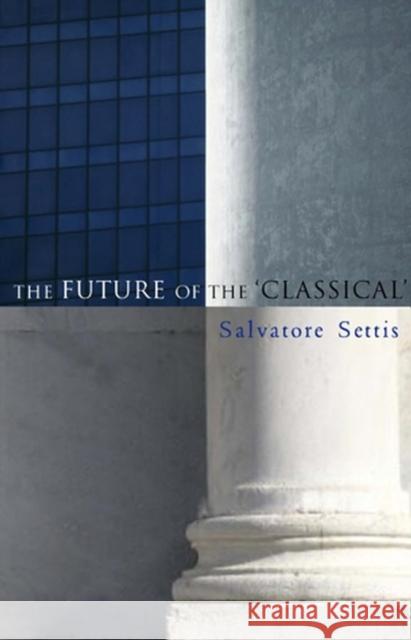
Salvatore Settis; Allan Cameron
The Future of the Classical Salvatore Settis Allan Cameron 9780745635989 Polity Press - książkaWidoczna okładka, to zdjęcie poglądowe, a rzeczywista szata graficzna może różnić się od prezentowanej.

The Future of the Classical

ISBN-13: 9780745635989 / Angielski / Twarda / 2006 / 104 str.

Salvatore Settis; Allan Cameron
cena 331,97 zł
(netto: 316,16 VAT:  5%)

Najniższa cena z 30 dni: 330,16 zł
Termin realizacji zamówienia:
ok. 16-18 dni roboczych
Bez gwarancji dostawy przed świętami

Darmowa dostawa!
inne wydania

Every era has invented a different idea of the 'classical' to create its own identity. Thus the 'classical' does not concern only the past: it is also concerned with the present and a vision of the future.

In this elegant new book, Salvatore Settis traces the ways in which we have related to our 'classical' past, starting with post-modern American skyscrapers and working his way back through our cultural history to the attitudes of the Greeks and Romans themselves.


Settis argues that this obsession with cultural decay, ruins and a 'classical' past is specifically European and the product of a collective cultural trauma following the collapse of the Roman Empire. This situation differed from that of the Aztec and Inca empires whose collapse was more sudden and more complete, and from the Chinese Empire which always enjoyed a high degree of continuity. He demonstrates how the idea of the 'classical' has changed over the centuries through an unrelenting decay of 'classicism' and its equally unrelenting rebirth in an altered form.


In the Modern Era this emulation of the 'ancients' by the 'moderns' was accompanied by new trends: the increasing belief that the former had now been surpassed by the latter, and an increasing preference for the Greek over the Roman. These conflicting interpretations were as much about the future as they were about the past. No civilization can invent itself if it does not have other societies in other times and other places to act as benchmarks.


Settis argues that we will be better equipped to mould new generations for the future once we understand that the 'classical' is not a dead culture we inherited and for which we can take no credit, but something startling that has to be re-created every day and is a powerful spur to understanding the 'other'.


Kategorie:
Nauka, Historia
Kategorie BISAC:
History > Modern - General
History > Ancient - General
Wydawca:
Polity Press
Język:
Angielski
ISBN-13:
9780745635989
Rok wydania:
2006
Ilość stron:
104
Waga:
0.29 kg
Wymiary:
22.35 x 16.05 x 1.42
Oprawa:
Twarda
Wolumenów:
01
Dodatkowe informacje:
Komentarz
Bibliografia

"Ably rendered into accessible English and intended for a broad readership both within classical studies and outside the field. It is an excellent, thought–provoking essay."

James Porter, Journal of Roman Studies

"A thought–provoking and very readable book, especially in light of the recent debate regarding the future of the Ancient History A–Level."

Anastasia Bakogianni, Journal of Classics Teaching

"This is a terrific book the fundamental statement we have long been hoping for, that confronts the European Classical heritage with the full complexity of its resonance in the age of globalization and postmodernity. It is brief, punchy and bright very learned, but wearing its learning lightly, engaged, committed, always enthusiastic. Settis writes as a great authority immersed in the living Classical tradition, yet very sensitive to its swathe of receptions (art historical, architectural, poetic and historiographic, as well as literary). He leads us through a dazzling and hugely stimulating confrontation with the deep pasts and the futures of the Western tradition."

John Elsner, University of Oxford

"Salvatore Settis seeks a contemporary answer to Arnaldo Momigliano s question: why study ancient history? In this dynamic and urgent series of chapters, Settis considers the classical in a global setting. European culture is seen to be demarcated by its rhythmic returns to classical civilization as an elsewhere of both time and space. Settis places classicism under scrutiny as a cultural project, rather than revering it as an icon, and argues that, through the classical, myth is absorbed into history. The deep tradition of cycles of death and rebirth unique to European history offers rich opportunities for viewing the past as alien, and therefore capable of providing a wider understanding of otherness. This provocative text takes nothing for granted."

Elizabeth Cropper, National Gallery of Art

1. The classical in the Global Universe.

2. Ancient History as Universal History.

3. Classicism and the classical′: Retracing our Steps.

4. The Classical as the Dividing Line Between Post–modern and Modern.

5. The Classical amongst the Historical Styles and the Victory of the Doric.

6. The Classical is not Authentic′.

7. Greek Classical versus Roman Classical′.

8. The Classical′, Liberty and Revolution.

9. The Classical as a Repertoire.

10. The Rebirth of Antiquity.

11. The Classical before Classical Antiquity′.

12. The Classicism of the Classical Period.

13. Eternity Amongst the Ruins.

14. Identity and Otherness.

15. Cyclical Histories.

16. The Future of the Classical′.

Note on the Text.

Bibliography.

Index.

S. Settis, Director, Scuola Normale Superiore in Pisa

Every era has invented a different idea of the classical to create its own identity. Thus the classical does not concern only the past: it is also concerned with the present and a vision of the future.

In this elegant new book, Salvatore Settis traces the ways in which we have related to our classical past, starting with post–modern American skyscrapers and working his way back through our cultural history to the attitudes of the Greeks and Romans themselves.

Settis argues that this obsession with cultural decay, ruins and a classical past is specifically European and the product of a collective cultural trauma following the collapse of the Roman Empire. This situation differed from that of the Aztec and Inca empires whose collapse was more sudden and more complete, and from the Chinese Empire which always enjoyed a high degree of continuity. He demonstrates how the idea of the classical has changed over the centuries through an unrelenting decay of classicism and its equally unrelenting rebirth in an altered form.

In the Modern Era this emulation of the ancients by the moderns was accompanied by new trends: the increasing belief that the former had now been surpassed by the latter, and an increasing preference for the Greek over the Roman. These conflicting interpretations were as much about the future as they were about the past. No civilization can invent itself if it does not have other societies in other times and other places to act as benchmarks.

Settis argues that we will be better equipped to mould new generations for the future once we understand that the classical is not a dead culture we inherited and for which we can take no credit, but something startling that has to be re–created every day and is a powerful spur to understanding the other .

Settis, Salvatore Salvatore Settis is Emeritus Professor of the Hist... więcej >
Cameron, Allan Cameron is a member of the Institute of Translatio... więcej >


Udostępnij

Facebook - konto krainaksiazek.pl


Opinie o Krainaksiazek.pl na Opineo.pl

Partner Mybenefit

Krainaksiazek.pl w programie rzetelna firma Krainaksiaze.pl - płatności przez paypal

Czytaj nas na:

Facebook - krainaksiazek.pl
  • książki na zamówienie
  • granty
  • książka na prezent
  • kontakt
  • pomoc
  • opinie
  • regulamin
  • polityka prywatności

Zobacz:

  • Księgarnia czeska

  • Wydawnictwo Książkowe Klimaty

1997-2025 DolnySlask.com Agencja Internetowa

© 1997-2022 krainaksiazek.pl
     
KONTAKT | REGULAMIN | POLITYKA PRYWATNOŚCI | USTAWIENIA PRYWATNOŚCI
Zobacz: Księgarnia Czeska | Wydawnictwo Książkowe Klimaty | Mapa strony | Lista autorów
KrainaKsiazek.PL - Księgarnia Internetowa

Polityka prywatnosci - link
Krainaksiazek.pl - płatnośc Przelewy24
Przechowalnia Przechowalnia





