• Wyszukiwanie zaawansowane
  • Kategorie
  • Kategorie BISAC
  • Książki na zamówienie
  • Promocje
  • Granty
  • Książka na prezent
  • Opinie
  • Pomoc
  • Załóż konto
  • Zaloguj się

The First Humans: Origin and Early Evolution of the Genus Homo » książka


zaloguj się | załóż konto
Logo Krainaksiazek.pl

koszyk

konto

szukaj
topmenu
Księgarnia internetowa
Szukaj
Książki na zamówienie
Promocje
Granty
Książka na prezent
Moje konto
Pomoc
 
 
Wyszukiwanie zaawansowane
Pusty koszyk
Bezpłatna dostawa dla zamówień powyżej 20 złBezpłatna dostawa dla zamówień powyżej 20 zł

Kategorie główne

• Nauka
 [2949965]
• Literatura piękna
 [1857847]

  więcej...
• Turystyka
 [70818]
• Informatyka
 [151303]
• Komiksy
 [35733]
• Encyklopedie
 [23180]
• Dziecięca
 [617748]
• Hobby
 [139972]
• AudioBooki
 [1650]
• Literatura faktu
 [228361]
• Muzyka CD
 [398]
• Słowniki
 [2862]
• Inne
 [444732]
• Kalendarze
 [1620]
• Podręczniki
 [167233]
• Poradniki
 [482388]
• Religia
 [509867]
• Czasopisma
 [533]
• Sport
 [61361]
• Sztuka
 [243125]
• CD, DVD, Video
 [3451]
• Technologie
 [219309]
• Zdrowie
 [101347]
• Książkowe Klimaty
 [123]
• Zabawki
 [2362]
• Puzzle, gry
 [3791]
• Literatura w języku ukraińskim
 [253]
• Art. papiernicze i szkolne
 [7933]
Kategorie szczegółowe BISAC

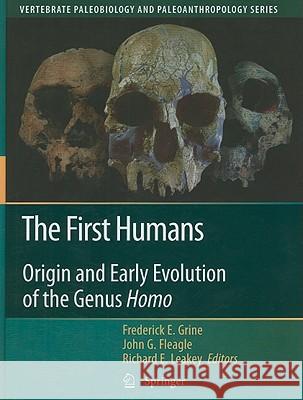
The First Humans: Origin and Early Evolution of the Genus Homo

ISBN-13: 9781402099793 / Angielski / Twarda / 2009 / 220 str.
Frederick E. Grine
The First Humans: Origin and Early Evolution of the Genus Homo Grine, Frederick E. 9781402099793 Springer - książkaWidoczna okładka, to zdjęcie poglądowe, a rzeczywista szata graficzna może różnić się od prezentowanej.

The First Humans: Origin and Early Evolution of the Genus Homo

ISBN-13: 9781402099793 / Angielski / Twarda / 2009 / 220 str.

Frederick E. Grine
cena 564,88 zł
(netto: 537,98 VAT:  5%)

Najniższa cena z 30 dni: 539,74 zł
Termin realizacji zamówienia:
ok. 22 dni roboczych
Bez gwarancji dostawy przed świętami

Darmowa dostawa!

There are some issues in human paleontology that seem to be timeless. Most deal with the origin and early evolution of our own genus something about which we should care. Some of these issues pertain to taxonomy and systematics. How many species of Homo were there in the Pliocene and Pleistocene? How do we identify the earliest members the genus Homo? If there is more than one Plio-Pleistocene species, how do they relate to one another, and where and when did they evolve? Other issues relate to questions about body size, proportions and the functional adaptations of the locomotor skeleton. When did the human postcranial Bauplan evolve, and for what reasons? What behaviors (and what behavioral limitations) can be inferred from the postcranial bones that have been attributed to Homo habilis and Homo erectus? Still other issues relate to growth, development and life history strategies, and the biological and archeological evidence for diet and behavior in early Homo. It is often argued that dietary change played an important role in the origin and early evolution of our genus, with stone tools opening up scavenging and hunting opportunities that would have added meat protein to the diet of Homo. Still other issues relate to the environmental and climatic context in which this genus evolved."


Kategorie:
Nauka, Socjologia i społeczeństwo
Kategorie BISAC:
Science > Life Sciences - Evolution
Wydawca:
Springer
Seria wydawnicza:
Vertebrate Paleobiology and Paleoanthropology
Język:
Angielski
ISBN-13:
9781402099793
Rok wydania:
2009
Wydanie:
2009
Numer serii:
000318550
Ilość stron:
220
Waga:
0.90 kg
Wymiary:
28.19 x 21.59 x 2.03
Oprawa:
Twarda
Wolumenów:
01
Dodatkowe informacje:
Bibliografia
Wydanie ilustrowane

From the reviews:

"This volume provides an up-to-date, concise synthesis of what is known about early Homo and highlights what still remains to be done." Journal of Human Evolution, 2009

Part I. Retrospectives and Theoretical Perspectives 1. Early humans: of whom do we speak? Richard E. Leakey 2. Homo habilis - a premature discovery: remembered by one of its founding fathers, 42 years later Phillip V. Tobia 3. Where does the genus Homo begin, and how would we know? Bernard Wood Part II. Craniodental Perspectives on Taxonomy and Systematics 4. The origin of Homo William H. Kimbel 5. Comparisons of Early Pleistocene skulls from East Africa and the Georgian Caucasus: evidence bearing on the origin and systematics of genus Homo G. Philip Rightmire and David Lordkipanidze 6. Phenetic affinities of Plio-Pleistocene Homo fossils from South Africa: molar cusp proportions Frederick E. Grine, Heather F. Smith, Christopher P. Heesy and Emma J. Smith Part III. Postcranial Perspectives on Locomotion and Adaptation 7. Evolution of the hominin shoulder: early Homo Susan G. Larson 8. Brains, brawn, and the evolution of human endurance running capabilities Daniel E. Lieberman, Dennis M. Bramble, David A. Raichlen and John J. Shea 9. Interlimb proportions in humans and fossil hominins: variability and scaling William L. Jungers Part IV. Perspectives on Development, Diet and Behavior 10. Growth and development of the Nariokotome youth, KNM-WT 15000 M. Christopher Dean and B. Holly Smith 11. Dental evidence for diets of early Homo Peter S. Ungar and Robert S. Scott 12. Origins and adaptations of early Homo: what archaeology tells us Hélène Roche, Robert J. Blumenschine and John J. Shea Part V. Environmental and Ecological Perspectives 13. Plio-Pleistocene EastAfrican pulsed climate variability and its influence on early human evolution. Mark A. Maslin and Martin H. Trauth 14. Tracking ecological change in relation to the emergence of Homo near the Plio-Pleistocene boundary. Kaye E. Reed and Samantha M. Russak 15. Ecology of Plio-Pleistocene mammals in the Omo-Turkana Basin and the emergence of Homo. René Bobe and Meave G. Leakey 16. Biogeochemical evidence for the environments of early Homo in South Africa Matt Sponheimer and Julia Lee-Thorp Part VI. Summary Perspective on the Workshop 17. The first humans: a summary perspective on the origin and early evolution of the genus Homo. Frederick E. Grine and John G. Fleagle

Frederick E. Grine

Fred Grine is Professor of Anthropology and of Anatomical Sciences at Stony Brook University. He has published over 100 articles in scientific journals dealing with the subject of human evolution, and his work on the Late Pleistocene human fossil from Hofmeyr, South Africa, was named by Time Magazine as one of the top ten science stories of 2007. He edited Evolutionary History of the ‘Robust’ Australopithecines (1988, Aldine de Gruyter), and is author of Regional Human Anatomy: a Laboratory Workbook (2002, 2005, 2007, McGraw-Hill).

John G. Fleagle

John Fleagle is Distinguished Professor of Anatomical Sciences at Stony Brook University. He has conducted paleontological field work in many parts of the world, including Argentina, Egypt, Kenya, Ethiopia and India. He is the author of the textbook Primate Adaptation and Evolution (1988, 1999, Elsevier), co-editor of the Human Evolution Sourcebook (1993, 2006, Prentice Hall), and editor of the journal Evolutionary Anthropology.

Richard E. Leakey

Richard Leakey is Professor of Anthropology at Stony Brook University and former Director of the Kenya National Museums and the Kenya Wildlife Service. His field work around Lake Turkana, Kenya, has yielded a treasure trove of hominin fossils that has provided much of the paleontological record on which our understanding of human evolution is based. He has authored a number of books, including Origins, and most recently, The Sixth Extinction: Patterns of Life and The Future of Humankind. He is Chairman of the Board of the Turkana Basin Institute at Stony Brook University.

This volume addresses the origin of the human genus Homo, a major transition in human evolution and associated with major changes in brain size, locomotion, and culture, but one with many unanswered questions. How many different species of Homo were there, and how were they interrelated? Are stone tools a characteristic of early Homo? What was their function? How does the use of stone tools relate to changes in the dentition and brain size? Did adaptations for long distance running first appear with the origin of this genus? How does this relate to its diet and cultural abilities.

Grine, Frederick E. Frederick E. Grine is professor and chairperson in... więcej >


Udostępnij

Facebook - konto krainaksiazek.pl


Opinie o Krainaksiazek.pl na Opineo.pl

Partner Mybenefit

Krainaksiazek.pl w programie rzetelna firma Krainaksiaze.pl - płatności przez paypal

Czytaj nas na:

Facebook - krainaksiazek.pl
  • książki na zamówienie
  • granty
  • książka na prezent
  • kontakt
  • pomoc
  • opinie
  • regulamin
  • polityka prywatności

Zobacz:

  • Księgarnia czeska

  • Wydawnictwo Książkowe Klimaty

1997-2025 DolnySlask.com Agencja Internetowa

© 1997-2022 krainaksiazek.pl
     
KONTAKT | REGULAMIN | POLITYKA PRYWATNOŚCI | USTAWIENIA PRYWATNOŚCI
Zobacz: Księgarnia Czeska | Wydawnictwo Książkowe Klimaty | Mapa strony | Lista autorów
KrainaKsiazek.PL - Księgarnia Internetowa

Polityka prywatnosci - link
Krainaksiazek.pl - płatnośc Przelewy24
Przechowalnia Przechowalnia





