• Wyszukiwanie zaawansowane
  • Kategorie
  • Kategorie BISAC
  • Książki na zamówienie
  • Promocje
  • Granty
  • Książka na prezent
  • Opinie
  • Pomoc
  • Załóż konto
  • Zaloguj się

The Evolution of China’s Anti-Poverty Strategies: Cases of 20 Chinese Changing Lives » książka


zaloguj się | załóż konto
Logo Krainaksiazek.pl

koszyk

konto

szukaj
topmenu
Księgarnia internetowa
Szukaj
Książki na zamówienie
Promocje
Granty
Książka na prezent
Moje konto
Pomoc
 
 
Wyszukiwanie zaawansowane
Pusty koszyk
Bezpłatna dostawa dla zamówień powyżej 20 złBezpłatna dostawa dla zamówień powyżej 20 zł

Kategorie główne

• Nauka
 [2952079]
• Literatura piękna
 [1850969]

  więcej...
• Turystyka
 [71058]
• Informatyka
 [151066]
• Komiksy
 [35579]
• Encyklopedie
 [23181]
• Dziecięca
 [620496]
• Hobby
 [139036]
• AudioBooki
 [1646]
• Literatura faktu
 [228729]
• Muzyka CD
 [379]
• Słowniki
 [2932]
• Inne
 [445708]
• Kalendarze
 [1409]
• Podręczniki
 [164793]
• Poradniki
 [480107]
• Religia
 [510956]
• Czasopisma
 [511]
• Sport
 [61267]
• Sztuka
 [243299]
• CD, DVD, Video
 [3411]
• Technologie
 [219640]
• Zdrowie
 [100984]
• Książkowe Klimaty
 [124]
• Zabawki
 [2281]
• Puzzle, gry
 [3363]
• Literatura w języku ukraińskim
 [258]
• Art. papiernicze i szkolne
 [8020]
Kategorie szczegółowe BISAC

The Evolution of China’s Anti-Poverty Strategies: Cases of 20 Chinese Changing Lives

ISBN-13: 9789811972805 / Angielski / Twarda / 2022 / 127 str.
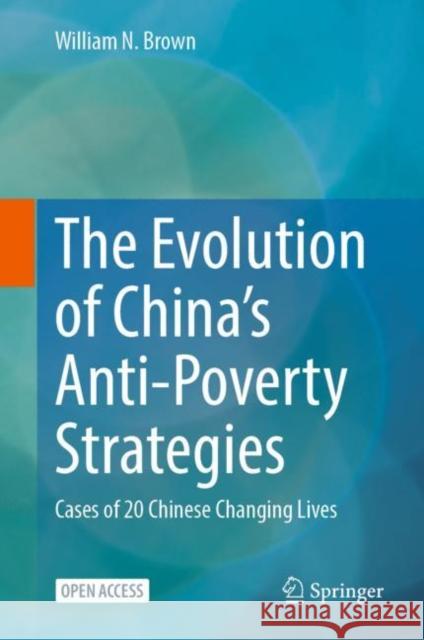
William N. Brown
The Evolution of China’s Anti-Poverty Strategies: Cases of 20 Chinese Changing Lives William N. Brown 9789811972805 Springer - książkaWidoczna okładka, to zdjęcie poglądowe, a rzeczywista szata graficzna może różnić się od prezentowanej.

The Evolution of China’s Anti-Poverty Strategies: Cases of 20 Chinese Changing Lives

ISBN-13: 9789811972805 / Angielski / Twarda / 2022 / 127 str.

William N. Brown
cena 201,72
(netto: 192,11 VAT:  5%)

Najniższa cena z 30 dni: 192,74
Termin realizacji zamówienia:
ok. 22 dni roboczych.

Darmowa dostawa!
inne wydania

This open access book presents the findings of the author’s 3 decades of studying China’s evolving anti-poverty strategies. It argues that much of the billions that nations spend yearly on economic aid is used inefficiently or to treat the symptoms but not the root causes of poverty. China, however, has evolved an effective sustainable alternative by providing the means for self-reliance to not only relieve economic poverty but also poverty of spirit. As a result, the success of China’s historic war on poverty has been due not only to top-down visionary leadership but also to the bottom-up initiatives of an empowered populace unswervingly united in ending poverty.From 1993 to 2019, the author drove over 200,000 km around China and interviewed hundreds of people from all walks of life as he explored the evolution of China’s anti-poverty strategies from simplistic aid and redistribution, which often engendered dependency and poverty of spirit. Over time, the philosophy shifted to empowerment by fostering self-reliance—or as Chinese put it, “blood production rather than blood transfusion.” The primary method of empowerment was to provide modern infrastructure, “Roads first, then riches,” so rural dwellers in remote Inner Mongolia or the Himalayan heights of Tibet had the same access to markets, jobs and internet for e-commerce as their urban counterparts. People who seized the opportunities and prospered first then used their newfound wealth and experience to help others.The stories in this book include a Tibetan entrepreneur whose family was impoverished in spite of 300 years of service to the Panchen Lama, or the farm girl with 4 years of education who now has several international schools, a biotechnology company and poverty alleviation projects across China, or the photographer who walked 40,000 km through deserts to chronicle the threat of desertification. Their tales underscore how diverse people across China helped make possible China’s success in alleviating absolute poverty and why Chinese are now confident in achieving a “moderately prosperous society.”

This open access book presents the findings of the author’s 3 decades of studying China’s evolving anti-poverty strategies. It argues that much of the billions that nations spend yearly on economic aid is used inefficiently or to treat the symptoms but not the root causes of poverty. China, however, has evolved an effective sustainable alternative by providing the means for self-reliance to not only relieve economic poverty but also poverty of spirit. As a result, the success of China’s historic war on poverty has been due not only to top-down visionary leadership but also to the bottom-up initiatives of an empowered populace unswervingly united in ending poverty.From 1993 to 2019, the author drove over 200,000 km around China and interviewed hundreds of people from all walks of life as he explored the evolution of China’s anti-poverty strategies from simplistic aid and redistribution, which often engendered dependency and poverty of spirit. Over time, the philosophy shifted to empowerment by fostering self-reliance—or as Chinese put it, “blood production rather than blood transfusion.” The primary method of empowerment was to provide modern infrastructure, “Roads first, then riches,” so rural dwellers in remote Inner Mongolia or the Himalayan heights of Tibet had the same access to markets, jobs and internet for e-commerce as their urban counterparts. People who seized the opportunities and prospered first then used their newfound wealth and experience to help others.


The stories in this book include a Tibetan entrepreneur whose family was impoverished in spite of 300 years of service to the Panchen Lama, or the farm girl with 4 years of education who now has several international schools, a biotechnology company and poverty alleviation projects across China, or the photographer who walked 40,000 km through deserts to chronicle the threat of desertification. Their tales underscore how diverse people across China helped make possible China’s success in alleviating absolute poverty and why Chinese are now confident in achieving a “moderately prosperous society.”

Kategorie:
Nauka, Historia
Kategorie BISAC:
History > Asia - China
Social Science > Socjologia
Social Science > Developing & Emerging Countries
Wydawca:
Springer
Język:
Angielski
ISBN-13:
9789811972805
Rok wydania:
2022
Dostępne języki:
Ilość stron:
127
Waga:
0.37 kg
Wymiary:
23.39 x 15.6 x 0.97
Oprawa:
Twarda
Dodatkowe informacje:
Wydanie ilustrowane

"It is highly recommended reading for social issues students interested in alternative anti-poverty strategies that have proven successful in the real world. ... For those interested in the social issues of various nations and China in particular, The Evolution of China's Anti-Poverty Strategies provides a blueprint of entrepreneurial efforts that demonstrates how prosperity may be encouraged at all levels of society." (California Bookwatch, Vol. 18 (4), April, 2023)

-        Chapter 1:  Mogan Mountain’s Tang Hairong

-        Chapter 2:  Liu Yunguang: An Entrepreneur With a Passion for Youth

-        Chapter 3:  Jing Xuhua — A Loving Mother Triumphs at Home and in Business

-        Chapter 4:  Ye Nan Brings a Bright Future to West China

-        Chapter 5:  Yang Ying— From House Maid to Millionaire Philanthropist

-        Chapter 6:  Gerile — Making Snacks to Put Her Daughter Through College

-        Chapter 7:  Zhang Fang — Documenting Inner Mongolia’s Environmental Fight

-        Chapter 8:  Zhao Xuan, A Retired Teacher From Xi’an

-        Chapter 9:  Bu Wenjun: Inheriting Wei-family’s Brick-Carving Craftsmanship

-        Chapter 10:  Zhang Jianlong — From Migrant Worker to Cattle King

-        Chapter 11:  Xin Baotong— Helping the Helpless to Dream Again

-        Chapter 12:  Wang Zenghao — Young Volunteer Working in Tibet

-        Chapter 13:  Dawa Wangdui: A Tibetan Serf -turned Entrepreneur

-        Chapter 14:  Xia Jiangping — Greening the Roof of the World!

-        Chapter 15:  Wu Qiong (吴琼) — Educated to Serve Tibet

-        Chapter 16:  How Self-made Man Xu Lidao Found He Needed Society

-        Chapter 17:  Zhu Qingfu — Passionate About Photography

-        Chapter 18:  Chen Qiaodi, The Yangshuo of Guangxi

-        Chapter 19:  Lin Ruiqi, Huawei’s Senior Vice President

Chapter 20:  Lucy: The Youthful Heart of Huawei

Dr. William Brown, at Xiamen University since 1988, is OneMBA Academic Director and Professor of Leadership and Strategy. Fujian’s first foreign PR, he has driven over 200,000 km around China exploring its development, co-written and hosted over 400 TV episodes, and consulted with cities on urban and rural development. Honors have included China’s “Friendship Award,” “Honorary Citizen of Fujian” from then-governor Xi Jinping, “Top Ten Educator 1954-2014,” and “CCTV’s Moving China 2019” award. He published Chasing the Chinese Dream with Springer in 2021.

This open access book presents the findings of the author’s 3 decades of studying China’s evolving anti-poverty strategies. It argues that much of the billions that nations spend yearly on economic aid is used inefficiently or to treat the symptoms but not the root causes of poverty. China, however, has evolved an effective sustainable alternative by providing the means for self-reliance to not only relieve economic poverty but also poverty of spirit. As a result, the success of China’s historic war on poverty has been due not only to top-down visionary leadership but also to the bottom-up initiatives of an empowered populace unswervingly united in ending poverty.

From 1993 to 2019, the author drove over 200,000 km around China and interviewed hundreds of people from all walks of life as he explored the evolution of China’s anti-poverty strategies from simplistic aid and redistribution, which often engendered dependency and poverty of spirit. Over time, the philosophy shifted to empowerment by fostering self-reliance—or as Chinese put it, “blood production rather than blood transfusion.” The primary method of empowerment was to provide modern infrastructure, “Roads first, then riches,” so rural dwellers in remote Inner Mongolia or the Himalayan heights of Tibet had the same access to markets, jobs and internet for e-commerce as their urban counterparts. People who seized the opportunities and prospered first then used their newfound wealth and experience to help others.



The stories in this book include a Tibetan entrepreneur whose family was impoverished in spite of 300 years of service to the Panchen Lama, or the farm girl with 4 years of education who now has several international schools, a biotechnology company and poverty alleviation projects across China, or the photographer who walked 40,000 km through deserts to chronicle the threat of desertification. Their tales underscore how diverse people across China helped make possible China’s success in alleviating absolute poverty and why Chinese are now confident in achieving a “moderately prosperous society.”


Udostępnij

Facebook - konto krainaksiazek.pl


Opinie o Krainaksiazek.pl na Opineo.pl

Partner Mybenefit

Krainaksiazek.pl w programie rzetelna firma Krainaksiaze.pl - płatności przez paypal

Czytaj nas na:

Facebook - krainaksiazek.pl
  • książki na zamówienie
  • granty
  • książka na prezent
  • kontakt
  • pomoc
  • opinie
  • regulamin
  • polityka prywatności

Zobacz:

  • Księgarnia czeska

  • Wydawnictwo Książkowe Klimaty

1997-2026 DolnySlask.com Agencja Internetowa

© 1997-2022 krainaksiazek.pl
     
KONTAKT | REGULAMIN | POLITYKA PRYWATNOŚCI | USTAWIENIA PRYWATNOŚCI
Zobacz: Księgarnia Czeska | Wydawnictwo Książkowe Klimaty | Mapa strony | Lista autorów
KrainaKsiazek.PL - Księgarnia Internetowa

Polityka prywatnosci - link
Krainaksiazek.pl - płatnośc Przelewy24
Przechowalnia Przechowalnia





