• Wyszukiwanie zaawansowane
  • Kategorie
  • Kategorie BISAC
  • Książki na zamówienie
  • Promocje
  • Granty
  • Książka na prezent
  • Opinie
  • Pomoc
  • Załóż konto
  • Zaloguj się

The Economic and Financial Market Consequences of Global Ageing » książka


zaloguj się | załóż konto
Logo Krainaksiazek.pl

koszyk

konto

szukaj
topmenu
Księgarnia internetowa
Szukaj
Książki na zamówienie
Promocje
Granty
Książka na prezent
Moje konto
Pomoc
 
 
Wyszukiwanie zaawansowane
Pusty koszyk
Bezpłatna dostawa dla zamówień powyżej 20 złBezpłatna dostawa dla zamówień powyżej 20 zł

Kategorie główne

• Nauka
 [2949965]
• Literatura piękna
 [1857847]

  więcej...
• Turystyka
 [70818]
• Informatyka
 [151303]
• Komiksy
 [35733]
• Encyklopedie
 [23180]
• Dziecięca
 [617748]
• Hobby
 [139972]
• AudioBooki
 [1650]
• Literatura faktu
 [228361]
• Muzyka CD
 [398]
• Słowniki
 [2862]
• Inne
 [444732]
• Kalendarze
 [1620]
• Podręczniki
 [167233]
• Poradniki
 [482388]
• Religia
 [509867]
• Czasopisma
 [533]
• Sport
 [61361]
• Sztuka
 [243125]
• CD, DVD, Video
 [3451]
• Technologie
 [219309]
• Zdrowie
 [101347]
• Książkowe Klimaty
 [123]
• Zabawki
 [2362]
• Puzzle, gry
 [3791]
• Literatura w języku ukraińskim
 [253]
• Art. papiernicze i szkolne
 [7933]
Kategorie szczegółowe BISAC

The Economic and Financial Market Consequences of Global Ageing

ISBN-13: 9783642073557 / Angielski / Miękka / 2010 / 346 str.
Kieran McMorrow; Werner Roger
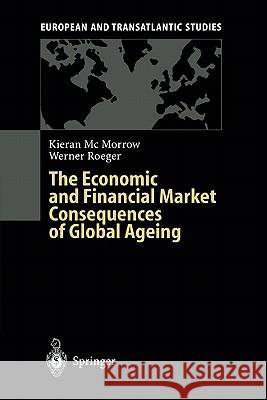
The Economic and Financial Market Consequences of Global Ageing Kieran McMorrow Werner Roger 9783642073557 Not Avail - książkaWidoczna okładka, to zdjęcie poglądowe, a rzeczywista szata graficzna może różnić się od prezentowanej.

The Economic and Financial Market Consequences of Global Ageing

ISBN-13: 9783642073557 / Angielski / Miękka / 2010 / 346 str.

Kieran McMorrow; Werner Roger
cena 403,47
(netto: 384,26 VAT:  5%)

Najniższa cena z 30 dni: 385,52
Termin realizacji zamówienia:
ok. 22 dni roboczych
Bez gwarancji dostawy przed świętami

Darmowa dostawa!

Many countries will be confronted with ageing populations in the coming decades. This will crucially affect the economic outlook for the economy. Population changes directly affect the size of the labour force and consequently potential employment and output growth. In addition, changes in demographic trends strongly influence savings and investment behaviour, the outlook for the public finances, a range of financial market variables and, more controversially, may impact on the pace of productivity growth in an economy. Because the timing and magnitude of demographic changes varies significantly across regions, international capital flows will play an important role for the allocation of investment. This book offers a comprehensive treatment of ageing related issues based on a five region overlapping generations model and provides a quantitative assessment until 2050.


Kategorie:
Nauka, Socjologia i społeczeństwo
Kategorie BISAC:
Social Science > Gerontology
Business & Economics > Economics - General
Political Science > Public Policy - Social Policy
Wydawca:
Not Avail
Seria wydawnicza:
European and Transatlantic Studies
Język:
Angielski
ISBN-13:
9783642073557
Rok wydania:
2010
Numer serii:
000074650
Ilość stron:
346
Waga:
0.56 kg
Wymiary:
23.5 x 15.5
Oprawa:
Miękka
Wolumenów:
01

From the reviews:

"In The Economic and Financial Market Consequences of Global Ageing, European Commission (EC) economists Kieran Mcmorrow and Werner Roeger examine the likely effects of ... differential aging trends on GDP, consumption, savings, investment returns, capital flows, and net foreign assets for key economic regions. ... provides a useful ... introduction to a world just over the horizon, in which aging has changed everything." (Paul S. Hewitt, PEF - Journal of Pension Economics and Finance, Vol. 3 (2), 2004)

"The book certainly contains a wide range of projections, analyses, graphs and tables that everyone with an interest in the questions of ageing and pension systems will want to study further. On top of this, the book is highly pedagogical, giving some very useful clarifications of the many concepts used in the debate of pension systems." (Michael Tiet Nielson, CoverAGE, Issue 36, 2004)

One: Economic and Financial Market Consequences of Global Ageing.- Executive Overview.- Section 1: Global Demographic Trends and Forecasts 1950–2050.- Section 2: How is Ageing Likely to Impact Economically over the Next 50 Years: What are the Main Transmission Mechanisms?.- 2.1: Expenditure Pressures on the Public Finances.- 2.2: Demographic Change and Savings Behaviour.- Box 1: Demographic Change and Savings Behaviour: Theoretical Considerations and Empirical Evidence.- 2.3: Labour Supply Implications.- 2.4: Capital Accumulation and Total Factor Productivity.- 2.5: Interest Rate, Exchange Rate and Balance of Payments Developments.- Box 2: Overview of the Basic Theoretical Mechanisms in the Ageing Model.- Section 3: Global Capital Market Developments, Current Account Imbalances and the Evidence for Agerelated International Capital Flows.- 3.1: External Capital Movements: an Historical Perspective.- 3.1.1: Global Trends: 1870–2000: has the Degree and Nature of Capital Market Integration Changed Overtime?.- 3.1.2: Country Specific Developments: Overview of Capital Market Integration Trends for the EU, US, Japan, Fast Ageing and Slow Ageing Countries: 1970–1998.- Box 3: Gross Capital Movements: Indicator of Degree of Capital Market Openness.- 3.2: Demographics and Foreign Capital Flows: Have Age-Related Capital Movements Been a Feature of Recent Decades?.- 3.3: Future Trends in International Capital Movements.- Box 4: Tracking the Trend Evolution of Net Foreign Assets: Global Capital Market Restrictions and the Growing Concentration of Capital Flows into the Us.- Section 4: Global Ageing Scenario 2000–2050.- 4.1: Model Assumptions.- 4.2: Key Results.- Box 5: Comparison of Growth Rates of GDP, Population and Living Standards for the Period 1950–2000 with that of the Model’s Central Scenario for 2000–2050.- Section 5: Policy Response: How Can the EU and the World as a Whole Effectively Deal with the Challenges of Ageing?.- 5.1: Dealing with Ageing — What Should be the Focus of EU Policy Reforms?.- Box 6: EU Budgetary Prudence: The Importance of Respecting the Stability and Growth Pact.- 5.2: Dealing with the International Financial Market Effects of Ageing: More Not Less Globalisation is Needed.- Box 7: Income Convergence: Theoretical and Empirical Evidence.- Detailed Summary of Main Points from Part 1.- Two: EU Pension Reform — an Overview of the Debate and an Empirical Assessment of the Main Policy Reform Options.- Executive Overview of Key Policy Conclusions.- Introductory Remarks.- Section 1: Overview of the Pension Reform Debate.- 1.1: Key Issues and Concepts.- 1.2: Main Driving Forces behind the Growing Calls for Pension Reform.- 1.2.1: Historical Analysis 1960–2000: What was the Role of Demographic, Labour Market and Generosity Factors in Determining the Past Growth of EU and us Public Pension Expenditure ?.- 1.2.2: Future Evolution 2000–2050: What are the Implications of Ageing for Growth and Pension Expenditure Trends in the EU and the us?.- 1.3: What are the Possible Policy Solutions?.- Section 2: Description of Model Used to Assess the Pension Reform Options.- 2.1: Model’s Central Scenario of the Growth and Pension Expenditure Implications in the EU of Ageing Populations (2000–2050).- 2.2: Assessing the Explanatory Power of the Ageing Model: A Comparison with the Pension Projections from the EU’s Economic Policy Committee.- 2.3: Criteria for Evaluating the Effectiveness of the Various PAYG and Systemic Pension Reform Options Analysed in Sections 3 to 5.- Section 3: PAYG System: Economic Assessment of the Main Parametric / Labour Market Reform Options: What is needed to Bring the System Back into Equilibrium?.- 3.1: Changes to the Generosity of the PAYG System (Partial V Full Shift from Wage to Price Indexation).- 3.2: An Increase in the Effective Retirement Age.- 3.3: Broad Package of “Payg” Reforms: Labour Market + Generosity + Retirement Age Changes.- Section 4: Systemic Reform: 2 Key Factors to be Considered: Internal Rates of Return + Transition Burden.- 4.1: Forecasts for the Internal Rate of Return of the PAYG + Funded Pension Systems: 2000–2050 (Central Scenario + Sensitivity Analysis).- 4.2: Forecasts for the Transition Burden in 2000 and its Evolution to 2050 (Central Scenario + Sensitivity Analysis).- Section 5: Economic Assessment of a Full / Partial Shift to Funding.- 5.1: 100% Shift to Funding: Compulsory Savings Option.- 5.2: 100% Shift to Funding: Voluntary Savings Option.- 5.3: Partial Shift to Funding + Stabilisation of PAYG System.- Section 6: An “Optimal” EU Pension Reform Strategy.- 6.1: Basic Policy Options with Regard to Public Pension Systems.- 6.2: Optimal Package of Reforms + Two Stage Transition Path.- Box 1: “Optimal” Policy Strategy: Maximising the Growth Rate Effects from Reform.- Detailed Summary of Main Points from Part 2.- Three: Annexes.- Annex 1: Member States Analysis.- Annex 2: Detailed Description of Ageing Model.- Annex 3: Basic Data on Savings, Wealth Holdings and Retirement Income Financing.- Annex 4: Results of Comparable Ageing Studies.- Annex 5: Prefunding within the PAYG System: Intergenerational Equity Objective.- List of Graphs.- List of Tables.- References.


Udostępnij

Facebook - konto krainaksiazek.pl


Opinie o Krainaksiazek.pl na Opineo.pl

Partner Mybenefit

Krainaksiazek.pl w programie rzetelna firma Krainaksiaze.pl - płatności przez paypal

Czytaj nas na:

Facebook - krainaksiazek.pl
  • książki na zamówienie
  • granty
  • książka na prezent
  • kontakt
  • pomoc
  • opinie
  • regulamin
  • polityka prywatności

Zobacz:

  • Księgarnia czeska

  • Wydawnictwo Książkowe Klimaty

1997-2025 DolnySlask.com Agencja Internetowa

© 1997-2022 krainaksiazek.pl
     
KONTAKT | REGULAMIN | POLITYKA PRYWATNOŚCI | USTAWIENIA PRYWATNOŚCI
Zobacz: Księgarnia Czeska | Wydawnictwo Książkowe Klimaty | Mapa strony | Lista autorów
KrainaKsiazek.PL - Księgarnia Internetowa

Polityka prywatnosci - link
Krainaksiazek.pl - płatnośc Przelewy24
Przechowalnia Przechowalnia





