• Wyszukiwanie zaawansowane
  • Kategorie
  • Kategorie BISAC
  • Książki na zamówienie
  • Promocje
  • Granty
  • Książka na prezent
  • Opinie
  • Pomoc
  • Załóż konto
  • Zaloguj się

The Drug Paradox: An Introduction to the Sociology of Psychoactive Substances in Canada » książka

zaloguj się | załóż konto
Logo Krainaksiazek.pl

koszyk

konto

szukaj
topmenu
Księgarnia internetowa
Szukaj
Książki na zamówienie
Promocje
Granty
Książka na prezent
Moje konto
Pomoc
 
 
Wyszukiwanie zaawansowane
Pusty koszyk
Bezpłatna dostawa dla zamówień powyżej 20 złBezpłatna dostawa dla zamówień powyżej 20 zł

Kategorie główne

• Nauka
 [2946912]
• Literatura piękna
 [1852311]

  więcej...
• Turystyka
 [71421]
• Informatyka
 [150889]
• Komiksy
 [35717]
• Encyklopedie
 [23177]
• Dziecięca
 [617324]
• Hobby
 [138808]
• AudioBooki
 [1671]
• Literatura faktu
 [228371]
• Muzyka CD
 [400]
• Słowniki
 [2841]
• Inne
 [445428]
• Kalendarze
 [1545]
• Podręczniki
 [166819]
• Poradniki
 [480180]
• Religia
 [510412]
• Czasopisma
 [525]
• Sport
 [61271]
• Sztuka
 [242929]
• CD, DVD, Video
 [3371]
• Technologie
 [219258]
• Zdrowie
 [100961]
• Książkowe Klimaty
 [124]
• Zabawki
 [2341]
• Puzzle, gry
 [3766]
• Literatura w języku ukraińskim
 [255]
• Art. papiernicze i szkolne
 [7810]
Kategorie szczegółowe BISAC

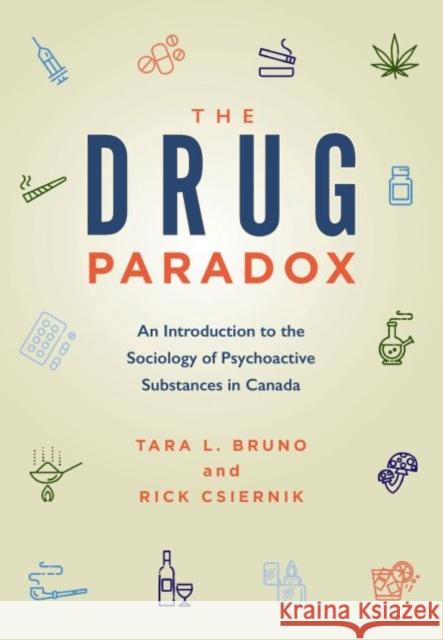
The Drug Paradox: An Introduction to the Sociology of Psychoactive Substances in Canada

ISBN-13: 9781773380520 / Angielski
Tara Bruno;Rick Csiernik
The Drug Paradox: An Introduction to the Sociology of Psychoactive Substances in Canada Tara Bruno Rick Csiernik  9781773380520 Canadian Scholars - książkaWidoczna okładka, to zdjęcie poglądowe, a rzeczywista szata graficzna może różnić się od prezentowanej.

The Drug Paradox: An Introduction to the Sociology of Psychoactive Substances in Canada

ISBN-13: 9781773380520 / Angielski

Tara Bruno;Rick Csiernik
cena 232,22
(netto: 221,16 VAT:  5%)

Najniższa cena z 30 dni: 222,09
Termin realizacji zamówienia:
ok. 30 dni roboczych
Bez gwarancji dostawy przed świętami

Darmowa dostawa!

Why are some drugs considered socially acceptable while others are demonized? In Canada today, drugs are viewed as both beneficial and problematic, and there is no definitive agreement on what should be done to address drug use. The Drug Paradox examines both the empirically founded and socially constructed nature of drugs and drug use. In their exploration of the drug paradox, the authors discuss how the punitive approach to drug use in Canada continues to exist alongside strategies of harm reduction, though this only impedes Canada's ability to deal effectively with substance misuse.


Kategorie:
Nauka, Medycyna
Kategorie BISAC:
Medical > Drug Guides
Wydawca:
Canadian Scholars
Język:
Angielski
ISBN-13:
9781773380520

  • Preface
  • Acknowledgements
  • Chapter 1: The Drug Paradox: Canada’s Conflicting Approaches to Drugs and Drug Users
  • 1.1 What Is the Drug Paradox?
  • 1.2 Defining the Core Concepts
  • 1.3 The Social Reality of Drugs and Drug Use
  • Chapter 2: The History and Politics of Canada’s Drug Laws
  • 2.1 Prohibition Era
  • 2.2 The Opium Act (1908)
  • 2.3 Proprietary or Patent Medicines Act (1908)
  • 2.4 The Opium and Drug Act (1911)
  • 2.5 The Opium and Narcotic Drug Act (1929)
  • 2.6 The Narcotic Control Act (1961)
  • 2.7 Controlled Drugs and Substances Act (1996)
  • 2.8 Marihuana for Medical Purposes Regulations (2013)
  • 2.9 Access to Cannabis for Medicinal Purposes Regulations (2016)
  • 2.10 A Framework for the Legalization and Regulation of Cannabis in Canada (2016
  • 2.11 Conclusion
  • Chapter 3: Explaining Substance Use I: Biological and Psychological Theories
  • 3.1 The Moral Model versus the Medical Model
  • 3.2 Biological Explanations
  • Nature and Drive Theories
  • Genetic Theories
  • Neurobiological Theories
  • 3.3 Psychological Explanations
  • Personality Theories
  • BehaviouralTheories
  • Psychopathology
  • 3.4 Conclusion
  • Chapter 4: Explaining Substance Use II: Sociological Theories
  • 4.1 Control Theories
  • Social Bonding Theory
  • Self-Control Theory
  • 4.2 Strain Theories
  • Anomie/Strain Theory
  • General Strain Theory
  • 4.3 Subcultural Theories
  • Labelling Theory
  • Differential Association Theory
  • Social Learning Theory (Differential Association-Reinforcement Theory)
  • 4.4 Integrated Explanations of Substance Use
  • Differential Opportunity Theory
  • Drift Theory
  • Routine Activities and Lifestyle Theories
  • 4.5 Conflict Theories
  • Marxian Conflict Theory
  • Pluralist Conflict Theory
  • 4.6 Postmodern Explanations
  • Normalization Thesis
  • Foucault and Biopower
  • 4.7 Conclusion
  • Chapter 5: Classifying Drugs: Psychopharmacological Properties and Legal Classifications
  • 5.1 What is Psychopharmacology and Why Does It Matter to Sociologists?
  • 5.2 Opioids (Narcotics)
  • Natural Opioids
  • Semi-Synthetic Opioids
  • Synthetic Opioids
  • Legal Classification and Penalties for Opioids
  • 5.3 Depressants
  • Alcohol
  • Barbiturates
  • Benzodiazepines
  • Inhalants/Solvents
  • Legal Classification and Penalties for Depressants
  • 5.4 Stimulants
  • Cocaine
  • Amphetamines (including Methamphetamine)
  • Nicotine
  • Caffeine
  • Legal Classification and Penalties for Stimulants
  • 5.5 Hallucinogens
  • Natural Hallucinogens
  • Semi-Synthetic Hallucinogens
  • Synthetic Hallucinogens
  • Legal Classification and Penalties for Hallucinogens
  • 5.6 Cannabis (Marijuana)
  • Legal Classification and Penalties for Cannabis
  • 5.7 Psychotherapeutic Agents and Performance-Enhancing Drugs
  • Psychotherapeutic Agents
  • Performance-Enhancing Drugs
  • Legal Classification and Penalties for Psychotherapeutic Agents and Performance-Enhancing
  • Drugs
  • 5.8 The Problem with Drug Effects and Legal Classifications
  • Chapter 6: The Socially Constructed Problem of Drugs and Drug Users
  • 6.1 Bath Salts
  • 6.2 Ecstasy
  • 6.3 Crystal Meth
  • 6.4 Cocaine
  • 6.5 Prescription Stimulants: Attention-Enhancing Prescription Drugs
  • 6.6 Cannabis
  • 6.7 Solvents/Inhalants
  • 6.8 Prescription Opioids
  • 6.9 Heroin
  • 6.10 Hallucinogens
  • 6.11 Bringing Together the Objective and Subjective Realities
  • Chapter 7: Studying Substance Use
  • 7.1 Population-based Studies
  • International Studies
  • National Studies
  • Provincial/Regional Studies
  • Advantages and Disadvantages of Population-based Studies
  • 7.2 Field-based Studies
  • In-Depth Interviews
    Ethnographies
  • Advantages and Disadvantages of Field-based Studies
  • 7.3 Clinical Population Studies
  • Treatment Studies
  • Correctional Populations
  • Advantages and Disadvantages of Clinical Population Studies
  • 7.4 Indigenous Methodological Approaches
  • 7.5 Conclusion
  • Chapter 8: Demographic Correlates of Substance Use in Canada
  • 8.1 General Prevalence Rates of Substance Use in Canada
  • 8.2 Demographic Correlates
  • Age
  • Sex
  • Ethnicity and Race
  • Socioeconomic Status (SES)
  • Geographic Location
  • 8.3 Conclusion
  • Chapter 9: Relational Correlates of Substance Use in Canada: Peers and Families
  • 9.1 Peer Influences
  • Perceived Peer Use versus Actual Peer Use
  • Social Activities and Peers
  • Selection of Peers
  • Intimate Partners
  • 9.2 Families
  • Sibling Influence
  • Parental Influences
  • Parental Substance Use
  • 9.3 Conclusion
  • Chapter 10: Prevention Strategies for Drugs and Potential Drug Users in Education
  • 10.1 Types of Prevention in Education
  • Universal Prevention
  • Selective Prevention
  • Indicated Prevention
  • 10.2 Drug Education in Schools
  • 10.3 Models of Drug Education
  • Information/Knowledge Models
  • Values/Decision-Making Models
  • Social Competency Models
  • Harm Minimization/Harm Reduction Models
  • 10.4 Drug Educators: Teachers and Police
  • 10.5 Ontario: The Case of Failed Drug Education
  • 10.6 Future of Drug Education: The Good and the Bad
  • Chapter 11: Legal Responses to Drugs and Drug Users
  • 11.1 Prohibition
  • Advantages and Disadvantages of Prohibition
  • 11.2 Decriminalization
  • Advantages and Disadvantages of Decriminalization
  • 11.3 Legalization
  • Free-Market Legalization
  • Limited-Distribution Legalization
  • Medical Legalization
  • Advantages and Disadvantages of Legalization
  • 11.4 Conclusion
  • Chapter 12: International Drug Policies
  • 12.1 International Drug Conventions
  • 12.2 Punitive Policies
  • Russia
  • China
  • Iran
  • 12.3 Pragmatic Policies
  • Portugal
  • Netherlands
  • Uruguay
  • 12.4 Conclusion
  • Chapter 13: Canada’s Drug Policies
  • 13.1 Advocates for Punitive Approaches
  • 13.2 Advocates for Pragmatic Approaches
  • 13.3 What is the Official Approach to Drugs and Drug Use in Canada?
  • 13.4 The Missing Component in Canada’s Current National Anti-Drug Strategy: Harm Reduction
  • 13.5 The Future
  • References


Udostępnij

Facebook - konto krainaksiazek.pl


Opinie o Krainaksiazek.pl na Opineo.pl

Partner Mybenefit

Krainaksiazek.pl w programie rzetelna firma Krainaksiaze.pl - płatności przez paypal

Czytaj nas na:

Facebook - krainaksiazek.pl
  • książki na zamówienie
  • granty
  • książka na prezent
  • kontakt
  • pomoc
  • opinie
  • regulamin
  • polityka prywatności

Zobacz:

  • Księgarnia czeska

  • Wydawnictwo Książkowe Klimaty

1997-2025 DolnySlask.com Agencja Internetowa

© 1997-2022 krainaksiazek.pl
     
KONTAKT | REGULAMIN | POLITYKA PRYWATNOŚCI | USTAWIENIA PRYWATNOŚCI
Zobacz: Księgarnia Czeska | Wydawnictwo Książkowe Klimaty | Mapa strony | Lista autorów
KrainaKsiazek.PL - Księgarnia Internetowa

Polityka prywatnosci - link
Krainaksiazek.pl - płatnośc Przelewy24
Przechowalnia Przechowalnia







