• Wyszukiwanie zaawansowane
  • Kategorie
  • Kategorie BISAC
  • Książki na zamówienie
  • Promocje
  • Granty
  • Książka na prezent
  • Opinie
  • Pomoc
  • Załóż konto
  • Zaloguj się

The Driving Forces of Evolution: Genetic Processes in Populations » książka


zaloguj się | załóż konto
Logo Krainaksiazek.pl

koszyk

konto

szukaj
topmenu
Księgarnia internetowa
Szukaj
Książki na zamówienie
Promocje
Granty
Książka na prezent
Moje konto
Pomoc
 
 
Wyszukiwanie zaawansowane
Pusty koszyk
Bezpłatna dostawa dla zamówień powyżej 20 złBezpłatna dostawa dla zamówień powyżej 20 zł

Kategorie główne

• Nauka
 [2948695]
• Literatura piękna
 [1824038]

  więcej...
• Turystyka
 [70868]
• Informatyka
 [151073]
• Komiksy
 [35227]
• Encyklopedie
 [23181]
• Dziecięca
 [621575]
• Hobby
 [138961]
• AudioBooki
 [1642]
• Literatura faktu
 [228651]
• Muzyka CD
 [371]
• Słowniki
 [2933]
• Inne
 [445341]
• Kalendarze
 [1243]
• Podręczniki
 [164416]
• Poradniki
 [479493]
• Religia
 [510449]
• Czasopisma
 [502]
• Sport
 [61384]
• Sztuka
 [243086]
• CD, DVD, Video
 [3417]
• Technologie
 [219673]
• Zdrowie
 [100865]
• Książkowe Klimaty
 [124]
• Zabawki
 [2168]
• Puzzle, gry
 [3372]
• Literatura w języku ukraińskim
 [260]
• Art. papiernicze i szkolne
 [7838]
Kategorie szczegółowe BISAC

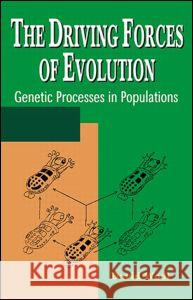
The Driving Forces of Evolution: Genetic Processes in Populations

ISBN-13: 9781578084456 / Angielski / Twarda / 2006 / 362 str.
David Wool
The Driving Forces of Evolution: Genetic Processes in Populations Wool, David 9781578084456 Science Publishers - książkaWidoczna okładka, to zdjęcie poglądowe, a rzeczywista szata graficzna może różnić się od prezentowanej.

The Driving Forces of Evolution: Genetic Processes in Populations

ISBN-13: 9781578084456 / Angielski / Twarda / 2006 / 362 str.

David Wool
cena 879,80
(netto: 837,90 VAT:  5%)

Najniższa cena z 30 dni: 856,36
Termin realizacji zamówienia:
ok. 22 dni roboczych.

Darmowa dostawa!
inne wydania

To cope with the abiotic stress-induced osmotic problems, plants adapt by either increasing uptake of inorganic ions from the external solution, or by de novo synthesis of organic compatible solutes acting as osmolytes. Of the osmoregulants and protectants discussed in this volume, trehalose, fructans, ectoine and citrulline, which are generated in different species, in osmotically ineffective amounts, mitigate the stress effects on cells/plants and improve productivity. There are several pieces of encouraging research discussed in this volume showing significant improvement in stress tolerance and in turn productivity by involving genetic engineering techniques.


Kategorie:
Nauka, Biologia i przyroda
Kategorie BISAC:
Science > Life Sciences - Evolution
Science > Biologia rozwoju
Science > Life Sciences - Genetics & Genomics
Wydawca:
Science Publishers
Język:
Angielski
ISBN-13:
9781578084456
Rok wydania:
2006
Ilość stron:
362
Oprawa:
Twarda
Wolumenów:
01
Dodatkowe informacje:
Bibliografia

Preface
Introduction
Part I: Mainly Theory
1. The Beginning
The point of departure; The origin of life; Spontaneous
generation of life; Modern approaches
2. Evolution as an On-going Process
Basic concepts and definitions; Genetic variation in
populations; Genetic and phenotypic variation; How to detect
evolutionary change; Models in population genetics and
evolution
3. Populations at Equilibrium: The Hardy-Weinberg Law
Genetic equilibrium; Graphic illustration: De-Finetti diagrams;
Properties of the De-Finetti diagram; Uses of the Hardy-
Weinberg law; Estimating the frequencies of recessive alleles;
Deviations from equilibrium: Absolute limits; The hexagon
method; More complex models: Two independent loci; Sexlinked
genes
4. Deviation from Equilibrium: Genetic Drift - Random
Changes in Small Populations
'Effective' population size; Sampling errors; Genetic drift in
small populations; Genetic variation in subdivided populations;
The Wahlund effect; The founder principle; Propagule size or
gene pool size?
5. Deviations from Equilibrium: Mutations
Historical review; About mutations: Terminology; The
frequency of mutations; The fate of a single mutation;
Recurrent mutations; Genetic load
6. Deviations from Equilibrium: Migration
Migration as an ecological phenomenon; Genetic and
evolutionary consequences of migration; The fate of a single
immigrant: Experimental evidence; Theory: Unidirectional
recurrent migration; Emigration and genetic change in the
source population; Estimating gene flow in natural populations;
Wright's F-statistics; The method of private alleles; Examples
7. Deviations from Equilibrium: Non-random Mating
Non-random mating in natural populations; Inbreeding and
outbreeding; Extreme inbreeding: Selfing; Sib-Mating; Wright's
general equilibrium formula; Identity by descent and pedigrees:
the method of path coefficients; Deleterious effects of
inbreeding; Isolation by distance; Variation in inbreeding
populations; Outbreeding systems: self-incompatibility;
Outbreeding depression
8. Deviation from Equilibrium: Selection
Basic concepts and definitions; Selection against a recessive
genotype; Other models of selection. Selection against
heterozygotes; Selection in favor of heterozygotes; Selection
and average fitness; The fundamental theorem of natural
selection
Part II: Selection in Nature
9. The Theory of Natural Selection: A Historical Outline
Paving the way; A short biography of Charles Darwin; Natural
selection: Darwin's reasoning; The history of 'The Origin of
Species'; Alfred Russel Wallace: Biographical notes; Support
from embryology for the theory of descent; The struggle for
existence of the theory of evolution; Thomas Henry Huxley:
Biographical notes
10. Genetic Variation in Natural Populations
Historical notes; Sources of genetic variation; The 'epigenetic
landscape' model; Phenotypic plasticity; Which characters
should be used to measure genetic variation? Variation in
morphological and chromosomal characters; Polygenic
quantitative characters; Inheritance of quantitative characters;
Heritability; Threshold characters
11. Genetic Variation in Natural Populations (continued)
Electrophoretic variation; Quantitative estimation of
electrophoretic variation in natural populations; 'Null' alleles;
Molecular methods in evolutionary research; Mini-satellite DNA
("Fingerprinting"); Polymerase chain reaction (PCR)
12. Evolutionary Processes in Natural Populations
Ecological genetics; Industrial melanism in moths; Shell color
polymorphism in the European land snail; Insecticide
resistance; Heavy-metal tolerance in plants; Experiments with
natural populations of guppies; Recent evolution of Darwin's
finches
13. Natural Selection and Adaptation
What is adaptation?; The evolution of adaptation; Measuring
adaptation; Co-adaptation and co-evolution; Natural selection
and Geographical clines; Non-selective explanations for
adaptation
14. Natural Selection and Polymorphism
Definitions; Selective advantage to heterozygotes; Frequencydependent
selection: Rare-male advantage; Environment
heterogeneity; Polymorphism without selection; Sexual
selection; Seasonal phenotypic changes; Polymorphism in the
ladybird beetle, Adalia bipunctata
15. Classification of Selection Processes
What can natural selection detect? Evolution of altruistic traits;
Altruism and the handicap principle; Group selection; Kin
selection; Altruism, kin selection, and proto-sociality in insects;
Laboratory studies of group selection
16. Evolution in Asexually-reproducing Populations
Advantage of sexual reproduction; Parthenogenesis;
Parthenogenesis, polyploidy and variation; Evolution of
parthenogenesis and polyploidy; Genetic variation in
parthenogenetic populations; Morphological variation in
parthenogenetic species
17. Laboratory Populations as Models for
Natural Selection
Advantages and limitations; Genetic and epigenetic
interactions within populations; Genetic facilitation; Modeling
evolutionary processes with laboratory populations; The
ecology of selection in Tribolium populations; Bottlenecks,
inbreeding, and fitness; A model for the differentiation of island
populations
18. The Neutralist-Selectionist Controversy:
'Non-Darwinian' Evolution?
The controversy; Historical review; Models of the structure of
the genome; Neutralism versus Neo-Darwinism; Basic
assumptions; Evidence in support of the neutrality hypothesis;
Degeneracy of the genetic code
19. The Neutrality Hypothesis: Molecular Support - and
Evidence to the Contrary
Gene duplication and Pseudogenes; Models of evolution by
neutral mutations; Testing for neutrality; Silent sites in the DNA;
Are synonymous mutations really neutral? Genotype
distributions in natural populations; Is electrophoretic variation
selectively neutral?; Selection affecting electrophoretic
variation
20. Molecular Evolution
Historical notes; Evolution of molecules: Protein evolution;
Rates of protein evolution; Evolution of organisms: The
molecular clock hypothesis; Molecular phylogeny: studies with
mitochondrial DNA; Regulatory genes in evolution; Evolution of
the genetic code
Part III: Macro-evolution
21. The Concepts of 'Species' in Evolution
Micro- and macro-evolution; Variation, classification, and
species definitions; Different definitions of "Species"; The
Biological Species concept; Other definitions; Multivariate
morphological definition: Numerical Taxonomy; Genetic
Identity and genetic Distance; Molecular identification of
species?
22. Formation of New Species (Speciation)
Historical review; How do species evolve? Geographic
(allopatric) speciation; Sympatric speciation; Host races in fruit
flies; Bottlenecks: Flush-crash cycles; The effect of genetic
bottlenecks: Laboratory studies
23. Speciation, Extinction of Species and Phylogeny
Interpretations of the fossil evidence: Cuvier, Lyell and Darwin;
Mass extinctions: Meteorites and cumulative destruction by
man; 'Gradualism' versus 'punctuated equilibria'; Evolution as
the history of life (phylogeny); The data; Cladistics, phenetics,
and phylogeny; Deducing phylogeny from molecular sequence
comparisons; Progress and trends in phylogeny; The
Caminalculus
24. Evolutionary Processes in Human Populations
Historical notes; Anatomical evolution; Natural selection in
human evolution; Cultural evolution; Mental faculties;
Heritability of talents; Genetic variation and the question of
human races; Eugenics: Artificial intervention in human
evolution; Man and the environment; The evolutionary future of
man
25. Strategies in Evolution
The evolutionary game; The meaning of 'success'; Coarseand
fine-grained environments; Concluding remarks
Author Index
Index

David Wool was born in Tel Aviv, Israel. He received his B.Sc. and M.Sc. at Tel Aviv University, followed by Ph.D. at the University of Kansas, USA in 1969. For his doctorate he studied genetic processes in populations, using flour beetles as an experimental model. Dr. Wool joined the Department of Zoology, Tel Aviv University, as a lecturer in 1970, and advanced to full professorship in 1984, teaching population genetics, ecological genetics and biometry. His research interests shifted from the laboratory population models to the biology and ecology of gall-inducing aphids in nature and to the historical development of the theory of evolution. His research yielded 150 papers in scientific journals. He spent sabbatical years doing research at the universities of Reading, UK, Michigan State, USA and Macquarie, Australia, and participated in numerous international scientific conferences.


Udostępnij

Facebook - konto krainaksiazek.pl


Opinie o Krainaksiazek.pl na Opineo.pl

Partner Mybenefit

Krainaksiazek.pl w programie rzetelna firma Krainaksiaze.pl - płatności przez paypal

Czytaj nas na:

Facebook - krainaksiazek.pl
  • książki na zamówienie
  • granty
  • książka na prezent
  • kontakt
  • pomoc
  • opinie
  • regulamin
  • polityka prywatności

Zobacz:

  • Księgarnia czeska

  • Wydawnictwo Książkowe Klimaty

1997-2026 DolnySlask.com Agencja Internetowa

© 1997-2022 krainaksiazek.pl
     
KONTAKT | REGULAMIN | POLITYKA PRYWATNOŚCI | USTAWIENIA PRYWATNOŚCI
Zobacz: Księgarnia Czeska | Wydawnictwo Książkowe Klimaty | Mapa strony | Lista autorów
KrainaKsiazek.PL - Księgarnia Internetowa

Polityka prywatnosci - link
Krainaksiazek.pl - płatnośc Przelewy24
Przechowalnia Przechowalnia





