• Wyszukiwanie zaawansowane
  • Kategorie
  • Kategorie BISAC
  • Książki na zamówienie
  • Promocje
  • Granty
  • Książka na prezent
  • Opinie
  • Pomoc
  • Załóż konto
  • Zaloguj się

The Domain of Logic According to Saint Thomas Aquinas » książka


zaloguj się | załóż konto
Logo Krainaksiazek.pl

koszyk

konto

szukaj
topmenu
Księgarnia internetowa
Szukaj
Książki na zamówienie
Promocje
Granty
Książka na prezent
Moje konto
Pomoc
 
 
Wyszukiwanie zaawansowane
Pusty koszyk
Bezpłatna dostawa dla zamówień powyżej 20 złBezpłatna dostawa dla zamówień powyżej 20 zł

Kategorie główne

• Nauka
 [2946912]
• Literatura piękna
 [1852311]

  więcej...
• Turystyka
 [71421]
• Informatyka
 [150889]
• Komiksy
 [35717]
• Encyklopedie
 [23177]
• Dziecięca
 [617324]
• Hobby
 [138808]
• AudioBooki
 [1671]
• Literatura faktu
 [228371]
• Muzyka CD
 [400]
• Słowniki
 [2841]
• Inne
 [445428]
• Kalendarze
 [1545]
• Podręczniki
 [166819]
• Poradniki
 [480180]
• Religia
 [510412]
• Czasopisma
 [525]
• Sport
 [61271]
• Sztuka
 [242929]
• CD, DVD, Video
 [3371]
• Technologie
 [219258]
• Zdrowie
 [100961]
• Książkowe Klimaty
 [124]
• Zabawki
 [2341]
• Puzzle, gry
 [3766]
• Literatura w języku ukraińskim
 [255]
• Art. papiernicze i szkolne
 [7810]
Kategorie szczegółowe BISAC

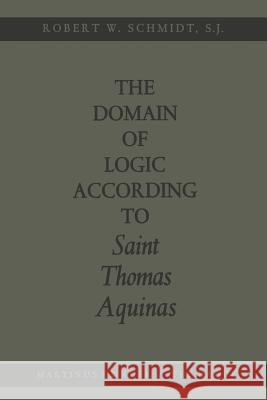
The Domain of Logic According to Saint Thomas Aquinas

ISBN-13: 9789401503679 / Angielski / Miękka / 1966 / 352 str.
Robert W. Schmidt
The Domain of Logic According to Saint Thomas Aquinas Robert W. Schmidt 9789401503679 Springer - książkaWidoczna okładka, to zdjęcie poglądowe, a rzeczywista szata graficzna może różnić się od prezentowanej.

The Domain of Logic According to Saint Thomas Aquinas

ISBN-13: 9789401503679 / Angielski / Miękka / 1966 / 352 str.

Robert W. Schmidt
cena 342,14
(netto: 325,85 VAT:  5%)

Najniższa cena z 30 dni: 327,68
Termin realizacji zamówienia:
ok. 22 dni roboczych
Bez gwarancji dostawy przed świętami

Darmowa dostawa!

Ever since philosophy became conscious of itself, there has been a problem of the relations between the real world which philosophy sought to understand and explain, and the thought by which it sought to explain it. It was found that thought had certain requirements and conditions of its own. If the real world was to be understood through thought, there was a question whether thought and the real correspond ed in all respects, and therefore whether they had the same conditions and laws, or whether some of these were peculiar to thought alone. For the solution of this problem it was necessary to study thought and the process of knowing and the conditions which the manner of know ing placed upon our interpretation of the real. With a consciousness of the peculiarities of thought and of its laws, philosophers could then more surely make use of it to arrive at the knowledge of the real world which they were seeking, without danger of reading into the real what is peculiar to thought. This necessity gave rise to the science of logic, a science which is still necessary, and for the same reasons. It has an importance in philosophy which it is disastrous to overlook."


Kategorie:
Religia
Kategorie BISAC:
Philosophy > Religious
Philosophy > Logic
Wydawca:
Springer
Język:
Angielski
ISBN-13:
9789401503679
Rok wydania:
1966
Wydanie:
1966
Ilość stron:
352
Waga:
0.57 kg
Wymiary:
23.5 x 15.5
Oprawa:
Miękka
Wolumenów:
01

I: The Specification of Logic as a Science.- I. Preliminary View of What Logic Is.- Logic as an Art.- Logic as a Science.- II. Relation of Logic to Other Sciences.- Classification of Sciences.- Place of Logic in This Classification.- Special Place for Logic.- Divisions of Logic.- Parts of Logic.- Dialectics and Demonstrative Logic.- Formal and Material Consideration of Reasoning.- Pure and Applied Logic.- “Logic” as Meaning Dialectics.- Comparison of Logic with Metaphysics.- Similarity.- Difference.- III. The Subject of Logic.- Operations of Reason as the Proper Matter of Logic.- Rationate Being and Intentions.- Predication and the True and the False.- “Formal” and “Material” Logic.- II: The Nature of the Subject of Logic.- IV. Rationate Being.- Non-Being and Being in Thought.- Positive Rationate Being.- Founded in Reality.- Remote Real Foundation.- Rationate Being as the Subject of Logic.- V. Intentions.- Intention as an Act of Will or of Intellect.- Intention as Intelligible Species.- Intentio Intellecta.- Distinguished from Intelligible Species.- Intentio Intellecta Explained.- Twofold Relation of the Intention.- Objective Significance of the Intention.- Knowledge of the Intention.- Kinds of Intentions.- Second Intentions.- VI. Relations.- Rationate Beings and Logical Intentions as Relative.- The Notion of Relation.- Foundations and Kinds of Relations.- Founded on Accidents.- Three Foundations?.- Exclusively Quantity and Action-Passion.- Mutual and Non-Mutual, Real and Rationate Relations.- Essentially and Attributively Relative Terms.- Rationate Relations.- Logical Relations.- III: The Intentions of the three Acts of Reason.- VII. The Intention of Universality.- Abstraction.- The Universal.- The Intention of Universality.- Identity or Likeness?.- VIII. The Intention of Attribution.- The Second Act of Understanding.- Necessity of the Second Act.- Function and Nature of Judgment.- Composition by Comparison.- Testimony of Concrete Existence.- Truth in Judgment.- Term of the Second Operation.- Components of the Proposition.- Essential and Accidental Predication.- Real Identity and Rational Diversity.- To Be as the Sign of Composition.- Existential and Attributive Propositions.- The True and the False.- A Rationate Being.- Analysis of the Relation of Attribution.- IX. The Intention of Consequence.- The Third Operation and the Need of It.- Motion in Reasoning.- Causation in Reasoning.- The Syllogism.- Comparison of Propositions and Terms.- Two-Stage Relation of Inherence.- The Role of the Middle Term.- Formal Causality in the Terms.- Mediated Relation of Identity.- Induction.- Induction and Abstraction.- Complete Enumeration of Particulars?.- The Basis of Induction.- Knowledge of Self-Evident Universal Propositions.- Induction of Non-Evident Universal Propositions.- The Intention of Consequence.- Conclusion.- What is Logic?.- The Subject of Logic.- Rationate Being.- Intention.- Relation.- Intention of Universality.- Intention of Attribution.- Intention of Consequence.- Salient Features of the Logic of St. Thomas.


Udostępnij

Facebook - konto krainaksiazek.pl


Opinie o Krainaksiazek.pl na Opineo.pl

Partner Mybenefit

Krainaksiazek.pl w programie rzetelna firma Krainaksiaze.pl - płatności przez paypal

Czytaj nas na:

Facebook - krainaksiazek.pl
  • książki na zamówienie
  • granty
  • książka na prezent
  • kontakt
  • pomoc
  • opinie
  • regulamin
  • polityka prywatności

Zobacz:

  • Księgarnia czeska

  • Wydawnictwo Książkowe Klimaty

1997-2025 DolnySlask.com Agencja Internetowa

© 1997-2022 krainaksiazek.pl
     
KONTAKT | REGULAMIN | POLITYKA PRYWATNOŚCI | USTAWIENIA PRYWATNOŚCI
Zobacz: Księgarnia Czeska | Wydawnictwo Książkowe Klimaty | Mapa strony | Lista autorów
KrainaKsiazek.PL - Księgarnia Internetowa

Polityka prywatnosci - link
Krainaksiazek.pl - płatnośc Przelewy24
Przechowalnia Przechowalnia






