Termin realizacji zamówienia: ok. 22 dni roboczych Bez gwarancji dostawy przed świętami
Darmowa dostawa!
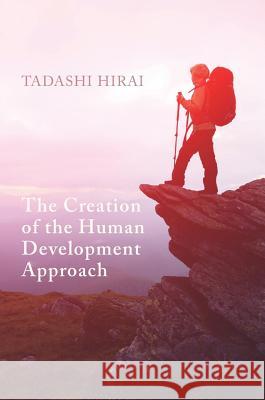
This book examines the main reasons and challenges for the success of the human development approach both in theory and practice as an alternative to the economic growth model.
"This concise and well-written book by Tadashi Hirai adds to the growing body of literature on Human Development (HD) by offering an in-depth historical perspective on the emergence of the approach and an analysis of its institutional context. ... Hirai's book is thoughtfully researched, clearly written and economical with words. The monograph is highly suitable for gaining an overview of the historic and institutional context of human development and its measurement." (Madleina Daehnhardt, Journal of Human Development and Capabilities, Vol. 20 (1), 2019)
1. History of Development: Towards Human Development
Introduction
Conceptual Shifts in Development
The Basic Needs Approach
The Human Development Approach
The Basic Needs Approach & the Human Development Approach
Conclusions
2. Institutionalisation of Development Concepts
Introduction
Institutional Mechanisms
The Economic Growth Model in the Bretton Woods Institutions
The Human Development Approach within the UNDP
Conclusions
3. Measurement of Development: Predecessors of the Human Development Index
Introduction
Conceptual Issues
Operational Issues
Some Reflections and Implications of the Formulation of the HDI
Conclusions
4. The Human Development Index and Its Evolution
Introduction
Review of Critiques of the HDI
Revisions of the HDI in the HDRs
Discussion: What for the Future?
Conclusions
5. Happiness in Human Development
Introduction
The Capability Approach in Support of the Human Development Approach
Happiness in the Capability Approach
Conclusions
Epilogue
Tadashi Hirai is Project Researcher in the University of Tokyo, Japan, and a supervisor specializing in the human development approach and the human development index at the University of Cambridge, UK.
This book examines the main reasons for the success of the human development approach as an alternative to the economic growth model of development. Is human development theoretically richer, as claimed by its advocates, than any other development concepts including the mainstream? Is its measurement, the human development index (HDI), better than other proposed indices of well-being? Is there anything to be revised to keep its influence for the future? The methodology used throughout this book follows a historical and institutional approach on the ground that human development cannot be understood without taking into account the complexities added by the formation process. Quite often, human development debates are either theoretical and prescriptive or empirical and descriptive. Instead, this book provides a ‘meso-analysis’ of human development by means of a more pragmatic historical and institutional methodology, avoiding the other two extremes that have already been covered by philosophers and field-experts.