• Wyszukiwanie zaawansowane
  • Kategorie
  • Kategorie BISAC
  • Książki na zamówienie
  • Promocje
  • Granty
  • Książka na prezent
  • Opinie
  • Pomoc
  • Załóż konto
  • Zaloguj się

The Comandos Distributed Application Platform » książka


zaloguj się | załóż konto
Logo Krainaksiazek.pl

koszyk

konto

szukaj
topmenu
Księgarnia internetowa
Szukaj
Książki na zamówienie
Promocje
Granty
Książka na prezent
Moje konto
Pomoc
 
 
Wyszukiwanie zaawansowane
Pusty koszyk
Bezpłatna dostawa dla zamówień powyżej 20 złBezpłatna dostawa dla zamówień powyżej 20 zł

Kategorie główne

• Nauka
 [2946600]
• Literatura piękna
 [1856966]

  więcej...
• Turystyka
 [72221]
• Informatyka
 [151456]
• Komiksy
 [35826]
• Encyklopedie
 [23190]
• Dziecięca
 [619653]
• Hobby
 [140543]
• AudioBooki
 [1577]
• Literatura faktu
 [228355]
• Muzyka CD
 [410]
• Słowniki
 [2874]
• Inne
 [445822]
• Kalendarze
 [1744]
• Podręczniki
 [167141]
• Poradniki
 [482898]
• Religia
 [510455]
• Czasopisma
 [526]
• Sport
 [61590]
• Sztuka
 [243598]
• CD, DVD, Video
 [3423]
• Technologie
 [219201]
• Zdrowie
 [101638]
• Książkowe Klimaty
 [124]
• Zabawki
 [2473]
• Puzzle, gry
 [3898]
• Literatura w języku ukraińskim
 [254]
• Art. papiernicze i szkolne
 [8170]
Kategorie szczegółowe BISAC

The Comandos Distributed Application Platform

ISBN-13: 9783540566601 / Angielski / Miękka / 1993 / 312 str.
Vinny Cahill; Roland Balter; Neville R. Harris
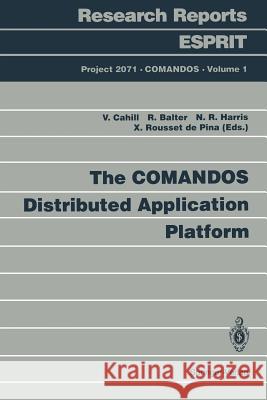
The Comandos Distributed Application Platform Cahill, Vinny 9783540566601 Springer-Verlag - książkaWidoczna okładka, to zdjęcie poglądowe, a rzeczywista szata graficzna może różnić się od prezentowanej.

The Comandos Distributed Application Platform

ISBN-13: 9783540566601 / Angielski / Miękka / 1993 / 312 str.

Vinny Cahill; Roland Balter; Neville R. Harris
cena 201,72 zł
(netto: 192,11 VAT:  5%)

Najniższa cena z 30 dni: 192,74 zł
Termin realizacji zamówienia:
ok. 22 dni roboczych
Bez gwarancji dostawy przed świętami

Darmowa dostawa!

The last decade has seen an enormous change in the capability of information technology and also in the expectations of what that technology can provide. The personal computer revolution at the start of the 1980s brought computing power to the desktop in a way that, for the first time, non-technical users could understand and use in their everyday work. The invisible wall of mystique that had separated computers from their potential users for so long had been demolished, and the world of business would never be the same again. As we entered the 1990s, a decade later, we witnessed the beginnings of another revolution. This revolution is not so obvious, but its implications are even more far-reaching. It is not so obvious because it is happening behind the scenes, in the communications and computing infrastructure that support the machines that can be seen sitting on office desks and, increasingly, being carried with business people as standard equipment along with a briefcase and umbrella. It is potentially more far-reaching for the following reason. The per- sonal computer of the 1980s brought computing power to the user in a box that could fit on a desk. The revolution of the 1990s brings to the user computing power that is distributed across the whole planet.


Kategorie:
Informatyka
Kategorie BISAC:
Computers > Operating Systems - General
Computers > Programming - General
Computers > Database Administration & Management
Wydawca:
Springer-Verlag
Seria wydawnicza:
Research Reports Esprit / Project 2071. Comandos
Język:
Angielski
ISBN-13:
9783540566601
Rok wydania:
1993
Wydanie:
Softcover Repri
Numer serii:
000403972
Ilość stron:
312
Waga:
0.51 kg
Wymiary:
23.5 x 15.5
Oprawa:
Miękka
Wolumenów:
01
Dodatkowe informacje:
Bibliografia
Glosariusz/słownik
Wydanie ilustrowane

1 Introduction.- 1.1 Rationale, Scope and Objectives.- 1.2 Object-Oriented Approach.- 1.3 The Comandos Model.- 1.4 Programming with the Comandos Model.- 1.5 Structure of the Comandos Platform.- 1.6 The Comandos Virtual Machine.- 1.7 The Comandos Virtual Machine Interface.- 1.8 Application Services.- 1.9 Management Tools.- 1.10 Comandos and the Rest of the World.- 1.10.1 Comandos and the Open Software Foundation.- 1.10.2 Comandos and UNIX International.- 1.10.3 Comandos and the Object Management Group.- 1.11 What is Comandos Added Value?.- 1.12 Road-map of the Book.- I User’s View of the Comandos Platform.- 2 Overview of the Comandos Platform.- 2.1 Basic Features.- 2.1.1 Transparent Access to Resources and Services.- 2.1.2 Persistence.- 2.1.3 Concurrency.- 2.1.4 Atomicity.- 2.1.5 Sharing.- 2.2 Interwdrking Between Languages.- 2.2.1 Manual Approach.- 2.2.2 Automated Approach.- 2.3 Data Management.- 2.4 Security.- 2.5 Management View of the Platform.- 2.6 Interworking with UNIX.- 2.7 Structure of the Platform.- 2.7.1 The Comandos System.- 2.7.2 Application Services and Management Tools.- 3 The Comandos Virtual Machine.- 3.1 Object Model.- 3.1.1 Comandos Objects.- 3.1.2 Global Names.- 3.1.3 Object Invocation.- 3.2 Security Model.- 3.2.1 Security Domains, Users and Groups.- 3.2.2 Isolation.- 3.2.3 Authorisation.- 3.2.4 Security Levels.- 3.3 Execution Model.- 3.3.1 Job and Activity Operation.- 3.3.2 Job and Activity Control.- 3.4 Transaction Model.- 3.4.1 Transaction Options.- 3.4.2 Job and Activity Model for Transactions.- 4 Supported Programming Languages.- 4.1 C++.- 4.1.1 Type Model.- 4.1.2 Distribution.- 4.1.3 Persistence.- 4.1.4 Concurrency.- 4.1.5 Storage.- 4.1.6 Transactions.- 4.1.7 Exceptions.- 4.1.8 Implementation.- 4.2 Eiffel.- 4.2.1 Type Model.- 4.2.2 Persistence.- 4.2.3 Distribution.- 4.2.4 Concurrency.- 4.2.5 Storage.- 4.2.6 Transactions.- 4.2.7 Exceptions.- 4.2.8 Implementation.- 4.3 The Comandos Object-Oriented Language.- 4.3.1 Type Model.- 4.3.2 Persistence.- 4.3.3 Distribution.- 4.3.4 Concurrency.- 4.3.5 Transactions.- 4.3.6 Exceptions.- 4.3.7 Implementation.- 5 Development Tools.- 5.1 The Distributed Debugger.- 5.1.1 Printing the Content of an Object.- 5.1.2 Execution Control.- 5.1.3 Eliminating Non-deterministic Behaviour.- 5.2 The User Interface Development System.- 5.3 The Type Manager.- 5.3.1 Canonical Type Model.- 5.3.2 The Type Manager Architecture.- 5.3.3 The Management of Units.- 5.3.4 The Creation of Types.- 5.3.5 The Storage and Retrieval of Type Information.- 5.3.6 The Process of Language Registration.- 5.3.7 The Process of Compilation.- 6 The Object Data Management Service.- 6.1 Data Model.- 6.2 Operational Model.- 6.3 Structure.- 6.3.1 The Aggregate Layer.- 6.3.2 The Bulk Layer.- 6.3.3 The Collection Layer.- 6.4 The Programmer’s Interface.- 6.4.1 Basics.- 6.4.2 The Data and Storage Definition Language.- 6.4.3 The Data Manipulation Sub-language.- 6.5 Summary.- 7 Management Tools.- 7.1 The Distributed Directory Service.- 7.1.1 Functional Model.- 7.1.2 Directory Services.- 7.1.3 The Distributed Directory Service Architecture.- 7.2 Management and Administration Tools.- 7.2.1 The System Observation Facility.- 7.2.2 The System Control Facility.- 7.2.3 User and Host Administration.- 7.2.4 The Distributed Information System Designer.- 7.3 Security Tools.- 7.3.1 Protocol Data Analysis Tool.- 7.3.2 Risk Management.- 7.4 Relationships Between Tools.- 8 The CIDRE Application.- 8.1 Description of the Pilot Application.- 8.1.1 Functions.- 8.1.2 Architecture.- 8.2 CIDRE Design and Implementation.- 8.2.1 Use of the Type Model.- 8.2.2 Use of the Computational Model.- 8.2.3 Persistent Objects.- 8.2.4 Integration with UNIX.- 8.2.5 Use of Comandos Services.- 8.3 Evaluation.- 8.3.1 Model and Language.- 8.3.2 Architecture.- 8.3.3 Conclusion.- II Implementor’s View of the Comandos Platform.- 9 Virtual Machine Interface.- 9.1 The Virtual Machine Architecture.- 9.2 Virtual Object Memory.- 9.2.1 Context Services.- 9.2.2 Global Services.- 9.3 Execution Sub-system.- 9.3.1 Job and Activity Management.- 9.3.2 Synchronisation Support.- 9.3.3 Exception Handling.- 9.4 Storage Sub-system.- 9.4.1 Container Management.- 9.4.2 Segments.- 9.4.3 Object Migration and Clustering.- 9.4.4 Ageing in the Storage Sub-system.- 9.5 Transaction Sub-system.- 9.5.1 Transaction Management.- 9.6 Communication Sub-system.- 9.6.1 Remote Invocation Support.- 9.6.2 Reliable Broadcast Protocol.- 9.7 Protection Sub-system.- 9.7.1 Authorisation.- 9.7.2 Secure Transmission.- 9.7.3 Auditing.- 10 Implementing the Virtual Machine.- 10.1 The Amadeus Platform.- 10.1.1 Basic Design Decisions and Assumptions.- 10.1.2 The Structure of Amadeus.- 10.1.3 Node Management.- 10.1.4 The Storage Sub-system.- 10.1.5 User and Extent Management.- 10.1.6 Context Management.- 10.1.7 Cluster Location.- 10.1.8 Cluster Fault Handling.- 10.1.9 Address Resolution.- 10.1.10 The Object Manager.- 10.1.11 Cluster Management.- 10.1.12 Job and Activity Management.- 10.1.13 Load Balancing.- 10.1.14 Transaction Management.- 10.1.15 Communications.- 10.1.16 Thread Management.- 10.2 Other Implementations.- 10.2.1 CHORUS.- 10.2.2 Mach.- 11 Interfacing a Language to the Virtual Machine.- 11.1 The Generic Run-time.- 11.1.1 Down-calls.- 11.1.2 Up-calls.- 11.2 The Eiffel Run-time.- 11.2.1 Types and Objects.- 11.2.2 Object Layout.- 11.2.3 ERT Data Structures for a Class.- 11.2.4 Object Creation, Access and Invocation.- 11.2.5 Functionality Provided by the ERT.- 11.3 Persistence.- 11.3.1 Interfacing the ERT and GRT.- 11.3.2 Down-calls.- 11.3.3 Problems in the Implementation of Persistence.- 11.3.4 Compilation.- 11.4 Distribution.- 11.4.1 Calling Mechanism.- 11.4.2 Code Generation.- 11.4.3 Up-calls for Distribution.- 11.4.4 Problems in Distribution.- 11.5 Concurrency.- 11.5.1 Implementation.- 11.6 Transactions.- 11.7 Conclusion.- 12 Conclusions.- 12.1 The Challenge of Distributed Computing and the Promise of the Comandos Technology.- 12.2 Benefits of the Comandos Technology.- 12.2.1 Main Benefits for the Application Developer.- 12.2.2 Main Benefits for the End-user.- 12.3 Industrial Achievements.- 12.4 Research Achievements.- A Example Programs.- A.1 Specification of the SimpleMail Application.- A.2 C++.- A.2.1 Application Mainline.- A.2.2 Class Mailer.- A.2.3 Class Mail Directory.- A.2.4 Class Mailbox.- A.2.5 Class Message.- A.2.6 Utility and Library Classes.- A.3 Eiffel.- A.3.1 Application Mainline.- A.3.2 Class Mailer.- A.3.3 Class MaiLDirectory.- A.3.4 Class Mailbox.- A.3.5 Class Message.- A.3.6 Utility and Library Classes.- A.4 Guide.- A.4.1 Class Mailer.- A.4.2 Class MaiLDirectory.- A.4.3 Class Mailbox.- A.4.4 Class Message.- A.4.5 Utility and Library Classes.- B Available Software.- C Comandos Glossary.- D Abbreviations.- E Comandos Publications.- E.1 Papers and Reports.- E.2 Project Deliverables.- References.

Cahill, Vinny Vinny Cahill is a professor of computer science at... więcej >


Udostępnij

Facebook - konto krainaksiazek.pl


Opinie o Krainaksiazek.pl na Opineo.pl

Partner Mybenefit

Krainaksiazek.pl w programie rzetelna firma Krainaksiaze.pl - płatności przez paypal

Czytaj nas na:

Facebook - krainaksiazek.pl
  • książki na zamówienie
  • granty
  • książka na prezent
  • kontakt
  • pomoc
  • opinie
  • regulamin
  • polityka prywatności

Zobacz:

  • Księgarnia czeska

  • Wydawnictwo Książkowe Klimaty

1997-2025 DolnySlask.com Agencja Internetowa

© 1997-2022 krainaksiazek.pl
     
KONTAKT | REGULAMIN | POLITYKA PRYWATNOŚCI | USTAWIENIA PRYWATNOŚCI
Zobacz: Księgarnia Czeska | Wydawnictwo Książkowe Klimaty | Mapa strony | Lista autorów
KrainaKsiazek.PL - Księgarnia Internetowa

Polityka prywatnosci - link
Krainaksiazek.pl - płatnośc Przelewy24
Przechowalnia Przechowalnia





