• Wyszukiwanie zaawansowane
  • Kategorie
  • Kategorie BISAC
  • Książki na zamówienie
  • Promocje
  • Granty
  • Książka na prezent
  • Opinie
  • Pomoc
  • Załóż konto
  • Zaloguj się

The Chemist's Companion Guide to Patent Law » książka


zaloguj się | załóż konto
Logo Krainaksiazek.pl

koszyk

konto

szukaj
topmenu
Księgarnia internetowa
Szukaj
Książki na zamówienie
Promocje
Granty
Książka na prezent
Moje konto
Pomoc
 
 
Wyszukiwanie zaawansowane
Pusty koszyk
Bezpłatna dostawa dla zamówień powyżej 20 złBezpłatna dostawa dla zamówień powyżej 20 zł

Kategorie główne

• Nauka
 [2946600]
• Literatura piękna
 [1856966]

  więcej...
• Turystyka
 [72221]
• Informatyka
 [151456]
• Komiksy
 [35826]
• Encyklopedie
 [23190]
• Dziecięca
 [619653]
• Hobby
 [140543]
• AudioBooki
 [1577]
• Literatura faktu
 [228355]
• Muzyka CD
 [410]
• Słowniki
 [2874]
• Inne
 [445822]
• Kalendarze
 [1744]
• Podręczniki
 [167141]
• Poradniki
 [482898]
• Religia
 [510455]
• Czasopisma
 [526]
• Sport
 [61590]
• Sztuka
 [243598]
• CD, DVD, Video
 [3423]
• Technologie
 [219201]
• Zdrowie
 [101638]
• Książkowe Klimaty
 [124]
• Zabawki
 [2473]
• Puzzle, gry
 [3898]
• Literatura w języku ukraińskim
 [254]
• Art. papiernicze i szkolne
 [8170]
Kategorie szczegółowe BISAC

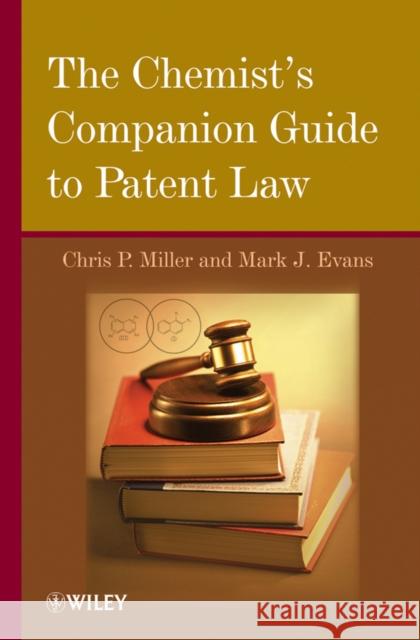
The Chemist's Companion Guide to Patent Law

ISBN-13: 9780471782438 / Angielski / Twarda / 2010 / 344 str.
Chris P. Miller;Mark J. Evans;¬Abar
The Chemist's Companion Guide to Patent Law Chris P. Miller Mark J. Evans  9780471782438  - książkaWidoczna okładka, to zdjęcie poglądowe, a rzeczywista szata graficzna może różnić się od prezentowanej.

The Chemist's Companion Guide to Patent Law

ISBN-13: 9780471782438 / Angielski / Twarda / 2010 / 344 str.

Chris P. Miller;Mark J. Evans;¬Abar
cena 544,01 zł
(netto: 518,10 VAT:  5%)

Najniższa cena z 30 dni: 538,44 zł
Termin realizacji zamówienia:
ok. 30 dni roboczych
Bez gwarancji dostawy przed świętami

Darmowa dostawa!

Written by an individual with experience as both a chemist and a patent attorney, The Chemist's Companion Guide to Patent Law covers everything the student or working chemist needs to know about patentability, explaining important concepts of patent law (such as novelty, non-obviousness, and freedom-to-operate) in easy-to-understand terms. Through abundant examples from case law as well as real-world situations with which a researcher might be faced, this book provides readers with a better understanding of how to put that knowledge into practice.

Everything a working chemist needs to know about patents—in easy–to–understand termsFor people working in the chemical, pharmaceutical, and biotechnology industries, understanding patents is vitally important when it comes to safeguarding their intellectual property. Unfortunately, most researchers involved in testing and evaluating novel chemicals have a limited knowledge of laws that pertain directly to their work. This thorough, accessible reference fills this critical educational gap by delivering relevant legal concepts in a clear, concise manner free of specialized jargon. The Chemist′s Companion Guide to Patent Law breaks down the most salient patent information by providing a combination of explanations germane to a given topic coupled with discussions centered on actual federal court opinions. This indispensible reference:

  • Provides straightforward explanations of patent law terminology, including "novelty" and "non–obviousness"
  • Uses examples from both case law and real–world situations to illustrate aspects of intellectual property law that concern chemists
  • Is appropriate for researchers across many disciplines who need a basic guide to patent law
  • Includes a table of cases that lists pertinent chemical court cases
The Chemist′s Companion Guide to Patent Law imparts basic patent law knowledge in a breezy format that frees up time for working chemists and students by helping them stay out of the courtroom to focus their attention where it belongs—in the laboratory.

Kategorie:
Nauka, Prawo i administracja
Kategorie BISAC:
Law > Intellectual Property - Patent
Technology & Engineering > Chemical & Biochemical
Język:
Angielski
ISBN-13:
9780471782438
Rok wydania:
2010
Ilość stron:
344
Waga:
0.65 kg
Wymiary:
23.62 x 15.49 x 2.29
Oprawa:
Twarda
Wolumenów:
01
Dodatkowe informacje:
Bibliografia

"For anyone involved in patents or the patenting process, this book will help clarify what must go on in every step, from musing over a problem in an office, through the laboratory work, the many steps involving patent agents and attorneys, through gaining and maintaining a viable patent." (Anal Bioanal Chem, 2011)

"The book is suitably encyclopaedic and covers a substantial fraction of the patent process. A compromise is struck between suitable content and use as a student referral aid and the book seems to get this exactly right." (Reviews, December 2010) Authors Chris Miller and Mark Evans are practicing chemists as well as patent law enthusiasts, and their appreciation  of both ends of the inventor attorney axis makes them ideally placed to advise researchers. (Nature Chemistry, January 2011)

"This well–priced, up–to–date publication is attractively printed and produced by the publisher. . . this book is especially recommended for chemists and other members of drug discovery teams, for graduate students, postdocs, for faculty members who have interests in drug discovery, for others who would like a one–volume review of U.S. patent law, and for the libraries that serve these groups". (TMCnet.com, November 2010)

"This well–priced, up–to–date publication is attractively printed and produced by the publisher. . . .this book is especially recommended for chemists and other members of drug discovery teams, for graduate students, postdocs, for faculty members who have interests in drug discovery, for others who would like a one–volume review of U.S. patent law, and for the libraries that serve these groups". (TMCnet.com, 23 November 2010) "This well–priced, up–to–date publication is attractively printed and produced by the publisher. . . .This book is especially recommended for chemists and other members of drug discovery teams, for graduate students, postdocs, for faculty members who have interests in drug discovery, for others who would like a one–volume review of U.S. patent law, and for the libraries that serve these groups." (Journal of Medicinal Chemistry, 2010)"

The title is accurate; it′s a top–to–bottom look at the major features of patent law as it applies to the business of chemistry....... There′s a lot of good stuff in this book. It′s not always light reading, but it′s the most readable treatment of some very complex patent issues that I′ve seen." (In the Pipeline, September 13, 2010)


Disclaimer

Preface.

1 Patent Basics.

1.1 Introduction.

1.2 Patents as Property.

1.3 Patent Rights Are Rights to Exclude.

1.4 Patents Do Not Convey Freedom to Operate the Invention.

1.5 Contrasting Freedom to Operate with Patentability.

1.6 Assignment and Recording of Patents.

1.7 Why Have Patents?

2 The Patent Process.

2.1 An Overview of the Patent Process in the United States.

2.2 Post Grant Procedures at the USPTO.

2.2.a Patent Maintenance Fees.

2.2.b Reissue Applications and Patents.

2.2.c Ex Parte Procedures.

2.2.d Inter Partes Procedures.

2.3 Inequitable Conduct in Patent Prosecution.

3 Prior Art and the Chemical Invention.

3.1 What is Prior Art?

3.2 Prior Art That Can Be Antedated.

3.3 Prior Art That Is an Absolute Bar.

3.4 Section 102 References in Support of Obviousness Rejections.

3.5 Double Patenting.

3.6 Obviousness–Type Double Patenting.

3.7 Prior Art Hypothetical Example 1.

3.8 Hypothetical Example 2.

4 Inventorship.

4.1 Inventorship and Ownership of U.S Patents.

4.2 Patent Validity and Correct Listing of Inventorship.

4.3 Determining Inventorship.

5 Patent Claims.

5.1 Introduction to Claim Language and Structure.

5.2 Independent and Dependent Claim Types.

5.3 Claim Structure.

5.4 Transition Phrases.

5.5 Markush Claiming in Chemical Patents.

5.6 Claim Construction.

6 Basic Requirements of Patentability: Utility.

6.1 The Six Requirements of Patentability.

6.2 Statutory Subject Matter of the Utility Requirement.

6.3 What Makes a Chemical Invention Useful?

7 Basic Requirements of Patentability: Novelty.

7.1 Requirements of the Prior Art to Defeat Novelty.

7.2 Anticipation in Chemical Patents.

7.3 Anticipation of a Claimed Genus by a Species Falling Within that Genus.

7.4 Anticipation of a Species Claim by a Prior Art Genus.

7.5 Anticipation of a Range by a Prior Art Species Falling Within that Range.

7.6 Inherent Anticipation.

8 Basic Requirements of Patentability: Nonobviousness.

8.1 The Basis for the Nonobviousness Requirement.

8.2 Understanding §103(a).

8.3 Graham Factors Analysis of Obviousness.

8.4 Focusing the Obviousness Inquiry: Prima Facie Obviousness and the Chemical Invention.

8.5 Application of the TSM Test to the Chemical Arts.

8.6 Prior Art as a Whole Must Be Considered for TSM Tests.

8.7 Obviousness and Unpredictability in the Art.

8.8 Unexpected Results as Secondary Indices of Nonobviousness.

8.8.a Unexpected Results Must Be Taught by, or Flow from the Patent Application.

8.8.b Unexpected or Superior Results Can Be Demonstrated Through a Single Property.

8.8.c Unexpected Results: Different in Degree or Different in Kind?

8.8.d The Claimed Invention Must Be Tested Against the Closest Prior Art.

8.9 Prima Facie Obviousness Based Primarily on Similarity of Chemical Structure.

8.9.a Isomers and Homologues.

8.9.b Enantiomers.

8.10 Obviousness of a Species or Genus in Light of a Prior Art Genus.

8.11 Obviousness of Ranges.

8.12 Changing the Sequence of Ingredient Addition.

8.13 Obviousness of Combining Equivalents Together for Same Known Purpose.

8.14 Substituting Equivalents Known for the Same Purpose.

8.15 Purified Forms of Compounds or Materials.

9 Basic Requirements of Patentability: Written Description, Enablement, and Best Mode.

9.1 The Written Description Requirement.

9.2 Enablement.

9.3 Best Mode.

Afterword and Sources.

Acknowledgments.

Cases Cited.

Index.

CHRIS P. MILLER obtained his PhD in organic chemistry from the University of Pittsburgh and is a magna cum laude graduate of the Temple University Beasley School of Law. Dr. Miller has over a decade of research experience as a medicinal chemist in the pharmaceutical industry and has worked as an associate at a law firm as well as served as in–house patent counsel in big pharma and the biotech industry. Dr. Miller is licensed to practice law before the state bar of Pennsylvania and the United States Patent and Trademark Office. He currently is practicing both medicinal chemistry and patent law in the Boston area.

MARK J. EVANS obtained his PhD from Northwestern University and his MBA from Penn State University; has fifteen years of pharmaceutical industry experience in the development of both small molecule and protein therapeutics at Wyeth Pharmaceuticals and Alexion Pharmaceuticals; and currently works in regulatory affairs in the Philadelphia area.

Everything a working chemist needs to know about patents in easy–to–understand terms

For people working in the chemical, pharmaceutical, and biotechnology industries, understanding patents is vitally important when it comes to safeguarding their intellectual property. Unfortunately, most researchers involved in testing and evaluating novel chemicals have a limited knowledge of laws that pertain directly to their work.

This thorough, accessible reference fills this critical educational gap by delivering relevant legal concepts in a clear, concise manner free of specialized jargon. The Chemist s Companion Guide to Patent Law breaks down the most salient patent information by providing a combination of explanations germane to a given topic coupled with discussions centered on actual federal court opinions. This indispensible reference:

  • Provides straightforward explanations of patent law terminology, including novelty and non–obviousness
  • Uses examples from both case law and real–world situations to illustrate aspects of intellectual property law that concern chemists
  • Is appropriate for researchers across many disciplines who need a basic guide to patent law
  • Includes a table of cases that lists pertinent chemical court cases

The Chemist s Companion Guide to Patent Law imparts basic patent law knowledge in a breezy format that frees up time for working chemists and students by helping them stay out of the courtroom to focus their attention where it belongs in the laboratory.


Udostępnij

Facebook - konto krainaksiazek.pl


Opinie o Krainaksiazek.pl na Opineo.pl

Partner Mybenefit

Krainaksiazek.pl w programie rzetelna firma Krainaksiaze.pl - płatności przez paypal

Czytaj nas na:

Facebook - krainaksiazek.pl
  • książki na zamówienie
  • granty
  • książka na prezent
  • kontakt
  • pomoc
  • opinie
  • regulamin
  • polityka prywatności

Zobacz:

  • Księgarnia czeska

  • Wydawnictwo Książkowe Klimaty

1997-2025 DolnySlask.com Agencja Internetowa

© 1997-2022 krainaksiazek.pl
     
KONTAKT | REGULAMIN | POLITYKA PRYWATNOŚCI | USTAWIENIA PRYWATNOŚCI
Zobacz: Księgarnia Czeska | Wydawnictwo Książkowe Klimaty | Mapa strony | Lista autorów
KrainaKsiazek.PL - Księgarnia Internetowa

Polityka prywatnosci - link
Krainaksiazek.pl - płatnośc Przelewy24
Przechowalnia Przechowalnia





