• Wyszukiwanie zaawansowane
  • Kategorie
  • Kategorie BISAC
  • Książki na zamówienie
  • Promocje
  • Granty
  • Książka na prezent
  • Opinie
  • Pomoc
  • Załóż konto
  • Zaloguj się

The Calculus of Consent and Constitutional Design » książka


zaloguj się | załóż konto
Logo Krainaksiazek.pl

koszyk

konto

szukaj
topmenu
Księgarnia internetowa
Szukaj
Książki na zamówienie
Promocje
Granty
Książka na prezent
Moje konto
Pomoc
 
 
Wyszukiwanie zaawansowane
Pusty koszyk
Bezpłatna dostawa dla zamówień powyżej 20 złBezpłatna dostawa dla zamówień powyżej 20 zł

Kategorie główne

• Nauka
 [2946600]
• Literatura piękna
 [1856966]

  więcej...
• Turystyka
 [72221]
• Informatyka
 [151456]
• Komiksy
 [35826]
• Encyklopedie
 [23190]
• Dziecięca
 [619653]
• Hobby
 [140543]
• AudioBooki
 [1577]
• Literatura faktu
 [228355]
• Muzyka CD
 [410]
• Słowniki
 [2874]
• Inne
 [445822]
• Kalendarze
 [1744]
• Podręczniki
 [167141]
• Poradniki
 [482898]
• Religia
 [510455]
• Czasopisma
 [526]
• Sport
 [61590]
• Sztuka
 [243598]
• CD, DVD, Video
 [3423]
• Technologie
 [219201]
• Zdrowie
 [101638]
• Książkowe Klimaty
 [124]
• Zabawki
 [2473]
• Puzzle, gry
 [3898]
• Literatura w języku ukraińskim
 [254]
• Art. papiernicze i szkolne
 [8170]
Kategorie szczegółowe BISAC

The Calculus of Consent and Constitutional Design

ISBN-13: 9781461428435 / Angielski / Miękka / 2013 / 120 str.
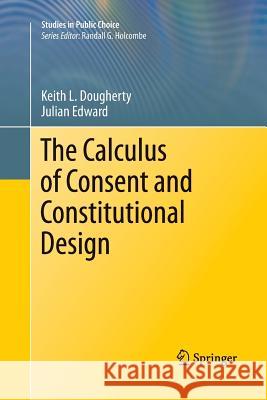
Keith L. Dougherty; Julian Edward
The Calculus of Consent and Constitutional Design Keith L. Dougherty Julian Edward 9781461428435 Springer - książkaWidoczna okładka, to zdjęcie poglądowe, a rzeczywista szata graficzna może różnić się od prezentowanej.

The Calculus of Consent and Constitutional Design

ISBN-13: 9781461428435 / Angielski / Miękka / 2013 / 120 str.

Keith L. Dougherty; Julian Edward
cena 403,47 zł
(netto: 384,26 VAT:  5%)

Najniższa cena z 30 dni: 385,52 zł
Termin realizacji zamówienia:
ok. 22 dni roboczych
Bez gwarancji dostawy przed świętami

Darmowa dostawa!
inne wydania

Buchanan and Tullock's seminal work, The Calculus of Consent, linked economic methodology to substantive questions in political science. Among the major contributions of the book is a connection between constitutional decision making and contractarianism, a philosophical tradition that proponents believe can give institutions legitimacy. In other words, a major contribution of their book is a clear connection between empirical decision making and normative principles. This book formalizes and extends this foundational work as it attempts to show how economic and philosophical arguments about the "best" voting rules can be used to improve constitutional design. It informs debates about constitutional political economy in comparative politics, democratic theory, and public choice. Political scientists often ask questions about what causes a nation to seek a new constitution, how constitutions are made, and what factors allow for corruption in constitutional decision making. The Calculus of Consent and Constitutional Design bridges the gap between normative questions about which institutions are most efficient and fair and empirical questions about how constitutions are formed. This provides a benchmark to help create better constitutions and informs empirical research about what institutions are most likely to succeed. The book begins by showing how contractarian ideals can be used to justify choices about decision-making. It then carefully defines several concepts employed by Buchanan and Tullock and shows why the relationships between these concepts may not be as closely linked as Buchanan and Tullock first thought. This provides a backdrop for analyzing the three phases of constitutional decision-making: 1) the constitutional phase, where rules for constitutional decision making must be justified; 2) the legislative phase, where the optimal k-majority rule1 is analyzed; and 3) the electoral phase, where the optimal voting rule for large electorates and open alternatives are determined. These phases differ by context and sources of legitimacy. Computational models and analytic techniques are introduced in each of these chapters. Finally, the book concludes with statements about the significance of the research for the creation of constitutions more broadly.


Kategorie:
Nauka, Polityka
Kategorie BISAC:
Political Science > General
Philosophy > Political
Social Science > Methodology
Wydawca:
Springer
Język:
Angielski
ISBN-13:
9781461428435
Rok wydania:
2013
Wydanie:
2011
Ilość stron:
120
Waga:
0.19 kg
Wymiary:
23.39 x 15.6 x 0.71
Oprawa:
Miękka
Wolumenów:
01
Dodatkowe informacje:
Wydanie ilustrowane

"The Calculus of Consent is one of the founding documents of the Public Choice school, and one of the most important books in political science in the last century. So it takes an ambitious book to promise to extend, and in some cases correct, the Buchanan and Tullock work. But Dougherty and Edward deliver on that promise. Make no mistake: this is much more than a reevaluation and update of the classic work. Dougherty and Edward bring these classic debates back to life, using the most recent literature and techniques. This book will be on dozens of graduate reading lists within a year of being published." - Michael Munger, Professor of Political Science and Professor of Economics, Duke University and Past President, Public Choice Society

"Dougherty and Edwards have written an excellent book. Its title echoes the classic work by Buchanan and Tullock. The authors re-examine, formalize and provide new insights into some of the main issues addressed in that classic and examine alternative properties of various electoral mechanisms. This book will be of significant interest to both political scientists and practitioners." - Annick Laruelle and Federico Valenciano, University of the Basque Country and Ikerbasque, authors of Voting and Collective Decision (2008)

Introduction.- Original Theories and Current Studies.- Clarifying Concepts.- Constitutional Decision Making.- Legislative Decision Making.- Electoral Decision Making.- Conclusion.

Buchanan and Tullock’s seminal work, The Calculus of Consent, linked economic methodology to substantive questions in political science. Among the major contributions of their book is a connection between constitutional decision making and contractarianism, a philosophical tradition that proponents believe can give institutions legitimacy. In other words, a major contribution of their book is a clear connection between empirical decision making and normative principles. The current book formalizes and extends their foundational ideas as it attempts to show how economic and philosophical arguments about the "best" voting rules can be used to improve constitutional design. It informs debates about constitutional political economy in comparative politics, democratic theory, and public choice. Political scientists often ask questions about what causes a nation to seek a new constitution, how constitutions are made, and what factors allow for corrupt decision making. The Calculus of Consent and Constitutional Design bridges the gap between normative questions about which institutions are most efficient and fair and empirical questions about how constitutions are formed. This provides a benchmark to help create better constitutions and informs empirical research about what institutions are most likely to succeed.

The book begins by showing how contractarian ideals can be used to justify choices about decision-making. It then carefully defines several concepts employed by Buchanan and Tullock and shows why the relationships between these concepts may not be as closely linked as Buchanan and Tullock first thought. This provides a backdrop for analyzing the three phases of constitutional decision-making: 1) the constitutional phase, where rules for constitutional decision making must be justified; 2) the legislative phase, where the optimal k-majority rule is analyzed; and 3) the electoral phase, where the optimal voting rule for large electorates and open alternatives are determined. These phases differ by context and sources of legitimacy. Computational models and analytic techniques are introduced in each of these chapters. Finally, the book concludes with statements about the significance of the research for the creation of constitutions more broadly.




Udostępnij

Facebook - konto krainaksiazek.pl


Opinie o Krainaksiazek.pl na Opineo.pl

Partner Mybenefit

Krainaksiazek.pl w programie rzetelna firma Krainaksiaze.pl - płatności przez paypal

Czytaj nas na:

Facebook - krainaksiazek.pl
  • książki na zamówienie
  • granty
  • książka na prezent
  • kontakt
  • pomoc
  • opinie
  • regulamin
  • polityka prywatności

Zobacz:

  • Księgarnia czeska

  • Wydawnictwo Książkowe Klimaty

1997-2025 DolnySlask.com Agencja Internetowa

© 1997-2022 krainaksiazek.pl
     
KONTAKT | REGULAMIN | POLITYKA PRYWATNOŚCI | USTAWIENIA PRYWATNOŚCI
Zobacz: Księgarnia Czeska | Wydawnictwo Książkowe Klimaty | Mapa strony | Lista autorów
KrainaKsiazek.PL - Księgarnia Internetowa

Polityka prywatnosci - link
Krainaksiazek.pl - płatnośc Przelewy24
Przechowalnia Przechowalnia



