• Wyszukiwanie zaawansowane
  • Kategorie
  • Kategorie BISAC
  • Książki na zamówienie
  • Promocje
  • Granty
  • Książka na prezent
  • Opinie
  • Pomoc
  • Załóż konto
  • Zaloguj się

The Bioarchaeology of Dissection and Autopsy in the United States » książka


zaloguj się | załóż konto
Logo Krainaksiazek.pl

koszyk

konto

szukaj
topmenu
Księgarnia internetowa
Szukaj
Książki na zamówienie
Promocje
Granty
Książka na prezent
Moje konto
Pomoc
 
 
Wyszukiwanie zaawansowane
Pusty koszyk
Bezpłatna dostawa dla zamówień powyżej 20 złBezpłatna dostawa dla zamówień powyżej 20 zł

Kategorie główne

• Nauka
 [2946912]
• Literatura piękna
 [1852311]

  więcej...
• Turystyka
 [71421]
• Informatyka
 [150889]
• Komiksy
 [35717]
• Encyklopedie
 [23177]
• Dziecięca
 [617324]
• Hobby
 [138808]
• AudioBooki
 [1671]
• Literatura faktu
 [228371]
• Muzyka CD
 [400]
• Słowniki
 [2841]
• Inne
 [445428]
• Kalendarze
 [1545]
• Podręczniki
 [166819]
• Poradniki
 [480180]
• Religia
 [510412]
• Czasopisma
 [525]
• Sport
 [61271]
• Sztuka
 [242929]
• CD, DVD, Video
 [3371]
• Technologie
 [219258]
• Zdrowie
 [100961]
• Książkowe Klimaty
 [124]
• Zabawki
 [2341]
• Puzzle, gry
 [3766]
• Literatura w języku ukraińskim
 [255]
• Art. papiernicze i szkolne
 [7810]
Kategorie szczegółowe BISAC

The Bioarchaeology of Dissection and Autopsy in the United States

ISBN-13: 9783319268347 / Angielski / Twarda / 2016 / 346 str.
Kenneth Carlyle Nystrom
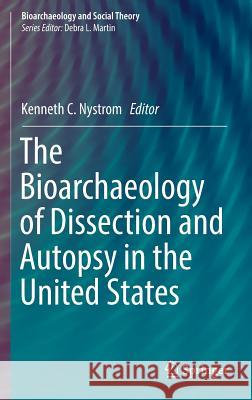
The Bioarchaeology of Dissection and Autopsy in the United States Kenneth Carlyl 9783319268347 Springer - książkaWidoczna okładka, to zdjęcie poglądowe, a rzeczywista szata graficzna może różnić się od prezentowanej.

The Bioarchaeology of Dissection and Autopsy in the United States

ISBN-13: 9783319268347 / Angielski / Twarda / 2016 / 346 str.

Kenneth Carlyle Nystrom
cena 726,29
(netto: 691,70 VAT:  5%)

Najniższa cena z 30 dni: 693,97
Termin realizacji zamówienia:
ok. 22 dni roboczych
Bez gwarancji dostawy przed świętami

Darmowa dostawa!

Encountering evidence of postmortem examinations - dissection or autopsy in historic skeletal collections is relatively rare, but recently there has been an increase in the number of reported instances. And much of what has been evaluated has been largely descriptive and historical. The Bioarchaeology of Dissection and Autopsy brings together in a single volume the skeletal evidence of postmortem examination in the United States. Ranging from the early colonial period to the early 1900 s, from a coffeehouse at Colonial Williamsburg to a Quaker burial vault in lower Manhattan, the contributions to this volume demonstrate the interpretive significance of a historically and theoretically contextualized bioarchaeology. The authors employ a wide range of perspectives, demonstrating how bioarchaeological evidence can be used to address a wide range of themes including social identity and marginalization, racialization, the nature of the body and fragmentation, and the emergence of medical practice and authority in the United States. "


Kategorie:
Nauka, Ekonomia i biznes
Kategorie BISAC:
Social Science > Archaeology
Social Science > Antropologia
Social Science > Socjologia
Wydawca:
Springer
Seria wydawnicza:
Bioarchaeology and Social Theory
Język:
Angielski
ISBN-13:
9783319268347
Rok wydania:
2016
Wydanie:
2017
Numer serii:
000779488
Ilość stron:
346
Waga:
0.68 kg
Wymiary:
23.39 x 15.6 x 2.06
Oprawa:
Twarda
Wolumenów:
01
Dodatkowe informacje:
Wydanie ilustrowane

Foreword I: Debra L. Martin.- Foreword II: Michael Sappol.- Chapter 1: Introduction Kenneth C. Nystrom.- Section I: Evidence from Early Colonial America.- Chapter 2: Renaissance Anatomy in the Americas: A Bioarchaeological Perspective on the Earliest Skeletal Evidence of Autopsy in the New World Thomas Crist and Marcella Sorg.- Chapter 3: Skeletal and Artifact Evidence for Surgery and Autopsy at James Fort Karin S. Bruwelheide, Douglas W. Owsley, Jamie E. May, and Beverly A. Straube.- Chapter 4: A Dissection at the Coffeehouse? The Performance of Anatomical Expertise in Colonial America Ellen Chapman and Mark Kostro.- Section II: Evidence from Public Cemeteries.- Chapter 5: Partible Persons or Persons Apart:  Anatomized Remains from the Spring Street Presbyterian Church Burial Vaults Shannon Novak.- Section III: Evidence from Medical Institutions.- Chapter 6: Teachings of the Dead: The Archaeology of Anatomized Remains from Holden Chapel, Harvard University Christina J. Hodge, Jane Lyden Rousseau, and Michèle E. Morgan.- Chapter 7: Commingled Skeletal Remains from a Well on the Medical College of Virginia Campus Doug Owsley, Karin Bruwelheide, Merry Outlaw, Richard L. Jantz, and Jodi L. Koste.- Chapter 8: Structural Violence in New Orleans: Skeletal Evidence from Charity Hospital’s Cemeteries, 1847-1929 Christine Halling and Ryan Seidemann.- Chapter 9: Dissection and Documented Skeletal Collections Jennifer Muller, Kristen Pearlstein, and Carlina de la Cova.- Section IV: Evidence from Almshouse Cemeteries.- Chapter 10: Autopsy, Dissection, and Anatomical Exploration: The Post-Mortem Fate of the Underclass and Institutionalized in Old Milwaukee Sean Dougherty and Normal Sullivan.- Chapter 11: "You couldn’t identify your grandmother if she were in that party": The Bioarchaeology of Postmortem Investigation at the Milwaukee County Poor Farm Cemetery Patricia B. Richards, Catherine R. Jones, Emily Mueller Epstein, and Thomas J. Zych.- Chapter 12: “The mangled remains of what had been humanity”: Evidence of Autopsy and Dissection at Philadelphia’s Blockley Almshouse, 1835-1895 Thomas Crist, Douglas Mooney, and Kimberly Morrell.- Chapter 13: Structural Inequality of the Socially Marginalized and Postmortem Examination at the Erie County Poorhouse Kenneth C. Nystrom, Joyce Sirianni, Rosanne Higgins, Jennifer Raines, and Douglas Perrelli.- Chapter 14: Exploring Evidence of 19th Century Dissection in the Dunning Poorhouse Cemetery Anne Grauer, Vanessa Lathrop, and Taylor Timoteo.- Chapter 15: A Historical and Osteological Analysis of Postmortem Medical Practices from the Albany County Almshouse Cemetery Skeletal Sample in Albany, New York. Kimberly Lowe Lusignan.- Chapter 16: The anthropology of dissection and autopsy Kenneth C. Nystrom.

Kenneth Nystrom is an Associate Professor in the Department of Anthropology at the State University of New York at New Paltz, USA.  He received his B.A. from the University of Minnesota-Duluth (1997), and his M.S. (1999) and Ph.D. (2005) from the University of New Mexico. He would characterize himself as a broadly trained bioarchaeologist. His early research focused on the Chachapoya of northern Perú where he investigated a range of topics including the reconstruction of mortuary behavior based on paleoentomology, trepanation and trauma, and the impact of Inca conquest on site-specific and regional-level genetic homogeneity using craniometrics. He has also conducted research on long bone cross-sectional geometry in Early Classic elites from Copan, Honduras and post-marital residence patterns among the Chiribaya of southern Perú utilizing craniometrics. His current focus is on African American and almshouse cemeteries from the 19th and 20th centuries in the United States. He grounds his research in the understanding that the biological and social world in which we live is incorporated into and onto our bodies. From this perspective he has examined dental health, trauma, and sex-specific post-manumission migration using strontium isotopes in a historic African American cemetery from New York. Additionally, he considered how the postmortem examination of a young woman from this cemetery can inform on our understanding of how social identity of African Americans was constructed during the 19th century. He is currently analyzing evidence of dissection and surgical experimentation from the Erie County Poorhouse from this same perspective.

Encountering evidence of postmortem examinations - dissection or autopsy- in historic skeletal collections is relatively rare, but recently there has been an increase in the number of reported instances. The Bioarchaeology of Dissection and Autopsy brings together in a single volume the skeletal evidence of postmortem examination in the United States. Ranging from the early colonial period to the early 1900’s, from a coffeehouse at Colonial Williamsburg to a Quaker burial vault in lower Manhattan, the contributions to this volume demonstrate the interpretive significance of a historically and theoretically contextualized bioarchaeology. The authors employ a wide range of perspectives, demonstrating how bioarchaeological evidence can be used to address a wide range of themes including social identity and marginalization, racialization, the nature of the body and fragmentation, and the emergence of medical practice and authority in the United States.


Udostępnij

Facebook - konto krainaksiazek.pl


Opinie o Krainaksiazek.pl na Opineo.pl

Partner Mybenefit

Krainaksiazek.pl w programie rzetelna firma Krainaksiaze.pl - płatności przez paypal

Czytaj nas na:

Facebook - krainaksiazek.pl
  • książki na zamówienie
  • granty
  • książka na prezent
  • kontakt
  • pomoc
  • opinie
  • regulamin
  • polityka prywatności

Zobacz:

  • Księgarnia czeska

  • Wydawnictwo Książkowe Klimaty

1997-2025 DolnySlask.com Agencja Internetowa

© 1997-2022 krainaksiazek.pl
     
KONTAKT | REGULAMIN | POLITYKA PRYWATNOŚCI | USTAWIENIA PRYWATNOŚCI
Zobacz: Księgarnia Czeska | Wydawnictwo Książkowe Klimaty | Mapa strony | Lista autorów
KrainaKsiazek.PL - Księgarnia Internetowa

Polityka prywatnosci - link
Krainaksiazek.pl - płatnośc Przelewy24
Przechowalnia Przechowalnia






