• Wyszukiwanie zaawansowane
  • Kategorie
  • Kategorie BISAC
  • Książki na zamówienie
  • Promocje
  • Granty
  • Książka na prezent
  • Opinie
  • Pomoc
  • Załóż konto
  • Zaloguj się

The Autism Matrix: The Social Origins of the Autism Epidemic » książka


zaloguj się | załóż konto
Logo Krainaksiazek.pl

koszyk

konto

szukaj
topmenu
Księgarnia internetowa
Szukaj
Książki na zamówienie
Promocje
Granty
Książka na prezent
Moje konto
Pomoc
 
 
Wyszukiwanie zaawansowane
Pusty koszyk
Bezpłatna dostawa dla zamówień powyżej 20 złBezpłatna dostawa dla zamówień powyżej 20 zł

Kategorie główne

• Nauka
 [2952079]
• Literatura piękna
 [1850969]

  więcej...
• Turystyka
 [71058]
• Informatyka
 [151066]
• Komiksy
 [35579]
• Encyklopedie
 [23181]
• Dziecięca
 [620496]
• Hobby
 [139036]
• AudioBooki
 [1646]
• Literatura faktu
 [228729]
• Muzyka CD
 [379]
• Słowniki
 [2932]
• Inne
 [445708]
• Kalendarze
 [1409]
• Podręczniki
 [164793]
• Poradniki
 [480107]
• Religia
 [510956]
• Czasopisma
 [511]
• Sport
 [61267]
• Sztuka
 [243299]
• CD, DVD, Video
 [3411]
• Technologie
 [219640]
• Zdrowie
 [100984]
• Książkowe Klimaty
 [124]
• Zabawki
 [2281]
• Puzzle, gry
 [3363]
• Literatura w języku ukraińskim
 [258]
• Art. papiernicze i szkolne
 [8020]
Kategorie szczegółowe BISAC

The Autism Matrix: The Social Origins of the Autism Epidemic

ISBN-13: 9780745643991 / Angielski / Twarda / 2010 / 240 str.
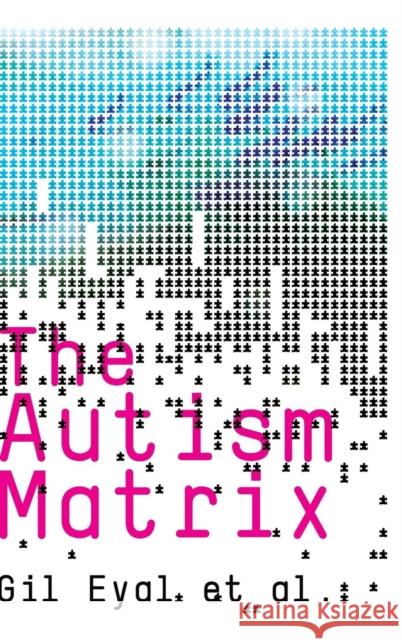
Gil Eyal
The Autism Matrix: The Social Origins of the Autism Epidemic Eyal, Gil 9780745643991 Polity Press - książkaWidoczna okładka, to zdjęcie poglądowe, a rzeczywista szata graficzna może różnić się od prezentowanej.

The Autism Matrix: The Social Origins of the Autism Epidemic

ISBN-13: 9780745643991 / Angielski / Twarda / 2010 / 240 str.

Gil Eyal
cena 291,47
(netto: 277,59 VAT:  5%)

Najniższa cena z 30 dni: 289,67
Termin realizacji zamówienia:
ok. 30 dni roboczych
Dostawa w 2026 r.

Darmowa dostawa!

Today autism has become highly visible. Once you begin to look for it, you realize it is everywhere. Why? We all know the answer or think we do: there is an autism epidemic. And if it is an epidemic, then we know what must be done: lots of money must be thrown at it, detection centers must be established and explanations sought, so that the number of new cases can be brought down and the epidemic brought under control.

But can it really be so simple? This major new book offers a very different interpretation. The authors argue that the recent rise in autism should be understood an "aftershock" of the real earthquake, which was the deinstitutionalization of mental retardation in the mid-1970s. This entailed a radical transformation not only of the institutional matrix for dealing with developmental disorders of childhood, but also of the cultural lens through which we view them. It opened up a space for viewing and treating childhood disorders as neither mental illness nor mental retardation, neither curable nor incurable, but somewhere in-between. The authors show that where deinstitutionalization went the furthest, as in Scandinavia, UK and the "blue" states of the US, autism rates are also highest. Where it was absent or delayed, as in France, autism rates are low.

Combining a historical narrative with international comparison, The Autism Matrix offers a fresh and powerful analysis of a condition that affects many parents and children today.


Kategorie:
Nauka, Socjologia i społeczeństwo
Kategorie BISAC:
Social Science > Socjologia
Psychology > Psychopathology - Autism Spectrum Disorders
Wydawca:
Polity Press
Język:
Angielski
ISBN-13:
9780745643991
Rok wydania:
2010
Ilość stron:
240
Waga:
0.59 kg
Wymiary:
23.11 x 15.49 x 2.79
Oprawa:
Twarda
Wolumenów:
01
Dodatkowe informacje:
Bibliografia
Wydanie ilustrowane

" The Autism Matrix fills in crucial gaps, and will greatly improve how the context of diagnosis and treatment is understood...The original research represented here is wide–ranging and invaluable"
Times Higher Education

"Gil Eyal and colleagues, five sociologists from Columbia University, have brought a fresh perspective from a different discipline to try to explain autism′s expansion in prevalence and popularity...Overall I found much to admire in this detailed study."
British Medical Journal

"This is a very useful book for those interested in autism and the role of parent movements and activists, and more generally in the social factors affecting changes in the classification of diseases."
Sociology of Health and Illness

"The development of the autistic spectrum is laid bare as a cultural construct still in evolutionary process, and the elucidation of this morphing phenomenon is the crowning achievement of this book."
The Kelvingrove Review

"Autism, rare and little publicized twenty years ago, is now constantly in the news and is absorbing ever larger sums of public funding and concern. It has changed school classrooms and perhaps the very nature of childhood. This book is the best available sociological analysis of how this happened, linking recent events to those early in the twentieth century. It tells of the formidable labour of autism activists, their dreams and schisms, with generosity and insight. Institutions, the ideals of the family and its management, and child minding, all play their role. This is a reflective analysis of a pervasive event of our times, replacing clichés by new ideas."
Ian Hacking, Collège de France

"The Autism Matrix is an exemplary exercise in historically informed medical anthropology and sociology. This richly argued, engaging, and well–researched book begins with the basic question of why autism diagnoses have increased in recent years and then offers a wealth of cascading implications. The authors succeed in showing that the simplistic question of ′epidemic or not?′ is unproductive in comparison to the more intellectually fruitful question of how institutional matrices identify, name, count, and treat neuropsychiatric difference."
Roy Richard Grinker, Ph.D. Professor of Anthropology, The George Washington University,and author of Unstrange Minds: Remapping the World of Autism

Introduction: The Autism Matrix.

Why focus on therapies?

Between mental illness and mental retardation.

Chapter 1: The Puzzle of US States and International Variation in Autism Rates.

Diagnostic substitution.

Supply–side and demand–side explanations for diagnostic substitution.

Deinstitutionalization as key to explaining diagnostic substitution.

Deinstitutionalization and the variation in autism rates.

Chapter 2: The Feebleminded.

Chapter 3: The Surveillance of Childhood.

The unification of mental deficiency and mental hygiene under child psychiatry.

The role of the middle class family.

The institutionalization of children as part of a comprehensive surveillance system.

Chapter 4: Deinstitutionalization.

A new look at the deinstitutionalization of the retarded.

The middle class family and the "valorization of retarded existence".

Chapter 5: "An existence as close to the normal as possible": Normalization.

Normalization as therapeutic practice.

Behavior modification and normalization.

Chapter 6: Childhood Schizophrenia.

Chapter 7: The Rise of the Therapies.

Autism therapies in the 1950s and 1960s.

Working on the child′s brain.

Inculcating habits and building skills.

Fuzzifying the boundary between expert and layman.

The space between fields.

Chapter 8: Rimland and the Formation of NSAC.

The problem of credibility.

Schopler and the new economy of blame and worth.

The implications of behavioral therapy.

Conclusion.

Chapter 9: The Atypical Children.

The struggle over inclusion in the developmental disabilities act: Autism as analogous with mental retardation.

"Items of autistic behavior": Autism as concurrent with mental retardation.

Looping and the transformation of autism.

Chapter 10: Asperger and Neurodiversity.

The riddle of simultaneous discovery dissolved.

"Personality trait" vs. "psychotic process".

Twins reunited.

Loops of self–advocacy.

Chapter11: The space of autism therapies and the making and remaking of the Spectrum.

The Return of Rimland.

The agonistic network.

Fuzzifying the boundary between medicine and alternative medicine.

The space of autism therapies.

Conclusion.

Gil Eyal is Professor of Sociology at Columbia University

Brendan Hart is Doctoral Candidate at the Department of Sociomedical sciences at Columbia University

Emine Oncular is Doctoral Candidate at the Department of Sociology at Columbia University

Neta Oren is Visiting Scholar at the Institute for Conflict Analysis and Resolution, George Mason University

Natasha Rossi is Doctoral Candidate at the Department of Sociology at Columbia University


"Autism, rare and little publicized twenty years ago, is now constantly in the news and is absorbing ever larger sums of public funding and concern. It has changed school classrooms and perhaps the very nature of childhood. This book is the best available sociological analysis of how this happened, linking recent events to those early in the twentieth century. It tells of the formidable labour of autism activists, their dreams and schisms, with generosity and insight. Institutions, the ideals of the family and its management, and child minding, all play their role. This is a reflective analysis of a pervasive event of our times, replacing clichés by new ideas."
Ian Hacking, The Collège de France

"The Autism Matrix is an exemplary exercise in historically informed medical anthropology and sociology. This richly argued, engaging, and well–researched book begins with the basic question of why autism diagnoses have increased in recent years and then offers a wealth of cascading implications. The authors succeed in showing that the simplistic question of ′epidemic or not?′ is unproductive in comparison to the more intellectually fruitful question of how institutional matrices identify, name, count, and treat neuropsychiatric difference."
Roy Richard Grinker, Ph.D. Professor of Anthropology, The George Washington University, and author of Unstrange Minds: Remapping the World of Autism

Today autism has become highly visible. Once you begin to look for it, you realize it is everywhere. Why? We all know the answer – or think we do: there is an autism epidemic. And if it is an epidemic, then we know what must be done: lots of money must be thrown at it, detection centers must be established and explanations sought, so that the number of new cases can be brought down and the epidemic brought under control.

But can it really be so simple? This major new book offers a very different interpretation. The authors argue that the recent rise in autism should be understood as an "aftershock" of the real earthquake, which was the deinstitutionalization of mental retardation in the mid–1970s. This entailed a radical transformation not only of the institutional matrix for dealing with developmental disorders of childhood, but also of the cultural lens through which we view them. It opened up a space for viewing and treating childhood disorders as neither mental illness nor mental retardation, neither curable nor incurable, but somewhere in–between. The authors show that where deinstitutionalization went the furthest, as in Scandinavia, the UK, and the "blue" states of the US, autism rates are also highest. Where it was absent or delayed, as in France, autism rates are low.

Combining a historical narrative with international comparison, The Autism Matrix offers a fresh and powerful analysis of a condition that affects many parents and children today

Eyal, Gil Gil Eyal is Assistant Professor of Sociology at th... więcej >


Udostępnij

Facebook - konto krainaksiazek.pl


Opinie o Krainaksiazek.pl na Opineo.pl

Partner Mybenefit

Krainaksiazek.pl w programie rzetelna firma Krainaksiaze.pl - płatności przez paypal

Czytaj nas na:

Facebook - krainaksiazek.pl
  • książki na zamówienie
  • granty
  • książka na prezent
  • kontakt
  • pomoc
  • opinie
  • regulamin
  • polityka prywatności

Zobacz:

  • Księgarnia czeska

  • Wydawnictwo Książkowe Klimaty

1997-2025 DolnySlask.com Agencja Internetowa

© 1997-2022 krainaksiazek.pl
     
KONTAKT | REGULAMIN | POLITYKA PRYWATNOŚCI | USTAWIENIA PRYWATNOŚCI
Zobacz: Księgarnia Czeska | Wydawnictwo Książkowe Klimaty | Mapa strony | Lista autorów
KrainaKsiazek.PL - Księgarnia Internetowa

Polityka prywatnosci - link
Krainaksiazek.pl - płatnośc Przelewy24
Przechowalnia Przechowalnia





