• Wyszukiwanie zaawansowane
  • Kategorie
  • Kategorie BISAC
  • Książki na zamówienie
  • Promocje
  • Granty
  • Książka na prezent
  • Opinie
  • Pomoc
  • Załóż konto
  • Zaloguj się

The Archaeology of Slavery in Early Medieval Northern Europe: The Invisible Commodity » książka


zaloguj się | załóż konto
Logo Krainaksiazek.pl

koszyk

konto

szukaj
topmenu
Księgarnia internetowa
Szukaj
Książki na zamówienie
Promocje
Granty
Książka na prezent
Moje konto
Pomoc
 
 
Wyszukiwanie zaawansowane
Pusty koszyk
Bezpłatna dostawa dla zamówień powyżej 20 złBezpłatna dostawa dla zamówień powyżej 20 zł

Kategorie główne

• Nauka
 [2949965]
• Literatura piękna
 [1857847]

  więcej...
• Turystyka
 [70818]
• Informatyka
 [151303]
• Komiksy
 [35733]
• Encyklopedie
 [23180]
• Dziecięca
 [617748]
• Hobby
 [139972]
• AudioBooki
 [1650]
• Literatura faktu
 [228361]
• Muzyka CD
 [398]
• Słowniki
 [2862]
• Inne
 [444732]
• Kalendarze
 [1620]
• Podręczniki
 [167233]
• Poradniki
 [482388]
• Religia
 [509867]
• Czasopisma
 [533]
• Sport
 [61361]
• Sztuka
 [243125]
• CD, DVD, Video
 [3451]
• Technologie
 [219309]
• Zdrowie
 [101347]
• Książkowe Klimaty
 [123]
• Zabawki
 [2362]
• Puzzle, gry
 [3791]
• Literatura w języku ukraińskim
 [253]
• Art. papiernicze i szkolne
 [7933]
Kategorie szczegółowe BISAC

The Archaeology of Slavery in Early Medieval Northern Europe: The Invisible Commodity

ISBN-13: 9783030732936 / Angielski / Miękka / 2022 / 191 str.
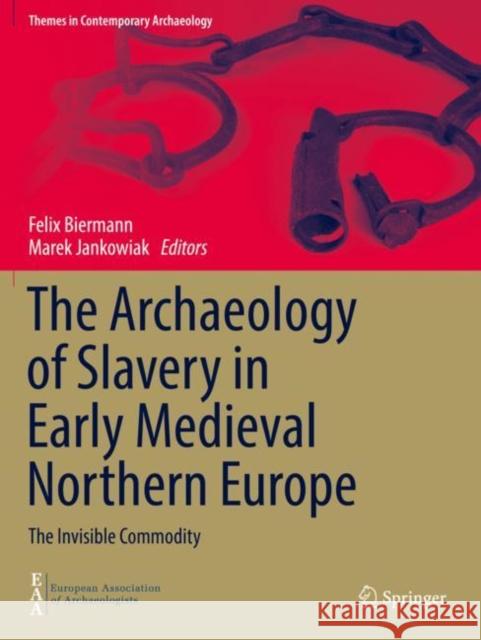
Felix Biermann; Marek Jankowiak
The Archaeology of Slavery in Early Medieval Northern Europe: The Invisible Commodity Felix Biermann Marek Jankowiak 9783030732936 Springer - książkaWidoczna okładka, to zdjęcie poglądowe, a rzeczywista szata graficzna może różnić się od prezentowanej.

The Archaeology of Slavery in Early Medieval Northern Europe: The Invisible Commodity

ISBN-13: 9783030732936 / Angielski / Miękka / 2022 / 191 str.

Felix Biermann; Marek Jankowiak
cena 645,58 zł
(netto: 614,84 VAT:  5%)

Najniższa cena z 30 dni: 578,30 zł
Termin realizacji zamówienia:
ok. 22 dni roboczych
Bez gwarancji dostawy przed świętami

Darmowa dostawa!
inne wydania

This volume is the first comprehensive study of the material imprint of slavery in early medieval Europe. While written sources attest to the ubiquity of slavery and slave trade in early medieval British Isles, Scandinavia and Slavic lands, it is still difficult to find material traces of this reality, other than the hundreds of thousands of Islamic coins paid in exchange for the northern European slaves. This volume offers the first structured reflection on how to bridge this gap. It reviews the types of material evidence that can be associated with the institution of slavery and the slave trade in early medieval northern Europe, from individual objects (such as e.g. shackles) to more comprehensive landscape approaches.The book is divided into four sections. The first presents the analytical tools developed in Africa and prehistoric Europe to identify and describe social phenomena associated with slavery and the slave trade. The following three section review the three main cultural zones of early medieval northern Europe: the British Isles, Scandinavia, and Slavic central Europe. The contributions offer methodological reflections on the concept of the archaeology of slavery. They emphasize that the material record, by its nature, admits multiple interpretations. More broadly, this book comes at a time when the history of slavery is being integrated into academic syllabi in most western countries. The collection of studies contributes to a more nuanced perspective on this important and controversial topic. This volume appeals to multiple audiences interested in comparative and global studies of slavery, and will constitute the point of reference for future debates.

This volume is the first comprehensive study of the material imprint of slavery in early medieval Europe. While written sources attest to the ubiquity of slavery and slave trade in early medieval British Isles, Scandinavia and Slavic lands, it is still difficult to find material traces of this reality, other than the hundreds of thousands of Islamic coins paid in exchange for the northern European slaves. This volume offers the first structured reflection on how to bridge this gap. It reviews the types of material evidence that can be associated with the institution of slavery and the slave trade in early medieval northern Europe, from individual objects (such as e.g. shackles) to more comprehensive landscape approaches.



The book is divided into four sections. The first presents the analytical tools developed in Africa and prehistoric Europe to identify and describe social phenomena associated with slavery and the slave trade. The following three section review the three main cultural zones of early medieval northern Europe: the British Isles, Scandinavia, and Slavic central Europe. The contributions offer methodological reflections on the concept of the archaeology of slavery. They emphasize that the material record, by its nature, admits multiple interpretations. More broadly, this book comes at a time when the history of slavery is being integrated into academic syllabi in most western countries. The collection of studies contributes to a more nuanced perspective on this important and controversial topic. This volume appeals to multiple audiences interested in comparative and global studies of slavery, and will constitute the point of reference for future debates.

Kategorie:
Nauka, Historia
Kategorie BISAC:
Social Science > Archaeology
Wydawca:
Springer
Seria wydawnicza:
Themes in Contemporary Archaeology
Język:
Angielski
ISBN-13:
9783030732936
Rok wydania:
2022
Dostępne języki:
Numer serii:
000793569
Ilość stron:
191
Oprawa:
Miękka

"In this thought-provoking volume, Felix Biermann and Marek Jankowiak bring together contributions from a number of scholars who are currently engaged in the study of early-medieval slaving practices. ... the volume's contributions represent a valuable resource ... . The volume will surely be of key interest to a range of scholars, and essential reading for medievalists and other researchers seeking to explore slavery in both regional and global contexts." (Ben Raffield, Medieval Archaeology, Vol. 66 (2), December, 2022)

Introduction: An ‘invisible commodity’? Marek Jankowiak and Felix Biermann

Part One: Comparative perspectives

Chapter 1. The arrogation of slavery: Prehistory, archaeology, and pre-theoretical commitments concerning people as property; Timothy Taylor

Chapter 2. Recent approaches to the archaeological investigation of slavery in Africa; Paul Lane

Part Two: The British Isles

Chapter 3. To tread the paths, and traverse the moors: Investigating slavery in early medieval western Britain; Katie Hemer

Chapter 4. The archaeology of slave trading in Viking Age Britain and Ireland: A methodological approach; Janel Fontaine

Part Three: Scandinavia

Chapter 5. The norm and the subaltern. Identifying slaves in an early medieval Scandinavian society; Anna Kjellström

Chapter 6. Legacy of the disowned. Finding ambátts in high medieval Scania and Östergötland through ceramic production; Mats Roslund

Chapter 7. Bonded people. Making thralls visible in Viking-Age and early medieval Sweden; Torun Zachrisson

Part Four: Central Europe

Chapter 8. The slave trade in Great Moravia: reality or fiction?; Jiří Macháček

Chapter 9. Slavery and slave trade in early medieval Czech duchy: Archaeology of slavery or slavery of archaeology?; Ivo Štefan

Chapter 10. Archaeological evidence for slavery among the early medieval north-western Slavs; Felix Biermann

Chapter 11.Tracing the Saqaliba: slave trade and the archaeology of tenth-century northern Europe; Marek Jankowiak

Index

Felix Biermann is an Associate Professor of early medieval archaeology at the University of Szczecin, Poland. His research interests include the archaeology and history of the Baltic Sea area, Middle and Eastern Europe from c. 500-1500, with special emphasis on social and economic structures, interregional contacts and the archaeology of fortified settlements.


Marek Jankowiak is an Associate Professor of Byzantine history at the University of Oxford. In addition to his interests in Byzantine social and economic history, he works on the slave trade system that connected the Islamic world and northern Europe in the ninth and tenth centuries. He was the co-investigator of the AHRC project “Dirhams for Slaves” and co-edited “Viking-Age Trade: Silver, Slaves and Gotland” (2020).

This volume is the first comprehensive study of the material imprint of slavery in early medieval Europe. While written sources attest to the ubiquity of slavery and slave trade in early medieval British Isles, Scandinavia and Slavic lands, it is still difficult to find material traces of this reality, other than the hundreds of thousands of Islamic coins paid in exchange for the northern European slaves. This volume offers the first structured reflection on how to bridge this gap. It reviews the types of material evidence that can be associated with the institution of slavery and the slave trade in early medieval northern Europe, from individual objects (such as e.g. shackles) to more comprehensive landscape approaches.


The book is divided into four sections. The first presents the analytical tools developed in Africa and prehistoric Europe to identify and describe social phenomena associated with slavery and the slave trade. The following three section review the three main cultural zones of early medieval northern Europe: the British Isles, Scandinavia, and Slavic central Europe. The contributions offer methodological reflections on the concept of the archaeology of slavery. They emphasize that the material record, by its nature, admits multiple interpretations. More broadly, this book comes at a time when the history of slavery is being integrated into academic syllabi in most western countries. The collection of studies contributes to a more nuanced perspective on this important and controversial topic. This volume appeals to multiple audiences interested in comparative and global studies of slavery, and will constitute the point of reference for future debates.


Udostępnij

Facebook - konto krainaksiazek.pl


Opinie o Krainaksiazek.pl na Opineo.pl

Partner Mybenefit

Krainaksiazek.pl w programie rzetelna firma Krainaksiaze.pl - płatności przez paypal

Czytaj nas na:

Facebook - krainaksiazek.pl
  • książki na zamówienie
  • granty
  • książka na prezent
  • kontakt
  • pomoc
  • opinie
  • regulamin
  • polityka prywatności

Zobacz:

  • Księgarnia czeska

  • Wydawnictwo Książkowe Klimaty

1997-2025 DolnySlask.com Agencja Internetowa

© 1997-2022 krainaksiazek.pl
     
KONTAKT | REGULAMIN | POLITYKA PRYWATNOŚCI | USTAWIENIA PRYWATNOŚCI
Zobacz: Księgarnia Czeska | Wydawnictwo Książkowe Klimaty | Mapa strony | Lista autorów
KrainaKsiazek.PL - Księgarnia Internetowa

Polityka prywatnosci - link
Krainaksiazek.pl - płatnośc Przelewy24
Przechowalnia Przechowalnia




