• Wyszukiwanie zaawansowane
  • Kategorie
  • Kategorie BISAC
  • Książki na zamówienie
  • Promocje
  • Granty
  • Książka na prezent
  • Opinie
  • Pomoc
  • Załóż konto
  • Zaloguj się

The Ambedkar–Gandhi Debate: On Identity, Community and Justice » książka


zaloguj się | załóż konto
Logo Krainaksiazek.pl

koszyk

konto

szukaj
topmenu
Księgarnia internetowa
Szukaj
Książki na zamówienie
Promocje
Granty
Książka na prezent
Moje konto
Pomoc
 
 
Wyszukiwanie zaawansowane
Pusty koszyk
Bezpłatna dostawa dla zamówień powyżej 20 złBezpłatna dostawa dla zamówień powyżej 20 zł

Kategorie główne

• Nauka
 [2946912]
• Literatura piękna
 [1852311]

  więcej...
• Turystyka
 [71421]
• Informatyka
 [150889]
• Komiksy
 [35717]
• Encyklopedie
 [23177]
• Dziecięca
 [617324]
• Hobby
 [138808]
• AudioBooki
 [1671]
• Literatura faktu
 [228371]
• Muzyka CD
 [400]
• Słowniki
 [2841]
• Inne
 [445428]
• Kalendarze
 [1545]
• Podręczniki
 [166819]
• Poradniki
 [480180]
• Religia
 [510412]
• Czasopisma
 [525]
• Sport
 [61271]
• Sztuka
 [242929]
• CD, DVD, Video
 [3371]
• Technologie
 [219258]
• Zdrowie
 [100961]
• Książkowe Klimaty
 [124]
• Zabawki
 [2341]
• Puzzle, gry
 [3766]
• Literatura w języku ukraińskim
 [255]
• Art. papiernicze i szkolne
 [7810]
Kategorie szczegółowe BISAC

The Ambedkar–Gandhi Debate: On Identity, Community and Justice

ISBN-13: 9789811686887 / Angielski / Miękka / 2023 / 266 str.
Bindu Puri
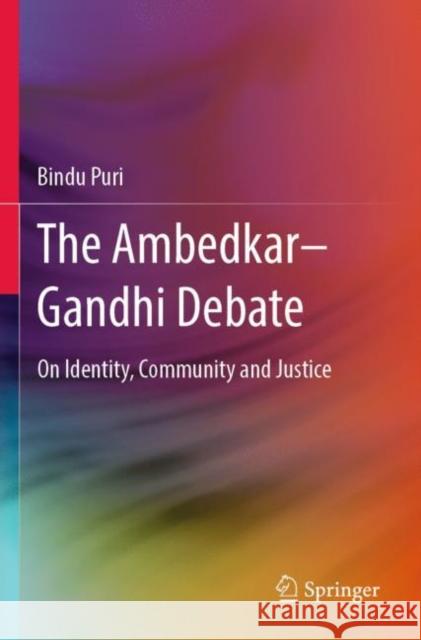
The Ambedkar–Gandhi Debate: On Identity, Community and Justice Bindu Puri 9789811686887 Springer - książkaWidoczna okładka, to zdjęcie poglądowe, a rzeczywista szata graficzna może różnić się od prezentowanej.

The Ambedkar–Gandhi Debate: On Identity, Community and Justice

ISBN-13: 9789811686887 / Angielski / Miękka / 2023 / 266 str.

Bindu Puri
cena 441,75
(netto: 420,71 VAT:  5%)

Najniższa cena z 30 dni: 424,07
Termin realizacji zamówienia:
ok. 22 dni roboczych
Dostawa w 2026 r.

Darmowa dostawa!
inne wydania

This book reconstructs the philosophical issues informing the debate between the makers of modern India: Ambedkar and Gandhi. At one level, this debate was about a set of different but interconnected issues: caste and social hierarchies, untouchability, Hinduism, conversion, temple entry, and political separatism. The introduction to this book provides a brief overview of the engagements and conflicts in Gandhi and Ambedkar's central arguments. However, at another level, this book argues that the debate can be philosophically re-interpreted as raising their differences on the following issues:The nature of the self,The relationship between the individual self and the community,The appropriate relationship between the constitutive encumbrances of the self and a conception of justice,The relationship between memory, tradition, and self-identity.Ambedkar and Gandhi’s contrary conceptions of the self, history,itihaas, community and justice unpack incommensurable world views. These can be properly articulated only as very different answers to questions about the relationship between the present and the past. This book raises these questions and also establishes the link between the Ambedkar--Gandhi debate in the early 20th century and its re-interpretation as it resonates in the imagination and writing of marginalized social groups in the present times.

This book reconstructs the philosophical issues informing the debate between the makers of modern India: Ambedkar and Gandhi. At one level, this debate was about a set of different but interconnected issues: caste and social hierarchies, untouchability, Hinduism, conversion, temple entry, and political separatism. The introduction to this book provides a brief overview of the engagements and conflicts in Gandhi and Ambedkar's central arguments. However, at another level, this book argues that the debate can be philosophically re-interpreted as raising their differences on the following issues: 

  • The nature of the self,
  • The relationship between the individual self and the community,
  • The appropriate relationship between the constitutive encumbrances of the self and a conception of justice,
  • The relationship between memory, tradition, and self-identity.
  Ambedkar and Gandhi’s contrary conceptions of the self, history,itihaas, community and justice unpack incommensurable world views. These can be properly articulated only as very different answers to questions about the relationship between the present and the past. This book raises these questions and also establishes the link between the Ambedkar--Gandhi debate in the early 20th century and its re-interpretation as it resonates in the imagination and writing of marginalized social groups in the present times.

Kategorie:
Nauka, Filozofia
Kategorie BISAC:
Philosophy > Filozofia wschodu
History > Asia - South - General
Social Science > Sociology of Religion
Wydawca:
Springer
Język:
Angielski
ISBN-13:
9789811686887
Rok wydania:
2023
Dostępne języki:
Ilość stron:
266
Waga:
0.44 kg
Wymiary:
23.5 x 15.5
Oprawa:
Miękka
Dodatkowe informacje:
Wydanie ilustrowane

"The book is a must-read for encapsulating the deeper philosophical issues informing the debate between Ambedkar and Gandhi. The author's long-term familiarity with Gandhi-Ambedkar scholarship ... has gained fresh new ground evident in the deep, insightful, and critical reflection on the contradictions involving the two great leaders on the universal ideas of freedom, autonomy and justice. The book will be of value to those who wish to unravel Gandhi-Ambedkar scholarship beyond the conventional polemics and hagiography surrounding the two scholars." (Sanjeev Kumar and Ratika Gaur, Gandhi Marg Quarterly, Vol. 44 (4), 2023)

1.  Chapter 1. Introduction: A Brief History of the Gandhi--Ambedkar Debate.- Chapter 2. Memory, Humiliation, Oppression: Untouchability and Dalit Self-Identity.- Chapter 3. The Individual and the Religious Community: On Religion and Conversion.-  Chapter 4. Individual and Collective Identity: Confrontations on Caste and Varna.- Chapter 5. The Politics of an Encumbered Self: Ambedkar and Gandhi on Separate Electorates.- Chapter 6. Debating Guru: Owners and Authors.- Chapter 7. Conclusion: Gandhi and Ambedkar: Philosophical divergences and convergences.


Bindu Puri is a Professor of contemporary Indian Philosophy at the Centre for Philosophy, School of Social Sciences, Jawaharlal Nehru University. Her main interests in philosophy are in the areas of contemporary Indian philosophy and moral and political philosophy. She has been seriously engaged with the philosophy of M.K Gandhi and her first monograph was on Gandhi and the Moral Life (2004).She has also been keenly interested in the philosophical issues involved in Gandhi’s debates with Savarkar, Ambedkar and Tagore.Her monograph The Tagore-Gandhi Debate: On Matters of Truth and Untruth ( Springer,2015)was published in the series: Sophia Studies in Cross-cultural Philosophy of Traditions and Cultures. She has edited seven volumes and has written over 50 papers in edited anthologies and philosophical and interdisciplinary journals including Sophia, Philosophia and the Journal of the Indian Council of Philosophical Research. She has presented over 160 papers and lectures at national and International forums. Professor Puri delivered the prestigious annual ‘M K Gandhi lecture on Peace and the Humanities’ 2017 for the Mahatma Gandhi Peace Council Of Ottawa, Canada and the Johnson and Hastings lectures at the University of Mount Allison Canada for the same year.

This book reconstructs the philosophical issues informing the debate between the makers of modern India: Ambedkar and Gandhi. At one level, this debate was about a set of different but interconnected issues: caste and social hierarchies, untouchability, Hinduism, conversion, temple entry, and political separatism. The introduction to this book provides a brief overview of the engagements and conflicts in Gandhi and Ambedkar's central arguments. However, at another level, this book argues that the debate can be philosophically re-interpreted as raising their differences on the following issues:


  • The nature of the self,
  • The relationship between the individual self and the community,
  • The appropriate relationship between the constitutive encumbrances of the self and a conception of justice,
  • The relationship between memory, tradition, and self-identity.

 

Ambedkar and Gandhi’s contrary conceptions of the self, history,itihaas, community and justice unpack incommensurable world views. These can be properly articulated only as very different answers to questions about the relationship between the present and the past. This book raises these questions and also establishes the link between the Ambedkar--Gandhi debate in the early 20th century and its re-interpretation as it resonates in the imagination and writing of marginalized social groups in the present times.


Udostępnij

Facebook - konto krainaksiazek.pl


Opinie o Krainaksiazek.pl na Opineo.pl

Partner Mybenefit

Krainaksiazek.pl w programie rzetelna firma Krainaksiaze.pl - płatności przez paypal

Czytaj nas na:

Facebook - krainaksiazek.pl
  • książki na zamówienie
  • granty
  • książka na prezent
  • kontakt
  • pomoc
  • opinie
  • regulamin
  • polityka prywatności

Zobacz:

  • Księgarnia czeska

  • Wydawnictwo Książkowe Klimaty

1997-2025 DolnySlask.com Agencja Internetowa

© 1997-2022 krainaksiazek.pl
     
KONTAKT | REGULAMIN | POLITYKA PRYWATNOŚCI | USTAWIENIA PRYWATNOŚCI
Zobacz: Księgarnia Czeska | Wydawnictwo Książkowe Klimaty | Mapa strony | Lista autorów
KrainaKsiazek.PL - Księgarnia Internetowa

Polityka prywatnosci - link
Krainaksiazek.pl - płatnośc Przelewy24
Przechowalnia Przechowalnia





