Chapter 1 Transcultural Diversity and Health Care: Individual and Organizational Larry Purnell Professor Emeritus, Faculty University of Delaware Eric Fenkl Professor, Nicole Wertheim College of Nursing and Health Sciences, Florida International University
Chapter 2 The Purnell Model and Theory for Cultural Competence Larry Purnell
Chapter 3 Individual Competence and Evidence-Based practice (with inclusion of the International Standards) Larry Purnell Susan Salmond Executive Vice Dean and Professor, Rutgers University, Jew Jersey
Chapter 4 Organizational Cultural Competence Stephen Marrone Professor, Long Island University, New York.
Chapter 5 Perspectives on Nursing in a Global Context Linda Baumann University of Wisconsin, Madison Laurie Hartjes Educational Design Consultant, Lodestone Safety International, Beverly, Massachusetts
Part II. Aggregate Data for Cultural-Specific Groups
Chapter 6 People of African American Heritage Josepha Campinha-Bacote Transcultural Healthcare Consultant, Transcultural C.A.R. E. Associates, Blue Ash, Ohio
Chapter 7 The Amish Susan Hassenau Professor, Madonna University, Michigan
Chapter 8 People of Appalachian Heritage Larry Purnell Kathleen Hunttlinger Associate Director, Graduate Programs, New Mexico State University, Las Cruces, New Mexico
Chapter 9 People of Arab Heritage Anahid Dervartian Kulwicki Dean, Lebanese American University, Lebanon
Chapter 10 People of Chinese Heritage Hsiu-Min-Tsai Dean Academic Affairs and Associate Professor, Chang Gung University or Science and Technology, Tao-Yuan, Taiwan
Chapter 11 People of Cuban Heritage Larry Purnell + another author to be confirmed
Chapter 12 People of European American Heritage Larry Purnell
Chapter 13 People of Filipino Heritage Corazon Munoz Professor Emerita Adjunct Professor, Capitol University, Ohio
Chapter 14 People of German Heritage Eric Fenkl
Chapter 15 People of Guatemalan Heritage Tina Ellis Nursing Instructor, Florida Gulf Coast University, Fort Myers, Florida
Chapter 16 People of Haitian Heritage Jessie Colin Director PhD Program, Barry University, Ft. Lauderdale, Florida
Chapter 17 People of Hindu Heritage Jaya Jambanathan Professor, College of Nursing, Director Research and Evaluation and Associate Dean, University Wisconsin, Oshkosh, Wisconsin
Chapter 18 People of Hmong Heritage Larry Purnell Richard Adair Physician University Minnesota
Chapter 19 People of Japanese Heritage Miso Ito Professor, Professor, Kawasaki University of Medical Welfare, Okayama, Japan Keiko Hattori Assistant Professor, Kawasaki University of Medical Welfare, Okayama, Japan
Chapter 20 People of Jewish Heritage Janice Selekman Professor Emeritus, University of Delaware
Chapter 21 People of Korean Heritage Eun-Ok Im Associate Dean for Research, Duke University, Chapel Hill, North Carolina
Chapter 22 People of Mexican Heritage Cecelia A. Zamarripa University of Pittsburg Medical Center, Open Heart surgery coordinator
Chapter 23 People of Polish Heritage Larry Purnell + another author to be confirmed
Chapter 24 People of Puerto Rican Heritage Larry Purnell + another author to be confirmed
Chapter 25 People of Russian Heritage Karen Aorian Director of Research University of Florida College of Nursing, Orlando, Florida Galina Khatutsky Research Analyst, RTI International, Waltham, Massachusetts.
Glossary
Dr. Larry D. Purnell is Emeritus Professor from the University of Delaware where he coordinated the graduate programs in nursing and healthcare administration and taught culture. His Model, the Purnell Model for Cultural Competence has been translated into Arabic, Czech, Flemish, Korean, French, German, Japanese, Persian, Portuguese, Spanish, and Turkish. His textbook on Transcultural Health Care won the Brandon Hill and American Journal of Nursing Book Awards. Dr. Purnell has over 100 refereed journal publications, 100 book chapters, and 14 textbooks, including updated editions. He has made presentations throughout the United States as well as in Australia, Colombia, Costa Rica, England, Denmark, Italy, Korea, Panama, Russia, Scotland, Spain, and Turkey. He is the U.S. Representative to the European Union’s Commission on Intercultural Communication resulting from the Salamanca, Sorbonne, Bologna, and WHO Declarations. He has been on the International Editorial Board, for six journals. Dr. Purnell is a Fellow in the American Academy of Nursing, a Transcultural Nursing Scholar, Luther Christman Fellow, and is on the Rosa Parks Wall of Fame for Teaching Tolerance.
Dr. Eric A. Fenkl, an Associate Professor of Nursing, received his PhD in Nursing from the University of Wisconsin - Milwaukee. Dr. Fenkl’s research interests include the cultural aspects of HIV/HPV prevention and related disease among LGBT populations with a particular emphasis on MSM and ethnically diverse populations. Dr. Fenkl has been the Co-PI on two large grants from the Center for Substance Abuse Prevention, SAMHSA. One to develop a program focusing on HIV/STD and substance abuse prevention for minority LGBT students on campus and a second one to implement a program for outreach in the greater Miami metropolitan area specifically for at-risk minority MSM. Dr. Fenkl has presented at numerous national and international conferences and has published widely in peer-reviewed journals globally. Dr. Fenkl's teaching is focused on the facilitation of cultural competence in advanced practice nursing.
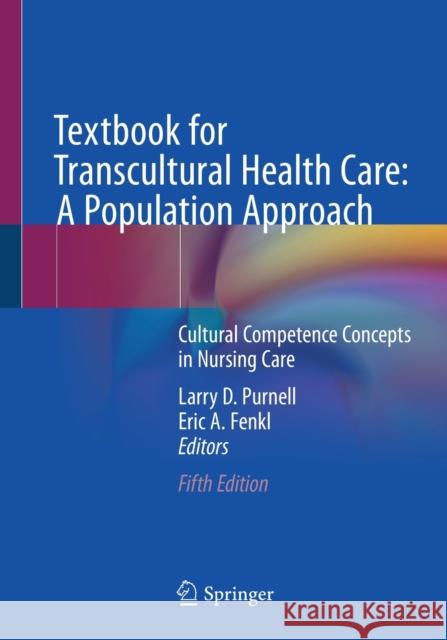
This textbook is the new edition of Purnell's famous Transcultural Health Care, based on the Purnell twelve-step model and theory of cultural competence. This textbook, an extended version of the recently published Handbook, focuses on specific populations and provides the most recent research and evidence in the field. This new updated edition discusses individual competences and evidence-based practices as well as international standards, organizational cultural competence, and perspectives on health care in a global context. The individual chapters present selected populations, offering a balance of collectivistic and individualistic cultures. Featuring a uniquely comprehensive assessment guide, it is the only book that provides a complete profile of a population group across clinical practice settings. Further, it includes a personal understanding of the traditions and customs of society, offering all health professionals a unique perspective on the implications for patient care.