• Wyszukiwanie zaawansowane
  • Kategorie
  • Kategorie BISAC
  • Książki na zamówienie
  • Promocje
  • Granty
  • Książka na prezent
  • Opinie
  • Pomoc
  • Załóż konto
  • Zaloguj się

Tectonic Evolution of the Moroccan High Atlas: A Paleomagnetic Perspective: Magnetic Techniques (Anisotropy of Magnetic Susceptibility and Paleomagnetism) Applied to the Understanding of the Evolution » książka


zaloguj się | załóż konto
Logo Krainaksiazek.pl

koszyk

konto

szukaj
topmenu
Księgarnia internetowa
Szukaj
Książki na zamówienie
Promocje
Granty
Książka na prezent
Moje konto
Pomoc
 
 
Wyszukiwanie zaawansowane
Pusty koszyk
Bezpłatna dostawa dla zamówień powyżej 20 złBezpłatna dostawa dla zamówień powyżej 20 zł

Kategorie główne

• Nauka
 [2946600]
• Literatura piękna
 [1856966]

  więcej...
• Turystyka
 [72221]
• Informatyka
 [151456]
• Komiksy
 [35826]
• Encyklopedie
 [23190]
• Dziecięca
 [619653]
• Hobby
 [140543]
• AudioBooki
 [1577]
• Literatura faktu
 [228355]
• Muzyka CD
 [410]
• Słowniki
 [2874]
• Inne
 [445822]
• Kalendarze
 [1744]
• Podręczniki
 [167141]
• Poradniki
 [482898]
• Religia
 [510455]
• Czasopisma
 [526]
• Sport
 [61590]
• Sztuka
 [243598]
• CD, DVD, Video
 [3423]
• Technologie
 [219201]
• Zdrowie
 [101638]
• Książkowe Klimaty
 [124]
• Zabawki
 [2473]
• Puzzle, gry
 [3898]
• Literatura w języku ukraińskim
 [254]
• Art. papiernicze i szkolne
 [8170]
Kategorie szczegółowe BISAC

Tectonic Evolution of the Moroccan High Atlas: A Paleomagnetic Perspective: Magnetic Techniques (Anisotropy of Magnetic Susceptibility and Paleomagnetism) Applied to the Understanding of the Evolution

ISBN-13: 9783031166921 / Angielski / Twarda / 2023 / 587 str.
Pablo Calvín; Antonio M. Casas-Sainz; Teresa Román-Berdiel
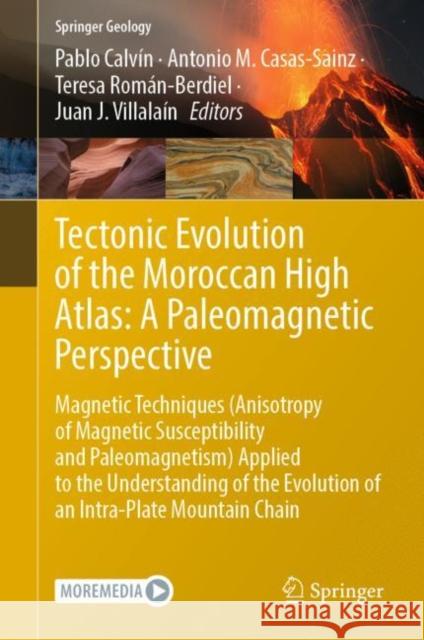
Tectonic Evolution of the Moroccan High Atlas: A Paleomagnetic Perspective: Magnetic Techniques (Anisotropy of Magnetic Susceptibility and Paleomagnetism) Applied to the Understanding of the Evolution Pablo Calv?n Antonio M. Casas-Sainz Teresa Rom?n-Berdiel 9783031166921 Springer - książkaWidoczna okładka, to zdjęcie poglądowe, a rzeczywista szata graficzna może różnić się od prezentowanej.

Tectonic Evolution of the Moroccan High Atlas: A Paleomagnetic Perspective: Magnetic Techniques (Anisotropy of Magnetic Susceptibility and Paleomagnetism) Applied to the Understanding of the Evolution

ISBN-13: 9783031166921 / Angielski / Twarda / 2023 / 587 str.

Pablo Calvín; Antonio M. Casas-Sainz; Teresa Román-Berdiel
cena 726,29 zł
(netto: 691,70 VAT:  5%)

Najniższa cena z 30 dni: 693,97 zł
Termin realizacji zamówienia:
ok. 22 dni roboczych
Bez gwarancji dostawy przed świętami

Darmowa dostawa!
inne wydania

This book presents a significant amount of structural, paleomagnetic and magnetic fabric data in the Central High Atlas (Morocco). The authors thoroughly described and analyzed the present-day structure of this intraplate chain through 22 of cross-sections, potential field data analysis and 3D reconstruction. In addition, the authors propose a palinspastic reconstruction of the structure of the basin at 100 Ma (i.e., post-extension and pre-compression) to finally evaluate its Mesozoic and Cenozoic geodynamic evolution. This books presents (1) a unique three-dimensional model at the chain scale, (2) an analysis of the ca. 100 Ma remagnetization, to perform palinspastic restorations of most representative structures, (3) as well as the interpretation of the magnetic fabrics in order to unravel the tectonic or deformation setting that the rocks underwent in different parts of the basin.This book is of interest to structural geologists in Northern Africa, the Mediterranean and Iberia, as well as to those interested in inverted intraplate basins and paleomagnetists from around the planet. Also, this book is intended to help students to understand better the geological evolution of the Atlas and therefore Morocco and surrounding areas.


This book presents a significant amount of structural, paleomagnetic and magnetic fabric data in the Central High Atlas (Morocco). The authors thoroughly described and analyzed the present-day structure of this intraplate chain through 22 of cross-sections, potential field data analysis and 3D reconstruction. In addition, the authors propose a palinspastic reconstruction of the structure of the basin at 100 Ma (i.e., post-extension and pre-compression) to finally evaluate its Mesozoic and Cenozoic geodynamic evolution. This books presents (1) a unique three-dimensional model at the chain scale, (2) an analysis of the ca. 100 Ma remagnetization, to perform palinspastic restorations of most representative structures, (3) as well as the interpretation of the magnetic fabrics in order to unravel the tectonic or deformation setting that the rocks underwent in different parts of the basin. This book is of interest to structural geologists in Northern Africa, the Mediterranean and Iberia, as well as to those interested in inverted intraplate basins and paleomagnetists from around the planet. Also, this book is intended to help students to understand better the geological evolution of the Atlas and therefore Morocco and surrounding areas.

Kategorie:
Nauka, Geografia
Kategorie BISAC:
Science > Earth Sciences - Geology
Science > Earth Sciences - Sedimentology & Stratigraphy
Science > Geofizyka
Wydawca:
Springer
Seria wydawnicza:
Springer Geology
Język:
Angielski
ISBN-13:
9783031166921
Rok wydania:
2023
Dostępne języki:
Numer serii:
000436662
Ilość stron:
587
Oprawa:
Twarda

Chapter 1. The geological setting of the Moroccan High Atlas and its plate tectonics context.

Moussaid, B., El-Ouardi, H., Casas-Sainz A.M., Pocoví, A., Román-Berdiel, T., Oliva-Urcia, B., Ruiz-
Martínez, V.C.
1.1. INTRODUCTION
1.2. GEOGRAPHICAL AND GEOLOGICAL SETTING
1.3. THE HIGH ATLAS IN ITS GEOLOGICAL CONTEXT: SURROUNDING GEOLOGICAL
UNITS
1.3.1. The Sahara domain
1.3.2. The Anti-Atlas
1.3.3. The Meseta domain
1.3.4. The Rif Chain
1.4. GEOLOGICAL FRAME OF THE MOROCCAN HIGH ATLAS
1.4.1. The Atlantic High Atlas
1.4.2. The Marrakech High Atlas
1.4.3. The Central High Atlas (CHA)
1.4.4. The Eastern High Atlas
1.5. GEODYNAMIC FRAME OF THE HIGH ATLAS AND EVOLUTION OF THE APWP
1.6. IMPLICATIONS OF THE MAIN GEODYNAMIC EVENTS IN NORTH AFRICA IN ATLASIC
GEOLOGY
1.6.1. Permian-Triassic stage
1.6.2. First rifting event: Late Triassic to Early Jurassic
1.6.3. Second rifting event: Late Liassic to Early Dogger (180Ma)
1.6.4. Bajocian-Late Jurassic stage
1.6.5. Early Cretaceous
1.6.6. Late Cretaceous-Cenozoic inversion
1.7. MAGMATIC EVENTS / HYDROTHERMALISM AND MINERALIZATION
1.7.1. Triassic: the CAMP event
1.7.2. Jurassic – Cretaceous event
1.7.3. Cenozoic event
1.7.4. Hydrothermalism and mineralization
1.8. STRATIGRAPHIC FRAME OF THE CENTRAL HIGH ATLAS
1.8.1. Triassic
1.8.2. Jurassic
1.8.3. Upper Jurassic-Lower Cretaceous
1.8.4. Lower Cretaceous
1.8.5. Post-Turonian Cretaceous deposits
1.8.6. Cenozoic deposits
1.9. STRUCTURING OF THE MOROCCAN HIGH ATLAS
1.9.1. Extensional structures
1.9.2. Post-basinal, pre-inversion tectonic structures
1.9.3. Alpine compressional structures
1.9.4. Crustal roots for Atlasic structures: the geophysical background
1.9.5. Recent evolution of the Atlas belt: topographic features
REFERENCES
FIGURE CAPTIONS
Chapter 2. Structure of the Central High Atlas (Morocco). Constraints from potential field data
and 3D models.
Casas-Sainz, A.M., Santolaria, P., Mochales, T., Pocoví, A., Izquierdo, E., El-Ouardi, H., Moussaid, B.,
Manar, A., Ruiz-Martínez, V.C., Marcén, M., Torres-López, S., Gil-Imaz, A., Román-Berdiel, T., Oliva-
Urcia, B., Calvín, P.
2.1. MAIN STRUCTURAL FEATURES
2.1.1. Southern Atlas fold-and-thrust belt (Zone 1)
1. Toundoute nappe (Amejgag syncline-Tisguine syncline)
2. Skoura culmination: basement thrusts associated with the Toundoute nappe (Asaka Kantoula
thrust and others
3. Boumalne-Dadès structures
4. Central thrust system (Aït Ourena-Tamayoust-Jbel Aderbat-Jbel Badoust)
5. Tadighoust anticline
6. Amellago recumbent fold system
7. Jbel Hamdoun thrust and related structures
2.1.2. Northern Atlas thrust system (Zone 2)
8. West of the Middle Atlas intersection
9. East of the Middle Atlas intersection
2.1.3. Western sector: the large interference synclines and basement-involved folds (Demnate area,
Zone 3)
10. Aït-Attab syncline
11. Guettioua syncline
12. Iouaridène, Tizgui and Tifni synclines (and intervening anticlines)
13. Jbel Til syncline
14. Jbel Rat syncline
15. Amezri syncline
2.1.4. Central sector (1): thrusts and diapiric anticlines (La Cathédrale area, Zone 4)
16. Ouaouizaght syncline
17. Taguelft syncline
18. M’Goun anticline (Tameksout-Timoutiguine-Aït Baha-Toumliline)
19. Wagoulzat anticline
20. Tabant syncline
21. Jbel Azourki anticline and Zawyat Ahansal zone
22. Jbel Tilicha anticline
23. Jbel Tabaghast thrust
24. La Cathédrale thrust
25. Aït-Mazigh anticline and western prolongation of La Cathédrale thrust
26. Talmest-Tazoult anticline
27. Tiffouine-Tagertetouch monocline
28. Talmest interference structure
29. Addendoum anticline
30. Tilouguit monocline
2.1.5. Central sector (2): thrusts, anticlines and diapirs (Imilchil area, Zone 5)
31. Tizi’n’Isly syncline and thrust
32. Chekret anticline and Ikassene syncline
33. Tasraft anticline
34. Anergui diapir
35. Tassent anticline
36. Lacs syncline
37. Ikkou anticline
38. Tissila anticline and Ikkou syncline
39. Tadaghmamt anticline
40. Timedouine diapir
41. Moussa diapir
42. Isselfène diapir and Taltfraout anticline/diapir
43. Msmrir diapir and syncline
44. Toumliline anticline and diapir
45. Platform (cleavage-domain) area between Timedouine and Toumliline
2.1.6. Eastern sector (1): cleavage-related linear structures (Tounfite area, Zone 6)
46. Jbel Amalou anticline
47. Tounfite syncline
48. Jbel Masker anticline
49. Tirrhist gabbro and associated structures
50. Almou syncline
51. Jbel Adderdoum thrust
52. Taribante syncline
53. Jbel Tazreft thrust
54. Ameksou anticline
55. Assoul syncline
56. Jbel Baddou thrust
2.1.7. Eastern sector (2): vergence-switching ridges (Midelt-Rich area, Ziz river, Zone 7)
57. Jbel Aouja (and Aït Arouz) anticline
58. Sidi Hamza anticline
59. Foum Tilich thrust
60. Kerrando syncline
61. Bou Hamid anticline/thrust
62. Gourrama syncline
63. Foum Zabel anticline/thrust
64. Aghbarou syncline
2.2. SERIATED CROSS SECTIONS
2.3. INPUT FROM MODELING OF POTENTIAL FIELD DATA
2.3.1. Petrophysical properties
2.3.1.1 Magnetic susceptibility and density
2.3.1.2 Magnetic remanence and Koenigsberger ratio
2.3.2 Magnetic maps processing
2.3.2.1. Reduction to Pole and Reduction to Equator
2.3.2.2. Filtering: Derivatives constraints
2.3.2.3. 2.5D modelling of magnetic and gravimetric anomalies
2.3.3. Results
2.3.3.1. Interpretation of the corrected magnetic field map of IGRF (ICMT), Reduced to Pole
(ICMTRTP) and Reduced to Equator (ICMTRTE)
2.3.3.2. Interpretation of the Vertical and horizontal Derivatives
2.3.3.3. Bouguer anomaly
2.3.4. The geophysical anomalies in their relation to geological features and evolution
2.3.5. 2.5D modelling. Configuration and interpretation of magnetic and gravimetric models
2.3.5.1. Profile 2, Tagoudite
2.3.5.2. Profile 8, Anergui E
2.3.5.3. Profile 12, Ouaouitzaght
2.4. CONTRIBUTIONS OF 3-D RECONSTRUCTIONS TO THE GEOMETRY OF THE CENTRAL
HIGH ATLAS
2.4.1. Methods and workflow
2.4.1.1 Defining the model area and resolution
2.4.1.2. Modelled stratigraphic pile
2.4.1.3. Input data and data compilation in a 3D environment
2.4.1.4. Verifying cross-sections in a 3D environment
2.4.1.5. Computing the model
1. Major bounding thrust
2. Faults
3. Diapirs
4. Diapir-fault systems
5. Compiling structural surfaces
6. Stratigraphic horizons
2.4.2. 3D structural model of the Central High Atlas
2.4.2.1. Southern Atlas fold-and-thrust belt (Zone 1)
2.4.2.2. Northern Atlas thrust system (Zone 2)
2.4.2.3. Western sector: the large interference synclines and basement-involved folds (Demnate
area, Zone 3)
2.4.2.4. Central sector (1): thrusts and diapiric anticlines (La Cathédrale area, Zone 4)
2.4.2.5. Central sector (2): thrusts, anticlines and diapirs (Imilchil area, Zone 5)
2.4.2.6. Eastern sector (1): cleavage-related linear structures (Tounfite area, Zone 6)
2.4.2.7. Eastern sector (2): vergence-switching ridges (Midelt-Rich area, Ziz river, Zone 7)
2.4.3. Potential and limitations of the 3D model
REFERENCES
FIGURE CAPTIONS
Chapter 3. Magnetic properties of the remagnetized carbonates of the Central High Atlas
(Morocco).
Calvín, P., Bógalo, M.F., Villalaín, J.J., Román-Berdiel, T., Falcón, I., Torres-López, S., Mochales, T.,
Herrejón, A.
3.1 METHODOLOGY
3.2 GENERAL MAGNETIC FRACTION IN THE ATLASIC ROCKS
3.2.1. Carbonates
3.2.2. Red beds
3.3 MAGNETIC PROPERTIES OF MAGNETITE-BEARING REMAGNETIZED CARBONATES
3.3.1. SP versus SSD grain size
3.3.2. ARM vs IRM experiment
3.3.3. Coercivity spectra
3.3.4 Discussion and summary
3.4 CARRIERS OF THE MAGNETIC SUSCEPTIBILITY
3.4.1. Magnetic susceptibility of carbonates
3.4.2. Magnetic susceptibility of red-beds
REFERENCES
FIGURE CAPTIONS
Chapter 4. Paleomagnetism of the Central High Atlas. The widespread Cretaceous
Remagnetization and structural implications.
Villalaín, J.J., Calvín, P., Falcón, I., Torres-López, S., Bógalo, M.F., Moussaid, B., Ruiz-Martínez, V.C.,
Sánchez, E.
4.1. MATERIALS, SAMPLING STRATEGY AND METHODS
4.2. NATURAL REMANENT MAGNETIZATION OF MESOZOIC HIGH ATLAS ROCKS
4.3. DIRECTIONAL ANALYSIS OF THE CHARACTERISTIC REMANENT MAGNETIZATION
4.4. AGE OF THE HIGH ATLAS REMAGNETIZATION
4.5. SPREADING OF THE HIGH ATLAS REMAGNETIZATION
4.6. RESTORATION OF THE PALEOMAGNETIC DIRECTIONS. PALEO-DIPS AT THE
REMAGNETIZATION TIME (100 Ma)
4.7. CONCLUSIONS
REFERENCES
FIGURE CAPTIONS
Chapter 5. Geodynamic evolution during the Mesozoic and Cenozoic in the Central High Atlas of
Morocco from Anisotropy of Magnetic Susceptibility
Román-Berdiel, T., Oliva-Urcia, B., Casas-Sainz, A., Calvín, P., Moussaid, B., Soto, R., Marcén, M., El
Ouardi, H., Pocoví, A., Gil-Imaz, A.
5.1. SAMPLING AND METHODOLOGY
5.2. MAGNETIC FABRIC (RT-AMS) RESULTS
5.2.1. Global RT-AMS results
5.2.2. RT-AMS by zones and types
5.3. MAGNETIC SUBFABRICS (LT-AMS AND AARM) AND PETROFABRICS
5.3.1. Scalar parameters
5.3.2. Orientation distribution of grains, the information of the magnetic subfabrics (LT-, RT-AMS
and AARM)
5.3.3. Comparison with petrofabrics
5.4. STRUCTURAL INTERPRETATION OF THE MAGNETIC FABRICS / TECTONIC
IMPLICATIONS OF THE MAGNETIC FABRIC ORIENTATION
5.4.1. Strain characterization from magnetic fabrics in the Central High Atlas
5.4.2. Timing of acquisition of AMS: Information derived from magnetic subfabrics separation
5.5. CONCLUSIONS
REFERENCES
FIGURE CAPTIONS
Chapter 6. Kinematics of structures and basin evolution in the Central High Atlas. Constraints
from AMS and paleomagnetic data
Casas-Sainz, A., Villalaín, J.J., Román-Berdiel, T., Calvín, P., Marcén, M., Izquierdo, E., Santolaria, P.,
Pocoví, A., Mochales, T., Oliva-Urcia, B., El-Ouardi, H., Moussaid, B.
6.1. PALEODIPS AND FOLD TEST. RESULTS AND LIMITATIONS
6.2. ORIGIN OF INDIVIDUAL STRUCTURES ACCORDING TO PALEOMAGNETISM AND
MAGNETIC FABRIC DATA.
6.3. RESTORED CROSS SECTION
6.4. SIGNIFICANCE AND MEANING OF MAJOR STRUCTURES IN THE CENTRAL HIGH
ATLAS FROM THE PERSPECTIVES OF MAGNETIC TECHNICS
6.4.1. Deformation of the Paleozoic basement
6.4.2. The asymmetry of the chain: compressional features of the southern Atlas fold-and-thrust-belt
6.4.3. Compressional features of the northern belt
6.4.4. Diapirism, magmatism and thrusting in the Central High Atlas
6.4.5. Geophysical constraints to large-scale structural features
6.4.6. Internal deformation: the cleavage domain
6.4.7. Geometry of the overall extension and inversion of the Atlasic basin
6.5. CONCLUSIONS. THE CONTRIBUTION OF MAGNETIC TECHNIQUES TO THE
EVOLUTION OF THE CENTRAL HIGH ATLAS
6.5.1. Paleomagnetism and AMS applied to the study of the CHA
6.5.2. The intermediate stage in basin evolution
6.5.3. Basin geometry: transtension vs. salt tectonics?
6.5.4. Final considerations: comparison with other basins of the Thetys domain
6.5.5. Concluding remarks
REFERENCES
FIGURE CAPTIONS

Dr. Pablo Calvín is currently a post-doctoral researcher at the IGME-CSIC research center (Spain). His work is focused on the study of remagnetizations and their kinematics both in intraplate basins (Iberia and North Africa) and in fold and thrust belts (Pyrenees), a research line that began during his Ph.D. at the University of Burgos (2014-2018), and he has combined with geophysical prospecting (magnetic and gravimetric surveys) and structural and tectonic studies. 

Prof. Dr. Antonio. M. Casas Sainz is a teacher/researcher at the Department of Earth Sciences of the University of Zaragoza. He has worked extensively on paleostresses, regional geology, basin analysis and basin inversion in the Iberian Chain and the Pyrenees, geometrical and analog modeling, and also in geophysical prospecting of the shallow subsurface and analysis of geological risks linked to large dams and seismicity. 

Prof. Dr. Teresa Román Berdiel is a teacher and a researcher at the Department of Earth Sciences of the University of Zaragoza. She leads since 2006 one of the pioneering teams working in Anisotropy of Magnetic Susceptibility (AMS) in Spain. Her work is focused in the application of analog modeling and magnetic fabrics to the understanding of different geological processes, from the emplacement of granitic bodies in the upper crust to the geodynamic evolution of intraplate basins. 

Prof. Dr. Juan J. Villalaín is currently a teacher and a researcher at the Department of Physics of the Universidad de Burgos (UBU) and responsible for the Paleomagnetic Group and the Laboratory of Paleomagnetism and Rock Magnetism of the UBU. His work is focused on the application of paleomagnetism and magnetism to solve different geological (magnetostratigraphy, tectonics) and archeological problems. His main interest is focused on the study of widespread remagnetizations and their application to perform palinspastic reconstructions of intraplate basins.

This book presents a significant amount of structural, paleomagnetic and magnetic fabric data in the Central High Atlas (Morocco). The authors thoroughly described and analyzed the present-day structure of this intraplate chain through 22 of cross-sections, potential field data analysis and 3D reconstruction. In addition, the authors propose a palinspastic reconstruction of the structure of the basin at 100 Ma (i.e., post-extension and pre-compression) to finally evaluate its Mesozoic and Cenozoic geodynamic evolution. This books presents (1) a unique three-dimensional model at the chain scale, (2) an analysis of the ca. 100 Ma remagnetization, to perform palinspastic restorations of most representative structures, (3) as well as the interpretation of the magnetic fabrics in order to unravel the tectonic or deformation setting that the rocks underwent in different parts of the basin.

This book is of interest to structural geologists in Northern Africa, the Mediterranean and Iberia, as well as to those interested in inverted intraplate basins and paleomagnetists from around the planet. Also, this book is intended to help students to understand better the geological evolution of the Atlas and therefore Morocco and surrounding areas.




Udostępnij

Facebook - konto krainaksiazek.pl


Opinie o Krainaksiazek.pl na Opineo.pl

Partner Mybenefit

Krainaksiazek.pl w programie rzetelna firma Krainaksiaze.pl - płatności przez paypal

Czytaj nas na:

Facebook - krainaksiazek.pl
  • książki na zamówienie
  • granty
  • książka na prezent
  • kontakt
  • pomoc
  • opinie
  • regulamin
  • polityka prywatności

Zobacz:

  • Księgarnia czeska

  • Wydawnictwo Książkowe Klimaty

1997-2025 DolnySlask.com Agencja Internetowa

© 1997-2022 krainaksiazek.pl
     
KONTAKT | REGULAMIN | POLITYKA PRYWATNOŚCI | USTAWIENIA PRYWATNOŚCI
Zobacz: Księgarnia Czeska | Wydawnictwo Książkowe Klimaty | Mapa strony | Lista autorów
KrainaKsiazek.PL - Księgarnia Internetowa

Polityka prywatnosci - link
Krainaksiazek.pl - płatnośc Przelewy24
Przechowalnia Przechowalnia




