• Wyszukiwanie zaawansowane
  • Kategorie
  • Kategorie BISAC
  • Książki na zamówienie
  • Promocje
  • Granty
  • Książka na prezent
  • Opinie
  • Pomoc
  • Załóż konto
  • Zaloguj się

Technology Research Explained: Design of Software, Architectures, Methods, and Technology in General » książka


zaloguj się | załóż konto
Logo Krainaksiazek.pl

koszyk

konto

szukaj
topmenu
Księgarnia internetowa
Szukaj
Książki na zamówienie
Promocje
Granty
Książka na prezent
Moje konto
Pomoc
 
 
Wyszukiwanie zaawansowane
Pusty koszyk
Bezpłatna dostawa dla zamówień powyżej 20 złBezpłatna dostawa dla zamówień powyżej 20 zł

Kategorie główne

• Nauka
 [2946912]
• Literatura piękna
 [1852311]

  więcej...
• Turystyka
 [71421]
• Informatyka
 [150889]
• Komiksy
 [35717]
• Encyklopedie
 [23177]
• Dziecięca
 [617324]
• Hobby
 [138808]
• AudioBooki
 [1671]
• Literatura faktu
 [228371]
• Muzyka CD
 [400]
• Słowniki
 [2841]
• Inne
 [445428]
• Kalendarze
 [1545]
• Podręczniki
 [166819]
• Poradniki
 [480180]
• Religia
 [510412]
• Czasopisma
 [525]
• Sport
 [61271]
• Sztuka
 [242929]
• CD, DVD, Video
 [3371]
• Technologie
 [219258]
• Zdrowie
 [100961]
• Książkowe Klimaty
 [124]
• Zabawki
 [2341]
• Puzzle, gry
 [3766]
• Literatura w języku ukraińskim
 [255]
• Art. papiernicze i szkolne
 [7810]
Kategorie szczegółowe BISAC

Technology Research Explained: Design of Software, Architectures, Methods, and Technology in General

ISBN-13: 9783031258169 / Angielski / Miękka / 2023 / 183 str.
Ketil Stølen
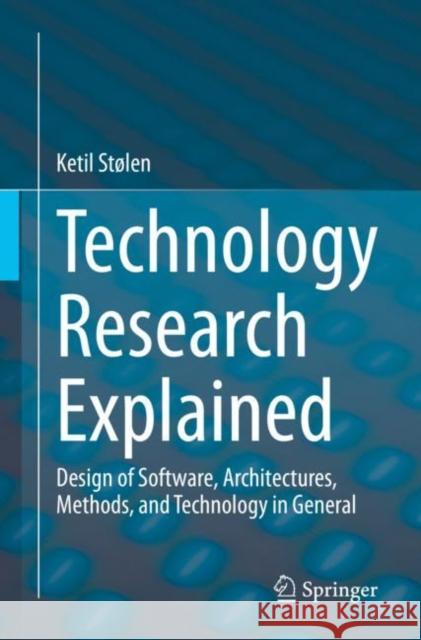
Technology Research Explained: Design of Software, Architectures, Methods, and Technology in General Ketil St?len 9783031258169 Springer - książkaWidoczna okładka, to zdjęcie poglądowe, a rzeczywista szata graficzna może różnić się od prezentowanej.

Technology Research Explained: Design of Software, Architectures, Methods, and Technology in General

ISBN-13: 9783031258169 / Angielski / Miękka / 2023 / 183 str.

Ketil Stølen
cena 120,45
(netto: 114,71 VAT:  5%)

Najniższa cena z 30 dni: 115,63
Termin realizacji zamówienia:
ok. 22 dni roboczych
Dostawa w 2026 r.

Darmowa dostawa!

This book aims to help research practitioners in technology science avoid some of the most common pitfalls or at least make them easier to overcome. Many technology scientists put too little weight on how they conduct their work and should be able to become significantly better at what they do by being more aware of methodological issues. The book differs from other related works in two main respects: First, by focusing on creating, producing, or inventing new artifacts – in other words, technology science. Second, by describing a general approach to technology science linking together specialized research methods.The book consists of 14 chapters. Following the first introductory chapter are two chapters providing the foundation for the rest of the book. These chapters clarify the meaning of key concepts and describe an overall process for technology science. The subsequent chapters 4–11 are about this process. Chapters 4, 5, and 6 concern problem analysis, research planning, and hypothesis formulation. The following five chapters then aim at evaluation. Chapter 7 introduces the concept of prediction, which plays a fundamental role in evaluating hypotheses. Chapters 8–10 address the evaluation of universal, existential, and statistical hypotheses. Chapter 11 concerns quality assurance and introduces the concepts of validity and reliability. Next, in chapters 12 and 13, we address publishing with an emphasis on the specifics of technology science. Eventually the last chapter, chapter 14, briefly introduces the philosophy of science.The book systematically collects in the form of suggestions, recommendations, and guidelines the author’s 35-year experience as a researcher, author and reviewer in technology science. It is written for anyone working in technology science, from master’s students to researchers and supervisors.


This book aims to help research practitioners in technology science avoid some of the most common pitfalls or at least make them easier to overcome. Many technology scientists put too little weight on how they conduct their work and should be able to become significantly better at what they do by being more aware of methodological issues. The book differs from other related works in two main respects: First, by focusing on creating, producing, or inventing new artifacts – in other words, technology science. Second, by describing a general approach to technology science linking together specialized research methods.The book consists of 14 chapters. Following the first introductory chapter are two chapters providing the foundation for the rest of the book. These chapters clarify the meaning of key concepts and describe an overall process for technology science. The subsequent chapters 4–11 are about this process. Chapters 4, 5, and 6 concern problem analysis, research planning, and hypothesis formulation. The following five chapters then aim at evaluation. Chapter 7 introduces the concept of prediction, which plays a fundamental role in evaluating hypotheses. Chapters 8–10 address the evaluation of universal, existential, and statistical hypotheses. Chapter 11 concerns quality assurance and introduces the concepts of validity and reliability. Next, in chapters 12 and 13, we address publishing with an emphasis on the specifics of technology science. Eventually the last chapter, chapter 14, briefly introduces the philosophy of science.The book systematically collects in the form of suggestions, recommendations, and guidelines the author’s 35-year experience as a researcher, author and reviewer in technology science. It is written for anyone working in technology science, from master’s students to researchers and supervisors.

Kategorie:
Podręczniki
Kategorie BISAC:
Study Aids > Study & Test-Taking Skills
Computers > Human-Computer Interaction (HCI)
Philosophy > Ethics & Moral Philosophy
Wydawca:
Springer
Język:
Angielski
ISBN-13:
9783031258169
Rok wydania:
2023
Wydanie:
2023
Ilość stron:
183
Oprawa:
Miękka
Wolumenów:
01
Dodatkowe informacje:
Wydanie ilustrowane

- 1. Introduction. - 2. Technology Science, Explanation Science, and Innovation. - 3. Technology Science and Its Overall Process. - 4. Problem Analysis. - 5. Planning. - 6. Hypotheses. - 7. Predictions. - 8. Evaluation of Universal Hypotheses. - 9. Evaluation of Existential Hypotheses. - 10. Evaluation of Statistical Hypotheses. - 11. Quality Assurance. - 12. Publishing. - 13. Article Writing. - 14. Technology Science from the Perspective of Philosophy of Science. 

Ketil Stølen is Chief Scientist at SINTEF (and Leader of the Research Group for Thrustworthy Green IoT Software at the Department for Software and Service Innovation there), and Professor at the Department of Informatics at the University of Oslo. He has been Project Leader of many European research projects and has more than 35 years of experience in conducting, presenting and supervising research. Ketil is also an elected member of Norges Tekniske Vitenskapsakademi.


This book aims to help research practitioners in technology science avoid some of the most common pitfalls or at least make them easier to overcome. Many technology scientists put too little weight on how they conduct their work and should be able to become significantly better at what they do by being more aware of methodological issues. The book differs from other related works in two main respects: First, by focusing on creating, producing, or inventing new artifacts – in other words, technology science. Second, by describing a general approach to technology science linking together specialized research methods.

The book consists of 14 chapters. Following the first introductory chapter are two chapters providing the foundation for the rest of the book. These chapters clarify the meaning of key concepts and describe an overall process for technology science. The subsequent chapters 4–11 are about this process. Chapters 4, 5, and 6 concern problem analysis, research planning, and hypothesis formulation. The following five chapters then aim at evaluation. Chapter 7 introduces the concept of prediction, which plays a fundamental role in evaluating hypotheses. Chapters 8–10 address the evaluation of universal, existential, and statistical hypotheses. Chapter 11 concerns quality assurance and introduces the concepts of validity and reliability. Next, in chapters 12 and 13, we address publishing with an emphasis on the specifics of technology science. Eventually the last chapter, chapter 14, briefly introduces the philosophy of science.

The book systematically collects in the form of suggestions, recommendations, and guidelines the author’s 35-year experience as a researcher, author and reviewer in technology science. It is written for anyone working in technology science, from master’s students to researchers and supervisors.




Udostępnij

Facebook - konto krainaksiazek.pl


Opinie o Krainaksiazek.pl na Opineo.pl

Partner Mybenefit

Krainaksiazek.pl w programie rzetelna firma Krainaksiaze.pl - płatności przez paypal

Czytaj nas na:

Facebook - krainaksiazek.pl
  • książki na zamówienie
  • granty
  • książka na prezent
  • kontakt
  • pomoc
  • opinie
  • regulamin
  • polityka prywatności

Zobacz:

  • Księgarnia czeska

  • Wydawnictwo Książkowe Klimaty

1997-2025 DolnySlask.com Agencja Internetowa

© 1997-2022 krainaksiazek.pl
     
KONTAKT | REGULAMIN | POLITYKA PRYWATNOŚCI | USTAWIENIA PRYWATNOŚCI
Zobacz: Księgarnia Czeska | Wydawnictwo Książkowe Klimaty | Mapa strony | Lista autorów
KrainaKsiazek.PL - Księgarnia Internetowa

Polityka prywatnosci - link
Krainaksiazek.pl - płatnośc Przelewy24
Przechowalnia Przechowalnia




