• Wyszukiwanie zaawansowane
  • Kategorie
  • Kategorie BISAC
  • Książki na zamówienie
  • Promocje
  • Granty
  • Książka na prezent
  • Opinie
  • Pomoc
  • Załóż konto
  • Zaloguj się

Technological Trends in the AI Economy: International Review and Ways of Adaptation » książka


zaloguj się | załóż konto
Logo Krainaksiazek.pl

koszyk

konto

szukaj
topmenu
Księgarnia internetowa
Szukaj
Książki na zamówienie
Promocje
Granty
Książka na prezent
Moje konto
Pomoc
 
 
Wyszukiwanie zaawansowane
Pusty koszyk
Bezpłatna dostawa dla zamówień powyżej 20 złBezpłatna dostawa dla zamówień powyżej 20 zł

Kategorie główne

• Nauka
 [2946912]
• Literatura piękna
 [1852311]

  więcej...
• Turystyka
 [71421]
• Informatyka
 [150889]
• Komiksy
 [35717]
• Encyklopedie
 [23177]
• Dziecięca
 [617324]
• Hobby
 [138808]
• AudioBooki
 [1671]
• Literatura faktu
 [228371]
• Muzyka CD
 [400]
• Słowniki
 [2841]
• Inne
 [445428]
• Kalendarze
 [1545]
• Podręczniki
 [166819]
• Poradniki
 [480180]
• Religia
 [510412]
• Czasopisma
 [525]
• Sport
 [61271]
• Sztuka
 [242929]
• CD, DVD, Video
 [3371]
• Technologie
 [219258]
• Zdrowie
 [100961]
• Książkowe Klimaty
 [124]
• Zabawki
 [2341]
• Puzzle, gry
 [3766]
• Literatura w języku ukraińskim
 [255]
• Art. papiernicze i szkolne
 [7810]
Kategorie szczegółowe BISAC

Technological Trends in the AI Economy: International Review and Ways of Adaptation

ISBN-13: 9789811974106 / Angielski / Twarda / 2023 / 656 str.
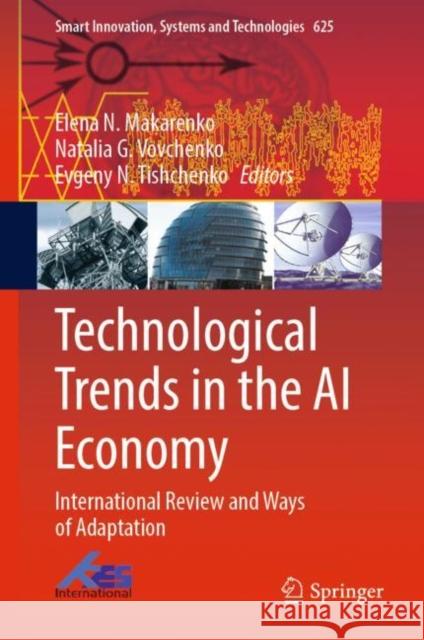
Elena N. Makarenko; Natalia G. Vovchenko; Evgeny N. Tishchenko
Technological Trends in the AI Economy: International Review and Ways of Adaptation Elena N. Makarenko Natalia G. Vovchenko Evgeny N. Tishchenko 9789811974106 Springer - książkaWidoczna okładka, to zdjęcie poglądowe, a rzeczywista szata graficzna może różnić się od prezentowanej.

Technological Trends in the AI Economy: International Review and Ways of Adaptation

ISBN-13: 9789811974106 / Angielski / Twarda / 2023 / 656 str.

Elena N. Makarenko; Natalia G. Vovchenko; Evgeny N. Tishchenko
cena 724,58
(netto: 690,08 VAT:  5%)

Najniższa cena z 30 dni: 693,97
Termin realizacji zamówienia:
ok. 22 dni roboczych
Bez gwarancji dostawy przed świętami

Darmowa dostawa!
inne wydania

This book is devoted to the study of artificial intelligence from a new perspective – not just a technology but a social institution with complex social connections and relationships. The book systematically highlights technological trends of the artificial intelligence economy and considers all the components of its cascade effect with an overview of international experience and substantiation of promising ways of adapting to the modern stage of technological transit of economic systems. The cascade effect is understood as a chain of interdependent events that are triggered as artificial intelligence takes root in society and the economy. Among the technological trends (current areas of the practical application of artificial intelligence), highlighted in the book, are “smart” homes, digital regions, the use of artificial intelligence to ensure cybersecurity, as well as the optimization of business processes based on artificial intelligence.The book interprets the economics of artificial intelligence as a result of the transition to a digital technological order. A review of modern experience and regulatory perspectives of the institutionalization of the artificial intelligence economy is carried out. The legal framework for combating cyber threats in the artificial intelligence economy has been determined. The promising frameworks for using artificial intelligence in various branches of industry are presented. The book provides practical examples, case studies and proposed frameworks for using AI in various sectors of the economy, which allows using the book as a practical guide to managing the artificial intelligence economy.


This book is devoted to the study of artificial intelligence from a new perspective – not just a technology but a social institution with complex social connections and relationships. The book systematically highlights technological trends of the artificial intelligence economy and considers all the components of its cascade effect with an overview of international experience and substantiation of promising ways of adapting to the modern stage of technological transit of economic systems. The cascade effect is understood as a chain of interdependent events that are triggered as artificial intelligence takes root in society and the economy. Among the technological trends (current areas of the practical application of artificial intelligence), highlighted in the book, are “smart” homes, digital regions, the use of artificial intelligence to ensure cybersecurity, as well as the optimization of business processes based on artificial intelligence.

The book interprets the economics of artificial intelligence as a result of the transition to a digital technological order. A review of modern experience and regulatory perspectives of the institutionalization of the artificial intelligence economy is carried out. The legal framework for combating cyber threats in the artificial intelligence economy has been determined. The promising frameworks for using artificial intelligence in various branches of industry are presented. The book provides practical examples, case studies and proposed frameworks for using AI in various sectors of the economy, which allows using the book as a practical guide to managing the artificial intelligence economy.

Kategorie:
Technologie
Kategorie BISAC:
Technology & Engineering > Engineering (General)
Computers > Artificial Intelligence - General
Computers > Security - General
Wydawca:
Springer
Seria wydawnicza:
Smart Innovation, Systems and Technologies
Język:
Angielski
ISBN-13:
9789811974106
Rok wydania:
2023
Dostępne języki:
Numer serii:
000405987
Ilość stron:
656
Oprawa:
Twarda

Part 1. Technological Trends in the AI Economy and its Contribution to Socio-Economic Development

Innovation and High-Tech Trends and Their Contribution to the Transition to a New Quality of Economic Growth
Elena G. Popkova Technological, Economic, and Social Changes: The Role of End-to-End Technologies

Natalia G. Vovchenko, Olga V. Andreeva, Valeria D. Dmitrieva, Valeriya S. Kaptsova and Venelin K. Terziev Fuzzy-multiple Model of a Gamified Mobile Application “Smart Home” Based on Bartle’s Classification of Players’ Psychological Types

Lyudmila V. Sakharova, Evgeny N. Tishchenko, Mikhail B. Stryukov, Nikita V. Bukhov and Gulnara T. Omarova Developing Competitive Strategies Based on Scenario Analysis with the Use of AI Capabilities

Nikolay A. Dimitriadi, Oleg I. Shchepilov and Almaz K. Atabekov   Analysis of Business Data and Cybersecurity as New Areas of Activity for Business Analysts in the Context of Digital Transformation

Elena N. Makarenko, Tatiana V. Makarenko, Yulia G. Chernysheva, Irina A. Polyakova and Irina A. Kislaya Investigation of a Singularly Perturbed Task Solution in an Unbounded Domain

Saly Karimov and Gulzhamal M. Anarbaeva MoSER: Sustainable Development Model for the Russian Macroregion

Alexander L. Chupin, Zhanna S. Chupina, Gabriel A. Moshlyak, Aleksei M. Sorokin and Daniil D. Dobromirov Analysis of Existing Systems of Indicators Used to Assess the Potential of Economic Growth of Rural Areas in the World Practise

Irina A. Morozova, Olga E. Akimova and Anna A. Khryseva The Problem of Cross-border Cooperation and its Solution Based on a Flexible Application-oriented Approach

Galina A. Khmeleva, Serik K. Serikbayev and Madeniet А. Mekin Information and Communication Technologies in the Digital Economy

Azizbek M. Tashbaev, Dinara A. Osmonalieva, Altynbek A. Malikov, Gulayim Zhakshylyk kyzy and Chynygul Zh. Anashova Development of the Information-analytical Base of Accounting and Analysis in SMEs under the Conditions of Digitalization

Chynara M. Ergeshova, Kanjarbek A. Mamashov, Perizat K. Alisheva, Mendi A. Arzybaeva and Zhasur M. Azimov

Part 2. Regulatory Framework for the AI Economy
The Main Components of the Innovation Audit of the Economy

Olga T. Cherney, Zhanna V. Smirnova, Elena V. Romanovskaya, Alexander P. Garin and Yuri A. Sidorenko  Application of the Mechanism of Public-private Partnership by Industrial Parks in the Context of the Sustainable Development Paradigm

Svetlana N. Kuznetsova, Victor P. Kuznetsov, Elena V. Romanovskaya, Tatyana E. Lebedeva and Elena P. Kozlova Artificial Intelligence as an Object of Civil Law Regulation

Tatyana A. Skvortsova, Nadezhda V. Nesterova, Nelli G. Shatveryan, Marina V. Markina and Vladimir V. Klimuk  Principles of Legal Liability of Owners (Proprietors) of Vehicles Equipped with Components of Artificial Intelligence

Evgeniy B. Luparev, Alexei N. Zherebzov, Elena V. Epifanova, Larisa E. Kalinina and Ludmila V. Komarova Legal Problems in the Application of Distance Technology at General Meetings of Members of Corporations

Vitaly V. Vanin, Stanislav D. Mogilevsky, Yulia G. Leskova, Oksana V. Shmaliy, and Lesya A. Dushakova Artificial Intelligence Technology as a Complex Object of Intellectual Rights

Tatiana V. Shatkovskaya, Tatiana V. Epifanova, Tatiana A. Mosienko, Margarita S. Shatkovskaya, Ekaterina V. Mikulina and Margarita I. Bogdanova Regional Perspective of the Development of Digitalization of the Economic and Legal Areas of Public Relations in Russia

Emil E. Barinov, Adam U. Albekov, Elena V. Markina, Alexey N. Pozdnyshov and Maxim A. Tkachenko Directions for Improving the Legal Regulation of the Use of Digital Technologies and Ensuring Cybersecurity in the Economy of the Russian Federation

Dmitry A. Alimov, Larisa Y. Kolyushkina, Elena V. Markina,Galina V. Mezhenskaya and Venera R. Zarubina

Part 3. State Regulation of the AI Economy
Artificial Intellect in Criminal Law: Issues of Governance, Regulation, and Prospect of Use

Glera S. Dosaeva, Marina V. Ryabova, Elena V. Seregina, Irina V. Fomenko and Eleonora A. Kagulyan The Use of Artificial Intelligence in the Activities of the Preliminary Investigation Bodies: Questionable Merits and Apparent Disadvantages

Alexander V. Gavritsky, Natalia G. Osadchaya, Ildar A. Kazarinov, Oksana N. Palieva and Vladimir B. Paliev Modernization of Judicial Activity in the Context of a New Strategy of Social Development

Zinaida S. Lusegenova, Evgeniya V. Tutinas, Olga G. Donskaya, Elena V. Ivneva and Liya L. Kavshbaya The Use of Artificial Intelligence in Considering a Criminal Case on its Merits as One of the Safeguards of Legal and Reasonable Sentencing by a Judge

Yuriy V. Demidchenko, Maria M. Kobleva, Bronislav A. Tsoi, Larisa I. Poltavtseva and Alina V. Poltavtseva The Use of Artificial Intelligence in the System of State Regulation of Entrepreneurship

Tatyana А. Skvortsova, Tatiana V. Epifanova, Tatiana A. Mosienko, Maria V. Lisitskaya and Yuri T. Erganov Artificial Intelligence Systems in Criminal Procedure

Veronika V. Kolesnik, Alexey Yu. Afanasyev, Irina V. Kolesnik, Natalia V. Fedorenko and Julia V. Fedorenko Countering Cybercrime as the Main Area of State Criminal Policy

Dmitry V. Tynyansky, Sergey I. Ulezko, Gennady Yu. Lesnikov, Alexandra L. Klochkova and Galina V. Mezhenskaya Artificial Intelligence in the Control and Supervisory Activities of the State: Current Trends

Saniyat A. Agamagomedova, Natalia V. Dzhagaryan, Larisa V. Zavgorodnyaya, Elena Yu. Zolochevskaya and Indira G. Tsopanova

Part 4. Current Problems of Financing the AI Economy and Ways to Solve Them
Artificial Intelligence in the Implementation of Monetary Policy in Russia: Directions and Application Limits

Olga G. Semenyuta, Elena V. Dobrolezha, Oleg V. Basko, Vladimir M. Maznyak and Inna G. Vorobyova Innovative Components of the Public Procurement Process in the Context of Digitalization of the Economy

Nadezhda N. Stolbovskaya, Evgeniya M. Sokolova, Zaur Kh. Antikov, Ekaterina M. Kolikova and Viktoria A. Maksimenko Application of Artificial Intelligence Technologies in the Control Activities of the Federal Treasury

Kantemir L. Elmesov Types of Cyber Threats and the Need to Ensure the Cybersecurity of the Financial System

Elena N. Smertina, Ellina Yu. Demyanenko, Maria M. Popova and Marusya I. Lyubcheva Issues of Using Artificial Intelligence in the Framework of Public Finance

Natalia G. Vovchenko, Olga B. Ivanova, Elena D. Kostoglodova, Anatoliy F. Khapilin and Stanislav A. Khapilin Financing Digital Transformation and Bridging Digital Divide: The Case of the European Union

Maria I. Tislenko Artificial Intelligence in Banking Systems: Trends and Possible Consequences of Implementation

Svetlana A. Urazova Risks of Banking Transformation in Digitalization

Olga G. Semenyuta and Irina E. Shapiro Issues of Unification of Certain Evidentiary Provisions

Gennady A. Laptev and Sergey I. Komaritsky Family Policy as an Integral Component of State Social Policy: Contemporary Challenges and Responses through Innovation

Nurgul K. Atabekova, Ainur A. Urisbayeva, Aizhan A. Kozhakhmetova, Tolgonai A. Uraimova and Elmira K. Bolotbekova Measurement of Customs Performance in Conditions of Customs Institute Intellectualization

Yuliya E. Gupanova and Galina I. Goremykina 

Part 5. Industry Overview of the AI Economy
Digital Tools for Stimulating Russian Grain Exports

Olesya A. Drebezova and Petr V. Taranov Issues of Using Artificial Intelligence in Pharmaceutical Retail in Russia

Victoria A. Bondarenko, Svetlana S. Galazova, Dmitry D. Kostoglodov, Natalia V. Przhedetskaya and Julia V. Solyanskaya Using Heterogeneous Neural Networks to Optimize Treatment Tactics for Various Diseases

Aleksandr V. Kurbesov, Karine Kh. Kalugyan, Natalia A. Aruchdi and Mikhail Yu. Zarubin Application of Artificial Intelligence in Computer Gaming and Game Content

Nikolay G. Kuznetsov, Natalya D. Rodionova, Mikhail V. Popov, Lidiya N. Roschina and Inna V. Ukraintseva Conceptual Model of a Regional Center for Cenological Monitoring of Factors Affecting the Development of Cardiovascular Diseases

Alexey V. Khripun, Alexey P. Ilyukhin, Alexander N. Kuzminov, Alexandra V. Voronina and Oksana G. Sorokina The Role of Early Warning System in the Building of Smart Organization

Bahzad T. Salim and Vladimir A. Ermakov Methodological Aspects of Assessing the Effectiveness of Digital Transformation of Oil and Gas Industry Enterprises

Alexey V. Beloshitskiy and Vera V. Biryukova The Impact of the Development of Fiber Optic Cable Market on the Formation of Global Digital Economy: The Example of Russia

Natalia S. Rytova The Contribution of Universities to Digitalization on the Example of Scientific Consortiums (WCRC) Created in Russia

Filipp D. Belov, Oksana V. Zvolinskaya, Elena A. Gutkovskaya, Roman A. Tikhonov and Marianna E. Klubnikina

Evgeny N. Tishchenko is the dean of the Faculty of Computer Technology and Information Security, Doctor of Economics, Professor. He is the graduate (1990) of the Rostov-on-Don Order of the Badge of Honor of the Institute of National Economy, specialty "Organization of mechanized processing of economic information"; qualification – "Engineer-economist" and the graduate (2018) of the North Caucasus Federal University, specialty "Information Security"; qualification – "Master". In 1994, in the dissertation Council of Rostov State University, he defended his Ph.D. thesis on the topic: "Data protection software in information systems (economic and statistical analysis)" (scientific supervisor – Doctor of Economics, Professor Khubaev G. N.). In 2003, he was awarded the title of associate professor. In 2003, in the dissertation Council of the Rostov State University of Economics, he defended her D.Sc. thesis on the topic "Instrumental methods for analyzing the security of distributed economic information systems" (scientific consultant: Doctor of Economics, Professor, Khubaev G. N.). In 2016, he was awarded the academic title of professor. He has teaching experience of 30 years. He has been working at the department since 1991.

Makarenko Elena Nikolaevna graduated in 1988 with honors from the Faculty of Economics, ChIGU. L.N. Tolstoy with a degree in Accounting and Analysis of Economic Activity in Industry. Since 1988, she began her career as an assistant at the Department of Economics, Organization and Planning of Production at ChIGU named after L.N. Tolstoy. In 1988, she entered the full-time postgraduate study of the Rostov-on-Don Order of the "Badge of Honor" Institute of National Economy. In November 1988, she was accepted as a junior researcher of the Rostov-on-Don Order of the Badge of Honor of the Institute of National Economy. In 1991, she graduated from graduate school, defended her Ph.D. thesis and in the same year began work at the Department of Accounting and Analysis of Economic Activity in Industry as an assistant. In 1995, she moved to the position of senior teacher, and in 1996, she was elected to the position of assistant professor. Since 2008, she worked as a deputy dean of the Faculty of Accounting and Economics in full-time education. In 2011, she defended her thesis for the degree of Doctor of Economics. In February 2012, she was appointed as the acting dean of the UEF, and in July 2012, she was elected to the post of dean of the Accounting Faculty. On September 21, 2018, she was appointed to the post of first vice-rector – vice-rector for Academic Affairs of the Rostov State Economic University. Since January 24, 2019, she has been appointed as the acting rector of Rostov State Economic University. On March 14, 2019, at the Conference of Employees and Students of the Russian State University of Economics, she was elected to the post of rector. By order of the Ministry of Science and Higher Education of the Russian Federation, she was approved as the rector of the Rostov State Economic University since June 11, 2019. From 2012 to the present, she has been working part time as a professor at the Department of Accounting.

Natalia G. Vovchenko is a vice-rector for Research and Innovation, Doctor of Economics, Professor. He is a graduate (1990) of the Rostov-on-Don Order of the Badge of Honor of the Institute of National Economy, specialty "Industrial Planning"; qualification – "Economist" and the graduate (1992) of the Rostov-on-Don Order of the Badge of Honor of the Institute of National Economy, specialty "Accounting, control and analysis of economic activity"; qualification – "Economist". In 1994, in the dissertation Council of Rostov State University, she defended her Ph.D. thesis on the topic: "Land reform and improvement of relations of agrarian nature management in the conditions of market formation" (scientific supervisor – Doctor of Economics, Professor Ovchinnikov V. N.). In 2002, she was awarded the title of associate professor. In 2006, in the dissertation Council of the Rostov State University of Economics, she defended her D.Sc. thesis on the topic "The impact of financial globalization processes on the transformation of the financial system of Russia" (scientific consultant: Doctor of Economics, Professor, Vladimir Zolotarev). In 2015, she was awarded the academic title of professor. She has teaching experience of 31 years. She has been working at the department since 1990.

This book is devoted to the study of artificial intelligence from a new perspective – not just a technology but a social institution with complex social connections and relationships. The book systematically highlights technological trends of the artificial intelligence economy and considers all the components of its cascade effect with an overview of international experience and substantiation of promising ways of adapting to the modern stage of technological transit of economic systems. The cascade effect is understood as a chain of interdependent events that are triggered as artificial intelligence takes root in society and the economy. Among the technological trends (current areas of the practical application of artificial intelligence), highlighted in the book, are “smart” homes, digital regions, the use of artificial intelligence to ensure cybersecurity, as well as the optimization of business processes based on artificial intelligence.

The book interprets the economics of artificial intelligence as a result of the transition to a digital technological order. A review of modern experience and regulatory perspectives of the institutionalization of the artificial intelligence economy is carried out. The legal framework for combating cyber threats in the artificial intelligence economy has been determined. The promising frameworks for using artificial intelligence in various branches of industry are presented. The book provides practical examples, case studies and proposed frameworks for using AI in various sectors of the economy, which allows using the book as a practical guide to managing the artificial intelligence economy.




Udostępnij

Facebook - konto krainaksiazek.pl


Opinie o Krainaksiazek.pl na Opineo.pl

Partner Mybenefit

Krainaksiazek.pl w programie rzetelna firma Krainaksiaze.pl - płatności przez paypal

Czytaj nas na:

Facebook - krainaksiazek.pl
  • książki na zamówienie
  • granty
  • książka na prezent
  • kontakt
  • pomoc
  • opinie
  • regulamin
  • polityka prywatności

Zobacz:

  • Księgarnia czeska

  • Wydawnictwo Książkowe Klimaty

1997-2025 DolnySlask.com Agencja Internetowa

© 1997-2022 krainaksiazek.pl
     
KONTAKT | REGULAMIN | POLITYKA PRYWATNOŚCI | USTAWIENIA PRYWATNOŚCI
Zobacz: Księgarnia Czeska | Wydawnictwo Książkowe Klimaty | Mapa strony | Lista autorów
KrainaKsiazek.PL - Księgarnia Internetowa

Polityka prywatnosci - link
Krainaksiazek.pl - płatnośc Przelewy24
Przechowalnia Przechowalnia




